
Antarctica Melting Much Faster Than Expected, See Timelapse Imagery


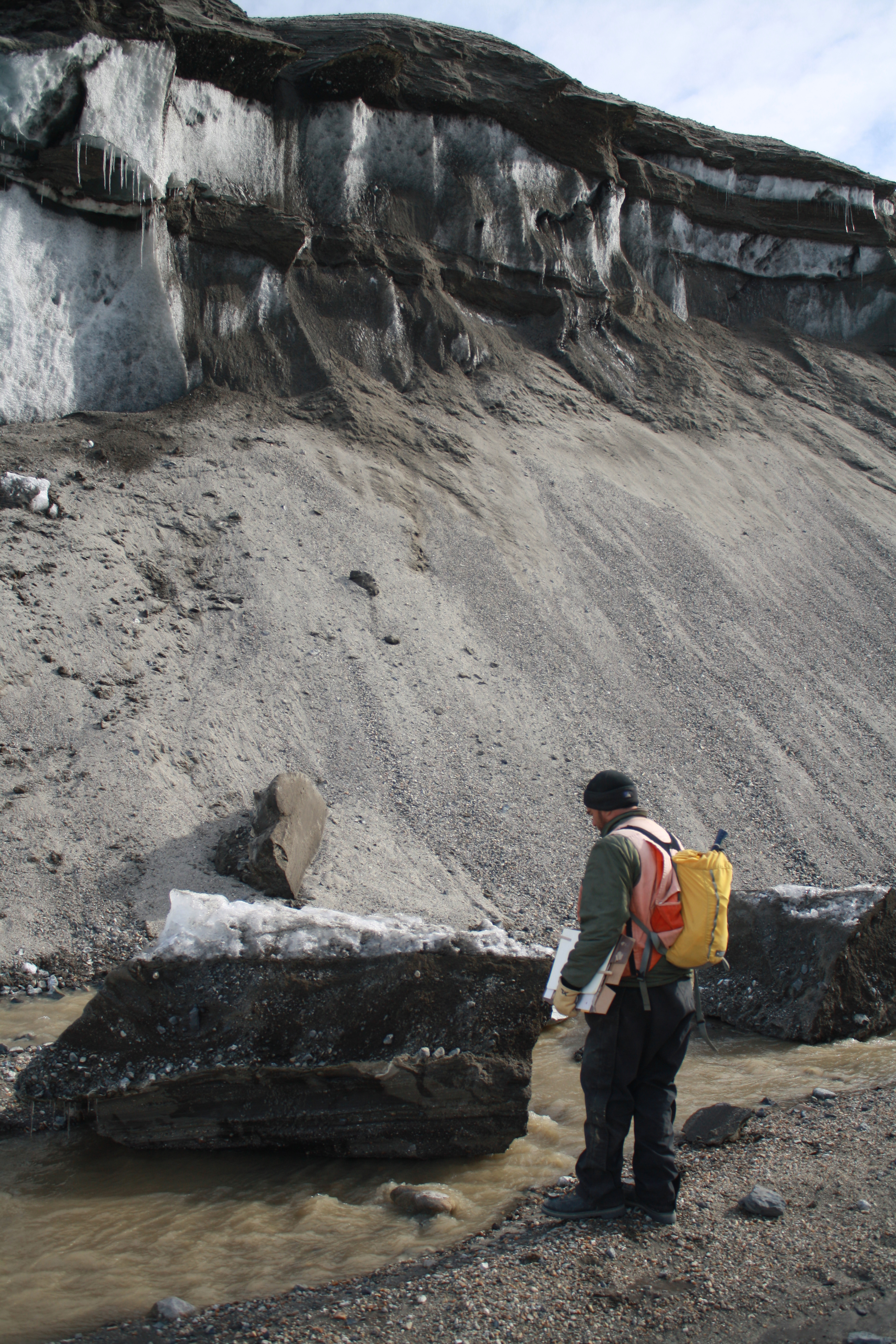
Photo by Joseph Levy, University of Texas Institute for Geophysics.
Tracking data from Garwood Valley in the McMurdo Dry Valleys region of Antarctica, Joseph Levy, a research associate at The University of Texas at Austin’s Institute for Geophysics, shows that melt rates accelerated consistently from 2001 to 2012, rising to about 10 times the valley’s historical average for the present geologic epoch, as documented in the July 24 edition of Scientific Reports.
Scientists had previously considered the region’s ground ice to be in equilibrium, meaning its seasonal melting and refreezing did not, over time, diminish the valley’s overall mass of ground ice.
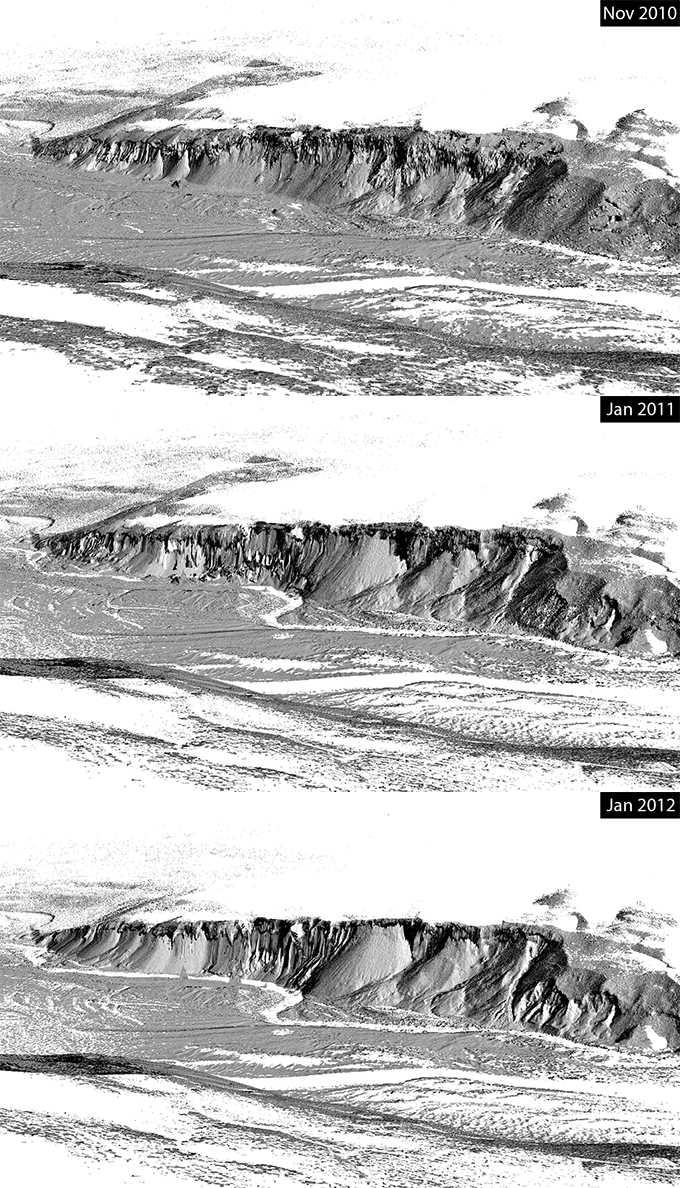
Instead, Levy documented through LIDAR and time-lapse photography a rapid retreat of ground ice in Garwood Valley, similar to the lower rates of permafrost melt observed in the coastal Arctic and Tibet.
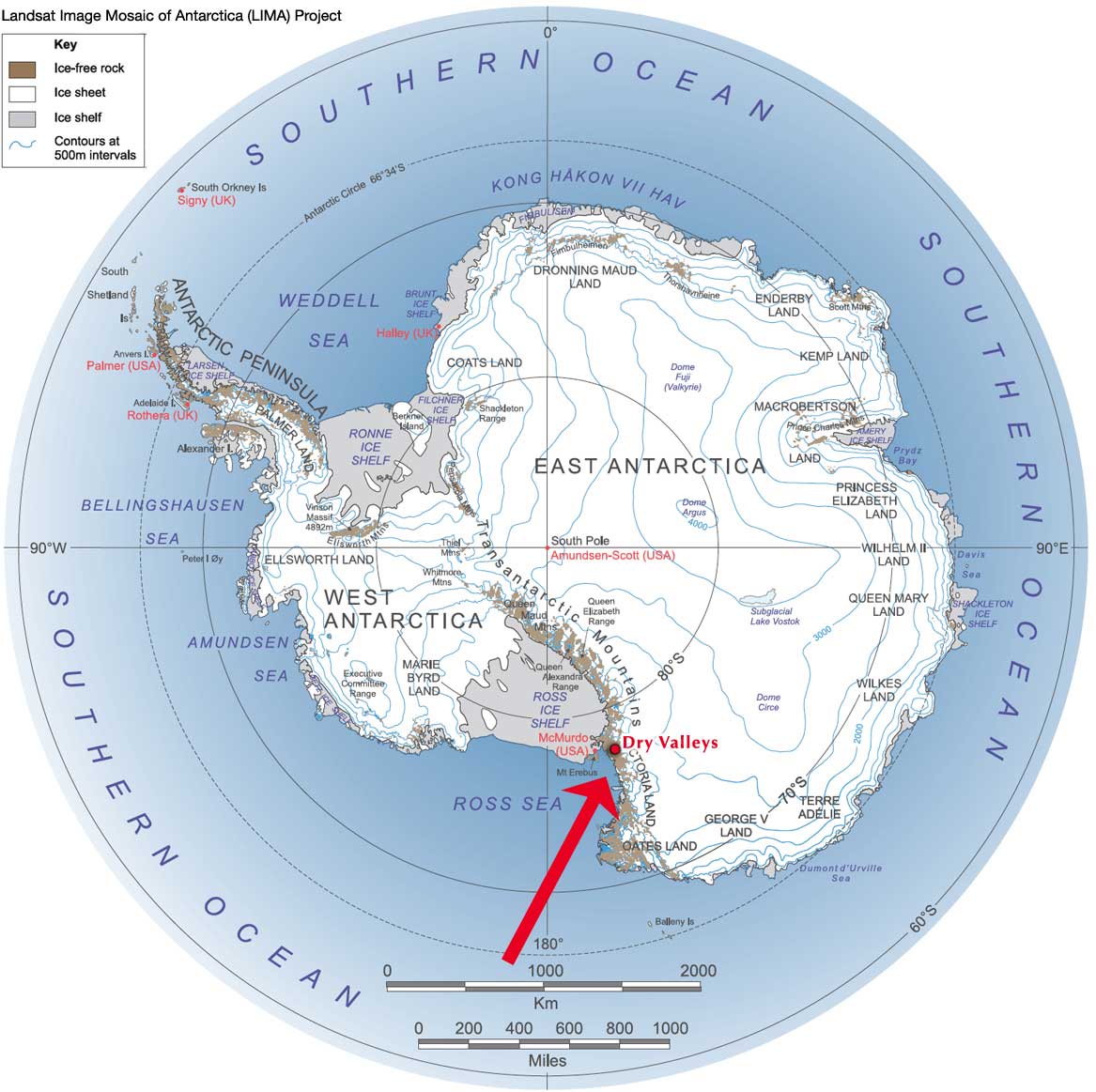
Image: Landsat Image Mosaic of Antarctica.
“The big tell here is that the ice is vanishing — it’s melting faster each time we measure,” said Levy, who noted that there are no signs in the geologic record that the valley’s ground ice has retreated similarly in the past. “This is a dramatic shift from recent history.”
Ground ice is more prevalent in the Arctic than in Antarctica, where glaciers and ice sheets dominate the landscape. In contrast to glaciers and ice sheets, which sit on the ground, ground ice sits in the ground, mixed with frozen soil or buried under layers of sediment. Antarctica’s Dry Valleys contain some of the continent’s largest stretches of ground ice, along the coast of the Ross Sea.
After Levy and colleagues noted visible effects of ground ice retreat in Garwood Valley, they began to monitor the valley, combining time-lapse photography and weather-station data at 15-minute intervals to create a detailed view of the conditions under which the ice, a relict from the last ice age, is being lost.
Rising temperatures do not account for the increased melting in Garwood Valley. The Dry Valleys overall experienced a well-documented cooling trend from 1986 to 2000, followed by stabilized temperatures to the present.
Rather, Levy and his co-authors attribute the melting to an increase in radiation from sunlight stemming from changes in weather patterns that have resulted in an increase in the amount of sunlight reaching the ground.
Credit: The University of Texas at Austin, Institute for Geophysics.
Sunlight tends to bounce off the white, reflective surfaces of glaciers and ice sheets, but the darker surfaces of dirty ground ice can absorb greater amounts of solar radiation. Thick layers of sediment tend to insulate deeply buried ground ice from sunlight and inhibit melting. But thin sediment layers have the opposite effect, effectively cooking the nearby ice and accelerating melt rates.
As the ground ice melts, the frozen landscape sinks and buckles, creating what scientists describe as “retrogressive thaw slumps.” An acceleration in the prevalence of such slumps has been well documented in the Arctic and other permafrost regions, but not in Antarctica.
Levy’s research shows that even under the stable temperature conditions of the Dry Valleys, recent increases in sunlight are leading to Arctic-like slump conditions.
If Antarctica warms as predicted during the coming century, the melting and slumping could become that much more dramatic as warmer air temperatures combine with sunlight-driven melting to thaw ground ice even more quickly.
Ground ice is not the major component of Antarctica’s vast reserves of frozen water, but there are major expanses of ground ice in the Dry Valleys, the Antarctic Peninsula and the continent’s ice-free islands.
Garwood Valley could tell the story of what will happen in these “coastal thaw zones,” says Levy.
“There’s a lot of buried ice in these low-elevation coastal regions, and it is primed to melt.”
Co-authors on the paper were Andrew Fountain of Portland State University, James Dickson and James Head of Brown University, Marianne Okal of UNAVCO, David Marchant of Boston University and Jaclyn Watters of The University of Texas at Austin.
The research was supported by a grant from the National Science Foundation.
University of Texas Institute for Geophysics
Jackson School of Geosciences
Anyone can join.
Anyone can contribute.
Anyone can become informed about their world.
"United We Stand" Click Here To Create Your Personal Citizen Journalist Account Today, Be Sure To Invite Your Friends.
Before It’s News® is a community of individuals who report on what’s going on around them, from all around the world. Anyone can join. Anyone can contribute. Anyone can become informed about their world. "United We Stand" Click Here To Create Your Personal Citizen Journalist Account Today, Be Sure To Invite Your Friends.
LION'S MANE PRODUCT
Try Our Lion’s Mane WHOLE MIND Nootropic Blend 60 Capsules
Mushrooms are having a moment. One fabulous fungus in particular, lion’s mane, may help improve memory, depression and anxiety symptoms. They are also an excellent source of nutrients that show promise as a therapy for dementia, and other neurodegenerative diseases. If you’re living with anxiety or depression, you may be curious about all the therapy options out there — including the natural ones.Our Lion’s Mane WHOLE MIND Nootropic Blend has been formulated to utilize the potency of Lion’s mane but also include the benefits of four other Highly Beneficial Mushrooms. Synergistically, they work together to Build your health through improving cognitive function and immunity regardless of your age. Our Nootropic not only improves your Cognitive Function and Activates your Immune System, but it benefits growth of Essential Gut Flora, further enhancing your Vitality.

Our Formula includes: Lion’s Mane Mushrooms which Increase Brain Power through nerve growth, lessen anxiety, reduce depression, and improve concentration. Its an excellent adaptogen, promotes sleep and improves immunity. Shiitake Mushrooms which Fight cancer cells and infectious disease, boost the immune system, promotes brain function, and serves as a source of B vitamins. Maitake Mushrooms which regulate blood sugar levels of diabetics, reduce hypertension and boosts the immune system. Reishi Mushrooms which Fight inflammation, liver disease, fatigue, tumor growth and cancer. They Improve skin disorders and soothes digestive problems, stomach ulcers and leaky gut syndrome. Chaga Mushrooms which have anti-aging effects, boost immune function, improve stamina and athletic performance, even act as a natural aphrodisiac, fighting diabetes and improving liver function. Try Our Lion’s Mane WHOLE MIND Nootropic Blend 60 Capsules Today. Be 100% Satisfied or Receive a Full Money Back Guarantee. Order Yours Today by Following This Link.



| Visits: | 1,834,080,909 |
| Stories: | 8,716,238 |
Whistler Blowers, Insiders


The world is changing, everything is changing.
news flash, once upon a time, there wasn’t any ice there! gasp!!! right!!
and guess what else, life thrived on earth even though all the ice was gone!
the planet is a living evolving thing, it continuously changes and will continue to do so even WHEN man becomes extinct.
so stick that in your low information voter brain!
It happens all the time. There are photos of Nazi WW2 submarine’s that had surfaced at the north pole to take photos, and not a trace of ice in sight.
It’s all BS in any case seeing as with are well into the on average 50’000 year interglacial period within and ice age, that has so far lasted 50’000’000 years.
If you reduce the time span of an ice age to that of our annual winter, then being generous an interglacial amounts to about 5 minutes of unseasonal warm sunshine on a mid winter day.
Before we start scaremongering about global warming, lets get out of the fricking ice age first.