

Cedar, Heat and Storm Mud: Setting a Deep-Cleaning Calendar for a Dallas Office


Here is the short answer. An office of about 40 people needs light cleaning every night, a detail pass every week, a deep clean of carpets, vents and hard-to-reach surfaces every quarter, and a full top-to-bottom reset once or twice a year. In Dallas, the timing of those deeper visits matters as much as the frequency, because pollen, heat, spring storms and flu season each put a different kind of load on the building.
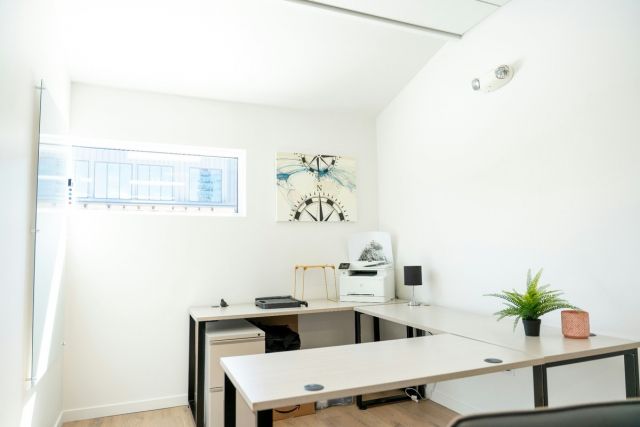
Most frequency questions get a generic checklist in reply. A better plan for commercial cleaning in Dallas starts from how the space is used, how many people pass through it, and what the North Texas calendar does to the air, the floors and the HVAC system over a year. A 40-person office produces enough foot traffic, kitchen use and restroom use that daily attention is not optional, but it is not so large that a crew needs to be on site all day. The sections below lay out what belongs at each frequency, and how to time the deep work around local conditions. A quick-reference table follows section 10.
1. Forty people is the point where daily cleaning stops being optional
With around 40 employees, the restrooms, break room and entrance are in use from the first arrival to the last departure. Trash fills quickly, coffee and food spills happen every day, and fingerprints build up on doors and elevator buttons by the afternoon. Skipping a night means the next morning starts with overflowing bins and a sticky kitchen. A nightly service, five days a week, is the baseline for an office this size, with the heavier work spread across the month.
2. Nightly tasks cover what people touch and what smells
The nightly list is short and consistent. It covers emptying trash and recycling, cleaning and restocking restrooms, wiping break room counters, sinks and tables, and spot-cleaning glass at the entrance. It also includes wiping high-touch points such as door handles, light switches, elevator buttons and shared equipment. The CDC advises cleaning high-touch surfaces regularly and other surfaces when they are visibly dirty, and notes that high-traffic spaces may call for more frequent cleaning.
3. Weekly tasks catch what the nightly crew passes over
A weekly pass handles the surfaces that collect dust slowly but visibly. That means dusting desks that are cleared, window sills, chair bases, baseboards and the tops of partitions and filing cabinets. It also includes a thorough vacuum of every carpeted area rather than only the walkways, damp mopping of hard floors edge to edge, and cleaning inside the break room microwave and the fronts of appliances. In many offices, the weekly work is split across the five nightly visits so that each night carries one extra zone.
4. Monthly tasks keep dust from moving into the air system
Once a month, the crew should work above and below the usual reach. High dusting of light fixtures, vents and return grilles, wiping blinds, cleaning under desks, and wiping chair upholstery all belong here. The EPA’s guide for office occupants notes that dust and outdoor particles can be drawn into a building, and that vents and return grilles should be kept unblocked so the HVAC system stays balanced. Clean grilles and dust-free blinds make a visible difference in a Dallas office where the air conditioning runs for much of the year.
5. Quarterly deep cleaning is where the calendar gets local
A quarterly deep clean usually includes hot-water extraction or another deep method for carpets, machine scrubbing of hard floors and grout, detailed cleaning of restroom partitions and fixtures, and a full wipe of walls and doors at hand height. For a 40-person office, four of these visits a year is a sensible default. The useful question is not only how often, but when, and in Dallas the seasons give clear answers. Scheduling the quarterly visits around pollen, heat and storm patterns gets more value out of the same budget for commercial cleaning in Dallas.
6. Winter brings cedar season and flu season at the same time
Mountain cedar pollen, the cause of what Texans call cedar fever, typically runs from December through February in North Texas, with the peak in January. Flu activity in the United States also usually peaks in winter, most often between December and February. That overlap makes winter the right time to add disinfection of high-touch surfaces after cleaning, to vacuum carpets and upholstered chairs more often, and to keep entry mats clean. CDC guidance is that cleaning removes most germs and that disinfection follows cleaning, especially in areas where someone has obviously been ill.
7. Spring tree pollen and storms call for a spring reset
Tree pollen in North Texas starts in February and continues into spring, from trees such as oak, elm, ash and pecan. Spring is also storm season: a National Weather Service meteorologist in Fort Worth has named April and May as the months that stand out for severe weather in Texas. Heavy rain means mud and grit tracked across lobbies and carpet, and wet umbrellas and shoes near the entrance. A deep clean scheduled for late spring, after the worst of the storms, clears pollen dust from vents and sills and restores carpets that took the brunt of the wet weather.
8. Summer heat puts the load on the HVAC system
Dallas summers are long and hot, and the Dallas-Fort Worth area set its record with 71 days at or above 100 degrees in 2011. When the air conditioning runs hard all day, return grilles and supply vents collect dust faster, and any filters the tenant controls deserve closer attention. The EPA notes that properly maintained filters can trap many of the particles in outdoor air, and that HVAC maintenance is essential for air quality. Summer is a good time for a high-dusting pass and a check that the cleaning crew is not blocking vents with carts or furniture.
9. Fall ragweed means one more deep pass before winter
Weed pollen, led by ragweed, is the main allergen in the fall in North Texas and lasts until the first hard freeze. Grass and mold allergens also stay active through the warm months. A deep clean in early fall removes the summer’s dust from carpet and upholstery before ragweed season peaks and before cedar season follows close behind. Offices with staff who report allergy symptoms can ask what type of vacuum filtration the crew uses and whether fragrance-free products are available.
10. A Dallas cleaning calendar at a glance
The table below puts the frequencies and the local factors in one place. It is a starting point for a 40-person office, and the right plan depends on the layout and the type of building. Use it to check whether a proposal covers each level, not only the nightly list.
|
Frequency |
Tasks |
Dallas factor |
|---|---|---|
|
Nightly |
Trash and recycling, restrooms, break room, high-touch points, entrance glass |
Daily use by about 40 people; heavier disinfection in flu season |
|
Weekly |
Full vacuum, edge-to-edge mopping, desk and ledge dusting, appliance fronts |
Pollen dust settles on sills and ledges most of the year |
|
Monthly |
High dusting, vents and return grilles, blinds, under desks, chair upholstery |
Air conditioning runs for much of the year and moves dust |
|
Quarterly (winter) |
Deep carpet cleaning, disinfecting shared surfaces, entry mats |
Cedar pollen and flu season both peak around December to February |
|
Quarterly (spring) |
Carpet extraction at entrances, hard floor scrubbing, vents and sills |
Tree pollen plus April and May storms and tracked-in mud |
|
Quarterly (summer) |
High dusting, vents, check that tenant-controlled filters are changed |
Long hot summers and heavy HVAC load |
|
Quarterly (fall) |
Carpet and upholstery deep clean, restroom detail |
Ragweed until the first hard freeze, ahead of cedar season |
|
Once or twice a year |
Full reset: walls, doors, light fixtures, furniture moved, floors refinished as needed |
Timed before cedar season or after spring storms |
11. Glass towers and suburban office parks need different emphasis
A suite in a Downtown, Uptown or Las Colinas tower usually shares a lobby, elevators and restrooms managed by the building, so the tenant’s plan focuses on the suite itself, with more attention to interior glass and hard floors. Office parks in the northern suburbs often have their own entrance opening straight onto a parking lot, more carpet, and private restrooms. Those spaces take more mud and pollen at the door, so entry mats, carpet extraction near entrances and restroom detail carry more weight. When comparing proposals for commercial cleaning in Dallas, ask whether the plan reflects the actual building type rather than a generic office.
12. Put the frequencies in writing and review them each season
A cleaning scope should list each task with its frequency, not just a total number of visits. It should say which months the quarterly deep cleans fall in, what each one includes, and how the office can request an extra visit after a storm or an illness in the team. A short review at the change of each season keeps the plan aligned with how the office is really used, which often changes as headcount or hybrid schedules shift. Writing it down also makes it easy to check whether the deep work actually happened.
13. Leave room in the plan for unscheduled visits
Some of the most useful cleaning visits are the ones nobody can schedule a year ahead. A spring storm that soaks the lobby carpet, a stomach bug that runs through a team, or a burst of moving boxes and drywall dust after a remodel all call for a targeted visit within a day or two. The scope should say how the office requests one, how fast the crew responds, and how the extra visit is priced or counted against the quarterly work. A plan for commercial cleaning in Dallas that only covers the routine leaves the office improvising at exactly the moments when a clean space matters most.
The right frequency for a 40-person Dallas office is not one number but a layered calendar: nightly basics, weekly detail, monthly high dusting and quarterly deep cleans timed to cedar season, spring storms, summer heat and fall ragweed. Offices that plan commercial cleaning in Dallas this way tend to spend the same budget with fewer complaints about dust and allergies, and those comparing janitorial companies in Dallas can use the table above as a checklist for each proposal.
This article was contributed by American Janitorial Services Dallas, a commercial cleaning company serving Dallas.
Anyone can join.
Anyone can contribute.
Anyone can become informed about their world.
"United We Stand" Click Here To Create Your Personal Citizen Journalist Account Today, Be Sure To Invite Your Friends.
Before It’s News® is a community of individuals who report on what’s going on around them, from all around the world. Anyone can join. Anyone can contribute. Anyone can become informed about their world. "United We Stand" Click Here To Create Your Personal Citizen Journalist Account Today, Be Sure To Invite Your Friends.
LION'S MANE PRODUCT
Try Our Lion’s Mane WHOLE MIND Nootropic Blend 60 Capsules
Mushrooms are having a moment. One fabulous fungus in particular, lion’s mane, may help improve memory, depression and anxiety symptoms. They are also an excellent source of nutrients that show promise as a therapy for dementia, and other neurodegenerative diseases. If you’re living with anxiety or depression, you may be curious about all the therapy options out there — including the natural ones.Our Lion’s Mane WHOLE MIND Nootropic Blend has been formulated to utilize the potency of Lion’s mane but also include the benefits of four other Highly Beneficial Mushrooms. Synergistically, they work together to Build your health through improving cognitive function and immunity regardless of your age. Our Nootropic not only improves your Cognitive Function and Activates your Immune System, but it benefits growth of Essential Gut Flora, further enhancing your Vitality.

Our Formula includes: Lion’s Mane Mushrooms which Increase Brain Power through nerve growth, lessen anxiety, reduce depression, and improve concentration. Its an excellent adaptogen, promotes sleep and improves immunity. Shiitake Mushrooms which Fight cancer cells and infectious disease, boost the immune system, promotes brain function, and serves as a source of B vitamins. Maitake Mushrooms which regulate blood sugar levels of diabetics, reduce hypertension and boosts the immune system. Reishi Mushrooms which Fight inflammation, liver disease, fatigue, tumor growth and cancer. They Improve skin disorders and soothes digestive problems, stomach ulcers and leaky gut syndrome. Chaga Mushrooms which have anti-aging effects, boost immune function, improve stamina and athletic performance, even act as a natural aphrodisiac, fighting diabetes and improving liver function. Try Our Lion’s Mane WHOLE MIND Nootropic Blend 60 Capsules Today. Be 100% Satisfied or Receive a Full Money Back Guarantee. Order Yours Today by Following This Link.


| Visits: | 1,837,100,285 |
| Stories: | 8,731,653 |
Whistler Blowers, Insiders

