

Teacher Appreciation Week 2027 Is May 3–7. Middle and High Schools Should Start Planning Now.

By Clay Shumate
Certified Secondary Social Studies Teacher | Seven Years of Classroom Experience | Member of the Society of Professional Journalists
Teacher Appreciation Week is an opportunity to recognize educators who spend their days teaching, encouraging, and supporting students. Yet in many middle and high schools, appreciation can become an afterthought, especially when the end of the school year brings exams, deadlines, and packed schedules.
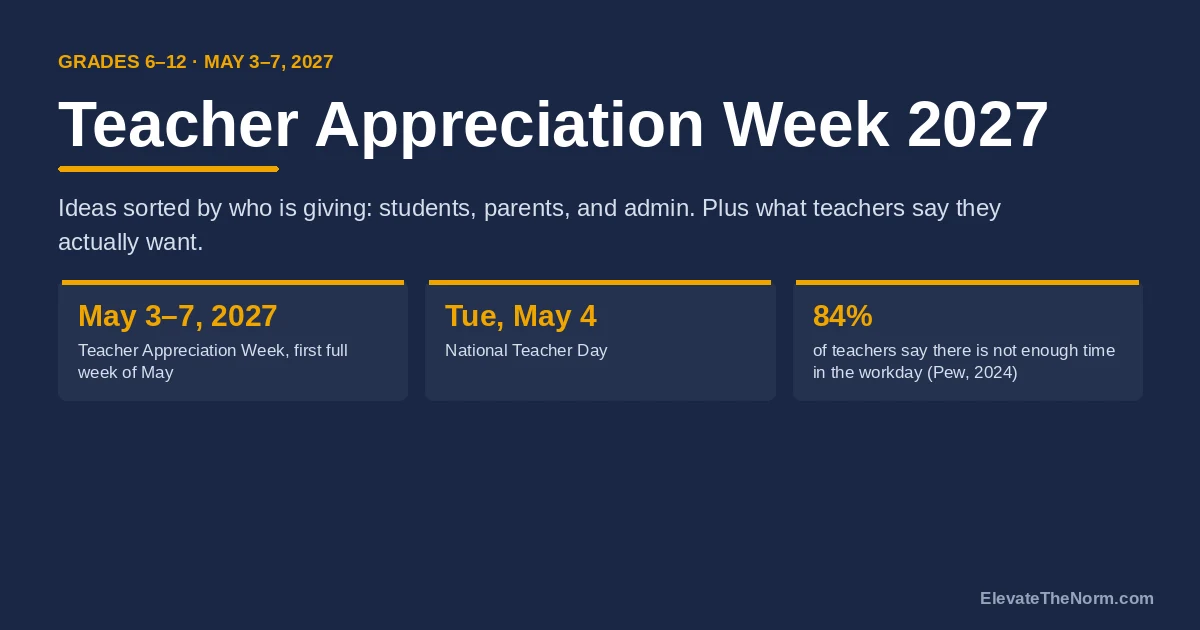
Teacher Appreciation Week 2027 will take place during the school week of Monday, May 3, through Friday, May 7, with National Teacher Day falling on Tuesday, May 4.
For secondary schools, planning early can make the difference between a meaningful celebration and another last-minute activity squeezed into an already demanding week.
Schools preparing for teacher appreciation week 2027 should begin organizing during fall 2026, giving students, parents, and administrators enough time to show their appreciation without adding to teachers’ workloads.
When Is Teacher Appreciation Week 2027?
Teacher Appreciation Week 2027 runs from Monday, May 3, through Friday, May 7, 2027, covering the first full school week of May.
National Teacher Day is Tuesday, May 4, 2027. The National Education Association (NEA) observes National Teacher Day on the Tuesday of the first full week of May, while the National PTA has a longstanding tradition of celebrating teachers during that week.
The National PTA lists May 2–8, 2027, as the broader Sunday-through-Saturday observance. For most schools, however, the practical celebration takes place during the five school days from May 3 through May 7.
These dates matter because they fall during one of the busiest periods of the academic year, particularly for middle and high school educators managing examinations, student progress, and end-of-year responsibilities.
Why Secondary Teachers Get Overlooked
Teacher appreciation often looks different in elementary schools. Students generally spend much of the day with one primary classroom teacher, and parent volunteers or room parents frequently help organize celebrations.
Middle and high schools operate differently.
A secondary student might see six or seven teachers throughout the school day, each responsible for a different subject. Families may know some of those teachers well but have limited contact with others.
Without an established room-parent system, appreciation activities can lack a clear organizer. A few teachers receive gifts and notes, while others quietly finish the week with little recognition.
This doesn’t necessarily mean families or students care less. The structure of secondary education simply makes coordinated appreciation more difficult.
Elective teachers, special education teachers, intervention specialists, and educators who teach across several grade levels can be particularly easy to miss.
Every teacher contributes to a student’s education, even when that contribution happens during only one class period each day.
A thoughtful appreciation plan should reflect that reality.
Why Schools Should Plan in the Fall
May may seem far away when a new school year begins, but secondary educators know how quickly the academic calendar fills up.
State testing windows frequently occur during the spring, although exact schedules vary by state and district. In 2027, the College Board has scheduled the first week of Advanced Placement (AP) exams for May 3–7, directly overlapping Teacher Appreciation Week.
That means some high school teachers will be preparing students for exams, coordinating testing procedures, adjusting classroom schedules, and managing the usual demands of teaching.
Adding an elaborate appreciation event at the last minute may create more stress than enjoyment.
Starting in fall 2026 gives schools time to establish a modest budget, recruit volunteers, collect teacher preferences, and review testing schedules.
It also allows administrators to identify which activities are realistic without interrupting instruction or placing additional responsibilities on teachers.
The purpose of planning early isn’t to create a bigger celebration. It’s to make appreciation easier for everyone involved.
What Teachers Actually Need
A thoughtful thank-you can mean a great deal to an educator. But recognizing teachers also means understanding the demands of their work.
A 2024 Pew Research Center report, What’s It Like To Be a Teacher in America Today?, provides valuable insight into the daily experiences of American public school educators.
According to the survey:
-
84% of public K–12 teachers said they did not have enough time during regular work hours to complete responsibilities such as grading, lesson planning, paperwork, and answering emails.
-
77% of teachers reported that their jobs were stressful often or extremely often.
The findings came from a nationally representative survey of 2,531 public K–12 teachers conducted in 2023.
These numbers reveal something important about teacher appreciation. While gifts and celebrations are thoughtful gestures, many educators also need manageable workloads, protected planning time, and practical support.
A teacher who receives a kind note and an uninterrupted planning period may appreciate those gestures more than an elaborate celebration that requires additional preparation.
Meaningful appreciation should recognize teachers’ contributions without asking them to do more work.
How Students Can Show Appreciation
Students have one of the most meaningful opportunities to recognize teachers because they experience the impact of teaching firsthand.
A handwritten note is a simple place to start. Rather than writing a generic thank-you message, students can mention something specific.
For example, a student might thank a history teacher for making a difficult topic easier to understand or recognize a math teacher who stayed after class to explain a challenging concept.
Specific appreciation feels personal because it shows that someone noticed the effort.
Students should also consider thanking former teachers. A middle school teacher may never know that a former student still remembers a conversation, lesson, or piece of advice several years later.
Sending a short note to that teacher can be especially meaningful.
Appreciation should extend beyond classroom teachers as well. School counselors, librarians, paraprofessionals, instructional aides, and other support staff play important roles in students’ lives.
Students don’t need expensive gifts or complicated projects. A thoughtful message, a respectful conversation, or a sincere expression of gratitude can make a difference.
How Parents Can Help
Parents and families can support Teacher Appreciation Week without organizing large events or spending significant amounts of money.
One particularly effective gesture is emailing the principal and copying the teacher.
A parent might describe how an educator helped their child develop confidence, improve academically, or feel more comfortable at school. Sharing that feedback with school leadership provides recognition that goes beyond a private thank-you.
Parents can also help restock classroom supplies.
Many classrooms regularly need pencils, tissues, paper, markers, and other everyday materials. Instead of assuming what a teacher needs, families can ask for a short supply list or coordinate with the school’s parent organization.
Before purchasing gift cards or other presents, parents should check district gift policies. Some schools limit the value or types of gifts employees may accept.
Families should also remember that their children have multiple teachers. A student who attends seven classes each day benefits from seven different educators, not only the teacher of their favorite subject.
Appreciation should be thoughtful, affordable, and available to every family that wants to participate.
How Administrators Can Make a Difference
School administrators are in a unique position to provide something many teachers need but rarely receive enough of: time.
Recognition from leadership matters, but practical changes to the workday can be equally valuable.
Administrators might arrange appropriate coverage for hallway or lunch duties, allowing teachers a break from responsibilities outside instruction.
Another option is canceling a nonessential faculty meeting during Teacher Appreciation Week and giving that time back to teachers.
Protecting planning periods can also communicate respect for the work that takes place outside classroom instruction.
Teachers use those periods to prepare lessons, assess student work, communicate with families, and respond to individual student needs. Avoiding unnecessary interruptions allows them to focus on those responsibilities.
Administrators can also recognize teachers through personalized notes that acknowledge specific contributions to their departments, students, or school communities.
However, recognition should never become another mandatory activity.
An appreciation breakfast that requires teachers to arrive early or a celebration that interrupts their planning time may miss the point entirely.
The best administrative gestures combine sincere recognition with genuine consideration for teachers’ schedules.
A Simple Five-Day Plan
Teacher Appreciation Week does not need an elaborate theme or expensive activities to feel meaningful.
A straightforward plan can give everyone an opportunity to participate while respecting instructional time.
Monday, May 3 — Student Appreciation
Students write personal thank-you notes to current teachers. School leaders can provide a convenient way to deliver messages without interrupting classes.
Tuesday, May 4 — National Teacher Day
Families send appreciation emails, and administrators recognize teachers through personal messages or brief acknowledgments.
Wednesday, May 5 — Classroom Support
Parent organizations coordinate approved donations of classroom supplies based on teachers’ actual needs.
Thursday, May 6 — Recognition Beyond the Classroom
Students thank former teachers, counselors, librarians, paraprofessionals, and other school staff who have supported their education.
Friday, May 7 — Time and Appreciation
Administrators provide duty coverage where feasible, protect planning periods, or eliminate a nonessential meeting.
This schedule is only a starting point. Schools should adapt activities around AP examinations, state testing, and local scheduling requirements.
The important consideration is that appreciation should fit the school day rather than disrupt it.
Building an Early Planning Timeline
Successful celebrations rarely happen without someone taking responsibility for the details.
During fall 2026, school leaders can begin by identifying a coordinator, inviting student representatives, and discussing ideas with parent organizations.
This is also a good time to ask teachers what they would actually appreciate. Some may prefer handwritten notes, while others might value classroom supplies or additional uninterrupted planning time.
By January or February 2027, schools should have a clear plan, established responsibilities, and a realistic budget.
During March and April, organizers can confirm testing schedules, arrange volunteers, communicate district gift policies, and prepare materials.
By the time May arrives, most of the organizational work should already be complete.
That preparation allows the school community to focus on thanking educators rather than rushing to solve logistical problems.
Keep Appreciation Inclusive
A successful Teacher Appreciation Week should recognize the entire teaching community.
That means looking beyond the most visible departments, the teachers who lead popular activities, or those who already receive frequent recognition.
Secondary schools should make a deliberate effort to include special education teachers, elective instructors, intervention teachers, and educators who work with students in less visible roles.
Schools should also avoid creating financial pressure for families. A student’s inability to purchase a gift should never prevent them from participating.
Free activities, including thank-you notes and personal messages, should remain central to the celebration.
At Elevate the Norm (by Clay Shumate), the emphasis is on recognizing the everyday work that teachers do and encouraging school communities to support educators in practical ways.
Appreciation becomes more meaningful when every teacher has an opportunity to feel recognized and every student has a way to participate.
Appreciation Should Last Beyond May
Teacher Appreciation Week offers a designated time to recognize educators, but meaningful support shouldn’t end when the week is over.
Teachers continue grading assignments, preparing lessons, helping students, and managing classroom responsibilities throughout the school year.
A message of encouragement in November can be just as meaningful as one delivered in May. Respecting planning time, communicating constructively, and acknowledging professional contributions should remain priorities year-round.
For administrators, this means considering how everyday policies affect teacher workloads.
For parents, it means maintaining positive communication and recognizing teachers’ efforts beyond report cards or parent conferences.
For students, it means understanding that teachers invest considerable time and attention in helping them succeed.
A single week cannot solve every challenge educators face. It can, however, encourage better habits of recognition and support.
Final Thoughts
Teacher Appreciation Week 2027 runs May 3–7, with National Teacher Day on Tuesday, May 4. For middle and high schools, those dates arrive during a particularly demanding part of the academic calendar.
That is why planning should begin in fall 2026 rather than waiting until the final weeks of April.
Students can write meaningful notes. Parents can recognize teachers through positive communication and practical classroom support. Administrators can make a lasting impression by protecting teachers’ time and reducing unnecessary responsibilities.
None of these gestures requires an expensive celebration.
What matters is recognizing that secondary teachers work with hundreds of students, often across multiple classes, while balancing responsibilities that extend far beyond classroom instruction.
The most meaningful Teacher Appreciation Week isn’t necessarily the one with the most gifts or decorations. It’s the one where teachers feel that their work is understood, respected, and genuinely appreciated.
And that kind of appreciation is worth planning for.
About the Author
Clay Shumate is a certified secondary Social Studies teacher with seven years of classroom experience and a member of the Society of Professional Journalists. Drawing on his experience in secondary education, he writes about teaching, school communities, and practical ways to recognize and support educators.
Anyone can join.
Anyone can contribute.
Anyone can become informed about their world.
"United We Stand" Click Here To Create Your Personal Citizen Journalist Account Today, Be Sure To Invite Your Friends.
Before It’s News® is a community of individuals who report on what’s going on around them, from all around the world. Anyone can join. Anyone can contribute. Anyone can become informed about their world. "United We Stand" Click Here To Create Your Personal Citizen Journalist Account Today, Be Sure To Invite Your Friends.
LION'S MANE PRODUCT
Try Our Lion’s Mane WHOLE MIND Nootropic Blend 60 Capsules
Mushrooms are having a moment. One fabulous fungus in particular, lion’s mane, may help improve memory, depression and anxiety symptoms. They are also an excellent source of nutrients that show promise as a therapy for dementia, and other neurodegenerative diseases. If you’re living with anxiety or depression, you may be curious about all the therapy options out there — including the natural ones.Our Lion’s Mane WHOLE MIND Nootropic Blend has been formulated to utilize the potency of Lion’s mane but also include the benefits of four other Highly Beneficial Mushrooms. Synergistically, they work together to Build your health through improving cognitive function and immunity regardless of your age. Our Nootropic not only improves your Cognitive Function and Activates your Immune System, but it benefits growth of Essential Gut Flora, further enhancing your Vitality.

Our Formula includes: Lion’s Mane Mushrooms which Increase Brain Power through nerve growth, lessen anxiety, reduce depression, and improve concentration. Its an excellent adaptogen, promotes sleep and improves immunity. Shiitake Mushrooms which Fight cancer cells and infectious disease, boost the immune system, promotes brain function, and serves as a source of B vitamins. Maitake Mushrooms which regulate blood sugar levels of diabetics, reduce hypertension and boosts the immune system. Reishi Mushrooms which Fight inflammation, liver disease, fatigue, tumor growth and cancer. They Improve skin disorders and soothes digestive problems, stomach ulcers and leaky gut syndrome. Chaga Mushrooms which have anti-aging effects, boost immune function, improve stamina and athletic performance, even act as a natural aphrodisiac, fighting diabetes and improving liver function. Try Our Lion’s Mane WHOLE MIND Nootropic Blend 60 Capsules Today. Be 100% Satisfied or Receive a Full Money Back Guarantee. Order Yours Today by Following This Link.


| Visits: | 1,835,166,594 |
| Stories: | 8,721,843 |
Whistler Blowers, Insiders

