

Our tax dollars are funding a slow genocide in Cuba


by JR Valrey, Editor in Chief
As our tax dollars go to the oppressive US government that is committed to enacting a slow Palestinian-like genocide on the people of Cuba, which is located in the Carribbean Sea just 90 miles from the shores of Florida, everybody reading this in the US and the Western world has a responsibility to act in whatever way appropriate so that it is understood that you are not OK with mass murder on a national scale. It should also be understood that most of us reading this are metaphorically late to the party. The US government has illegally imposed a 67-year blockade against the island because its people are determined to make decisions for themselves instead of being ruled from Washington, D.C., like so many puppet governments in the world. Ten million people have been surviving for eight months without petrol because the US government, immediately after the US military’s overthrow of President Maduro in Venezuela, imposed an oil blockade.
First Secretary Sulia Páez of the Cuban Embassy was gracious enough to sit down to set the record straight on the recent barrage of distortions, exaggerations and outright lies that the US government has been pumping through mainstream media about Cuba to justify the illegal imperialist aggression that it’s been meting out to Cuba for nearly seven decades.
JR Valrey: The US Secretary of War, Marco Rubio, recently released a 100-page document accusing the Cuban government of leading social and political movements that took place in the United States over the last six decades, naming a number of organizations and individuals. What are your thoughts?
Sulia Páez: Our government has firmly rejected the report published on July 20 by the United States Department of State on the alleged subversive influence of Cuba, considering it to be a new disinformation campaign aimed at justifying the policy of aggression, the oil siege and the coercive measures imposed against the Cuban people.
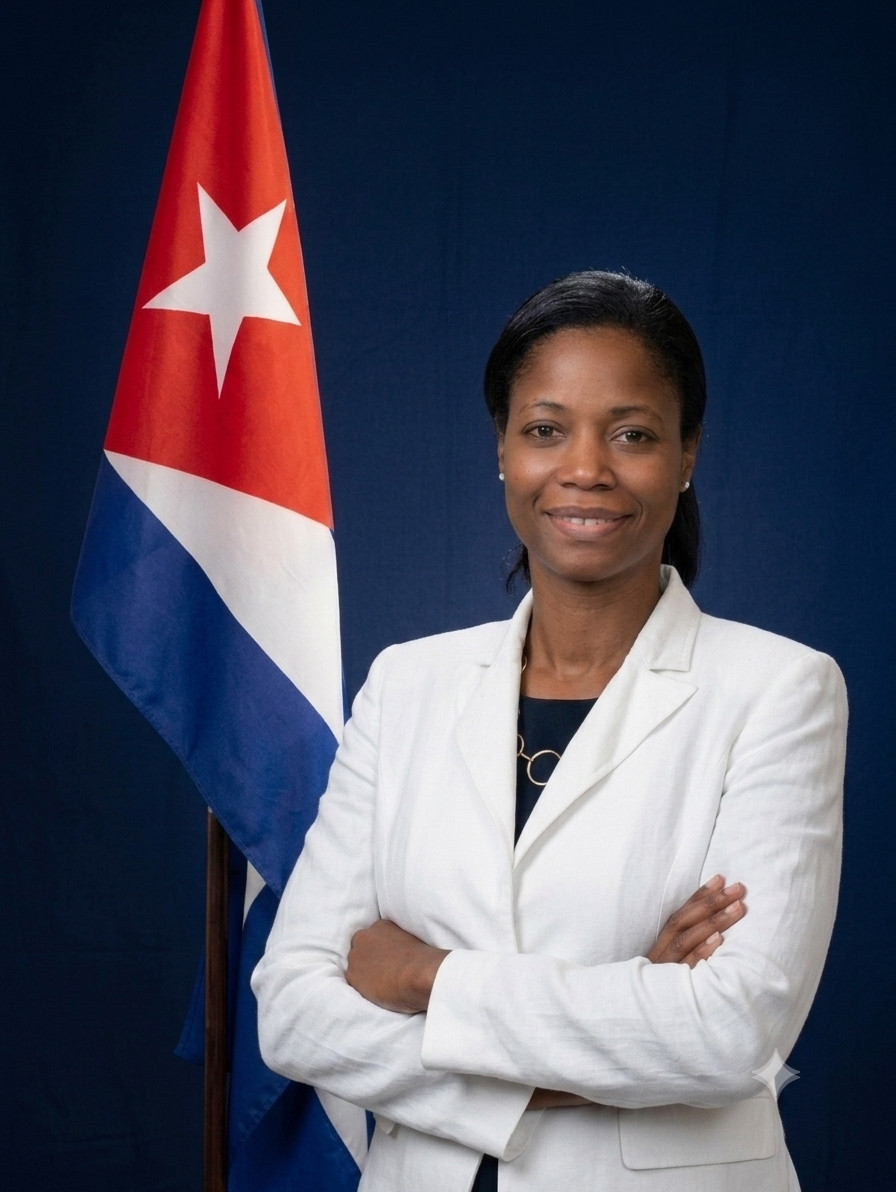
We have pointed out that the accusations made against our country are unfounded and we have stated that Cuba has been the victim of multiple terrorist attacks organized and financed from the United States.
We have also questioned the use of the concept of “left-wing terrorism” to discredit and attack social movements and expressions of solidarity, and we have denounced the repeated attempts to portray Cuba as a threat in order to legitimize new pressure actions against the island.
Likewise, we have reiterated that we will continue developing relations with the American people and institutions on the basis of respect for International Law, the Charter of the United Nations, and the Vienna Convention on Diplomatic Relations.
JR Valrey: Cuban President Diaz Carnal addressed the Cuban nation on July 26. What was his message?
Sulia Páez: In his speech at the central ceremony for the 73rd anniversary of the attack on the Moncada and Carlos Manuel de Céspedes barracks in Pinar del Río, President Miguel Díaz-Canel delivered a message of determination and resistance. He stressed that “Cuba is fighting a historic battle today” in defense of our sovereignty and our right to freely choose how we are governed. He strongly denounced the economic blockade imposed by the United States, which he described as “genocide” and a policy of maximum suffocation. He also called on our people to continue acting with audacity, creativity and resilience to build alternatives based on the country’s own strengths.
JR Valrey: With Cubans living through eight months without oil, after the US government initiated an oil blockade at the beginning of the year, can you describe the condition of ordinary people and the social institutions that they depend on, on the island?
Sulia Páez: As our President recently stated during the closing session of the Seventh Ordinary Session of the National Assembly of People’s Power, the economic and social implications of this collective punishment have been humanly unbearable.
The energy blockade has prevented the National Electric Power System from having approximately 1,400 megawatts available each day through what is known as distributed generation.
It has also led to other major hardships for Cuban families, including disruptions to water pumping systems, thereby extending the intervals between supplies of this essential resource.
Due to the shortage of fuels and lubricants, agricultural harvests have been severely affected, as has planting for the coming months. Likewise, most industrial production processes have come to a standstill.
Tourism has also been seriously impacted by the targeting of international markets, the shortage of fuel for international aviation, and threats against hotel companies operating in Cuba.
In the area of healthcare, we have witnessed how intensive care units and the increasingly limited number of surgical procedures remain under the constant threat of power outages putting patients’ lives at risk.
More than 100,000 patients are currently awaiting surgery, including 12,000 children. In addition, 5 million people living with chronic illnesses face the risk of interruptions to their life-sustaining treatments. A total of 2,888 patients are awaiting hemodialysis treatment, while 375 are waiting for the implantation of a pacemaker.
On top of that, the survival rate of children with cancer in Cuba has dropped dramatically from 85% to 65%, while the infant mortality rate has risen from 4.0 to 9.9 per 1,000 live births.
Recently, we knew that thousands of containers carrying medical supplies, food, photovoltaic equipment, spare parts, and materials needed to repair electricity-generating plants, among other essential resources for sustaining the country’s vital functions, have remained stranded in international ports. This has all been due to threats directed at shipping companies, including those transporting imports for the private sector, such as raw materials and essential consumer goods that are sold directly on the domestic market.
These are only a few examples. The effects of this policy intensify every day.
JR Valrey: Before the oil blockade was implemented, the US government already had a 67-year general blockade in place. Can you talk about that and how this has affected the lives of ordinary Cubans for generations? How has this been kept in place?
Sulia Páez: We have endured the longest-running and most severe sanctions regime in history, whose cumulative impact amounts to more than U.S. $178.7 billion. It is a policy that has affected every sphere of the daily lives of the Cuban people. As it was stated in the Deputy Assistant Secretary of State Lester Mallory’s memorandum in 1960, its purpose is to “weaken the economic life of Cuba: to bring about hunger, desperation and the overthrow of the government.”
Today, we are no longer living only under the traditional blockade that we have resisted for more than 67 years; we are now confronting the cumulative effects of that policy, along with an energy blockade. It is an act of genocide that has been maintained despite the overwhelming rejection of the international community and in defiance of the will of thousands of honorable Americans who oppose this policy.
JR Valrey: Many people on the West Coast of the US think that Cubans all look like actor Al Pacino, from the movie “Scarface” or the late Cuban leader Fidel Castro. Can you describe how Black the island’s people are?
Sulia Páez: In Cuba, we often say that we are one great “ajiaco” — a traditional Cuban stew — drawing on the characterization of our national identity made by the Cuban anthropologist and historian Fernando Ortiz. The idea is that, even though many people may have lighter skin, their ancestry may very well include African roots. We are an inclusive and racially mixed nation, where nearly 64% of the Cuban population aged 15 and older is white, nearly 26% is mulatto, and nearly 10% is Black.
From a cultural perspective, the Afro-descendant roots are a cornerstone of Cuban identity, exerting a profound influence on the country’s music, culture, religion and traditions. They also play a significant role in the spiritual life of the Cuban nation.
JR Valrey: Would you compare what is being initiated now in Cuba by the US government as a slow genocide comparable to what just took place in Palestine? Why or why not?
Sulia Páez: What I can tell you is that we are living through a war without bombs. Our President has described it as a multidimensional form of aggression with several components: an ideological one, a cultural one and a third that is media-driven.
“Ideologically, there is an attempt to impose a hegemonic way of thinking. Culturally, there is an effort to erase our identity. And all of this is being reinforced through a vast political communications strategy rooted in supremacist, capitalist and imperial interests, with an extremely high level of media manipulation and disinformation.
JR Valrey: If people would like to stay informed on US and Cuban government relations, where should they go?
Sulia Páez: You can consult the information published by the country’s main newspapers and media platforms, such as Granma and Cubadebate. You can also visit our Mission’s website and follow our official social media accounts on Facebook, Instagram, X and YouTube.
SF Bay View Editor-in-Chief JR Valrey is a veteran journalist. His work can also be heard on www.blockreportradioworld.com. He can be reached at [email protected].
The post Our tax dollars are funding a slow genocide in Cuba appeared first on San Francisco Bay View.
Source: https://sfbayview.com/2026/08/our-tax-dollars-are-funding-a-slow-genocide-in-cuba/
Anyone can join.
Anyone can contribute.
Anyone can become informed about their world.
"United We Stand" Click Here To Create Your Personal Citizen Journalist Account Today, Be Sure To Invite Your Friends.
Before It’s News® is a community of individuals who report on what’s going on around them, from all around the world. Anyone can join. Anyone can contribute. Anyone can become informed about their world. "United We Stand" Click Here To Create Your Personal Citizen Journalist Account Today, Be Sure To Invite Your Friends.
LION'S MANE PRODUCT
Try Our Lion’s Mane WHOLE MIND Nootropic Blend 60 Capsules
Mushrooms are having a moment. One fabulous fungus in particular, lion’s mane, may help improve memory, depression and anxiety symptoms. They are also an excellent source of nutrients that show promise as a therapy for dementia, and other neurodegenerative diseases. If you’re living with anxiety or depression, you may be curious about all the therapy options out there — including the natural ones.Our Lion’s Mane WHOLE MIND Nootropic Blend has been formulated to utilize the potency of Lion’s mane but also include the benefits of four other Highly Beneficial Mushrooms. Synergistically, they work together to Build your health through improving cognitive function and immunity regardless of your age. Our Nootropic not only improves your Cognitive Function and Activates your Immune System, but it benefits growth of Essential Gut Flora, further enhancing your Vitality.

Our Formula includes: Lion’s Mane Mushrooms which Increase Brain Power through nerve growth, lessen anxiety, reduce depression, and improve concentration. Its an excellent adaptogen, promotes sleep and improves immunity. Shiitake Mushrooms which Fight cancer cells and infectious disease, boost the immune system, promotes brain function, and serves as a source of B vitamins. Maitake Mushrooms which regulate blood sugar levels of diabetics, reduce hypertension and boosts the immune system. Reishi Mushrooms which Fight inflammation, liver disease, fatigue, tumor growth and cancer. They Improve skin disorders and soothes digestive problems, stomach ulcers and leaky gut syndrome. Chaga Mushrooms which have anti-aging effects, boost immune function, improve stamina and athletic performance, even act as a natural aphrodisiac, fighting diabetes and improving liver function. Try Our Lion’s Mane WHOLE MIND Nootropic Blend 60 Capsules Today. Be 100% Satisfied or Receive a Full Money Back Guarantee. Order Yours Today by Following This Link.


| Visits: | 1,831,894,492 |
| Stories: | 8,704,711 |
Whistler Blowers, Insiders

