

10 Toxic Plants That Could Kill You in Your Own City

The ambulance didn’t arrive because of a car crash. There was no house fire, no violent storm, and no dangerous animal attack. Instead, a routine afternoon of gardening ended with blistered skin, severe pain, and an emergency trip to the hospital after a homeowner unknowingly brushed against a plant that had been growing beside the fence for years. Incidents like this rarely make national headlines, yet poison control centers receive thousands of calls every year involving toxic plants that people encounter in parks, neighborhoods, schoolyards, and even their own backyards.
FEMA Emergency Alert! Hidden Terrible Situations Exposed- Watch the video below to find out the most shocking details!!!
With a whopping 1.03 million home invasions occurring every year in just the U.S. alone, there’s no reason you shouldn’t have a plan of action ready to utilize in case you become one of these unfortunate victims.
So pay chose attention because this video will change your life forever for the good!

That is what makes these plants so unsettling. They don’t hide in remote rainforests or isolated mountain ranges. They grow where children play, where people walk their dogs every morning, and where families gather for weekend picnics. Some have flowers beautiful enough to decorate city gardens. Others produce berries that resemble harmless fruit. A few can cause painful chemical burns after only a brief touch, while others contain toxins powerful enough to affect the heart or nervous system if accidentally eaten. Serious poisonings are uncommon, but they do happen—and they almost always begin with the same sentence: “I had no idea that plant was dangerous.”
Urban survival isn’t only about preparing for blackouts, floods, or natural disasters. Sometimes, being prepared simply means recognizing a hidden danger before it turns into a medical emergency. The following plants are among the most hazardous species that can be found growing in or around cities across North America and Europe. Learning to identify them could spare you a painful injury—or, in rare cases, save someone’s life.
1. Giant Hogweed (Heracleum mantegazzianum) — The Plant That Can Burn Your Skin Without Fire
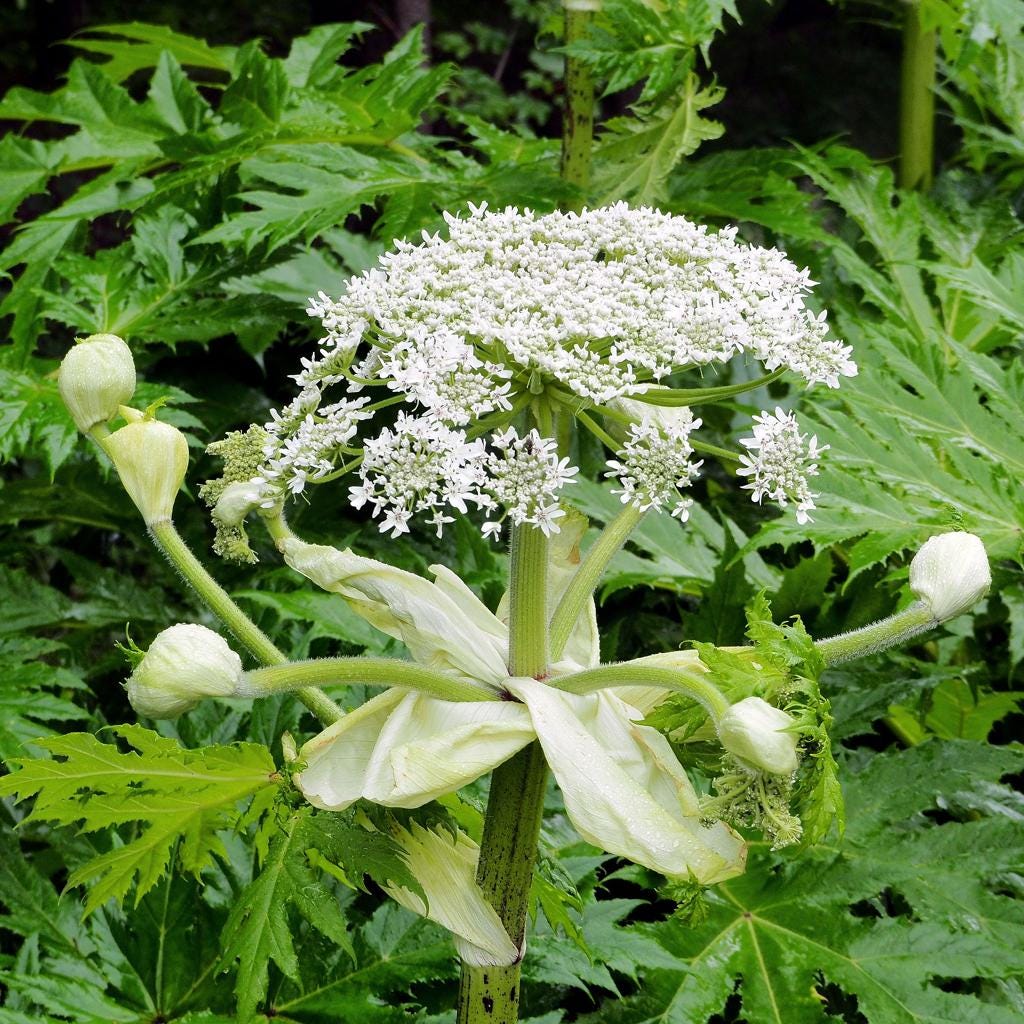
At first glance, Giant Hogweed looks more like something that belongs in a botanical garden than a list of dangerous plants. It can grow over 15 feet (4.5 meters) tall, producing enormous umbrella-shaped clusters of white flowers that attract photographers and nature lovers alike. In many cities, it spreads along riverbanks, abandoned lots, roadsides, and even public walking trails.
The danger doesn’t come from its appearance—it comes from its sap. Hidden inside the stems and leaves are chemicals called furanocoumarins, compounds that become highly reactive when exposed to sunlight. If the sap touches your skin and that area is later exposed to ultraviolet light, the result can be severe chemical burns, painful blisters, and scars that may remain sensitive to sunlight for months or even years. If the sap reaches the eyes, it can cause serious injury and, in severe cases, permanent vision damage.
What makes Giant Hogweed particularly dangerous is that many people don’t realize anything is wrong until several hours after contact. The burning sensation often develops later, giving victims little warning that the damage has already begun.
Survival Tip: Never touch a giant umbrella-shaped plant with thick hollow stems marked by purple blotches. If you accidentally come into contact with it, immediately wash the affected skin with soap and cold water, keep it completely out of direct sunlight, and seek medical attention if blistering develops.
2. Poison Hemlock (Conium maculatum) — The Deadly Look-Alike
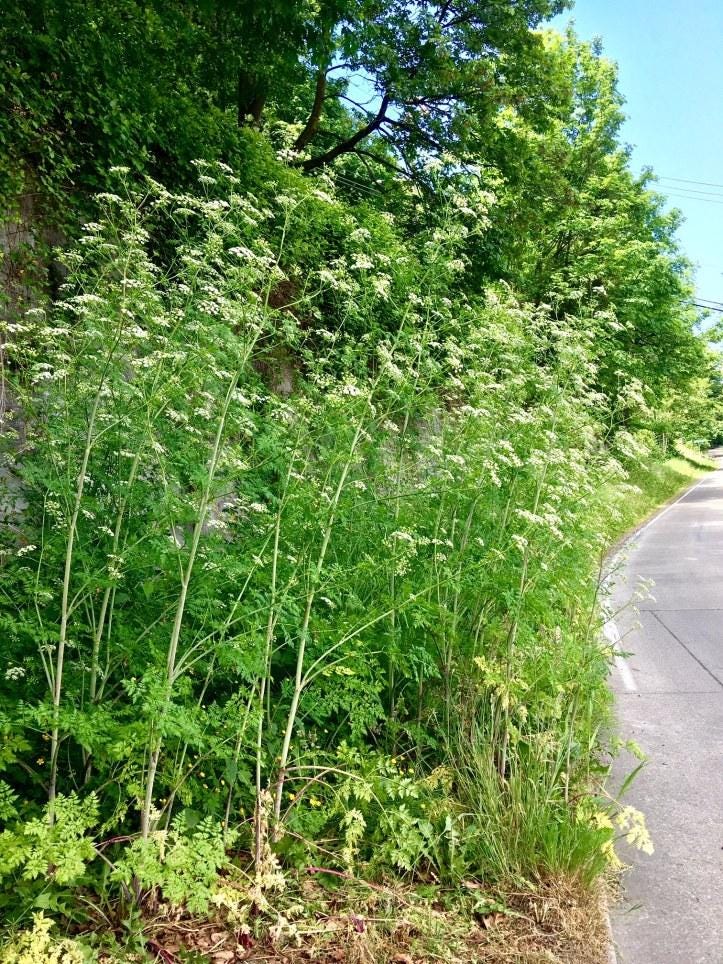
Imagine collecting what you believe are harmless wild herbs for dinner, only to discover hours later that you’ve picked one of the most poisonous plants in North America and Europe. That exact mistake has happened countless times because Poison Hemlock closely resembles edible members of the carrot family, including wild carrot and parsley.
The plant often grows where few people expect it—beside roads, railway tracks, drainage ditches, empty construction lots, and neglected green spaces throughout many cities. Its smooth stem, covered with distinctive purple blotches, is one of the easiest ways to identify it, but that detail is often overlooked by inexperienced foragers.
Every part of Poison Hemlock contains powerful neurotoxins. If ingested, the toxins interfere with communication between nerves and muscles, potentially leading to weakness, paralysis, and respiratory failure. Historically, this is the same plant associated with the execution of the Greek philosopher Socrates, making it one of history’s most infamous natural poisons.
Survival Tip: Never eat wild plants simply because they resemble something edible. One mistaken identification can have devastating consequences.
3. Oleander (Nerium oleander) — The Beautiful Shrub With a Dangerous Secret
If beauty were a warning sign, Oleander would fool almost everyone.
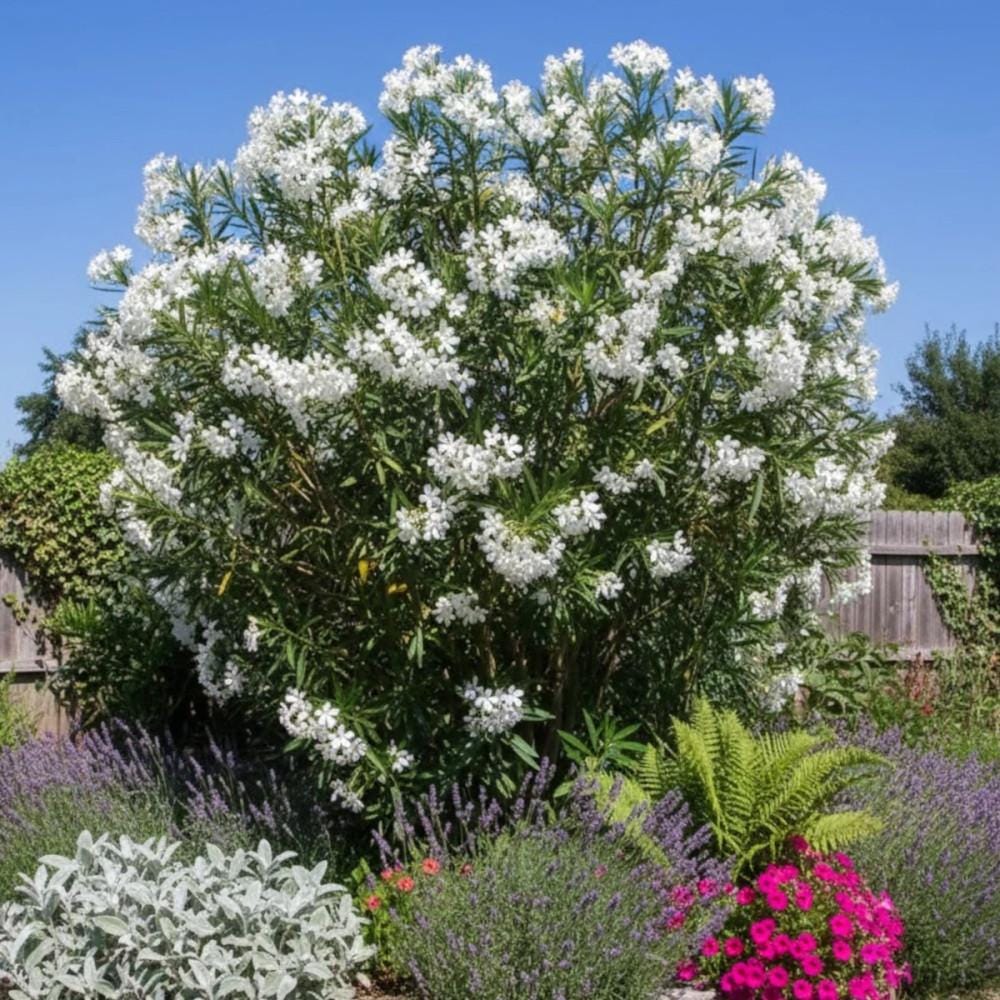
Its vibrant pink, white, red, and yellow flowers have made it one of the world’s most popular ornamental shrubs. It decorates hotel entrances, city parks, residential neighborhoods, highway medians, and public gardens across warm climates. Thousands of people walk past it every day without giving it a second glance.
Yet behind those colorful blossoms lies one of the most toxic ornamental plants commonly found in urban landscapes.
Every leaf, flower, stem, and root contains cardiac glycosides—compounds capable of interfering with the electrical signals that control the human heart. Ingesting even small amounts may lead to nausea, vomiting, dizziness, slowed heart rate, dangerous heart rhythm disturbances, and, in severe poisonings, life-threatening complications.
Although accidental fatalities are rare, poisoning incidents involving children and pets continue to be reported because the attractive flowers make the plant appear completely harmless.
Survival Tip: Never use Oleander branches for cooking fires or barbecue fuel. Even handling large amounts of cut branches should be done with gloves, and children should be taught never to place its flowers or leaves in their mouths.
4. Deadly Nightshade (Atropa belladonna) — The Berry That Has Fooled Generations
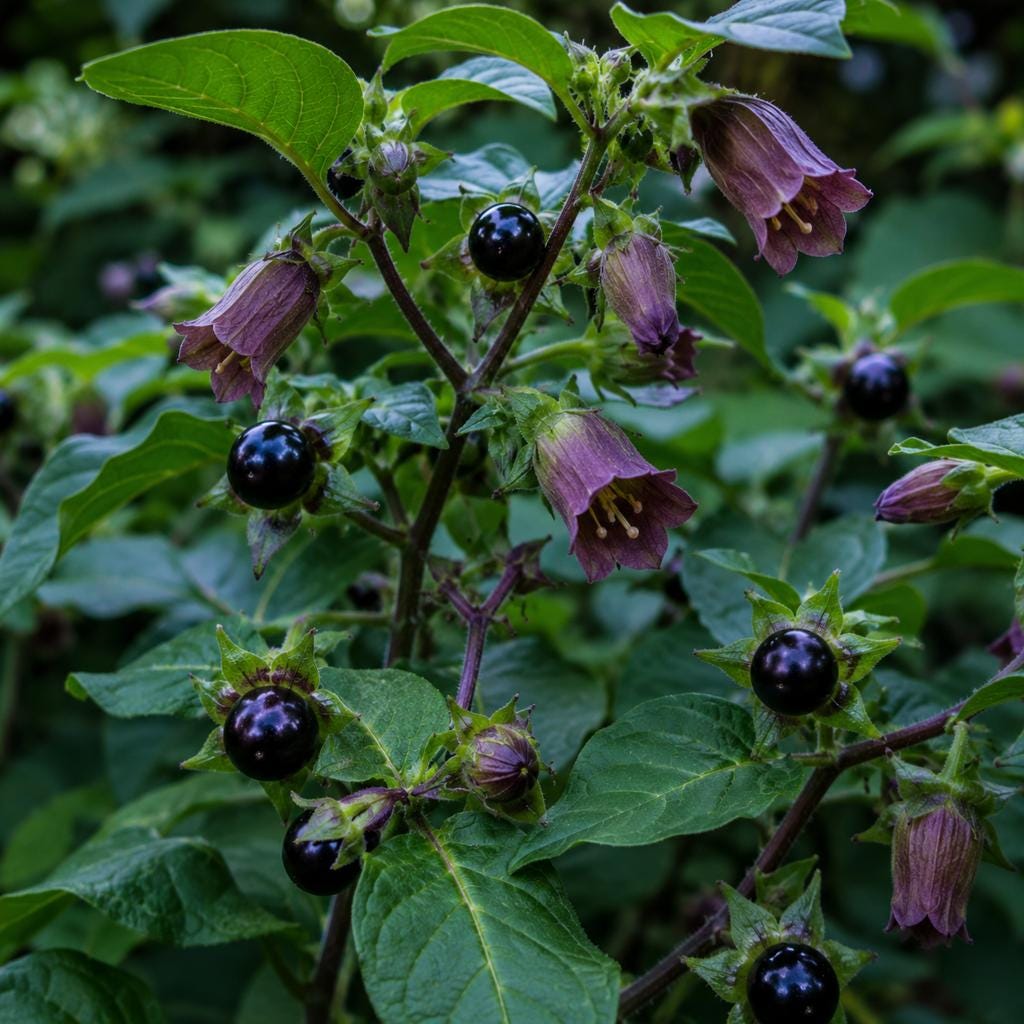
Few poisonous plants have earned a reputation as chilling as Deadly Nightshade. Its very name sounds as though it belongs in a gothic novel, yet this species still grows throughout parts of Europe and can occasionally be found in neglected gardens, woodland edges, abandoned properties, and overgrown urban green spaces. Because it prefers disturbed ground and partial shade, it sometimes appears surprisingly close to residential neighborhoods.
Its greatest deception is its fruit. The shiny, dark-purple berries look remarkably similar to edible cherries or blueberries, especially to a child who has never seen the plant before. They appear inviting, almost irresistible, which explains why accidental poisonings continue to occur despite centuries of warnings.
The toxins found in Deadly Nightshade attack the nervous system by interfering with normal nerve signaling. Early symptoms often include an intensely dry mouth, blurred vision, difficulty swallowing, and an unusually rapid heartbeat. As poisoning progresses, victims may become confused, restless, and disoriented. In more severe cases, hallucinations, seizures, dangerously high body temperature, and respiratory complications can develop, making immediate medical attention essential.
What makes this plant particularly frightening is how little is required to cause serious illness. Children are especially vulnerable because of their smaller body size, meaning even a few berries may result in severe poisoning.
Survival Tip: Bright, attractive berries growing on an unfamiliar plant should never be tasted—no matter how harmless they appear. If someone is suspected of swallowing any part of Deadly Nightshade, contact emergency medical services or your local poison center immediately instead of waiting for symptoms to worsen.
5. Castor Bean Plant (Ricinus communis) — One of Nature’s Most Powerful Toxins Hidden in Plain Sight
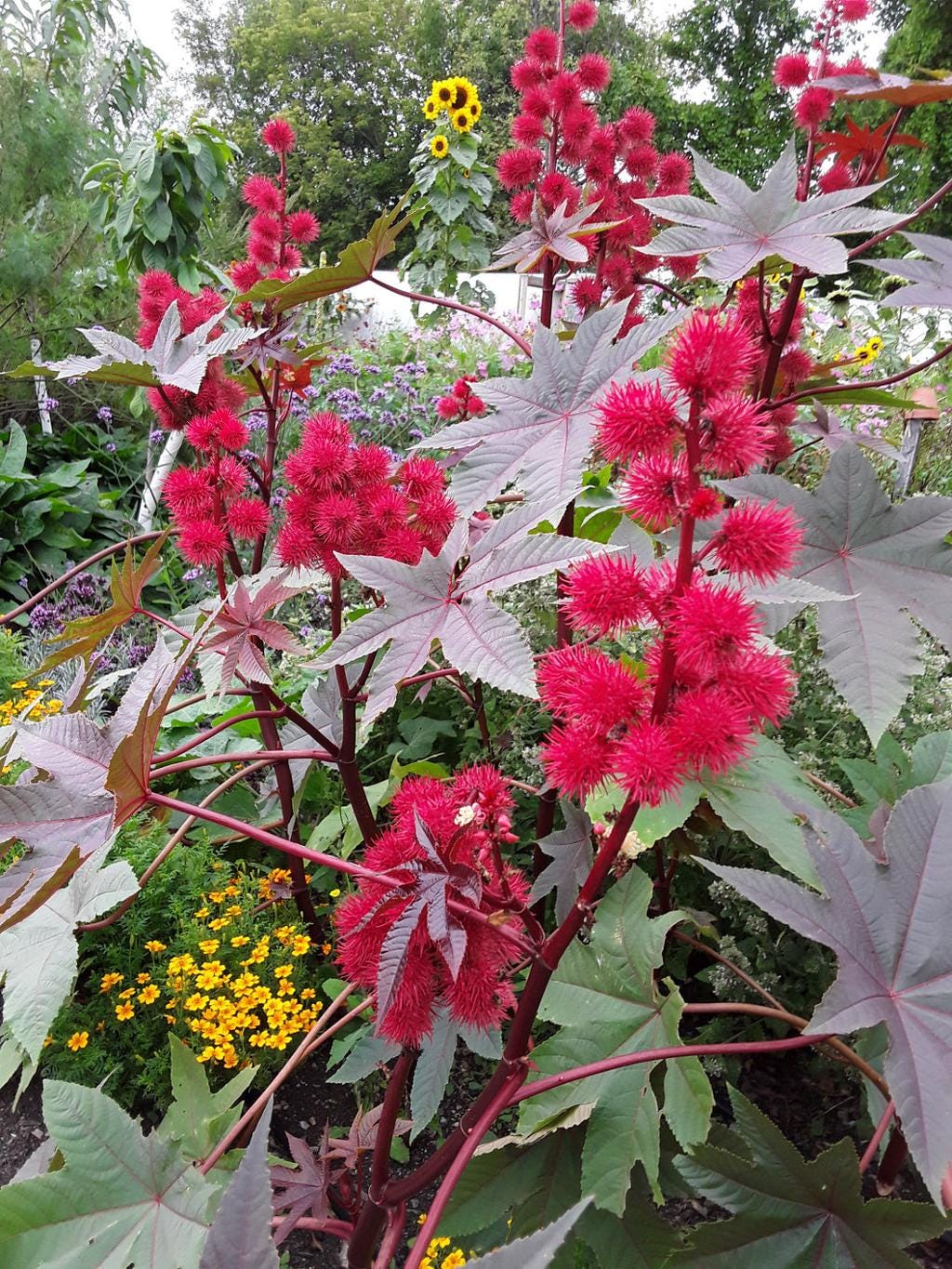
It looks more like an exotic tropical plant than a serious hazard. With its enormous star-shaped leaves and striking red seed pods, the Castor Bean Plant has become a popular ornamental species in parks, botanical gardens, and private landscapes around the world. Many homeowners grow it simply because it is beautiful, never realizing that it produces one of the most infamous natural toxins known to science.
Inside each seed is ricin, a highly toxic protein. It’s important to understand that the danger generally arises when the seeds are chewed or otherwise damaged, releasing the toxin. Simply walking past the plant or brushing against its leaves is not considered dangerous.
If enough ricin is absorbed after ingestion, it can severely damage cells throughout the body. Initial symptoms usually include intense stomach pain, vomiting, and severe diarrhea, often leading to dangerous dehydration. In serious cases, the toxin may affect multiple organs, including the liver and kidneys, making rapid medical treatment critical.
Fortunately, accidental poisonings remain relatively uncommon because the hard outer shell of the seed often passes through the digestive system intact if swallowed whole. The real danger occurs when curious children—or even pets—bite into the attractive, bean-like seeds.
Survival Tip: If you grow ornamental plants, learn exactly what they are. A decorative garden can sometimes hide species that should never be within easy reach of small children or animals. Removing the seed pods before they mature is one of the simplest ways to reduce the risk.
By now, a pattern has probably become clear. None of these plants announces itself as a threat. They don’t grow fangs, produce warning sounds, or display bright hazard labels. Instead, they rely on something much more effective: familiarity. Once a poisonous species becomes part of the everyday landscape, people stop noticing it altogether.
That is precisely why survival experts place so much emphasis on awareness. In an emergency, knowledge often matters more than equipment. A first-aid kit is invaluable, but recognizing a dangerous plant before touching it—or before a child picks its berries—can prevent the emergency from happening in the first place.
The remaining plants on this list are, if anything, even more deceptive. Some are common garden favorites admired for their spectacular flowers, while others quietly grow along roadsides and vacant lots where thousands of people pass them every day without ever suspecting the danger they conceal.
6. Foxglove (Digitalis purpurea) — The Flower That Can Stop a Heart
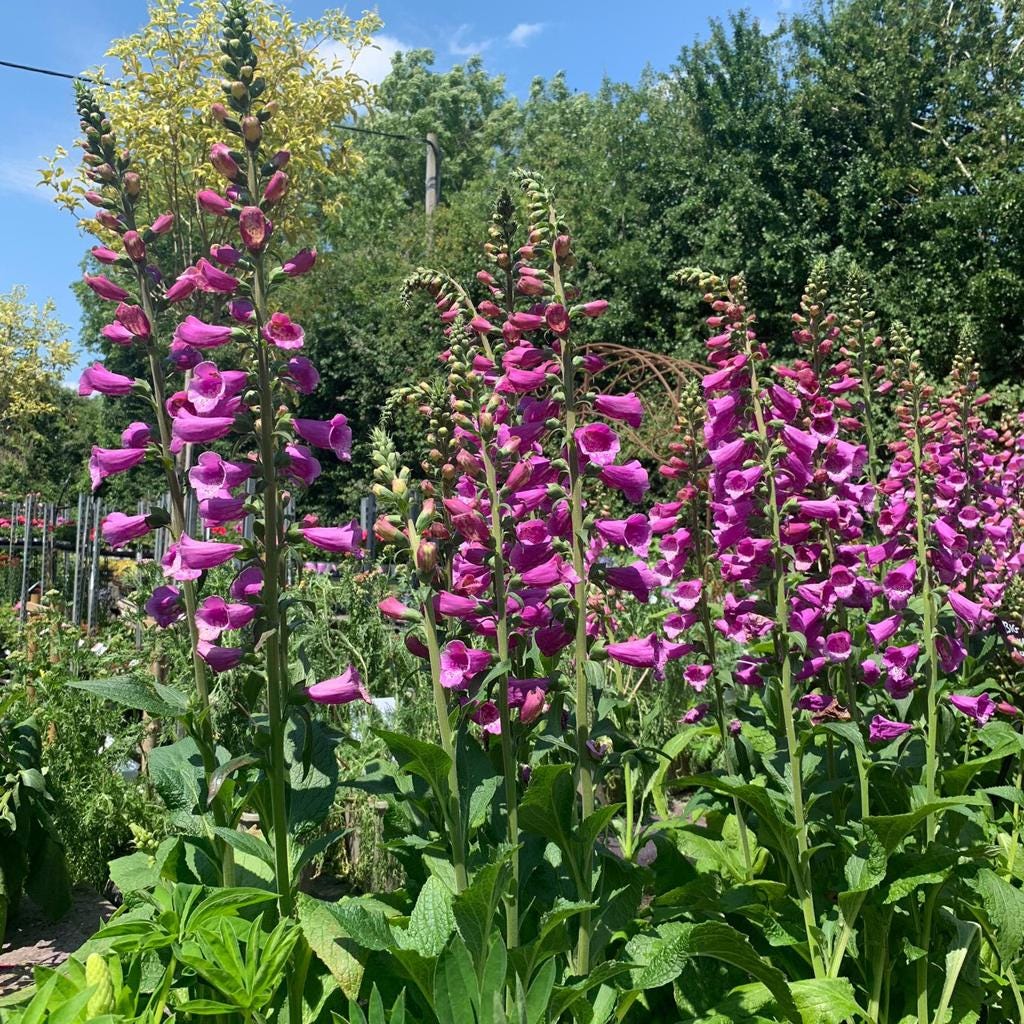
Few garden flowers are as breathtaking as Foxglove. Its tall spikes covered in elegant purple, pink, or white bell-shaped blossoms have made it a favorite among gardeners for centuries. It frequently appears in botanical gardens, residential landscapes, cottage gardens, and even public parks, where its striking appearance attracts photographers and pollinators alike.
What many people don’t realize is that every part of the plant contains naturally occurring cardiac glycosides—the same family of compounds used in carefully controlled heart medications. In the right medical dose, these chemicals can help certain patients. In the wrong amount, they can become extremely dangerous.
Accidentally chewing the leaves or flowers may trigger nausea, vomiting, dizziness, blurred vision, and an irregular heartbeat. Larger exposures can interfere with the heart’s electrical activity, creating a potentially life-threatening emergency that requires immediate medical care.
The irony is difficult to ignore. One of the world’s most beautiful ornamental flowers also contains chemicals powerful enough to disrupt the organ that keeps us alive.
Survival Tip: Never assume that an attractive flowering plant is safe simply because it grows in a public garden. Landscaping decisions are often based on appearance—not toxicity.
7. Jimsonweed (Datura stramonium) — The Hallucinogenic Plant That Can Turn Reality Into Chaos
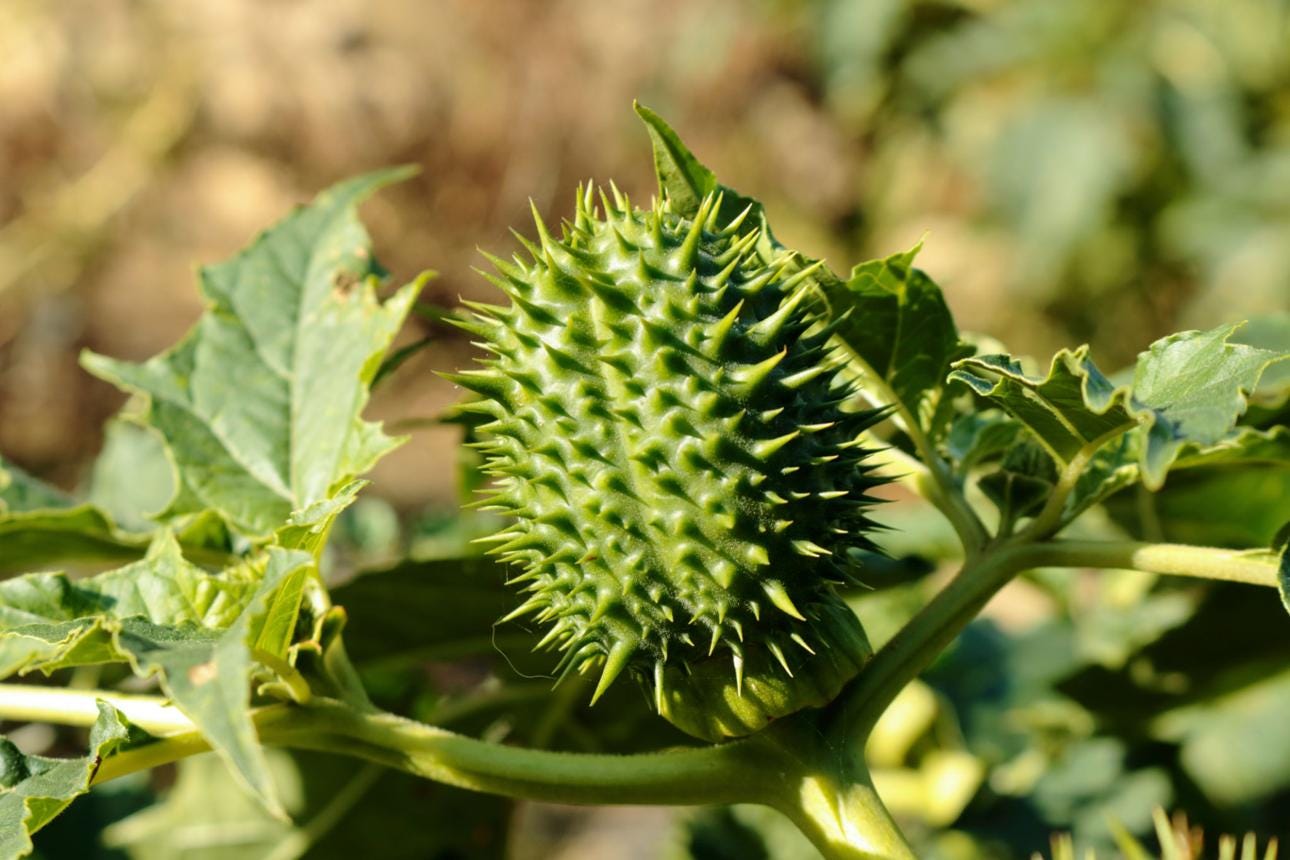
Construction sites, abandoned lots, railway embankments, neglected fields, and vacant urban land often share one thing in common: disturbed soil. That happens to be the exact environment where Jimsonweed thrives.
Its large trumpet-shaped flowers may look elegant, but the real warning sign is its spiky seed capsule—a strange, thorn-covered sphere that resembles something from another planet. Hidden inside are hundreds of seeds containing potent alkaloids capable of severely disrupting the brain and nervous system.
Throughout history, Jimsonweed has earned a notorious reputation because people intentionally experimented with it, believing its hallucinogenic effects would produce spiritual experiences. Instead, many ended up in emergency departments suffering from extreme confusion, terrifying hallucinations, dangerously elevated body temperature, rapid heart rate, and complete disorientation.
Unlike many toxins that mainly affect the digestive system, Jimsonweed attacks perception itself. Victims often lose the ability to distinguish reality from imagination, making them vulnerable to accidents, dehydration, or self-inflicted injuries.
Survival Tip: Never experiment with unknown plants because of stories found online or on social media. Natural does not mean safe, and Jimsonweed has been responsible for countless preventable poisonings.
8. English Yew (Taxus baccata) — The Tree That Hides Its Danger Behind Bright Red Berries
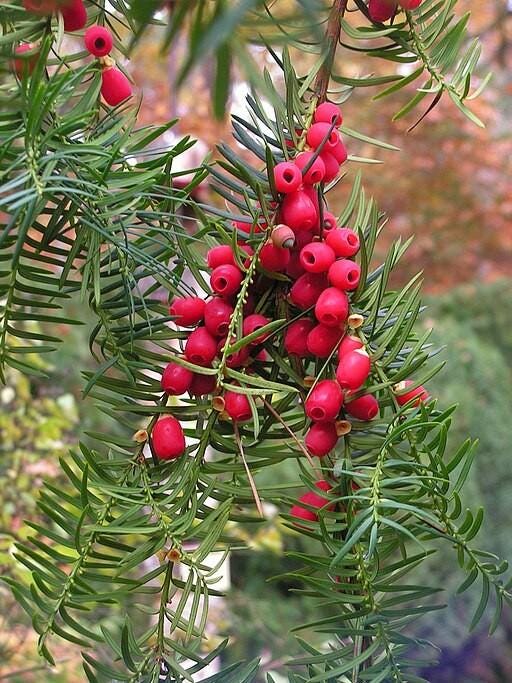
Walk through an old cemetery, a historic churchyard, or a carefully landscaped park, and there’s a good chance you’ll encounter an English Yew. These evergreen trees have been planted across Europe for centuries because of their beauty, longevity, and ability to form dense ornamental hedges.
Their appearance gives almost no hint of the danger they contain.
The soft red berry-like structure often catches people’s attention, but it is the seed hidden inside—and nearly every other part of the tree—that contains toxic compounds known as taxines. These chemicals can interfere with the normal electrical activity of the heart, potentially leading to serious cardiac complications if ingested.
Fortunately, accidental poisonings are relatively rare, but when they do occur, they are considered medical emergencies because symptoms can progress rapidly.
The tree’s greatest defense is its ability to appear completely harmless. It has quietly become part of countless urban landscapes, where thousands of people walk past it every day without recognizing its toxic nature.
Survival Tip: Teach children never to eat berries or seeds from ornamental trees, even if they appear edible. A beautiful landscape should never be mistaken for a safe food source.
9. Monkshood (Aconitum napellus) — The Flower Once Feared by Ancient Hunters
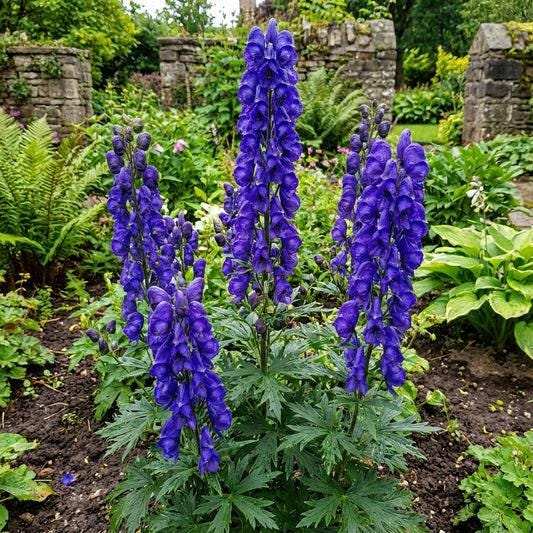
Long before synthetic poisons existed, hunters and warriors in parts of Europe and Asia were already aware of Monkshood’s deadly reputation. Historical accounts describe extracts from the plant being used to poison arrow tips because of the extraordinary potency of its natural toxins.
Today, Monkshood survives as an ornamental garden flower admired for its deep blue blossoms and elegant appearance.
The contrast is remarkable.
One of the most visually stunning flowers found in decorative gardens also contains aconitine, a toxin capable of affecting both the nervous system and the heart. Even handling damaged plant material may produce tingling or numbness in sensitive individuals, while accidental ingestion can quickly become life-threatening.
Thankfully, poisonings are uncommon because the plant has an intensely unpleasant taste. Nevertheless, accidental exposure remains possible, particularly among children or inexperienced gardeners.
Survival Tip: Always wear gloves when pruning unfamiliar ornamental plants. Identifying what grows in your own garden is one of the simplest—and most overlooked—forms of emergency preparedness.
10. Rosary Pea (Abrus precatorius) — The Tiny Seed That Commands Respect
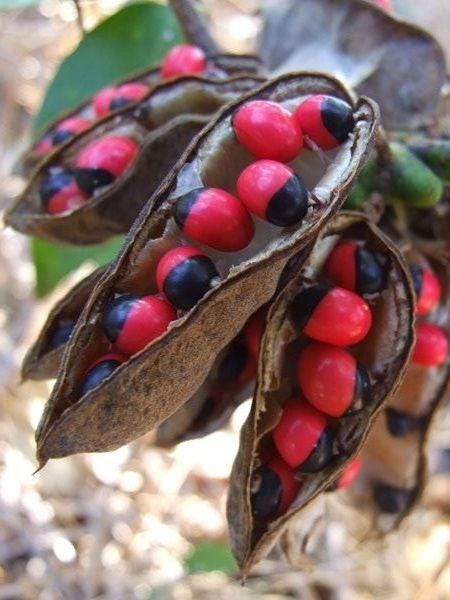
It would be easy to mistake these glossy red-and-black seeds for children’s beads or decorative jewelry. In fact, they have been used in necklaces, bracelets, and crafts for generations because of their almost perfect appearance.
Yet inside each seed lies abrin, one of the most potent plant toxins known.
There is an important detail, however: intact seeds are generally much less hazardous because of their hard outer coating. The greatest risk arises when a seed is chewed, broken, or drilled, allowing the toxin to escape. In those circumstances, severe poisoning can occur and requires immediate emergency care.
The Rosary Pea serves as a reminder that nature often hides extraordinary danger inside ordinary-looking objects. A seed small enough to fit on a fingertip can demand the same respect as far larger and more obvious hazards.
Survival Tip: Avoid decorative jewelry or crafts made from unidentified natural seeds, especially if children might handle or place them in their mouths.
Final Thoughts: The Greatest Survival Tool Is Awareness
The next time you walk through your neighborhood, visit a city park, or admire the flowers outside a public building, take a closer look. The greatest threat isn’t that these plants are everywhere—it’s that they blend in so well that they become invisible. Familiarity creates a false sense of safety, encouraging people to assume that anything growing in a maintained landscape must be harmless.
Fortunately, the solution isn’t fear—it’s knowledge.
You don’t need to memorize hundreds of plant species or become a botanist overnight. Simply recognizing a handful of the most hazardous plants common to your region can dramatically reduce the risk of accidental exposure. Teach children never to eat berries or leaves they can’t identify, wear gloves when handling unfamiliar plants, and remember that “natural” is not always synonymous with “safe.”
In survival, small decisions often determine major outcomes. Knowing how to identify a poisonous plant may never seem as exciting as learning wilderness skills or building an emergency kit, but in the moment it matters most, that single piece of knowledge could prevent a serious injury—or even save a life.
Anyone can join.
Anyone can contribute.
Anyone can become informed about their world.
"United We Stand" Click Here To Create Your Personal Citizen Journalist Account Today, Be Sure To Invite Your Friends.
Before It’s News® is a community of individuals who report on what’s going on around them, from all around the world. Anyone can join. Anyone can contribute. Anyone can become informed about their world. "United We Stand" Click Here To Create Your Personal Citizen Journalist Account Today, Be Sure To Invite Your Friends.
LION'S MANE PRODUCT
Try Our Lion’s Mane WHOLE MIND Nootropic Blend 60 Capsules
Mushrooms are having a moment. One fabulous fungus in particular, lion’s mane, may help improve memory, depression and anxiety symptoms. They are also an excellent source of nutrients that show promise as a therapy for dementia, and other neurodegenerative diseases. If you’re living with anxiety or depression, you may be curious about all the therapy options out there — including the natural ones.Our Lion’s Mane WHOLE MIND Nootropic Blend has been formulated to utilize the potency of Lion’s mane but also include the benefits of four other Highly Beneficial Mushrooms. Synergistically, they work together to Build your health through improving cognitive function and immunity regardless of your age. Our Nootropic not only improves your Cognitive Function and Activates your Immune System, but it benefits growth of Essential Gut Flora, further enhancing your Vitality.

Our Formula includes: Lion’s Mane Mushrooms which Increase Brain Power through nerve growth, lessen anxiety, reduce depression, and improve concentration. Its an excellent adaptogen, promotes sleep and improves immunity. Shiitake Mushrooms which Fight cancer cells and infectious disease, boost the immune system, promotes brain function, and serves as a source of B vitamins. Maitake Mushrooms which regulate blood sugar levels of diabetics, reduce hypertension and boosts the immune system. Reishi Mushrooms which Fight inflammation, liver disease, fatigue, tumor growth and cancer. They Improve skin disorders and soothes digestive problems, stomach ulcers and leaky gut syndrome. Chaga Mushrooms which have anti-aging effects, boost immune function, improve stamina and athletic performance, even act as a natural aphrodisiac, fighting diabetes and improving liver function. Try Our Lion’s Mane WHOLE MIND Nootropic Blend 60 Capsules Today. Be 100% Satisfied or Receive a Full Money Back Guarantee. Order Yours Today by Following This Link.


| Visits: | 1,828,066,477 |
| Stories: | 8,684,834 |
Whistler Blowers, Insiders

