

A Warrant in Arctic Waters: The Hunt for Russia’s Svalbard Assets

Freddie Ponton
21st Century Wire
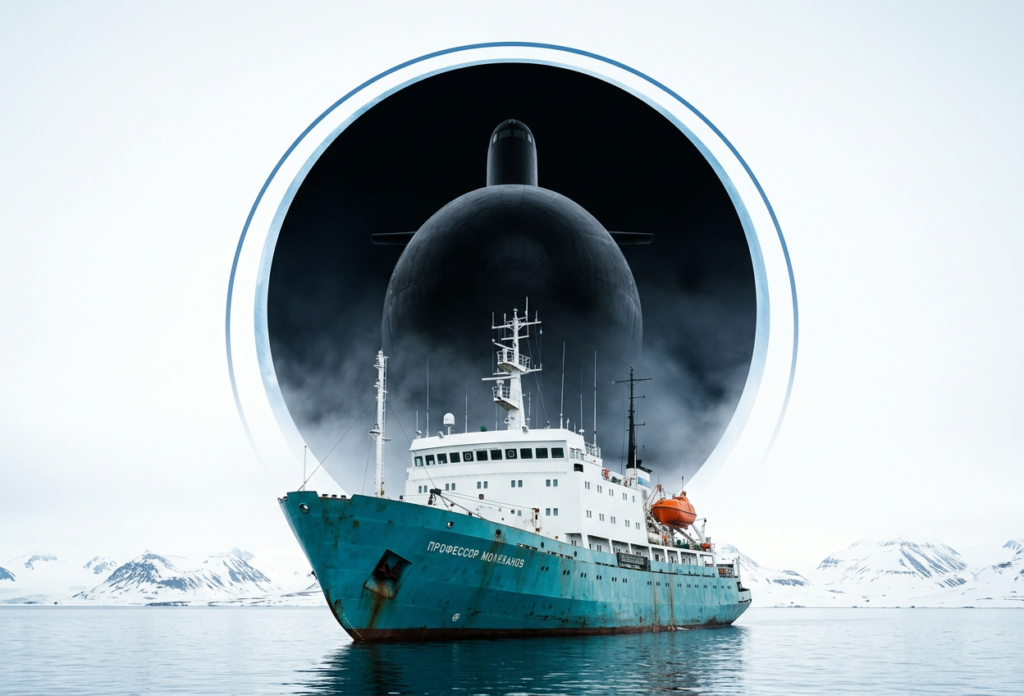
On 2 September 2026, Norwegian authorities stopped the Russian state vessel Professor Molchanov from leaving Barentsburg, a remote Russian mining settlement on the west coast of Spitsbergen, the largest island in Norway’s Svalbard archipelago. The town lies beside Grønfjorden, around 60 kilometres west of Svalbard’s administrative centre, Longyearbyen, with no road connecting the two communities. The ship had arrived at Russia’s main settlement on Svalbard carrying crew, passengers and members of an Arctic cultural expedition. A court in Tromsø had ordered its arrest two days earlier at the request of Ukraine’s state-owned energy company Naftogaz, which is trying to collect a USD 4.22 billion award, plus interest and costs, from Russia over assets lost in Crimea. Naftogaz was also seeking a forced sale.
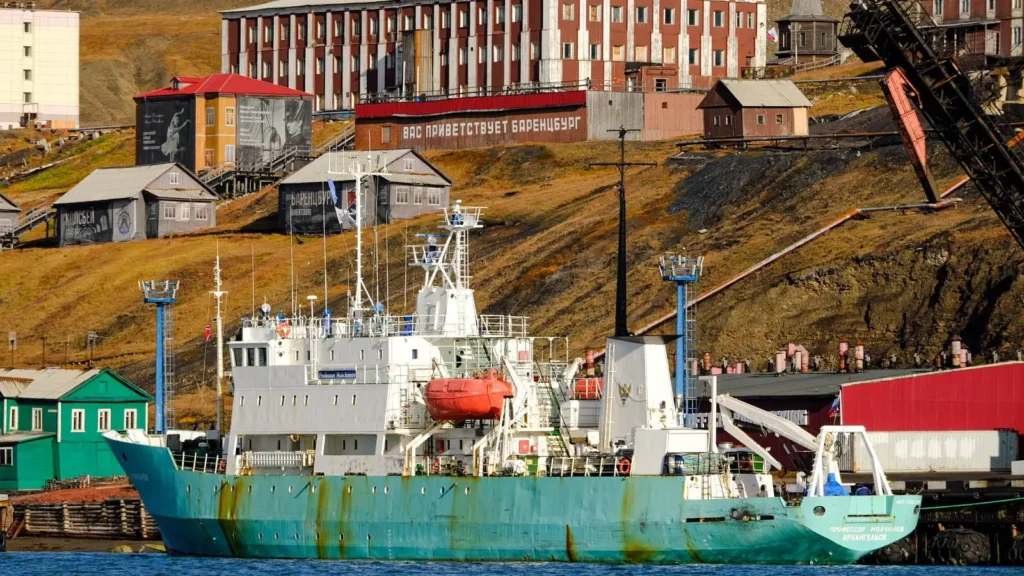
IMAGE: Professor Molchanov remained at Barentsburg after a Norwegian court ordered the arrest of the Russian state vessel at Naftogaz’s request. (Source: Maria Philippa Rossi/NRK)
Most reporting reduced the arrest to a debt-enforcement case in which an independent court acted for a Ukrainian creditor while a supposedly unaware Norwegian administration simply carried out the order. The months before the ship reached Barentsburg tell a very different story. Norway was already monitoring the route, its maritime reporting system provided advance notice of the vessel’s approach, and Naftogaz’s international counsel, Covington & Burling, had tracked Professor Molchanov for months and anticipated its arrival in Svalbard. Its Norwegian counsel, Wikborg Rein, had experience pursuing Russian assets for Naftogaz while also working for Norway in a Svalbard-related dispute. An earlier case had already mapped a path to Russian property through the same Tromsø court, while Britain and Norway were building military power around the Bear Island Gap, close to Russia’s nuclear-submarine bases.
The arrest took place north of one of the most important military corridors in the European Arctic, a roughly 400-mile stretch of water known as the Bear Gap. Running between Bear Island and Norway’s North Cape, it forms a gateway from the Barents Sea into the Norwegian Sea and the North Atlantic. To the east, the Northern Fleet’s bases on Russia’s Kola Peninsula support the ballistic-missile submarines that carry much of Moscow’s sea-based nuclear deterrent. NATO wants to detect those submarines, restrict their movement from the Russian bastion and preserve allied access to the surrounding waters. Norway’s defence minister has warned that Russia must not be allowed to control this passage, now described as the Bear Island Gap.
Svalbard overlooks that strategic space, but the 1920 Treaty was meant to prevent the archipelago from becoming an openly militarised frontier. Norway holds sovereignty, Russia retains extensive rights of access and economic activity, and Article 9 of the treaty restricts naval bases, fortifications and the use of the islands for warlike purposes. Britain and Norway are building military power around Svalbard while the struggle inside it is moving through environmental rules, property controls, maritime monitoring, sanctions and courts.
Norway’s official explanation began only after the court had issued the arrest order. The Governor of Svalbard said Norway wasn’t a party to the dispute, had known nothing about it until after the decision, and merely carried out the arrest as bailiff. That explanation passed over the monitored route, the advance voyage information, the lawyers who knew the Norwegian system and the earlier litigation that had already exposed the route into Russian property.
Naftogaz’s international counsel, Covington, said its lawyers had been tracking Professor Molchanov for months before the vessel entered Barentsburg. Once it arrived, Naftogaz’s Norwegian lawyers moved against it through a legal system they knew well, while Britain continued expanding its military presence around Svalbard. Norwegian civil law achieved what a naval interception could not have done without provoking an immediate confrontation, stopping a Russian state vessel without a warship firing a shot.
Norway and its allies are carrying the confrontation into courts, ownership rules, maritime administration and commercial law, steadily weakening the Arctic restraint they claim to protect. Beneath the civilian appearance of these measures lies a strategic purpose already visible in the months before the arrest, along the Russian route into Barentsburg that Norway was monitoring.
The watched route
The route that brought Professor Molchanov into Barentsburg had reopened only the previous year. In June 2025, the Russian settlement received its first visa-free passenger voyage from Murmansk in 27 years, restoring a direct connection with mainland Russia. For Barentsburg, the service brought tourists and revenue, but also workers, researchers, cultural visitors and supplies needed to sustain Moscow’s presence on Svalbard.
Professor Molchanov was assigned to the new corridor in 2026. Ten voyages were planned, with the first leaving Murmansk on 8 March, but Norway was watching from the beginning. The Governor had made monitoring the programme a priority, and Norwegian officers checked identities, cargo and customs documents at every call.
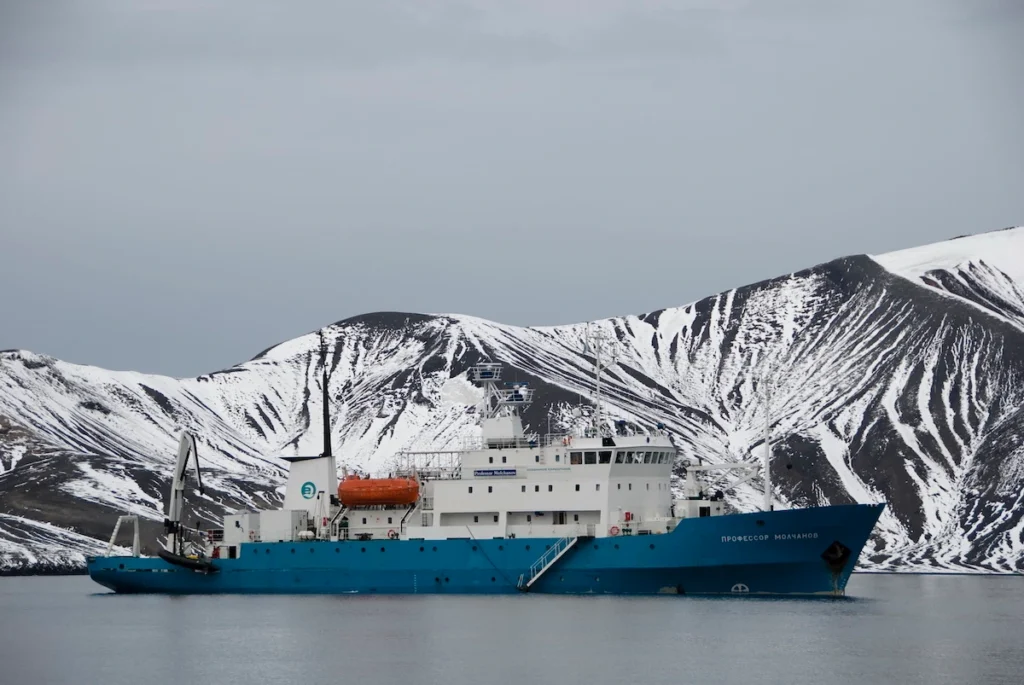
IMAGE: Professor Molchanov prepared to reopen the Murmansk–Barentsburg corridor in March 2026, carrying passengers and supplies to Russia’s settlements on Svalbard. (Source: Yaroslav Nikitin/GeoPhoto via GoArctic)
The ship’s mixed role helped sustain the route while exposing it to the claim waiting in Norway. Professor Molchanov belongs to Roshydromet’s Northern Administration, while Russia’s ambassador said the state-owned Trust Arktikugol operated it. Roshydromet’s history records that the vessel had been converted for passenger service and used for polar tourism before returning to research work. State ownership offered protection, but paying passengers and commercial voyages gave Naftogaz a route around it.
Norway also knew when the ship was coming. At about 71 metres, Professor Molchanov fell within Svalbard’s pilotage rules, which required the vessel or its agent to register the voyage and order a pilot through SafeSeaNet Norway, normally 72 hours before arrival. The reporting system then distributed arrival and departure information to Norwegian maritime authorities, police, Customs, the Armed Forces and the port.
The Justice Ministry later said that “the authorities” knew nothing beforehand, without explaining whether the government knew nothing about the arrest application or Norway’s operational agencies knew nothing about the vessel’s approach. The second interpretation cannot be reconciled with the monitoring programme, the checks at every call and the mandatory advance reporting already circulating through the Norwegian system.
Norway has not identified which agencies it consulted before issuing that denial, whether any operational authority communicated with Naftogaz’s lawyers, or how Covington learned enough about the vessel’s movements to track it for months and anticipate its arrival. Professor Molchanov didn’t arrive unexpectedly. Norway had been watching the route; its agencies knew the ship was approaching, and Naftogaz’s international counsel, Covington, said its lawyers had tracked the vessel for months.
The ship was being watched, its arrival known in advance, but knowing where it would be was not enough. To turn that foreknowledge into the arrest of a Russian state vessel, Naftogaz needed lawyers who knew exactly where and how Norway’s legal defences might give way.
The lawyers who knew the terrain
Covington & Burling was directing Naftogaz’s global enforcement campaign, coordinating the pursuit of Russian assets across national jurisdictions. In Norway, it worked with Wikborg Rein, whose knowledge of Naftogaz’s claims and the Norwegian legal system gave the campaign a local route into Svalbard.
When Professor Molchanov entered Norwegian waters, Covington and Wikborg Rein were already familiar with the hunt for Russian assets. Wikborg Rein, one of Norway’s largest commercial law firms, had joined it years earlier.
In 2018, Norwegian legal press reported that Wikborg Rein was helping Naftogaz seize Gazprom assets in Switzerland, the Netherlands and England after a USD 2.56 billion arbitration victory, having represented the Ukrainian company throughout the underlying disputes
In 2018, Norwegian legal press reported that Wikborg Rein was helping Naftogaz seize Gazprom assets in Switzerland, the Netherlands and England after a USD 2.56 billion arbitration victory, having represented the Ukrainian company throughout the underlying disputes. Covington had secured the Crimea award now being enforced and was coordinating Naftogaz’s pursuit of Russian state assets across roughly ten jurisdictions, with Wikborg Rein providing the route into Norway’s courts.
Five years later, Wikborg Rein brought part of Naftogaz’s arbitration operation into the firm. Olga Ivaniv, appointed legal director in its London office in 2023, had spent the previous six years as Naftogaz’s deputy head of legal for arbitration. The firm’s biography says she managed high-profile Naftogaz proceedings, including Crimea-related investment claims against Russia exceeding USD 10 billion, and belonged to the core team handling its disputes with Gazprom.

IMAGE: Olga Ivaniv joined Wikborg Rein after serving as Naftogaz’s deputy head of legal for arbitration and international matters. (Source: Wikborg Rein)
Wikborg Rein was no last-minute local hire brought in to file papers in Tromsø. A former member of Naftogaz’s arbitration leadership gave it direct knowledge of the Crimea claims that Covington was enforcing across multiple jurisdictions. It also knew the terrain from behind Norway’s lines
Norway’s Foreign Ministry had retained Wikborg Rein under successive framework agreements since 2014. In 2021, it assigned the firm’s Oslo and London offices to analyse money flows, beneficial ownership and damages in Peteris Pildegovics and SIA North Star v. Kingdom of Norway, a dispute connected to Svalbard.
Acting for Norway’s Foreign Ministry, Wikborg Rein moved from analysing money flows and ownership structures to finding investigators who could pursue them across borders. It sought proposals from four international firms: Kroll, Control Risks, Nardello & Co. and Mintz Group. Kroll was instructed and produced a report in September 2021, which has not been made public.
By August 2026, Wikborg Rein knew Naftogaz’s pursuit of Russian assets from the inside. It had also worked for Norway in a Svalbard-related claim, analysing ownership and money flows before helping to bring in investigators. The firm has not identified who handled Naftogaz’s Norwegian recognition proceedings, tracked Professor Molchanov, prepared the arrest application or pursued the forced sale. The names remain undisclosed, but the risks created by Wikborg Rein’s overlapping roles and potential conflicts of interest were already being argued before an international tribunal.
In 2023, the tribunal said it was “disturbed” that Wikborg Rein’s role for Norway had emerged only after the merits hearing and that the precise scope of its work remained unclear. It nevertheless declined to exclude the firm, finding that the claimants had not established a real risk to the integrity of the proceedings.
When the dispute moved into annulment, a new committee took a more guarded approach. Without deciding whether a conflict existed, and after Norway said Wikborg Rein had not yet participated, it barred the firm from becoming involved while the issue remained unresolved. Norway maintained that the external firms it instructed were responsible for conducting their own conflict checks.
Wikborg Rein has not published its conflict review for the Naftogaz mandate, explained how its work for the Ukrainian company was separated from its work for Norway, or said whether the Foreign Ministry was notified. Covington has not identified who selected Professor Molchanov as a target or explained how its lawyers tracked the vessel for months before seeking its arrest. The firms nevertheless arrived at Barentsburg with the vessel’s movements mapped and Norway’s legal terrain already known.
That knowledge placed Professor Molchanov within reach, but it did not make a Russian state vessel seizable. Covington and Wikborg Rein still needed a route through the legal protections surrounding state property, and they found one.
The legal map
Months before Professor Molchanov entered Barentsburg, another creditor had tested how far Norwegian courts could reach into Russia’s property on Svalbard. Yukos Capital went before the Nord-Troms and Senja District Court seeking security for an award exceeding USD 5 billion. Its targets were Russian-linked land and buildings in Barentsburg, Pyramiden, Grumantbyen and Bohemanflya.
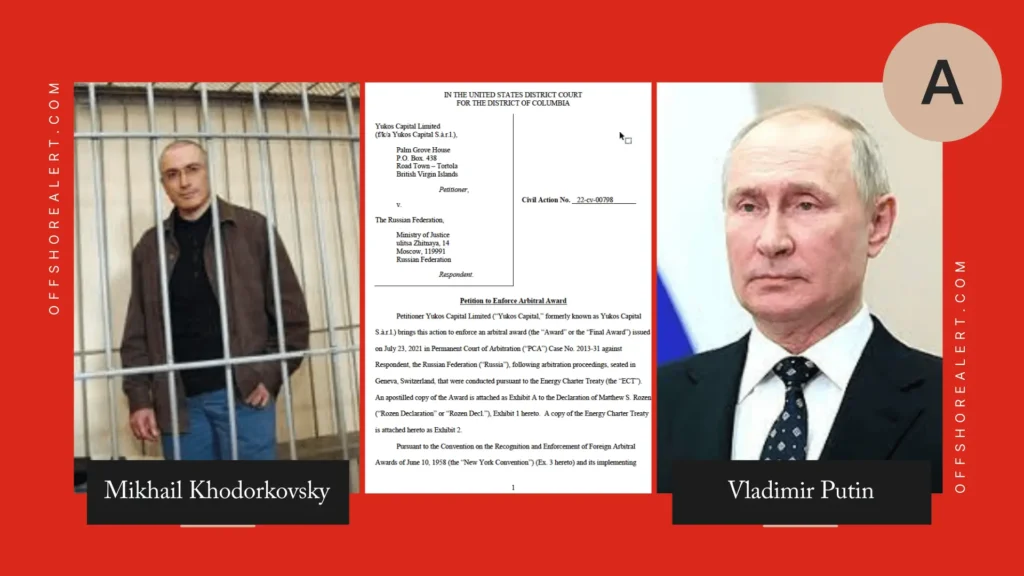
IMAGE: Yukos Capital pursued Russia’s property across jurisdictions before testing whether its multibillion-dollar arbitral award could reach Russian assets on Svalbard. (Source: OffshoreAlert)
Norwegian enforcement law extended to Svalbard, with the Nord-Troms and Senja District Court in Tromsø responsible for enforcing foreign arbitral awards. Trust Arktikugol’s name on the register did not end the inquiry into ownership; the court could look beyond it and ask whether Russia was the real owner. Russian property had come within sight, but not necessarily within reach.
In its May 2026 ruling, the court shielded Barentsburg, Pyramiden and Grumantbyen as Russian cultural property. Bohemanflya fell on the other side of the line, allowing Yukos to attach it as security for its claim. Yukos was nevertheless ordered to pay Russia and Trust Arktikugol a combined NOK 11.28 million in legal costs.
The judgment opened a path into Russian state property but protected assets serving a public purpose. Three months later, Naftogaz presented Professor Molchanov as movable state property whose commercial use could place it beyond the protection given to the settlements. The vessel was carrying paying passengers and generating revenue, providing the basis for an argument that Russia could not place it beyond reach through state immunity.
Behind the application was a USD 4.22 billion award arising from Russia’s seizure of Naftogaz’s oil and gas assets in Crimea. Russia had refused to participate in the arbitration and continued to challenge the result, but those proceedings did not prevent Naftogaz from pursuing Russian property elsewhere.
Norway’s recognition of the award opened the door to enforcement, yet it did not place every Russian asset within reach. State immunity still protected property serving a public purpose, leaving Covington and Wikborg Rein to find something Russia owned but used commercially. After months of tracking, Professor Molchanov emerged as a viable target for enforcement.
By carrying paying passengers into Barentsburg, Professor Molchanov had become the asset Naftogaz needed. A dispute born from Russia’s seizure of property in Crimea had now delivered a Russian state vessel into a Norwegian court on Svalbard, where legal enforcement was unfolding amid a wider contest for control of the Arctic. The ship had entered the case as property, but it had sailed into a far larger confrontation. Across the waters it travelled, NATO was expanding the military network built to watch, track and contain Russia in the High North. Naftogaz’s award furnished the legal claim, while Covington’s enforcement campaign turned it into the arrest of Russian state property on Svalbard. The seizure exposed a much larger contest already under way as NATO extended its reach, hardened its northern frontier and sought to shape the balance of power across the Arctic.
NATO’s Arctic arsenal
It was never much of a secret that Britain is seeking a leading military role in the European Arctic. Its Type 26 partnership binds Norwegian naval development to British ships, shared technical standards and joint anti-submarine training across the northern approaches used by Russian submarines moving towards the Atlantic. In February 2026, London announced that it would double the number of British troops training in Norway from 1,000 to 2,000 over three years.
VIDEO: A look inside Camp Viking, the UK Commandos’ Arctic operations base in northern Norway. (Source: Forces News)
At the same time, Norway was tightening control inside Svalbard. Is own 2024 white paper titled Svalbard – the path ahead, promised stronger national control and more consistent enforcement of sovereignty. Two months later, the government invoked section 2-5 of Norway’s Security Act to require state consent before negotiations or any sale of the privately held Søre Fagerfjord property could proceed. The Oslo law firm Thommessen called the intervention unprecedented, while Norwegian legal experts argued that it conflicted with the Treaty’s equal-treatment provision.
In March 2026, Marc DeVore and Kristen Harkness, two University of St Andrews security scholars writing in a journal embedded in Britain’s defence-policy establishment, described how those powers could be made to work together. Their article in The RUSI Journal set out a programme for British and allied action. It urged Britain and its regional partners to harden Svalbard and the Bear Island Gap through legal, military and economic pressure on Russian activity, including British-led military planning, deployments, shared intelligence and restrictions operating through insurers and European ports.
By March 2026, the Governor of Svalbard was giving high priority to Russian voyages, working with Customs on passenger checks and inspections of unloaded goods. The measures already moving through Svalbard followed the same combination of administrative scrutiny and strategic pressure that DeVore and Harkness advocated. In May, the Nord-Troms and Senja District Court ruled in the Yukos case that four Russian properties on Svalbard were protected by state immunity as cultural-heritage assets not intended for sale. On 31 August, the same court approved Naftogaz’s secret application to arrest Professor Molchanov.
British and Norwegian military integration was expanding around the archipelago, Norwegian authorities were asserting tighter control within it, and civil enforcement supplied the legal and economic pressure that Western strategists had urged.
Covington and Wikborg Rein secured the arrest of a Russian state vessel serving Barentsburg as security for Naftogaz’s USD 4.22 billion award. Russia received no warning before the application, which Norwegian reporting said had been planned under strict secrecy. Customs had already joined the monitoring of Russian voyages when the court issued its order on 31 August. The Governor enforced it two days later, preventing the vessel from leaving Barentsburg without any minister having to publicly order its detention.
The day before the court approved Naftogaz’s application, Russian Foreign Minister Sergey Lavrov warned that NATO’s military activity in the Far North posed a direct threat to Russia and raised the risk of an armed confrontation with potentially disastrous consequences. The warning preceded the arrest, but it defined the strategic setting in which Moscow would receive it.
Russia treated the seizure as part of something larger. On 3 September, the Russian Foreign Ministry summoned Norway’s ambassador and protested both the arrest and Norway’s “recently intensified actions” on Svalbard. Independent reporting confirmed that the protest extended beyond the vessel to what Moscow characterised as broader Norwegian pressure across the archipelago. Moscow placed the ship, the land restrictions and the tightening of Norwegian control inside one pattern that Western reporting had largely kept apart.
That pattern now surrounds the archipelago. Britain and Norway are expanding military integration along the routes used by Russia’s Northern Fleet. Norwegian authorities are monitoring Russian voyages, restricting unwanted land ownership and asserting wider regulatory control. Norwegian courts are stopping Russian state property at the request of a Ukrainian company pursuing assets to enforce a war-related award.
Responsibility disappears into the distance between those who set the machinery in motion and those who carry out its final act. Covington tracked the vessel and brought the claim, the court gave it legal force, maritime agencies knew when the ship would arrive, and the Governor prevented it from leaving. No minister had to order the detention, and no institution had to claim the strategy behind it. The confrontation with Russia had entered the civilian machinery that once helped keep Svalbard apart from it.
Moscow is unlikely to preserve distinctions that Norway’s own system has made increasingly difficult to see. The arrest occurred beside the Kola Peninsula, home to the Northern Fleet and the nuclear submarines that underpin Russia’s ability to retaliate after an attack. A 2026 assessment described the peninsula as home to Russia’s Northern Fleet headquarters, nuclear arsenal and second-strike capabilities. In those waters, a privately directed asset hunt, a shipping restriction and an administrative intervention no longer arrive as isolated acts. They form part of the same pressure moving north through law, regulation and military power.

IMAGE: A submarine in Norway during Arctic Dolphin 26, part of NATO’s expanding anti-submarine warfare activity in the High North. (Source: NATO Allied Command Operations)
Norway and Britain say they are making the High North safer. Their policy is producing the opposite condition. It is collapsing the distance between NATO’s military contest with Russia and the civilian order that restrained it inside Svalbard.
The Treaty kept Arctic rivalry from consuming every institution on the islands, but the arrest shows how far that restraint has already been eroded. A court order reached a ship serving a Russian settlement in waters shadowed by nuclear submarines, while each Norwegian institution confined its responsibility to one part of the result. Together, they stopped a Russian state vessel without any minister having to claim the decision or answer for its strategic consequences.
The next confrontation may also begin with a warrant, an inspection or an administrative decision, but this time its consequences may not remain inside the courtroom.
READ MORE NORWAY NEWS AT: 21st Century Wire Norway Files
SUPPORT OUR INDEPENDENT MEDIA PLATFORM – BECOME A MEMBER @21WIRE.TV
VISIT OUR TELEGRAM CHANNEL
21st Century Wire is an alternative news agency designed to enlighten, inform and educate readers about world events which are not always covered in the mainstream media.
Source: https://21stcenturywire.com/2026/09/08/a-warrant-in-arctic-waters-the-hunt-for-russias-svalbard-assets/
Anyone can join.
Anyone can contribute.
Anyone can become informed about their world.
"United We Stand" Click Here To Create Your Personal Citizen Journalist Account Today, Be Sure To Invite Your Friends.
Before It’s News® is a community of individuals who report on what’s going on around them, from all around the world. Anyone can join. Anyone can contribute. Anyone can become informed about their world. "United We Stand" Click Here To Create Your Personal Citizen Journalist Account Today, Be Sure To Invite Your Friends.
LION'S MANE PRODUCT
Try Our Lion’s Mane WHOLE MIND Nootropic Blend 60 Capsules
Mushrooms are having a moment. One fabulous fungus in particular, lion’s mane, may help improve memory, depression and anxiety symptoms. They are also an excellent source of nutrients that show promise as a therapy for dementia, and other neurodegenerative diseases. If you’re living with anxiety or depression, you may be curious about all the therapy options out there — including the natural ones.Our Lion’s Mane WHOLE MIND Nootropic Blend has been formulated to utilize the potency of Lion’s mane but also include the benefits of four other Highly Beneficial Mushrooms. Synergistically, they work together to Build your health through improving cognitive function and immunity regardless of your age. Our Nootropic not only improves your Cognitive Function and Activates your Immune System, but it benefits growth of Essential Gut Flora, further enhancing your Vitality.

Our Formula includes: Lion’s Mane Mushrooms which Increase Brain Power through nerve growth, lessen anxiety, reduce depression, and improve concentration. Its an excellent adaptogen, promotes sleep and improves immunity. Shiitake Mushrooms which Fight cancer cells and infectious disease, boost the immune system, promotes brain function, and serves as a source of B vitamins. Maitake Mushrooms which regulate blood sugar levels of diabetics, reduce hypertension and boosts the immune system. Reishi Mushrooms which Fight inflammation, liver disease, fatigue, tumor growth and cancer. They Improve skin disorders and soothes digestive problems, stomach ulcers and leaky gut syndrome. Chaga Mushrooms which have anti-aging effects, boost immune function, improve stamina and athletic performance, even act as a natural aphrodisiac, fighting diabetes and improving liver function. Try Our Lion’s Mane WHOLE MIND Nootropic Blend 60 Capsules Today. Be 100% Satisfied or Receive a Full Money Back Guarantee. Order Yours Today by Following This Link.


| Visits: | 1,833,686,092 |
| Stories: | 8,713,979 |
Whistler Blowers, Insiders

