

10 Amish Survival Hacks You Didn't Know About — Ancestor Tricks Kept Quiet While the Grid Hums Behind Your Kitchen Tap

In a tin box that never hung on any wall, my great-grandfather Samuel kept a photograph of four men standing in front of a half-built barn frame outside Somerset County, Pennsylvania. One of them held a crosscut saw with the loose grip of somebody who had used it ten thousand times, and the light in the picture was flat and grey, the way it gets before rain. Two of the crew were Amish. A Stoltzfus, twenty years a neighbor, occupied the left of the frame and had come with his brothers and his saw and his lunch.
Eleven hours, that barn took. Men with empty pockets and hand tools raised it in the spring of 1936, three years after the banks in that part of the state had stopped handing money back to anyone who asked. The farm underneath had already been saved twice, both times by the fact that its owners could feed themselves.
Other people kept such pictures out of nostalgia. Samuel could barely look at his.
My grandmother learned from those people, though nobody ever sat her down and taught. Children pick up what matters in a farmhouse kitchen by carrying things and being told to hold the lamp higher, and what she picked up was a working vocabulary of the practical. Carrots packed in sand lasted until March. One weed went into the mouth for a sour stomach, another got spat out. Fire, she understood early, lives and must be fed and banked and put to bed, and a house with a full cellar has no reason to be brave in February. At nineteen she married a man who could not have told you the temperature of a cellar if his life depended on it.
Preppers is the wrong word for the people who taught her. Preppers brace for a future they believe is coming, while the plain families around Somerset simply kept doing what their grandparents had done because quitting cost more than continuing. Midway through the 1950s, with the rest of the county wiring farmhouses for electric ranges and buying chest freezers on installment, a district bishop ruled that his congregation would stay with what it already had. The year was 1954. Nobody in that room could have guessed what the next seven decades of American infrastructure would look like, and it would not have changed his mind. (Watch this video to see how some families are preparing for a future where access to food may not always be guaranteed.)
Techniques held. Held in a place where land passes down instead of selling, where a diesel compressor and a hydraulic press in a shop turn out cabinet doors for Manhattan kitchens while the house next door has never had a telephone line, where a thirteen-year-old can kill and dress a chicken in twenty minutes and keep her apron clean doing it. Drive through a settlement on an ordinary Tuesday and the whole arrangement sits in plain view, easy to mistake for quaintness, which is the most expensive misreading available to a modern adult.
Voices arrived in my life at different times and for different reasons, and several of them shape what follows. A harness maker near Millersburg, Ohio, mended my father’s leather belt without charging and refused money again on the second visit, and the shop smells of coal and hoof and strap stock. Six hundred babies have come into the world under the care of a midwife in northern Indiana whose pantry wall holds enough glass jars to stock a pharmacy counter. Bees keep a widow outside Lancaster, and she speaks of them as tenants who pay rent. Coal dust settles on the blacksmith’s windowsill and he once told me that tools break because people buy them expecting that they will. Eli let me walk his fields across two seasons and answered questions the way a grown man answers a child, patiently and with faint amusement.
Disagreement runs through all of them. One block is what the Amish become after a weekend in a tourist town; in truth the districts split along Old Order and New Order lines, with Swartzentruber families who consider the Old Order soft, and the argument among them turns fierce and petty by turns over the single question underneath everything. How much of the outside world can be taken in before the outside world starts taking you. Nearly every household, from the strictest to the most relaxed, still holds a practical inheritance the rest of us spent a century throwing out with the packaging.
Getting close enough to see it costs something. Some of this work is hard, a little of it is genuinely unpleasant, and the paranoid edges have started looking less paranoid since the substations began catching rifle fire.
Five thousand five hundred substations, give or take, route the power that runs pumps, refrigeration, traffic signals, hospitals and card terminals across a country that has forgotten how to function without them. Two men with rifles darkened a North Carolina county in December 2022 by shooting one, and the lights stayed off for days. Cold weather collapsed the Texas grid in February 2021 and killed people in their own houses, some from carbon monoxide, some from exposure, inside the second-largest economy in the union. Weather and a truck were all either event required.
Matters have tightened since. Machine learning has pushed electricity demand upward for the first time in a generation, transformer orders stretch past two years in some regions, and insurers have begun walking away from whole fire zones and flood plains. Eggs crossed six dollars a dozen in the spring of 2025 and the shelves thinned for a month. Farmland turned into an asset class, which means the ground under a working farm now competes with pension funds for its own price. A haybox and a root cellar stop looking like folk decoration under those conditions.
Ten practices follow, all in daily use, all given to me by the people who depend on them, and hardly any of them the ones printed in the brochures. Some can start this weekend. Others want land, animals, or ten years.
1. Cold Without Current: Cellars Dug Into Banks, Spring Houses Over Seeps, and the Arithmetic of a Winter’s Food
Air leaves the Zook cellar like a hand pressed flat against your face, and the shock arrives before your eyes adjust. Fifty-two degrees in July, thirty-eight in January. Stone that thick needs weeks to gain or lose a single degree, and the structure sits buried on three sides with a foot of soil and sod across its roof, so the range barely moves.
Shelving inside holds nothing a supermarket would recognize. Cabbage sits in crocks under brine with salt crusted on the top layer, weighted by a plate and a smooth river stone. Potatoes fill bins of dry sand, layered so that no tuber touches another. Apples go into newspaper one at a time, each parcel of acid and sugar meant for February and tasting of November. Squash rest on planks clear of the wall, since squash touching a cold wall rots at the contact point, and onions hang in braids away from the potatoes because the two crops make each other sprout when stored in shared air.
Cords appear nowhere in the room.
Engineering here predates the republic and stays simple, which explains both why it functions and why almost nobody builds one now. A slope helps. Drainage away from the door helps more. Gravel under the stone floor, two vent pipes set at different heights so warm air escapes high while cold air enters low, a door that seals against a gasketed frame made from old carpet or wool. A week of mattock and spade will open the hole, or half a day with a rented excavator if you can stand being seen operating one.
Temperature accounts for half the job. Humidity and darkness make up the rest, managed through material instead of machinery, with sand holding moisture short of drowning a crop, straw buffering the cold, and a shallow tray of water on the floor keeping the air from shriveling apples and splitting squash. Mass and patience run the whole arrangement, whose failures arrive slowly and visibly, which beats a chest freezer that dies in silence on the third day of an outage while you are at work.
Thirty yards downhill stands a second structure older than the cellar. Water seeps through the floor of that little stone building and runs along a trough and out a gap in the wall, and butter and milk went into the flow in crocks, held near forty degrees by nothing but motion. Slab roof, heavy door, one small window. The seep has not stopped in the hundred and forty years anyone can account for.
Eli’s mother used the spring house until 1979, when a gas refrigerator arrived as a gift and she felt obliged to run it. She swept the old building anyway. Melons still go into the trough every August.
Cost is what stops a modern visitor cold. Cellar and spring house together run on nothing, burn nothing, and fail only through neglect. A freezer costs several hundred dollars up front and another hundred a year in current, and holds your entire food supply hostage to a wire. Plain families around Somerset picked the cellar over the freezer for reasons that had little to do with purity. A cellar never mails a bill.
Planting lists and the calendar of the table change under a cellar’s influence, and that matters more than the masonry. Households with storage grow keep-crops in volume, harvest at peak, and eat for six months. Households with only a refrigerator grow lettuce and buy the rest. March turns dull and March stays nourishing, and a cook learns to think in seasons rather than moods.
Seventy-one years old and still gardening, the Lancaster widow described the difference while sorting onions on a bench. A person who has never had a full cellar, she said, has never had a quiet January.
Hers is smaller than the Zooks’. Four days of work with her son and two grandsons followed her husband’s death. Oak frame, strap iron hinges cut by the blacksmith, a gasket sliced from conveyor belt. Pretty it is not. Forty degrees and eleven bushels it holds, and off it has yet to be.
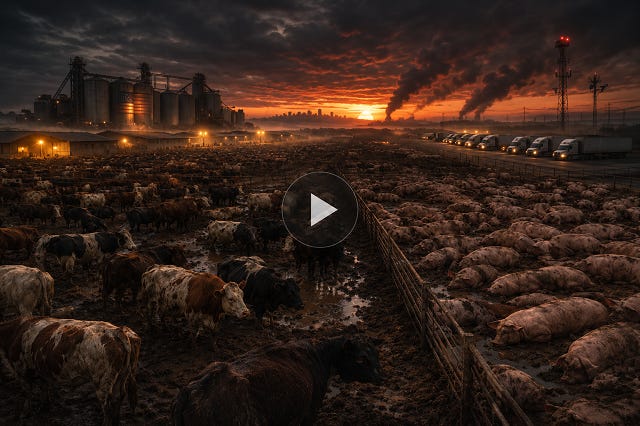
Inside Factory Farms – Hidden Camera Footage Reveals What Really Happens Behind Closed Doors! (Full video below)
2. Water That Answers to You: Pitcher Pumps, Driven Points, Cisterns, and the Long Age of the Mains
Cast iron cylinder, leather cup on a rod, handle on a pivot. Work the handle and the cup drags water up the pipe and dumps it from the spout, and electronics appear nowhere in the assembly. Pressure tanks, float switches, boosters and municipal accounts all sit outside the design. The seal is leather, which swells when wet and grips harder the more you use it, going slack after a long idle until you prime it, exactly the behavior you want from a machine that waits unattended for months.
Use of these pumps runs everywhere in a settlement, in kitchens, barnyards and garden edges, on a design unchanged for well over a century because it happens to be the right design for the task. A submersible pump moves more water with less effort and dies the instant the current does. A pitcher pump moves less and keeps working.
Driving a point completes the arrangement and makes it possible on ground with no dug well. Steel pipe, perforated tip, hardened cap, sections screwed together and beaten into the earth with a driver, a heavy iron sleeve on a rope, lifted and dropped for an hour or a day depending on the subsoil. Water-bearing sand fills the pipe once the point reaches it, the pump goes on, and the handle comes alive. Twenty-five feet is a shallow well and a fair weekend target for two strong adults. Sixty feet is reachable with a tripod and considerable stubbornness.
Three points stand on Eli’s property, one by the house, one at the barn, one in the far pasture, all driven by him in the 1980s with a driver his father turned on a lathe. Keep the pipe plumb, he told me, and stop dead the moment you strike clay, since a point driven into clay will not produce water and cannot be pulled back out without a fight.
Cisterns form the third leg. Gutters take roof runoff down a screened downspout into a buried tank of concrete, stone or food-grade plastic, with a sump and a hand pump at the top. Barrels of fifty-five gallons serve a garden; a household needs a thousand or more, and most rural jurisdictions let you bury one without a permit. An inch of rain on a thousand square feet of roof yields about six hundred gallons. An ordinary summer refills a cistern several times, an ordinary winter does not, and the difference is worth planning around.
Filtration splits the plain people from the survival literature, and here the Amish are quietly the more sophisticated party. Gravel prefilter, slow sand bed, charcoal column, then boiling or a ceramic candle for anything headed toward a mouth. A gravity filter of the Berkey type sits in the Indiana midwife’s pantry and she calls it the one modern object she would fight to keep, which from a woman who churns her own butter counts as strong language.
Farms with a seep let the spring house do a cistern’s work. Trough water runs cold enough to chill milk and clean enough to wash in, and drinking it raw is a different question that the old people understand. My grandmother boiled spring water for coffee and drank it straight only in her youth, when she still trusted her own stomach.
Municipal water deserves suspicion, for reasons that stay unglamorous. Treatment plants need current. Pumping stations need current. Mains under most Northeastern and Midwestern cities run between eighty and a hundred and twenty years old and burst at a rate utilities describe as manageable, a word meaning they have decided against fixing them. Boil-water advisories have become a Tuesday afternoon in a lot of American cities. Add a gas outage and an ice storm and the same advisory turns into something else.
Flint poisoned its residents for eighteen months while officials assured them the water was fine. Jackson, Mississippi, lost its system outright in 2022 while people queued in the heat for bottled water. Both sit further along the same road, and neither is an aberration.
A hand pump on your own ground answers all of it with a shrug. Bond ratings and main age and county advisories mean nothing to a leather cup and a column of water and the strength in an arm, and the thing will keep meaning nothing for as long as the cup stays greased and the pipe stays clear.
Millersburg’s harness maker runs a pitcher pump at his shop sink over a point driven through the floorboards, installed during the Y2K winter mostly as an excuse to stop hauling buckets. Every working day since has used it. Twice he has replaced the leather.
3. Fire Discipline: Split Wood, Banked Coals, and a Haybox That Finishes Supper Without Flame
Wood dries from the outside inward, and everything else about fuel handling follows from that. Splitting small, stacking bark up with the split face to the weather, leaving a full year under cover: three habits, and any of them skipped means you are burning water.
Twenty feet of woodpile runs along Eli’s shed wall, chest high and sorted by size, wrist-thick blocks down one end and finger-sized kindling down the other, with a bark bin and a shavings bucket between them. Standing at a chopping block, he splits with a maul dropped from the shoulder rather than swung from the back. That distinction separates a man who works all day from a man finished by noon.
Kindling is its own craft. Cedar, pine, poplar bark, the split heart of softwood, bundled with twine and boxed beside the stove. Newspaper gets used and never relied on, since it burns fast and cold and leaves ash that smothers a young fire. Two small splits crossed at the base, a fist of kindling over the junction, one match, then leave it alone instead of poking.
Banking is what outsiders have forgotten. Coals get raked to the back of the firebox at night, buried in ash, the damper shut to a whisper, and the fire sits there starved of air until morning, when a bed of live coal under the ash takes a split and comes back up without a match. Banked well, a stove stays lit for years. Banked badly, it goes out at five in the morning and you are on your knees with kindling.
Ash earns its keep. Garden soil takes it for potash, the outhouse takes it against smell and flies, the soap kettle takes it for lye, the ice on the walk takes it for grip. Every part of a fire gets used where somebody has to think about the wood.
Then comes the haybox, the piece that surprises people most. Line a box with a foot of hay, straw, wool or newspaper and fit a lid that closes tight, and you have a fireless cooker. Bring a pot of beans, stew, porridge or rice to a hard boil on the stove, let it roll ten or fifteen minutes, then set the lidded pot into the hay and shut the box. Insulation holds the heat and the food keeps cooking four to six hours on the fuel it took to start it.
Overnight, a haybox finishes a pot of beans. Through a midday, it keeps stew hot for a family coming in from the field, or holds wash water at scalding temperature. Costs nothing, burns nothing, scorches nothing, and the only skill involved is a tight lid and sufficient hay.
Plain households adopted them for the reason any household would, fuel and hours saved, and American kitchens used them widely until electric ranges and pressure cookers made them look foolish. My grandmother’s sat built into a pantry bench, hinged on top, and she kept the lid shut even when it stood empty because an open box of hay draws mice.
Masonry heaters belong to the same family of ideas and carry more weight. Austrian and Russian stoves amount to a brick mass with a firebox at the base and a serpentine flue winding through the mass before the smoke exits. Two hours of hot, fast fire charges the brick, which then radiates for eighteen. A single firing heats a house, and the fire itself burns fierce and clean and short, producing little smoke and almost no creosote while the mass does what a cast iron box cannot. Expense runs high, a footing has to carry the load, and in a cold climate with scarce wood the fuel savings reach two-thirds of what a conventional stove would eat.
Anthracite still turns up in older Pennsylvania homes where coal stayed cheap for generations. Coal burns long and hot under a different discipline entirely, deep bed, controlled draft, a grate to shake, and its ash goes on the driveway instead of the garden because sulfur loads it.
Heat as a switch is what all of this refuses. A furnace fires when a house cools. A stove must be fed, and feeding imposes a rhythm on the day that people raised without one find startling. Somebody rises first and lays the fire. Somebody checks it before bed. Somebody fills the woodbox so the next person stays out of the snow. Comfort gets produced rather than delivered, and after a few winters the producing stops registering as work.
Coal for the forge sits in a bin under a tin roof at the blacksmith’s, covered with a board. Most men who try heating with wood, he told me, quit in the second winter, and the ones who reach the third never go back. What changes in the third winter, I asked. Nothing changes, he said. You stop minding.
4. Preservation as Doctrine: Salt, Smoke, Rendered Fat, and the Crock That Outlives the Freezer
Salt draws water from meat until the meat becomes an environment bacteria cannot use. Two thousand years old, and it will still work a month after the freezer has gone dark and its contents have thawed into a puddle on the floor.
Curing happens in a cellar or summer kitchen held under fifty degrees, with dry rubs and brines in quantities that startle modern cooks. Ham gets salt, saltpeter and sugar, then a crock, a weight, and turning every few days for a month before drying and smoking. Bacon goes into brine for a week or ten days and comes out firm and pink and stable. Sausage is stuffed, smoked, and hung until the surface dries to a slight wrinkle, after which a cold room holds it for months.
Flavor is the least of what smoke does. Antimicrobial and antioxidant compounds in wood smoke make a heavy smoke ring a preservative layer as much as a culinary flourish. The fire beneath it smolders hardwood for days rather than burning, in a small shed with a pit in the floor and slatted vents at the top.
Rendered fat is the third pillar and the most thoroughly forgotten. A crock of lard sealed under half an inch of clean fat holds cooked meat, confit style, through a winter in a cold cellar. Sausage packed under lard keeps. Potted meat keeps. Air stays out, hot fat is sterile, and the whole arrangement sits in the dark doing its work while a refrigerator hums and meters money somewhere upstairs.
Canning reached most settlements late and arrived carrying an argument. Glass jars and pressure canners got accepted because a jar is a vessel rather than a machine, and by the 1940s households were putting up hundreds of quarts of tomatoes, beans, corn, peaches and pickles each August. Work happens in a summer kitchen, a separate building with its own stove, so the house avoids becoming a steam bath, and women and girls run it as a line of stations: one washing, one cutting, one filling, one tending the canner.
Cabbage goes down as kraut in a crock for six weeks of fermentation, and the acid produced becomes a preservative in its own right. Cucumbers enter brine with dill and garlic. Beans get salted and dried, or strung and hung. Corn dries on the cob to be shelled and ground later, and apples slice onto racks above the stove into snitz, which stew in winter and taste of very little until they do.
Influenza swept the country in 1918 and the plain people weathered it better than most, helped along by dispersal across farms and by households that could nurse the sick out of a cellar instead of a shop. Isolation with food in it produces a different epidemic than isolation without.
Drying runs through the same pantry tradition. Screens over a stove or in a summer kitchen take beans, peppers, apples, herbs and meat, and dried meat gets pounded with fat and salt into a coarse powder in some houses, a European cousin of pemmican that turns a spoonful into a meal when stirred through a pot of greens.
Clamping deserves more attention than it receives. Potatoes, beets, carrots and turnips pile into an outdoor mound, get covered in straw and then a foot of earth, with a straw chimney at the top for venting. Edges freeze, the core holds, and root crops keep through the worst of the year without a cellar at all. Ugly, effective, and still feeding families in April during a bad spring.
Every technique here trades August labor for January dinner, and every one of them asks a cook to tolerate a result unlike the fresh article. Salted beans are not green beans, confit is not a roast, snitz are not apples. Expect equivalence and you will be disappointed. Expect food and you will eat.
Forty quarts of tomatoes and a barrel of kraut still go down at the widow’s each year, at seventy-one, with her granddaughter working the second station. A freezer is convenient, she said, and crocks are insurance, and a jar has yet to be lost to a power cut in that house.
Tin over a wooden frame with a hook latch closes her smokehouse. The inside of that door is black to the height of her shoulder.
5. Seed Debt: Why a Garden With a Coffee Can in the Pantry Is a Vault Left Open
Envelopes fill a coffee can at the back of the pantry, under a plastic lid. Beans, peas, tomato, pepper, lettuce, marigold, dill, each labeled in pencil with a name and a year, and some of those years reach back into the 1990s where the beans still germinate because beans keep a decade in a cool dry can.
That can is worth more than anything else in the house, and it cost nothing.
Saving seed underwrites every other practice here. A household able to grow food but forced to buy seed each spring sits one supply chain away from hunger. Open-pollinated varieties that breed true get saved as a matter of course, and the varieties themselves pass down with the farm as family property.
A pole bean of the Kentucky Wonder type has grown on Eli’s place since his grandfather’s time, along with a tomato his mother got from hers and a dent corn that goes to the mill and the hogs. Which rows are for eating and which for seed he can tell you without looking twice. The seed rows sit at the far end of the garden where a visitor will not pick them.
Mechanics are simple and the discipline is not. Bean pods stay on the vine until they rattle, then shell onto a screen and dry two weeks. Tomato seeds and gel scoop into a jar of water and ferment four days until the gel rots off and good seed sinks, after which they rinse and dry on a plate. Peppers get cut and scraped onto paper. Corn stands in the field until the husk turns papery, then the best ears come off the best stalks by hand and the rest goes to feed.
Crossing is the hazard. Squash breeds with squash, and a man saving seed from a garden holding three varieties harvests a fourth and a useless one. Distance solves it, a quarter mile between cucurbits, or hand pollination with tape and a brush. Most households grow one of each thing and trade with a neighbor for the rest.
Southern corn leaf blight in 1970 taught the country what a narrow gene pool costs. About eighty-five percent of the national crop that year carried a single quirk of genetics called Texas male-sterile cytoplasm, which spared seed companies the labor of detasseling. A blight arrived that the quirk could not resist, ran the Corn Belt like a grass fire, and took roughly fifteen percent of the harvest. Hybrid uniformity had been sold as progress and it was, right up until it became a single point of failure.
Modern seed now arrives under license and much of it legally resists saving. Hybrids refuse to breed true anyway, so seed saved from them gives mixed and often inferior plants, which leaves a gardener technically saving seed and practically saving nothing. The shift happened quietly. Legislatures passed nothing forbidding a family from feeding itself out of its own ground, and the practical ability to do so got engineered off the rack.
Plain households sidestepped the whole business by never becoming customers. Open-pollinated stock comes from small houses, trades happen inside the district, and the can gets refilled from the garden. Seed swaps run in barns through the winter in some settlements, over coffee, with the bargaining conducted in the same dry manner as everything else.
Orchards hold a second seed bank. Scions come off a neighbor’s tree and go onto wild rootstock by grafting, a winter job with a sharp knife, a rubber strip and wax, and a man who grafts puts a good apple on a feral stump for the price of a cutting. Pears arrive from grandmothers in other counties that way, and plum thickets colonize fence lines.
Working knowledge of what grows unasked fills the gaps. Dock, plantain, lamb’s quarters, purslane, dandelion, nettle, cattail. A garden is a plan; weeds are the backup plan, eaten without ceremony in spring when the cellar runs thin.
Eli keeps his can on a high pantry shelf and knows the count of envelopes inside it. A man who buys all his seed, he said, is renting his own dinner.
Pencil on the oldest envelopes has gone grey and soft from handling. One of them, a pepper, carries a year older than his marriage.
6. Four Legs and a Halter: Stock, Draft Power, and the Muscle Economy of a Working Farm
A jenny turned out with sheep will put herself between the flock and a coyote and go at it with her teeth, and coyotes remember. That is why several Amish sheep farms run a donkey, and why the donkey is generally the calmest animal on the place, having nothing to prove and no reason to run.
Stock forms the least glamorous and most consequential part of a working homestead, treated as a system of inputs and outputs rather than a collection of pets. Kitchen scraps and bugs become eggs and meat through chickens. Pasture becomes cream, butter and cheese through a milk cow worth more than most trucks. Brush becomes order under a goat, and the milk suits a child who cannot drink cow’s. Hogs eat anything and return lard, bacon and ham. Clover becomes wax and honey through bees, wax becomes candles, and candles become light.
Draft horses separate an Amish farm from a hobby farm and represent a commitment rather than an ornament. Belgians or Percherons will plow, disc, harrow, mow, rake, haul manure, skid logs and pull a wagon on hay and oats the place grows for itself. A tractor works faster, eats nothing while idle, refuses to reproduce, and depends on diesel that arrives by truck along with parts that arrive by truck and a mechanic holding a laptop.
Kitchens have run that arithmetic a thousand times and the answer turns almost entirely on scale. Under eighty acres, particularly where stock needs daily attention, a team competes, and the manure comes free while the fuel grows in the ground. Beyond that, hours favor the tractor. Resilience favors the horse without qualification, because a horse does not care that the fuel depot is empty or the parts counter shuttered.
Duke and Barney pull Eli’s plow, geldings both, and four more horses stand in the barn for wagon, buggy and spares, because a horse can go lame and a farm cannot stop. Hay ground and an oat patch feed them. He shoes them himself from a farrier’s set on stocks his father built, and he will tell you without much prompting that a man who cannot shoe his own horse belongs to the man who can.
Feed governs the rest. A team eats near two and a half percent of body weight in dry matter daily, most of a small bale for two horses, thirty bales a week, which is why a horse farm is a hay farm wearing a different hat. Mowing, tedding, raking and baling all run off ground drive behind the team, and the year bends around haying.
Small stock carries less risk and pays sooner. A movable hen pen follows the garden and cleans it, eating bugs and weed seed and turning the soil, and eggs arrive daily. Rabbits turn weeds and hay into meat in eight weeks on almost no ground. Two goats keep a family in milk and a hillside in order, and none of it wants a loan.
Muscle extends past animals. Manure replaces nitrogen from a plant, horses replace diesel, chickens replace pesticide. The farm runs on sun, grass and the labor of the people living on it, while money leaving the place goes for salt, sugar, coffee, kerosene, shoes and taxes instead of fuel and chemistry.
Apologizing for horses stopped in 1973. Diesel queues stretched across the country during the embargo and prices quadrupled inside a year, and plain families drove past the lines at eight miles an hour. Something in the district settled after that. Men who had been quietly pricing a tractor bought another team.
Slaughter is the other side, and sentiment has little to do with it. A chicken goes onto a block with a cone or a nail and a sharp knife, bleeds, scalds at a hundred and forty degrees, gets plucked, singed, drawn and cut. Twenty minutes of work a child can handle. Hogs die in cold weather with neighbors on hand and every part gets used: head into head cheese, fat into lard, hide into rind.
Fifteen years old, Eli’s daughter does the chickens. She tucks one under her arm and holds until it settles, which takes about ten seconds, and she works without talking.
Barney is twenty-two, carries a white star, leans on gates out of habit, and will be buried on the place rather than sold.
7. Bitter Teas and Bone Setters: Folk Medicine for the Hours Before a Hospital
Canvas satchel, leather bottom, and inside it a stethoscope, a cuff, a scale, sterile scissors, cord clamps, a bottle of alcohol, and beneath those a folded cloth holding twenty paper packets labeled in ballpoint with a plant and a use.
Comfrey mashed into a poultice for a bruise. Yarrow packed into a cut to stop the bleeding. Elderberry syrup at the first tickle of a cold. Plantain chewed and laid on a sting. Burdock root tea for the skin, peppermint for a stomach, catnip for a colicky infant, willow bark for fever and ache, boneset, which tastes like its name, for flu.
Hospital replacement is the wrong frame. Plain people go to hospitals, often, paying cash and paying too much, and every settlement keeps a list of drivers willing to run a woman in labor to a county hospital at three in the morning. What the folk materia medica covers is the hundred small things that would otherwise take a fifteen-minute drive, along with the reflex of reaching for a bottle.
German roots run through the tradition, arriving with the same immigrants who carried the seed and the crocks, and it lives in handwritten notebooks and in the heads of older women. Braucherei survives in some families, a healing practice of spoken charms and prayers used for bleeding, burns, warts and frightened children, and its practitioners insist it is a channel rather than a power of their own.
Bone setting holds the best reputation and earns it. A settler is usually someone from a family that has done the work for generations, able to reduce a simple fracture or a dislocation by feel, splint and wrap it, and check daily. Amish break bones at a high rate because animals, machinery and ladders break them, and a good settler in a district is a known quantity with a waiting list. Complicated breaks go to an orthopedist; simple ones go to the settler, who charges little or takes nothing.
Costs exist on the other side. Districts can wait too long before seeking care, since plain people share the ordinary wish to be told a thing is trivial, and pneumonia gets missed while a hernia gets carried for years. Delivery is the least of the midwife’s work. Persuasion is the hardest, and she has driven more than one man to a hospital against his stated preference.
Money explains the depth of the tradition plainly enough. Commercial health insurance stays largely out of Amish life, hospital bills come from savings, church aid or a share plan, and the figures run large, so a household with ten children thinks hard before a five-thousand-dollar emergency visit for a sprain a settler will fix for a pie.
Apprenticeship and books carry the herbal knowledge forward, and the modern book is a shelf of paperbacks operating on the same principle as the notebooks, with the same mixture of sound practice and hopeful folklore. Comfrey genuinely helps a bruise and is now suspected of straining the liver in large internal doses. Elderberry shows real antiviral activity and cures nothing. Willow works because it holds a salicylate and will tear a stomach the way aspirin does.
Triage is the actual inheritance. Plain households know what is small and what is not, handle the small things at home without a decision, and move fast on the big ones. Most urban adults lost that distinction somewhere and now meet a splinter and a broken wrist with the same reflex.
Refilling the twenty packets happens from her garden each summer. Yarrow dries in bunches from the porch rafters, and one jar of it is older than her youngest grandchild.
8. Barn Raising Logic: Mutual Aid as Load-Bearing Wall and the Ledger Held in Memory
Preparation starts with a list written by the deacon or the bishop and carried by word of mouth through the district and into the neighboring ones. By six in the morning a hundred and fifty men stand on the property, each assigned to a crew, each crew to a foreman, each foreman to a stage of the build. Sills come first, then the bents, braced by men on the ground and men on the plate working ropes and pike poles, then rafters, purlins, sheathing, roofing, doors.
Feeding a crew of that size takes near four hundred meals in a day, cooked the night before across three kitchens, delivered under wet towels in the back of a wagon, coffee boiled in a wash tub over a fire in the yard.
Framed and roofed inside a single day, a moderate barn will be, occasionally with an hour bleeding into the next morning. Coordinated manual labor of that order happens a dozen times a summer in this country and almost nobody outside the settlements ever watches it.
Goodwill is real, and goodwill is not the mechanism. Obligation drives it, tallied in memory and occasionally in a ledger, and a man who has had a barn raised owes days to the district for the rest of his life. When the next fire comes he is on the list before anyone asks, and that standing debt insures him better than a contract, enforced by the one force that enforces anything in a small community, which is the certainty that everyone will know.
Deacons run the formal version, a fund every household pays into on a sliding scale and the deacon disburses in secret. Medical bills, funerals, fires, machinery accidents, a widow’s roof. Who received what goes unannounced in both directions, and the amounts stay undiscussed.
Where commercial insurance is permitted, plenty of families still skip it, and a number use a share plan in which members pay monthly into a common pool covering large bills. Church groups run the plans and the cost stays low because the risk pool is homogeneous and fraud runs near zero.
Strain arrived in 1985 with a tornado outbreak across northwestern Pennsylvania that flattened whole farms and set several districts working at once, and the response came so fast and so complete that state emergency officials wrote about it afterward in something close to bafflement. Men from four counties showed up with tools before the weather cleared.
Edges are where the system frays. A man who never showed up for anybody’s raising finds his own thinly attended and knows exactly why. Families leaving the church forfeit both fund and list, and the rupture stays quiet and total. Newcomers buying into a settlement discover they can hire crews for money, that the crews work well, and that being a customer differs from being a neighbor.
Long residence pulls outsiders in regardless. My great-grandfather’s people never became Amish and by 1940 sat on their neighbors’ list anyway, having shown up for everyone else’s, and the borrowing in my family began with a hammer and a casserole rather than a book.
Fourteen men and a crew of boys replaced the widow’s roof in 2011 after a limb went through the shingles. She cooked for three days and still carries a mental tally of who came.
A hammer with a taped handle lay in her grass a week before anybody thought to ask after it.
9. Sharpen, Patch, Rebuild: A Repair Culture That Treats New as the Last Resort
Cast iron base, foot pedal, belt to the wheel. The treadle machine in the widow’s sewing room dates to 1911 and will sew through eight layers of canvas without complaint, since a treadle has no motor to stall and the needle draws its force from a leg. A second machine sits there for parts, alongside a drawer of feet and bobbins, and work trousers, horse blankets, buggy tops and curtains have all come off that table since her husband died.
Repair ranks as the plainest of plain skills and the clearest divider between settlements and suburbs. Buying becomes compulsory where repair is impossible, and a household that must buy lives at the far end of a supply chain. Buy once, keep the object thirty years, and the supply chain downgrades to an option.
Tools of the trade are ordinary, cheap and nearly extinct: an awl for leather, a stitching horse to clamp a harness between the knees and free both hands, a cobbler’s last, a froe for shingles, a drawknife and shaving horse for handles, a brace and bit, files, a good stone, a soldering iron, a tin of rivets.
Harness work stands as the emblem. A hundred pieces of leather and iron take years of hard use, failing constantly at stitching and buckles and trace ends, and a man who repairs his own stays in the field while a man who cannot walks. Strap stock lines a wall in the Millersburg shop beside a coal stove. The district keeps him busy, and the English found him anyway.
Sharpening happens daily. A dull scythe tears grass instead of cutting and doubles the labor, a dull knife slips into a hand, and plain households sharpen on a stone with oil or water at a fixed angle, touching the edge before it feels dull because the edge lasts longer that way. Carrying a whetstone is a habit rather than a display.
Forge work covers the heavy end and stays alive in every settlement as farm support rather than tourist craft. Shoes, hinges, hooks, chain repair, strapping, brackets, tongs, punches, chisels, the endless small iron a farm eats. Hearth, blower, anvil and bucket make a forge, and twenty minutes at it produces what would otherwise cost a week of waiting for a truck.
Cloth gets patched until the patch outnumbers the original. A knee wears through, denim goes over it, that square wears through, another lands on top, and the trousers finish their life as chore wear. Socks get darned on a mushroom, sheets get turned sides to middle, buttons migrate from a dead shirt to a live one.
New things are not the enemy, which the misconception insists on. New things that displace a working object before its time are. A New Order family buys a buggy when the old one is used up and the old one becomes a shed or a coop. A shop buys a compressor when the old one passes rebuilding and strips the old one for fittings.
Hours are the cost, money and independence the payoff, and both get exaggerated in the telling. Rebuilding a harness eats a Saturday; buying a new one eats an hour, eighty dollars and a drive. The Saturday wins whenever you have the Saturday.
Competence follows from the habit, a sense that objects stay legible. Somebody who has taken a pump apart can usually fix a pump. Somebody who has only ever swapped one stands helpless in front of a strange model.
Thirty feet and a dozen bobbins fill the widow’s sewing drawer, with a pincushion made from a jar lid stuffed with wool. That drawer is the only locked thing in the house.
10. Buggy Speed: Distance, Horseshoeing, and a Message System That Never Goes Dark
Meeting a buggy at dusk means meeting a dark shape with two red lamps and a slow yellow triangle, emerging from a treeline at eight miles an hour while you travel fifty-five. Your hands move before your brain does the first time it happens on a two-lane road at night. Cars have been hitting these vehicles since there have been cars, the reflective triangle and the battery lamps both came as concessions to that, and neither one suffices on a shoulder the width of a shoe.
Light engineering shows in the buggy itself. Thin bent wood and canvas over a body on elliptic springs, wire wheels with steel tires, one seat and a footwell, and a horse in front trained to stand and to ignore traffic. A few hundred pounds, assembled in a shop inside a week, repairable at the roadside with wire and a spare pin.
Winter rewrites the rules. Caulks go into the shoe face for ice, a closed body and a heater made from a box of hot bricks or a coal lamp under the lap robe go onto the buggy, heavier blankets and a good deal of stoicism go onto the family, and a blizzard stops everything.
Shoeing underpins all of it at six to eight week intervals, because hooves grow and a fitted shoe goes out of true and starts levering the wall. The farrier pulls the shoe, trims the hoof flat with a rasp and knife, nails on a new one, and the horse stands in stocks under a leather apron and mostly dozes.
Bicycles serve most Old Order districts, scooters serve the children, and roller skates and pony carts fill the school run on some farms.
Accommodation around communication has been the most careful of all and is the least understood. A shanty at the lane end or a shed beside the barn holds a telephone and an answering machine in many districts, used for business and emergencies rather than conversation. Unheated, with a shelf, a pad of paper and a pencil on a string.
Children and the visiting schedule carry messages inside the district. A note goes home in a boy’s pocket on a bicycle, a woman tells her sister at church, the sister tells her husband, and by evening everyone knows, which runs faster than a group chat and holds more reliably because leaving the group takes effort.
Out to the English world runs a grapevine of bulk stores, auction barns, equipment dealers and the drivers on retainer for hospital runs. Road conditions, washed-out bridges and police checkpoints all reach a settlement long before the county posts anything.
Power failed across whole Northeastern towns for a week and more during the 1998 ice storm, and plain households around them lost almost nothing beyond the telephone, which had failed anyway. Light, heat, water, food and a stove to cook on all stayed, along with neighbors who could move on foot and horseback over roads cars could not use. Gasoline pumps were the gap, and refrigeration in the shops.
Slow travel limits genuinely. Fifteen miles is a long trip, thirty a full day with a horse rested at the midpoint, and a district builds its life inside that radius by necessity, which puts church, school, mill, harness shop, bulk store and most relatives within it. The radius ends up shaping the life.
Spare shoes, a hammer, a clinch block, a strap, a lantern and a wool blanket live in Eli’s buggy box, and every one of them has been used on the road at least once.
Gravel carries the sound of a horse a long way before the buggy comes into sight.
What Can Be Borrowed and What Cannot
Eggs will be sold to you, and a haybine will be sold to you, and land will not. Understand that first if a settlement is where you intend to move, because ground is the point and the good ground in Lancaster County has run past twenty thousand an acre and past forty in the best of it.
Working edge parcels make the realistic target, five to twenty acres, in a county with a farm market, a bulk store and an auction barn, on a place that already has a well and a stove. Years of showing up follow, then a horse or a steer or bees, then a garden serious enough to matter. Neighbors help a man who is trying and ignore a man who has bought a costume.
Fences standing, animals fed, grass mowed, arrival on time. Those get noticed in that order. Clothing gets noticed last or never.
Digging a cellar this month costs a week. A haybox from a cooler and a bale of straw costs a weekend. A driven point and a pitcher pump run under three hundred dollars and an afternoon, seed keeps in a coffee can with a pencil, and a hundred dollars at auction buys a treadle machine that will sew for another century once somebody spends a Saturday cleaning and oiling it.
What resists borrowing is whatever needs a district. A raising wants a hundred and fifty men who owe you days, a share plan wants a church, a settler wants generations. Joining something is the outsider’s route in, a volunteer fire company, a grange, a church, a co-op, and then start owing days.
Crocks still stood in my grandmother’s pantry when she died in 2004, and the last thing she put down that autumn was a barrel of kraut in October, four days before the stroke.
Her key hung on a hook in the phone shanty most of the time, and the shanty door had a latch and a lock nobody used.
Anyone can join.
Anyone can contribute.
Anyone can become informed about their world.
"United We Stand" Click Here To Create Your Personal Citizen Journalist Account Today, Be Sure To Invite Your Friends.
Before It’s News® is a community of individuals who report on what’s going on around them, from all around the world. Anyone can join. Anyone can contribute. Anyone can become informed about their world. "United We Stand" Click Here To Create Your Personal Citizen Journalist Account Today, Be Sure To Invite Your Friends.
LION'S MANE PRODUCT
Try Our Lion’s Mane WHOLE MIND Nootropic Blend 60 Capsules
Mushrooms are having a moment. One fabulous fungus in particular, lion’s mane, may help improve memory, depression and anxiety symptoms. They are also an excellent source of nutrients that show promise as a therapy for dementia, and other neurodegenerative diseases. If you’re living with anxiety or depression, you may be curious about all the therapy options out there — including the natural ones.Our Lion’s Mane WHOLE MIND Nootropic Blend has been formulated to utilize the potency of Lion’s mane but also include the benefits of four other Highly Beneficial Mushrooms. Synergistically, they work together to Build your health through improving cognitive function and immunity regardless of your age. Our Nootropic not only improves your Cognitive Function and Activates your Immune System, but it benefits growth of Essential Gut Flora, further enhancing your Vitality.

Our Formula includes: Lion’s Mane Mushrooms which Increase Brain Power through nerve growth, lessen anxiety, reduce depression, and improve concentration. Its an excellent adaptogen, promotes sleep and improves immunity. Shiitake Mushrooms which Fight cancer cells and infectious disease, boost the immune system, promotes brain function, and serves as a source of B vitamins. Maitake Mushrooms which regulate blood sugar levels of diabetics, reduce hypertension and boosts the immune system. Reishi Mushrooms which Fight inflammation, liver disease, fatigue, tumor growth and cancer. They Improve skin disorders and soothes digestive problems, stomach ulcers and leaky gut syndrome. Chaga Mushrooms which have anti-aging effects, boost immune function, improve stamina and athletic performance, even act as a natural aphrodisiac, fighting diabetes and improving liver function. Try Our Lion’s Mane WHOLE MIND Nootropic Blend 60 Capsules Today. Be 100% Satisfied or Receive a Full Money Back Guarantee. Order Yours Today by Following This Link.


| Visits: | 1,838,407,422 |
| Stories: | 8,737,016 |
Whistler Blowers, Insiders

