

What Israel’s Genocide Has Taken From Palestinian Women and Girls in Gaza

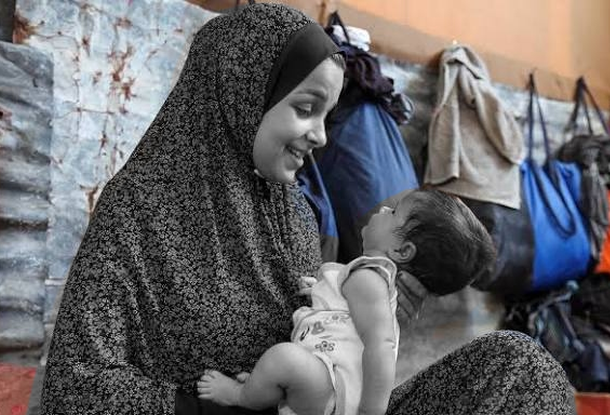
Freddie Ponton
21st Century Wire
In Gaza, Palestinian women gave birth in rooms used as shelters, and patients lost embryos stored at a fertility clinic destroyed in an Israeli attack. Amnesty International’s new investigation finds that Israeli measures prevented Palestinian births and calls for an inquiry into whether Israel imposed those measures for that purpose.
Israel’s genocide in Gaza has devastated the lives of Palestinian women and girls. Women have endured bombardment while pregnant, been displaced while recovering from childbirth, and gone hungry while trying to feed their children. At the very moments when their lives and those of their babies depend on medical care, the destruction of hospitals and restrictions on essential supplies have made that care harder to get.
DOCUMENT: In its “No Conditions for Life” investigation, Amnesty International documents how attacks on healthcare facilities, restrictions on medical supplies and forced displacement made it harder for Palestinians in Gaza to carry pregnancies to term and give birth safely. Amnesty found that these harms were part of Israel’s genocide (Source: Amnesty International)No_conditions_for_life_-_Full_Report_-_English
A new investigation by Amnesty International traces how these harms mounted from October 2023 to October 2026. Women and girls were killed, injured, forcibly displaced, arbitrarily detained and denied food and essential healthcare, including reproductive care. Building on its earlier finding of genocide, the organisation concludes that the genocide continued after the October 2025 ceasefire.

IMAGE: After giving birth at Al-Awda maternity hospital, Mai brought her newborn daughter Mila back to the school classroom where their displaced family was sheltering (Source: UNFPA; photo: UNFPA in Palestine/Hardy Skills)
Fertility clinics stopped functioning, stored embryos were destroyed, and pregnancies ended amid conditions that put timely treatment out of reach. Even where hospitals kept working, incubators, medicines and equipment needed for safe deliveries remained outside Gaza. The restrictions persisted despite repeated warnings about what women and newborns needed to survive.

IMAGE: Newborns share an incubator in the neonatal intensive care unit at Al-Helou hospital in Gaza City in July 2025 (Source: Médecins Sans Frontières; photo: Joanne Perry/MSF)
The report finds that Israeli measures have prevented Palestinian births in Gaza and continue to do so. It calls for an investigation into whether Israel imposed those measures to prevent births. Under Article II(d) of the Genocide Convention, imposing measures intended to prevent births within a protected group constitutes a genocidal act when done with the intent to destroy that group, in whole or in part. A separate UN commission of inquiry concluded that Israel imposed measures intended to prevent births, including through the destruction of Al-Basma, Gaza’s largest fertility clinic.
Delivering babies in rooms used as shelters
At Kamal Adwan Hospital in northern Gaza, the nurse Rawiya delivered babies and treated wounded patients while trying to find food for her own two children. She stayed through repeated Israeli sieges. Thousands of displaced people took shelter in the hospital while its maternity and newborn units continued to care for patients.

IMAGE: The courtyard of Kamal Adwan Hospital in Beit Lahiya, where displaced Palestinians had sheltered in tents, on December 16, 2023, after an Israeli raid. (Source: Le Monde; photo: Mahmoud Sabbah / Anadolu via AFP)
Rawiya recalled in her account for Amnesty’s online exhibition that Israeli forces attacked a room in the maternity unit where women and children were staying. It was shortly before Kamal Adwan Hospital was evacuated in December 2023. The accompanying report records at least two deaths in the attack.
“I was in that same room seconds before the attack,” she said. “When I came back, it was destroyed, and children were on the floor.”
Elsewhere in the maternity unit, staff were trying to deliver babies in rooms where displaced people slept. When a woman needed to give birth, the people sheltering in the room were asked to step out. Afterwards, they were allowed back in.
“Women were giving birth in the rooms sheltering the displaced without any sanitization.”
Wounded patients were also arriving from another hospital. There wasn’t enough blood for both of two severely injured patients, and Rawiya had to choose which one would receive it. While she worked, her own children were hungry.
“I was working and crying,” she said. “I couldn’t find anything to feed my kids while trying to save lives.”
In October 2024, during another raid on Kamal Adwan Hospital, staff and families were ordered into the yard in the middle of the night. Rawiya said male medical staff were then taken away, blindfolded and handcuffed. Another raid forced the hospital to evacuate that December. By then, she said, the babies had been transferred elsewhere. None remained in the incubators.
Losing maternity care and the supplies it depended on
Transferring patients depended on another hospital being able to take them. But maternity services were being lost elsewhere in Gaza, too.
Before Israel’s offensive in Rafah, the city’s main maternity hospital was handling about 60 deliveries a day. On 5 May 2024, Natalia Kanem, executive director of the United Nations Population Fund, warned that an invasion could destroy Al-Helal Al-Emirati Hospital and other facilities that pregnant women and newborns depended on.
On 30 May, Al-Helal Al-Emirati was evacuated, according to World Health Organization figures published by the UN’s humanitarian office. It was the last of the governorate’s three hospitals still taking patients, though some field hospitals continued to operate. Medical evacuations through the Rafah crossing had already stopped after it closed earlier that month.
For many women, the gap in care began well before delivery. In a March–July 2025 study of about 100 women who had been pregnant in Gaza during that period, Médecins du Monde found that only 18% received comprehensive antenatal care.
DOCUMENT: Israeli Attacks on the Health of Women and Girls Destroy Palestinian People’s Future, an October 2025 report by Médecins du Monde drawing on clinic records and a study of maternal health in Gaza (Source: Médecins du Monde)MDM-DSSR-Gaza-V2-export-sans
The maternity and newborn services still operating in Gaza needed medicines, equipment and reliable electricity. Yet supplies meant for those services were stuck at the border.
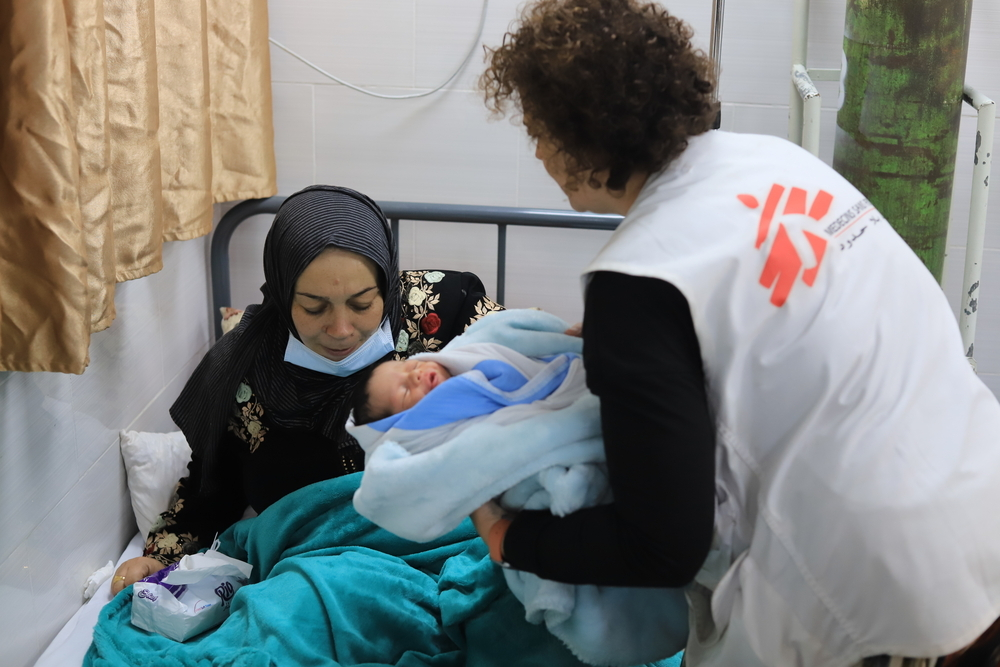
IMAGE: An MSF midwife checks on a newborn in the postnatal ward of Al-Helal Al-Emirati Hospital in Rafah in early 2024, before the hospital was evacuated in May (Source: Doctors Without Borders / Médecins Sans Frontières; photo: Mariam Abu Dagga/MSF)
On 25 March 2025, the United Nations Population Fund (UNFPA) reported that nine incubators, 54 ultrasound machines and 350 midwifery kits were waiting to enter Gaza. With those kits, community midwives could have helped more than 15,000 women give birth safely. Inside Gaza, blood plasma for women bleeding heavily, medicines for pre-eclampsia and drugs used during labour were all critically short. Antibiotics and supplies to prevent and control infections were also running low.
The shortages changed what clinicians in Gaza could do for pregnant women and newborns. A January 2026 report from Physicians for Human Rights (PHR) draws on interviews with 78 clinicians to document what happened when patients needed care that staff could no longer provide.
DOCUMENT: Destroying Hope for the Future: Reproductive Violence in Gaza, a January 2026 report by Physicians for Human Rights and the University of Chicago Law School’s Global Human Rights Clinic (Source: Physicians for Human Rights – PHR)Destroying-Hope-for-the-Future_Reproductive-Violence-in-Gaza_PHR-Report_Jan-2026
“This blockade is not only denying pregnant women and newborns essential medical care but also stripping them of their fundamental right to life,” said Laila Baker, UNFPA’s regional director for the Arab States.
In August, UNFPA delivered ten truckloads of reproductive health and hygiene supplies to Gaza. Another 160 truckloads remained stranded at the border after more than five months.
Equipment shortages persisted after the October 2025 ceasefire. In its briefing, Médecins Sans Frontières (MSF) described how shortages of equipment, generator parts and other supplies disrupted the operation of incubators and devices that help newborns breathe. MSF reported 112 newborn deaths among 1,842 newborn admissions at Nasser and Al-Helou hospitals from September 2025 to March 2026.
The UN commission of inquiry examined the wider toll in a June 2026 report on Palestinian children, tracing how attacks on healthcare and disruptions to reproductive care put newborns in Gaza at greater risk of dying.
For women who depended on fertility treatment, the destruction of care could also take away the chance to become pregnant again. Dr Ambereen Sleemi, a gynaecologist who volunteered in Gaza in July 2025, told the UN Human Rights Office what women had said to her during treatment:
“Almost every pregnant woman I treated who had other children said she had already lost a child in the war,” she said. “The collective pain and sorrow were overwhelming and ever-present.”
Azza’s twins and the loss of another chance
Azza, whose name is a pseudonym, sold gold from her wedding to pay for fertility treatment. She had struggled to conceive, and the treatment helped her become pregnant with twins. Then bombardment and displacement made it harder and harder for her to get medical care.
On 30 December 2023, a medical emergency led Azza to deliver her twins at Al-Sahaba Hospital in Gaza City. Both babies needed intensive care the hospital could not provide. They died half an hour after birth, she said in her account to Amnesty.
Azza still had embryos stored at Al-Basma fertility clinic. After losing contact with the clinic’s staff, her husband went to check on it. Azza eventually reached a nurse and asked whether her embryos had been saved. The nurse told her everything had been destroyed.
“At this point, I felt I had lost everything and felt hopeless,” she said.

IMAGE: Specimen tubes remain in a broken refrigerator inside the damaged Al-Basma fertility clinic in Gaza City on 2 April 2024 (Source: Reuters; photo: Dawoud Abu Alkas/Reuters)
The clinic’s director estimated that Al-Basma’s destruction affected about 4,000 embryos and around 1,000 sperm or egg samples. For patients, what they had stored there represented years of treatment and financial sacrifice. For some, age or medical circumstances meant it could not be replaced.
Before October 2023, at least nine facilities in Gaza offered in vitro fertilisation (IVF) and related services. By mid-2026, none could provide IVF, according to three doctors interviewed separately for the investigation. One clinic was still partly operational, but it could not offer the treatment. Equipment, laboratory supplies and reliable electricity were in short supply.
Treatment outside Gaza was also out of reach for the seven Palestinians interviewed for the report who had sought IVF before the war. Some had obtained referrals but still waited more than a year.
The loss of reproductive control extended beyond IVF. Some women abandoned plans to become pregnant because of trauma and unsafe living conditions. Women who did not want to become pregnant faced barriers to getting contraception.
Why was Al-Basma attacked?
The UN commission of inquiry examined whether Al-Basma was attacked because it was a fertility clinic. The commission traced the damage at Al-Basma to a large-calibre projectile, most likely a tank shell. It examined the damage to the clinic and the reproductive material stored there and found no evidence that the clinic was a legitimate military target. It concluded that Israeli forces knew what the clinic did and intended to destroy it. The commission found that destroying Al-Basma was a measure intended to prevent births among Palestinians in Gaza.

IMAGE: Two boys cycle past the damaged Al-Basma fertility clinic in Gaza City on 2 April 2024 (Source: Reuters; photo: Dawoud Abu Alkas/Reuters)
The commission’s wider inquiry also considered attacks on reproductive healthcare, siege restrictions and deprivation. It concluded that these actions, taken together, destroyed part of Palestinians’ reproductive capacity in Gaza and included measures intended to prevent births.
Amnesty’s broader finding of genocide leaves one question open. The report documents measures that prevented Palestinian births and calls for an investigation into whether Israel imposed them for that purpose.
Warnings about the harm to hospitals and patients did not bring an end to the restrictions. On 21 November 2024, International Criminal Court judges issued arrest warrants for Benjamin Netanyahu and Yoav Gallant, Israel’s prime minister and defence minister at the time of the conduct under review. The judges found reasonable grounds to believe that the two had “intentionally and knowingly” deprived civilians in Gaza of essentials, including medicines, medical supplies, fuel and electricity, from at least 8 October 2023 to 20 May 2024. The judges said the restrictions severely impaired hospitals’ ability to care for patients.
The judges also found reasonable grounds to believe that no clear military need or other justification under international humanitarian law could be identified for restricting humanitarian relief. Despite repeated warnings and appeals, only minimal aid was authorised. The warrants rested on findings about deliberate deprivation, not on convictions or a finding that the restrictions were intended to prevent births.
On 26 January 2024, months before the arrest warrants, the International Court of Justice ordered Israel to take all measures within its power to prevent acts covered by the Genocide Convention, including measures intended to prevent births. The court also ordered Israel to enable the provision of urgently needed basic services and humanitarian assistance. The order set out what Israel had to do while the case was pending. It did not decide whether genocide had occurred.
Israel’s military told the BBC it does not deliberately target fertility clinics or seek to suppress Gaza’s civilian birth rate.
At 27, Azza had lost her twins and the embryos she had stored at Al-Basma. IVF was no longer available in Gaza. She said she could not get a referral to leave for treatment because her case was not considered urgent.
“My heart breaks every time I see children around me,” she said.
The October 2025 ceasefire did not end Israel’s genocide against Palestinians in Gaza, Amnesty International concluded. The repeated harms Israel inflicted on Palestinian women and girls were integral to that genocide. As hunger and repeated displacement made survival a daily struggle, the destruction of health services and denial of essential care left many women with far less control over whether and when to become pregnant and less access to the care they needed to give birth safely.
READ MORE PALESTINE NEWS AT: 21st Century Wire Palestine Files
SUPPORT OUR INDEPENDENT MEDIA PLATFORM – BECOME A MEMBER @21WIRE.TV
VISIT OUR TELEGRAM CHANNEL
21st Century Wire is an alternative news agency designed to enlighten, inform and educate readers about world events which are not always covered in the mainstream media.
Source: https://21stcenturywire.com/2026/11/26/what-israels-genocide-has-taken-from-palestinian-women-and-girls-in-gaza/
Anyone can join.
Anyone can contribute.
Anyone can become informed about their world.
"United We Stand" Click Here To Create Your Personal Citizen Journalist Account Today, Be Sure To Invite Your Friends.
Before It’s News® is a community of individuals who report on what’s going on around them, from all around the world. Anyone can join. Anyone can contribute. Anyone can become informed about their world. "United We Stand" Click Here To Create Your Personal Citizen Journalist Account Today, Be Sure To Invite Your Friends.
LION'S MANE PRODUCT
Try Our Lion’s Mane WHOLE MIND Nootropic Blend 60 Capsules
Mushrooms are having a moment. One fabulous fungus in particular, lion’s mane, may help improve memory, depression and anxiety symptoms. They are also an excellent source of nutrients that show promise as a therapy for dementia, and other neurodegenerative diseases. If you’re living with anxiety or depression, you may be curious about all the therapy options out there — including the natural ones.Our Lion’s Mane WHOLE MIND Nootropic Blend has been formulated to utilize the potency of Lion’s mane but also include the benefits of four other Highly Beneficial Mushrooms. Synergistically, they work together to Build your health through improving cognitive function and immunity regardless of your age. Our Nootropic not only improves your Cognitive Function and Activates your Immune System, but it benefits growth of Essential Gut Flora, further enhancing your Vitality.

Our Formula includes: Lion’s Mane Mushrooms which Increase Brain Power through nerve growth, lessen anxiety, reduce depression, and improve concentration. Its an excellent adaptogen, promotes sleep and improves immunity. Shiitake Mushrooms which Fight cancer cells and infectious disease, boost the immune system, promotes brain function, and serves as a source of B vitamins. Maitake Mushrooms which regulate blood sugar levels of diabetics, reduce hypertension and boosts the immune system. Reishi Mushrooms which Fight inflammation, liver disease, fatigue, tumor growth and cancer. They Improve skin disorders and soothes digestive problems, stomach ulcers and leaky gut syndrome. Chaga Mushrooms which have anti-aging effects, boost immune function, improve stamina and athletic performance, even act as a natural aphrodisiac, fighting diabetes and improving liver function. Try Our Lion’s Mane WHOLE MIND Nootropic Blend 60 Capsules Today. Be 100% Satisfied or Receive a Full Money Back Guarantee. Order Yours Today by Following This Link.



| Visits: | 1,839,798,573 |
| Stories: | 8,744,258 |
Whistler Blowers, Insiders


Been asking for 25yrs— how long till the JEWnociders drone neighborhoods inside AMERICA? They nuked NYC on 911.
Now they’ve exploded a dirty bomb in Iowa. WAKE UP sheeple and ACT!
https://x.com/realStockes/status/2125597531534930208