

How Fear Takes Over a Character’s Body & Brain


Fear is more than an emotion; it’s a built-in survival mechanism that alerts a person to danger, kicking off a chain reaction of automatic body responses. This reaction—a hammering heart rate, breathing fluctuations, muscle tension, dizziness, and others—is immediate, raw, and usually something a person can’t control, at least not right away.
And, luckily for us writers, it’s also a universal experience, meaning we can use this response to tap into the reader’s psyche!
When fear takes hold of a character, not only will readers recognize it, but it can also trigger memories of their own past experiences. After all, we’ve all had brushes with fear, from those small jump-scare moments when the wind slams the door shut unexpectedly to thinking we’re alone in a room to suddenly realizing we’re not. And of course, we all have a collection of other experiences—things we don’t like to talk about—difficult past moments that caused us emotional pain and uncertainty, or left us feeling trepidation when we encounter reminders of something that happened. Fear is common ground, so when readers are close enough to a character’s fear to feel an echo of it, they feel involved and invested in what happens next.
Sounds great, right? But it all hinges on two things: describing the way fear hijacks the body and brain in a true-to-life way and describing the chain reaction so it mirrors how fear unfolds.
How Fear Takes Over the Body and Brain
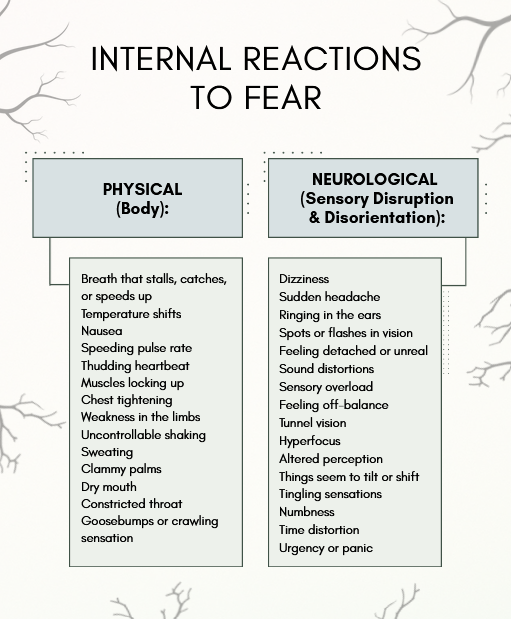
When fear takes hold, all sorts of internal reactions happen. Some are physical, tied to muscles, breath, and organs. Others are more neurological, affecting perception, balance, and sensory processing.
Using physical or neurological cues (when point-of-view allows) lets you bypass telling entirely. You don’t need to name the fear—these reactions reveal exactly what’s going on. Be choosy about which to use, though, as less is more. Select one or two that fit your character and keep the writing tight. Also consider what’s happening in the scene. If the character feels danger is imminent, they’ll be focused on escaping it, not how they can’t catch their breath, they feel numb and slow, and they’re shaking all over. Readers don’t need a lot of description that slows the scene—they know what fear feels like, so a cue or observation here and there is all that is needed.
How Fear Unfolds in a Specific Way
Another important factor to writing authentic fear is to pay attention to the order of details you share that show fear’s progression. It starts with a cause—a stimulus or trigger that sets everything in motion and ends with your character acting to escape or neutralize the threat.
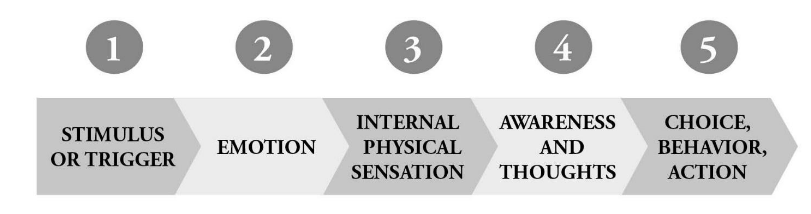
The order is important, because we process fear in a specific way, and we want to show it unfold the same way it happens in real life so readers more easily slip into the character’s experience.
To play this out, imagine our character Emma is finishing her shift at the local pub. Last one out, she shuts down the lights, locks up, and carries a bag of trash to the dumpster. It’s late, a moonless night, so she quickly tosses the garbage and then moves toward her car, a murky lump in the dark parking lot. Halfway to it, a sound disturbs the quiet—the scrape of boots against gravel. Her pulse starts to race. Her ribs crush her lungs, trapping her breath. Someone’s there! She digs in her pocket for her key fob, and once it’s in hand, she runs.
Stimulus: The sound of gravel
Emotion: Fear
Internal Physical Sensation: Racing heartbeat, a tight chest, halted breath
Awareness and Thoughts: Someone’s there, a threat.
Action: (Flight) She gets her key ready and then runs for the car.
Notice how the body reacts before her thoughts fully form—that split-second difference is what makes her fear feel immediate and real. Now, a different order:
Halfway across, a sound disrupts the quiet—the scrape of a boot against gravel. Someone’s there! Her pulse races and her ribs crush her lungs, trapping her breath. She digs in her pocket for her key fob, and once it’s in her grasp, she runs.
Swapping awareness and thoughts with internal physical sensations feels disjointed, right? It no longer matches how our internal warning system works.
Describing fear can be challenging because we know from experience how it feels like everything is happening at once. Time seems to speed up. We’re paying attention to everything, scanning for threats. We feel intense internal pressure to restore safety: fight, flight, freeze (and sometimes fawn). Keeping this order in mind can help us focus on what to describe and when.
Sometimes your description will have parts missing, too. A situation could be so urgent your character won’t have room for thought, or you’re not in the POV of the character experiencing fear, meaning you can’t share internal physical sensations and thoughts. But whatever is there should mirror the true unfolding of fear. One part you should always show is the trigger, as this helps readers understand the cause for your character’s fear even if they don’t yet know why it’s setting them off.
Tip: Focus on What’s Triggering the Character’s Fear
One area you do want to give a bit more descriptive airtime is the stimulus/trigger. Readers will recognize those visceral sensations that are part of fear (adrenaline spiking, a racing heart) but if they don’t know what’s triggering the fear response, they end up going back and rereading to see what they missed. So be sure that cause-effect is always clear.
Fear Burrows Deeper Over Time
Fear can also affect characters over the long term, too. It may not be as explosive or obvious, largely because it’s steering your character’s actions in choices through patterns of avoidance. Characters who fear failure (due to a painful past experience with it) might hold back when opportunities come up, they might avoid responsibility, believing they’ll only let people down, and they might choose easy goals where there’s no risk of things going wrong. Or a character who was betrayed by a close friend may avoid gatherings and get-togethers where closeness is encouraged, not reach out to others when she needs help, and bottle up her emotions rather than risk confiding in someone again. These fears are the ones that steer your character’s actions and choices in a way that ultimately holds them back. Understanding what this looks like for your protagonist—and why—will be a key part of their arc, as your story will be about them confronting this fear and breaking free of the patterns that are limiting their growth and happiness.
And Remember… Fear Isn’t All Bad
It isn’t fun to experience, so we tend to think about fear being a bad thing and something to overcome. The reality is that it has an important purpose—to keep us safe. This early warning system alerts a person to possible risk and the body and brain takeover is to push them toward fight, flight, or flee, whichever will help them avoid harm.
Show this balance in your story: how fear activates your character to spot the danger and act to be safe, not just lead to overreactions or complications because they misread a situation or are driven by a deeper fear.

For more ideas on how to show fear shaping a character’s behavior and choices, The Fear Thesaurus: A Writer’s Guide to What Holds Characters Back explores 80+ human fears, from betrayal and heartbreak to powerlessness and death. See all the fears covered in this guide here.
Summary for Busy Writers: Fear isn’t just an emotion—it’s a survival mechanism. Writing fear with visceral cues, proper narrative sequencing, and long-term character arcs can tap into your reader’s psyche and keep them hooked.
The post How Fear Takes Over a Character’s Body & Brain appeared first on WRITERS HELPING WRITERS®.
The Bookshelf Muse is a hub for writers, educators and anyone with a love for the written word. Featuring Thesaurus Collections that encourage stronger descriptive skills, this award-winning blog will help writers hone their craft and take their writing to the next level.
Source: https://writershelpingwriters.net/2026/11/how-fear-takes-over-a-characters-body-brain/
Anyone can join.
Anyone can contribute.
Anyone can become informed about their world.
"United We Stand" Click Here To Create Your Personal Citizen Journalist Account Today, Be Sure To Invite Your Friends.
Before It’s News® is a community of individuals who report on what’s going on around them, from all around the world. Anyone can join. Anyone can contribute. Anyone can become informed about their world. "United We Stand" Click Here To Create Your Personal Citizen Journalist Account Today, Be Sure To Invite Your Friends.
LION'S MANE PRODUCT
Try Our Lion’s Mane WHOLE MIND Nootropic Blend 60 Capsules
Mushrooms are having a moment. One fabulous fungus in particular, lion’s mane, may help improve memory, depression and anxiety symptoms. They are also an excellent source of nutrients that show promise as a therapy for dementia, and other neurodegenerative diseases. If you’re living with anxiety or depression, you may be curious about all the therapy options out there — including the natural ones.Our Lion’s Mane WHOLE MIND Nootropic Blend has been formulated to utilize the potency of Lion’s mane but also include the benefits of four other Highly Beneficial Mushrooms. Synergistically, they work together to Build your health through improving cognitive function and immunity regardless of your age. Our Nootropic not only improves your Cognitive Function and Activates your Immune System, but it benefits growth of Essential Gut Flora, further enhancing your Vitality.

Our Formula includes: Lion’s Mane Mushrooms which Increase Brain Power through nerve growth, lessen anxiety, reduce depression, and improve concentration. Its an excellent adaptogen, promotes sleep and improves immunity. Shiitake Mushrooms which Fight cancer cells and infectious disease, boost the immune system, promotes brain function, and serves as a source of B vitamins. Maitake Mushrooms which regulate blood sugar levels of diabetics, reduce hypertension and boosts the immune system. Reishi Mushrooms which Fight inflammation, liver disease, fatigue, tumor growth and cancer. They Improve skin disorders and soothes digestive problems, stomach ulcers and leaky gut syndrome. Chaga Mushrooms which have anti-aging effects, boost immune function, improve stamina and athletic performance, even act as a natural aphrodisiac, fighting diabetes and improving liver function. Try Our Lion’s Mane WHOLE MIND Nootropic Blend 60 Capsules Today. Be 100% Satisfied or Receive a Full Money Back Guarantee. Order Yours Today by Following This Link.


| Visits: | 1,838,239,243 |
| Stories: | 8,735,999 |
Whistler Blowers, Insiders

