

Flying Blind in High-Stakes Retail: Why Static Pricing and Demand Models Fail in Volatile Markets

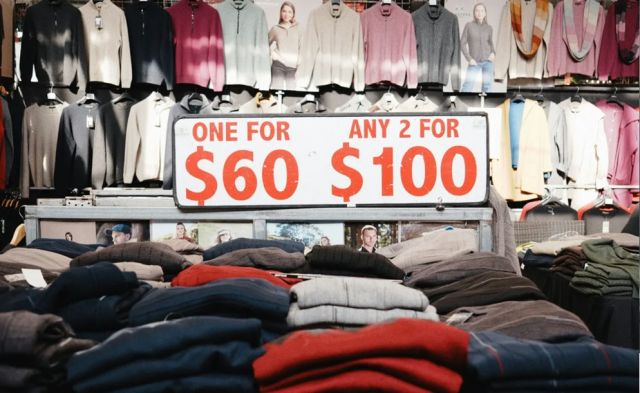
For consumer brands, a 5% pricing change rarely feels like a high-risk decision.When a company adjusts a product’s price, expands a promotional campaign, increases inventory ahead of a seasonal launch, or shifts marketing dollars toward a new customer acquisition strategy, most people would think these decisions appear incremental at first glance.
The Hidden Risk of “Incremental” Operational Bets
In reality, they can represent multimillion-dollar bets. One small pricing adjustment can influence customer behavior, alter demand patterns, affect inventory turnover, trigger competitive responses, and ultimately reshape profit margins across an entire product portfolio. Yet many of these decisions are still made using forecasting models that were designed for a much more predictable business environment.
The problem isn’t a lack of data. Retailers now have more information than ever before. They can analyze customer behavior, monitor inventory levels, track website traffic, evaluate campaign performance, measure conversion rates, review competitive pricing, and monitor social sentiment in real time.
The challenge is that most traditional models still treat pricing and demand as relatively static variables. And modern markets are anything but static: consumer preferences shift overnight. Because of social media accelerating trends at unprecedented speeds or competitors reacting faster than ever. Even supply chain disruptions can ripple across entire industries in a matter of weeks. But most of it, economic uncertainty continues to influence purchasing behavior across nearly every retail category.
Despite these realities, many businesses continue to make critical operational decisions using frameworks that assume demand exists in isolation. Costing companies far more than they can realize.
The Myth of Static Elasticity
Demand forecasting has relied heavily on historical data, and it still does for many professionals. Because of that analysts review previous sales, identify patterns, estimate price elasticity, and project future outcomes based on those relationships. Is a process that seems logical: if consumers responded positively to a pricing strategy last year, the same approach should theoretically work again.
Except markets don’t stand still. Traditional pricing models often assume that demand responds in a relatively predictable way. Increase a price by a certain percentage, and sales decline by a measurable amount. Lower the price, and demand increases. Assuming cause and effect.
Unfortunately, consumers don’t make purchasing decisions inside controlled environments and as we mentioned earlier, more variables play an important role.
A competitor might introduce a discount at the same time a company raises prices. A viral social media trend could unexpectedly increase demand for a product category. Consumer sentiment could shift because of economic uncertainty. Seasonal purchasing patterns might amplify or weaken a pricing decision.
Each of these variables influences the outcome. And even more importantly, they influence one another. Understanding that demand doesn’t exist in a vacuum, but it exists within an ecosystem of constantly changing variables is the key to understanding where traditional forecasting begins to break down.
Factoring in the Unmeasurable: Unknown Unknowns as Stochastic Variance
Retail leaders have become remarkably good at measuring known variables. They can track sales performance, inventory levels, customer retention, fulfillment rates, and promotional effectiveness with extraordinary precision. Predictability is now one of the expected outcomes for people working in retail, but operational risk isn’t usually created by known variables. Making operational risk unpredictable because it’s created by uncertainty
Economists sometimes refer to these factors as “unknown unknowns” variables that cannot be easily identified before they begin influencing outcomes.
These variables might include:
- Unexpected competitor actions.
- Supply chain disruptions.
- Changes in consumer sentiment.
- Shifting economic conditions.
- Emerging market trends.
- Cultural events that reshape purchasing behavior.
Traditional business models often struggle to incorporate these variables because they don’t fit neatly into linear forecasting frameworks. And financial institutions have approached this problem differently for decades.
Rather than assuming that markets will behave exactly as they did in the past, quantitative analysts build models that account for uncertainty. Instead of predicting a single outcome, they evaluate multiple possible scenarios.
The objective isn’t to eliminate uncertainty. It’s to understand how uncertainty affects decision-making. And the retail industry may be reaching a point where that same approach becomes necessary.
Simulating the Road Not Taken: Counterfactuals in Retail Strategy
Perhaps the biggest limitation of traditional forecasting is that it only measures what actually happened.
It doesn’t measure what could have happened. What if a product had launched one month earlier? What if a company had increased prices by 3% instead of 7%? What if inventory allocations had shifted toward a different region? What if a promotional campaign had been delayed?
These questions are known as counterfactuals. They examine alternative scenarios that never occurred but could have. Historically, answering those questions required extensive analysis, specialized expertise, and significant resources.
Today, advances in data science are beginning to make those evaluations more accessible. Rather than relying exclusively on historical reports, organizations can increasingly simulate multiple scenarios before making a decision. Pricing strategies, promotional calendars, inventory allocations, product launches, and demand forecasts can all be tested against a range of market conditions before capital is committed.
Instead of asking, “What happened last quarter?” businesses can begin asking, “What is most likely to happen if we make this decision?” A shift that may seem subtle, but in practice, it changes everything.
The Future of Retail Is Proactive, Not Reactive
This shift from backward-looking reports to real-time decision simulation is redefining how modern consumer brands approach operational risk.
New solutions like the ones Kapnova is introducing to the retail industry show how companies routinely make multimillion-dollar decisions on pricing, inventory, promotions, and product launches using historical data that often fails to capture the complexity of today’s markets. Kapnova is bringing causal AI to the retail sector, changing how these businesses operate at a fundamental level. In high-stakes retail environments, relying on last year’s performance metrics to predict next quarter’s consumer behavior creates a massive, unnecessary vulnerability.
By uniting quantitative finance methodologies with causal inference research, decision simulation platforms allow commercial teams to run tens of thousands of scenario simulations before deploying capital. A brand considering a seasonal pricing increase can model not only direct demand elasticity, but also indirect feedback loops, such as competitor price cuts, shifts in consumer sentiment, and regional inventory constraints.
Instead of reacting to unexpected market shifts after profit margins have already eroded, enterprise leaders can evaluate counterfactual paths with empirical confidence. The goal of decision simulation is not to promise an impossible crystal ball, but to quantify stochastic uncertainty, isolate precise causal drivers, and ensure that every major operational call is backed by mathematical rigor.
The era of relying on historical spreadsheets and static dashboards to guide multimillion-dollar decisions is coming to an end. In an increasingly volatile marketplace, the competitive advantage belongs to brands that stop reacting to what happened yesterday, and start simulating what happens next.
Anyone can join.
Anyone can contribute.
Anyone can become informed about their world.
"United We Stand" Click Here To Create Your Personal Citizen Journalist Account Today, Be Sure To Invite Your Friends.
Before It’s News® is a community of individuals who report on what’s going on around them, from all around the world. Anyone can join. Anyone can contribute. Anyone can become informed about their world. "United We Stand" Click Here To Create Your Personal Citizen Journalist Account Today, Be Sure To Invite Your Friends.
LION'S MANE PRODUCT
Try Our Lion’s Mane WHOLE MIND Nootropic Blend 60 Capsules
Mushrooms are having a moment. One fabulous fungus in particular, lion’s mane, may help improve memory, depression and anxiety symptoms. They are also an excellent source of nutrients that show promise as a therapy for dementia, and other neurodegenerative diseases. If you’re living with anxiety or depression, you may be curious about all the therapy options out there — including the natural ones.Our Lion’s Mane WHOLE MIND Nootropic Blend has been formulated to utilize the potency of Lion’s mane but also include the benefits of four other Highly Beneficial Mushrooms. Synergistically, they work together to Build your health through improving cognitive function and immunity regardless of your age. Our Nootropic not only improves your Cognitive Function and Activates your Immune System, but it benefits growth of Essential Gut Flora, further enhancing your Vitality.

Our Formula includes: Lion’s Mane Mushrooms which Increase Brain Power through nerve growth, lessen anxiety, reduce depression, and improve concentration. Its an excellent adaptogen, promotes sleep and improves immunity. Shiitake Mushrooms which Fight cancer cells and infectious disease, boost the immune system, promotes brain function, and serves as a source of B vitamins. Maitake Mushrooms which regulate blood sugar levels of diabetics, reduce hypertension and boosts the immune system. Reishi Mushrooms which Fight inflammation, liver disease, fatigue, tumor growth and cancer. They Improve skin disorders and soothes digestive problems, stomach ulcers and leaky gut syndrome. Chaga Mushrooms which have anti-aging effects, boost immune function, improve stamina and athletic performance, even act as a natural aphrodisiac, fighting diabetes and improving liver function. Try Our Lion’s Mane WHOLE MIND Nootropic Blend 60 Capsules Today. Be 100% Satisfied or Receive a Full Money Back Guarantee. Order Yours Today by Following This Link.


| Visits: | 1,831,881,740 |
| Stories: | 8,704,598 |
Whistler Blowers, Insiders

