

Australian Construction Site Safety: What Perimeter Planning Requires in 2026

A temporary fence can look like a straightforward boundary until a pedestrian route shifts, excavation begins beside it or strong wind tests its supports. On an Australian construction site, the perimeter is a public-safety control that must suit the work and its surroundings. In 2026, the useful question is not whether every project faces a newly introduced fencing rule. It is whether the barrier in place can still manage the risks outside the work zone.
Why a construction perimeter is a public-safety control
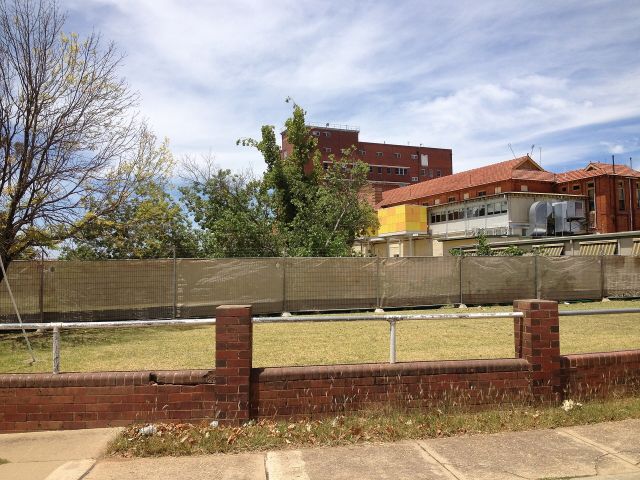
Construction activity creates hazards that do not stop at the site boundary. A passer-by may be drawn toward an open gate, a child may find a gap between panels, or a vehicle leaving the site may cross a busy footpath. Excavations, moving equipment and stored materials make unauthorised entry especially consequential. Effective perimeter security reduces the opportunity for people to enter those areas and helps separate normal public movement from construction traffic. It cannot replace supervision, traffic management or controls inside the site, but it gives those measures a defined edge.
That edge changes as the project changes. A boundary that worked during early groundworks may no longer suit a later delivery route or a newly occupied building next door. Project managers should consider who passes the site, when they pass it and where an apparently convenient shortcut might develop. A residential street used by families walking to school calls for a different review from an isolated work area with limited public access. The aim is to keep the boundary credible throughout the job, rather than treating its initial installation as a finished task.
What Australian WHS duties and AS 4687 actually require
Work health and safety obligations and technical standards answer related but different questions. WHS requirements establish duties to manage risks; a technical standard describes requirements for particular equipment and its use. Australian jurisdictions do not all express their construction-site rules in identical terms, so a project team needs to apply the requirements relevant to its location. In Tasmania, for example, WHS Regulation 298 requires a construction workplace to be secured against unauthorised access so far as is reasonably practicable. WorkSafe Tasmania also identifies surroundings such as schools, parks and densely populated areas as relevant to site-security decisions.
For temporary fencing and pedestrian barriers, AS 4687.2:2022 specifies minimum requirements for design, installation and performance intended to protect the public. The 2022 edition is the relevant standards reference when assessing equipment and installation in 2026; the year in an article headline does not itself signal a new nationwide rule introduced that year. Equally, referring to a standard does not establish that every panel, foot or completed installation meets it. Site conditions and the configuration of the whole barrier matter. Project teams need to distinguish the applicable legal duty, the technical criteria used to select and install a system, and the continuing checks that show whether it remains effective.
Choosing temporary barriers for the actual site
Equipment selection starts with the complete perimeter, not an individual panel. The fence line needs to account for corners, changes in ground level, gates and points where members of the public could reach underneath or between sections. Connections and supports must suit the proposed layout and the conditions they will face. A panel that appears stable on level ground may behave differently on a slope or where a gate is repeatedly opened for deliveries. Signs, mesh and sightlines should help people recognise the boundary without obscuring approaching pedestrians or vehicles.
Protecta supplies fence temporary systems, including a galvanised temporary panel measuring 2.4 metres wide by 2.1 metres high. The panel is hand-welded, has anti-climb mesh and is reusable. Those physical features are useful considerations when comparing site management supplies, but choosing a panel is only one part of selecting a suitable barrier. The feet, clamps, gates and installation arrangement must also be assessed for the location.
Wind deserves attention before shade cloth, signs or other coverings are added. Covering a mesh fence can increase the force on it, so a layout should be reviewed as a system rather than assuming that a sturdy-looking panel is sufficient. Where the public moves close to the boundary, a temporary pedestrian barrier or a different form of separation may be more appropriate than fencing alone. The right choice follows a risk assessment of the route, work activity and available space.
Planning around homes, footpaths and busy neighbourhoods
High-density residential areas leave little room for a poorly placed perimeter. Footpaths may carry commuters, schoolchildren and people using mobility aids, while residents and delivery drivers need predictable access to neighbouring properties. Before positioning a fence, project teams should map these movements alongside site entrances, loading areas and the working space needed inside the boundary. A barrier that protects the excavation but forces pedestrians into a traffic lane has transferred the problem rather than solved it.
High-visibility perimeter planning means making the route and its limits easy to understand. Gate locations, warning signs and pedestrian diversions should be visible where people make decisions, not only once they have reached a closed path. Corners and vehicle exits warrant particular attention because fencing can restrict sightlines in both directions. If the intended arrangement occupies or changes access to public space, relevant local approvals and traffic or pedestrian-management requirements should be addressed before installation. These details depend on the jurisdiction and location; a layout copied from another project is no substitute for checking the actual street.
Neighbours can also affect how well a boundary works in practice. Repeatedly opened gates, materials placed against a fence or a detour that people find confusing can weaken an otherwise sound plan. Regular observation of how the public uses the area helps identify those issues while they are still manageable.
Installation, inspection and whole-life value
Rapid deployment is valuable when work zones change, provided speed does not bypass the installation checks. Panels should form a continuous line, connections should remain secure, and supports should be positioned so they do not create a new trip hazard on a public route. Gates need a clear operating routine: workers must know when they may open them, how deliveries are supervised and who confirms they are secured afterward. The SafeWork NSW website provides construction safety information, including risks associated with overhead and underground services.
Inspection should respond to events as well as a routine schedule. Strong weather, vehicle contact, a moved panel or a new phase of work can change the risk before the next planned check. A supervisor needs a practical way to record defects, arrange repairs and prevent continued use of a compromised section. Public-facing access points deserve particular attention at the end of a shift, when workers who normally notice an open gate have left.
Durability also has an economic dimension. A flimsy barrier may require repeated straightening, replacement or extra labour to keep the line intact. Reusable, appropriately selected components can support more consistent installation across project stages, while damaged equipment should be removed rather than relied upon because it is already on site. Purchase price alone therefore gives an incomplete picture: maintenance, handling, replacement and the consequences of an unsafe boundary all matter to the project.
A practical perimeter review for project managers
A short review can turn broad Australian site safety duties into decisions the site team can act on. Start with the hazards behind the proposed boundary and the people likely to encounter it. Then walk the entire line from the public side where it is safe to do so. This reveals gaps, confusing routes and visibility problems that are easy to miss on a drawing. The review should cover the installed system and its day-to-day operation, because even sound equipment can fail as a control when gates or temporary openings are poorly managed.
-
Assess exposure: Identify nearby homes, schools, parks, footpaths and vehicle movements, as well as changing hazards inside the site.
-
Check continuity: Look for gaps, access beneath panels, unsecured gates and places where the fence can be climbed or displaced.
-
Test the arrangement: Review supports, connections, ground conditions and the effect of wind or added coverings.
-
Protect movement: Keep pedestrian routes, signs and sightlines clear, particularly near entrances and deliveries.
-
Assign ownership: Set responsibility for inspections, repairs and checks after weather events or changes to the work zone.
Document the decisions and revisit them when the work, access routes or surrounding activity changes. A perimeter remains useful because it is actively managed—not because the first row of panels has stayed in the same place.
Anyone can join.
Anyone can contribute.
Anyone can become informed about their world.
"United We Stand" Click Here To Create Your Personal Citizen Journalist Account Today, Be Sure To Invite Your Friends.
Before It’s News® is a community of individuals who report on what’s going on around them, from all around the world. Anyone can join. Anyone can contribute. Anyone can become informed about their world. "United We Stand" Click Here To Create Your Personal Citizen Journalist Account Today, Be Sure To Invite Your Friends.
LION'S MANE PRODUCT
Try Our Lion’s Mane WHOLE MIND Nootropic Blend 60 Capsules
Mushrooms are having a moment. One fabulous fungus in particular, lion’s mane, may help improve memory, depression and anxiety symptoms. They are also an excellent source of nutrients that show promise as a therapy for dementia, and other neurodegenerative diseases. If you’re living with anxiety or depression, you may be curious about all the therapy options out there — including the natural ones.Our Lion’s Mane WHOLE MIND Nootropic Blend has been formulated to utilize the potency of Lion’s mane but also include the benefits of four other Highly Beneficial Mushrooms. Synergistically, they work together to Build your health through improving cognitive function and immunity regardless of your age. Our Nootropic not only improves your Cognitive Function and Activates your Immune System, but it benefits growth of Essential Gut Flora, further enhancing your Vitality.

Our Formula includes: Lion’s Mane Mushrooms which Increase Brain Power through nerve growth, lessen anxiety, reduce depression, and improve concentration. Its an excellent adaptogen, promotes sleep and improves immunity. Shiitake Mushrooms which Fight cancer cells and infectious disease, boost the immune system, promotes brain function, and serves as a source of B vitamins. Maitake Mushrooms which regulate blood sugar levels of diabetics, reduce hypertension and boosts the immune system. Reishi Mushrooms which Fight inflammation, liver disease, fatigue, tumor growth and cancer. They Improve skin disorders and soothes digestive problems, stomach ulcers and leaky gut syndrome. Chaga Mushrooms which have anti-aging effects, boost immune function, improve stamina and athletic performance, even act as a natural aphrodisiac, fighting diabetes and improving liver function. Try Our Lion’s Mane WHOLE MIND Nootropic Blend 60 Capsules Today. Be 100% Satisfied or Receive a Full Money Back Guarantee. Order Yours Today by Following This Link.


| Visits: | 1,838,729,806 |
| Stories: | 8,738,090 |
Whistler Blowers, Insiders

