

Dog Ramp Angle and Surface: Planning a Safer Home Setup

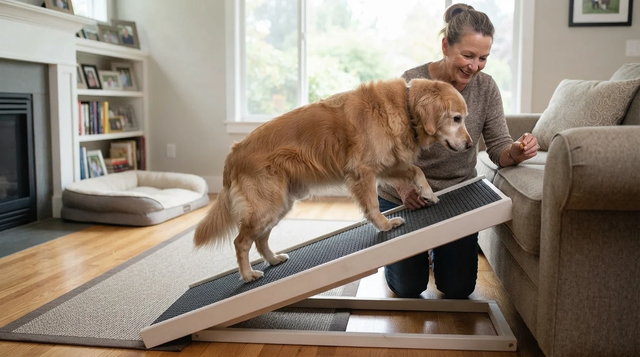
There comes a point in many dogs’ lives when the jump into the car, onto the sofa, or up the back step starts to look a little less effortless. Some dogs hesitate. Some try and slip. Others simply stop going to places they used to love. For owners, a ramp often seems like the obvious answer, and in many homes it can make a real difference.
But not every ramp works for every dog or every spot. A ramp that’s too steep, too slippery, or awkwardly placed can be ignored entirely, or worse, make a dog less confident. This guide looks at the main things to consider when planning a ramp, from angle and surface to where it fits in your dog’s daily routine.
Why Home Setup Matters as Mobility Changes
As dogs age, or after illness or injury, the way they move around the home can change. Small obstacles that never mattered before, such as a single step or a slippery floor, can start to shape where a dog goes and how comfortable it feels.
Adapting the home is one of the most practical things an owner can do. It doesn’t replace veterinary care, but it can help a dog keep using the spaces and routes it’s used to. A ramp is often part of that adaptation.
Ramp Angle and Surface
The two most important features of a ramp are its angle and its surface. A ramp that’s too steep asks a dog to work harder than a gentler slope, and a smooth surface can make paws slide.
For a detailed look at how to judge both, there’s a useful care note on choosing a dog ramp that covers slope, surface, landing, and where the ramp fits into the dog’s everyday route. It’s a planning resource designed to help owners think through each element rather than guessing.
In general terms, a longer ramp reaching the same height creates a gentler slope. Where space is tight, owners sometimes end up with a steeper ramp than they’d like. In that situation, it’s worth thinking about whether another location or approach would work better.
What Makes a Good Surface?
A good ramp surface gives paws something to grip. Carpeted, rubberised, or textured surfaces are common choices. Smooth plastic or bare wood can be slippery, especially if a dog’s paws are wet or the dog is unsteady.
It’s also worth checking the surface over time. Carpet can wear thin, and textured coatings can become smooth with use. A quick check now and again helps keep the ramp reliable.
The Landing and Everyday Route
A ramp isn’t just a slope. Where it starts and where it ends matter just as much. A ramp that lands on a slippery floor, or ends abruptly against furniture, can undo the benefit of a good slope.
Think about the full route your dog takes:
- Is there a stable, non-slip area at the bottom of the ramp?
- Is there enough space at the top for your dog to step off comfortably?
- Does the ramp sit firmly, without wobbling or sliding?
- Is it placed where your dog naturally wants to go, rather than somewhere convenient for the furniture?
Dogs are more likely to use a ramp that fits their existing habits. If your dog always gets onto the sofa from one particular end, that’s usually the best spot for the ramp.
Introducing a Ramp to Your Dog
Many dogs need time to get used to a ramp. A new object in a familiar place can feel strange, and some dogs are wary at first. Patience helps:
- Place the ramp flat on the floor initially, if possible, so your dog can walk over it.
- Use treats and praise to make it a positive experience.
- Let your dog explore at its own pace rather than lifting or pushing it onto the ramp.
- Keep early sessions short.
- Gradually set the ramp at its working height once your dog is confident.
If your dog seems unsure or uncomfortable, stop and try again another day. A calm, gradual introduction is usually more successful than a rushed one.
After Surgery or Injury: Your Vet Decides
If your dog is recovering from surgery or an injury, the rules are different. Your vet or veterinary team will give specific advice on activity restrictions, including whether your dog should use stairs, ramps, or furniture at all during recovery.
Follow that advice closely. A ramp may be helpful later in recovery, or it may not be appropriate for a while. Individual exercise decisions belong with the veterinary team, who understand your dog’s procedure and progress.
Ramps as Part of a Wider Routine
A ramp is one piece of a bigger picture. Many owners also think about bedding, flooring, exercise routines, weight, and, where their vet agrees, joint supplements. Each element plays a different role, and none of them replaces veterinary assessment.
Some owners ask their vet about joint-wellness supplements as part of this wider routine. Antinol, for example, is presented as a joint-wellness softgel for dogs and cats. If you’re considering a supplement, check the exact product label and talk it through with your vet, especially if your dog takes other products or is recovering from a procedure.
Other Home Adjustments Worth Considering
- Non-slip rugs or runners on smooth floors, particularly along common routes.
- Supportive bedding that’s easy to step into and out of.
- Raised food and water bowls, if your vet thinks they’d help your dog.
- Baby gates to limit access to stairs, where advised.
- Good lighting along routes your dog uses at night.
Observing How Your Dog Uses the Space
Once the ramp is in place, watch how your dog uses it. Does your dog go up confidently? Does it hesitate at the top or bottom? Does it avoid the ramp altogether? These observations help you adjust the setup and are worth sharing with your vet.
Changes in how your dog uses the ramp over time can also be useful information. If your dog suddenly struggles where it used to cope well, contact your vet.
Ramps for the Car
Getting in and out of the car is one of the hardest jumps many dogs face, especially into the boot of a taller vehicle. Car ramps follow the same principles as indoor ones: a gentle angle, a grippy surface, and a secure connection at the top. Because the height is often greater, a longer ramp is usually needed to keep the slope comfortable.
Check that the ramp sits firmly against the car and on the ground, and practise in a quiet place before relying on it for a trip. Some dogs are more nervous outdoors, so the same gradual introduction used indoors is just as important here.
Checking the Setup Over Time
A home setup isn’t something you do once and forget. Surfaces wear, rugs move, and your dog’s needs can change. Every few weeks, take a quick look at the ramp and the routes around it. Is the surface still grippy? Has the ramp shifted? Is the landing area still clear and stable? Small adjustments keep the setup working well.
Choosing Between a Ramp and Steps
Ramps and pet steps both offer an easier way up, but they suit different dogs and spaces. Steps take up less floor space and work well for some dogs, while a ramp avoids the lifting motion of each step entirely. Watch how your dog moves now, and think about the height involved and the room available. If you’re unsure which would suit your dog better, especially after an injury or procedure, ask your veterinary team for their view.
Final Thoughts
A well-chosen, well-placed ramp can help a dog keep enjoying its favourite places at home. The key is planning: a gentle angle, a grippy surface, a stable landing, and a location that fits your dog’s natural routes.
Introduce the ramp gradually, keep an eye on how your dog uses it, and let your veterinary team guide any decisions about activity after surgery or injury. With that approach, a ramp becomes a practical, reassuring part of your dog’s everyday life.
Anyone can join.
Anyone can contribute.
Anyone can become informed about their world.
"United We Stand" Click Here To Create Your Personal Citizen Journalist Account Today, Be Sure To Invite Your Friends.
Before It’s News® is a community of individuals who report on what’s going on around them, from all around the world. Anyone can join. Anyone can contribute. Anyone can become informed about their world. "United We Stand" Click Here To Create Your Personal Citizen Journalist Account Today, Be Sure To Invite Your Friends.
LION'S MANE PRODUCT
Try Our Lion’s Mane WHOLE MIND Nootropic Blend 60 Capsules
Mushrooms are having a moment. One fabulous fungus in particular, lion’s mane, may help improve memory, depression and anxiety symptoms. They are also an excellent source of nutrients that show promise as a therapy for dementia, and other neurodegenerative diseases. If you’re living with anxiety or depression, you may be curious about all the therapy options out there — including the natural ones.Our Lion’s Mane WHOLE MIND Nootropic Blend has been formulated to utilize the potency of Lion’s mane but also include the benefits of four other Highly Beneficial Mushrooms. Synergistically, they work together to Build your health through improving cognitive function and immunity regardless of your age. Our Nootropic not only improves your Cognitive Function and Activates your Immune System, but it benefits growth of Essential Gut Flora, further enhancing your Vitality.

Our Formula includes: Lion’s Mane Mushrooms which Increase Brain Power through nerve growth, lessen anxiety, reduce depression, and improve concentration. Its an excellent adaptogen, promotes sleep and improves immunity. Shiitake Mushrooms which Fight cancer cells and infectious disease, boost the immune system, promotes brain function, and serves as a source of B vitamins. Maitake Mushrooms which regulate blood sugar levels of diabetics, reduce hypertension and boosts the immune system. Reishi Mushrooms which Fight inflammation, liver disease, fatigue, tumor growth and cancer. They Improve skin disorders and soothes digestive problems, stomach ulcers and leaky gut syndrome. Chaga Mushrooms which have anti-aging effects, boost immune function, improve stamina and athletic performance, even act as a natural aphrodisiac, fighting diabetes and improving liver function. Try Our Lion’s Mane WHOLE MIND Nootropic Blend 60 Capsules Today. Be 100% Satisfied or Receive a Full Money Back Guarantee. Order Yours Today by Following This Link.


| Visits: | 1,839,945,853 |
| Stories: | 8,744,973 |
Whistler Blowers, Insiders

