

The Entropy Trap

This post The Entropy Trap appeared first on Daily Reckoning.
New York, April 1930
The rally convinced Livermore, but not Bernard Baruch. He had sat in his office reading the same newspapers, checking the same prices, and listening to the same experts as Livermore.
He was one of the most successful speculators in American history, having built and rebuilt fortunes over three decades on Wall Street. He had advised presidents and was known for spotting what others overlooked.
At fifty-nine, Baruch was tall and silver-haired, with a calm presence that came from knowing how costly constant action could be on Wall Street. While other traders paced, shouted, and clung to the ticker tape, Baruch stayed seated and read. Most mornings, he walked alone in Central Park, thinking through numbers and testing his ideas. His office was simple, without a ticker machine, which some peers found odd and rivals found suspicious. He got price quotes by phone, usually once a day or even less. He had learned long ago that the tape only showed price changes, not what was happening within the system.
Now, he noticed something the rally was hiding.
Baruch was not focused on prices. Everyone could see they were rising. Instead, he watched the system beneath the prices; the foundations were still crumbling even as things looked better on the surface.
The banking system was still fragile. Deposits were still draining. Credit was still contracting. The interventions that had produced the rally: rate cuts, public reassurances, coordinated buying, were getting larger and achieving less. Each one a little more desperate. Each one a little shorter lived. The stress was not dissipating. It was being suppressed. And each suppression cost more energy than the last.
But Baruch was also looking beyond the immediate crisis. He watched where the stress was building pressure, not just what was breaking, but what was becoming scarce because of it.
The gold standard was under visible strain. Governments were defending their currency pegs with reserves that were depleting. Monetary credibility, the trust that held the entire system together, was eroding with every intervention. Baruch saw what that meant. The constraint was not liquidity. The constraint was trust itself. And the assets that did not depend on trust would be the last ones standing.
He saw where the fault lines intersected: where sovereign stress met monetary fragility met physical scarcity.
He stayed mostly in cash throughout the rally, not out of fear, but because his indicators had not changed. For weeks, the rally went on. Newspapers said the panic was over. Former critics praised themselves. Money returned to the market. Some of Baruch’s friends wondered if his caution was turning into fear. Even Baruch had to ask himself if he was wrong. Still, he chose not to act.
For two years, the market dropped, rallies failed, and interventions became bigger but less effective. The old system struggled and then weakened; people still distrusted the system, banks kept failing, and political talk was against capital.
Baruch’s discipline was not just in what he avoided. Before the crisis, he had positioned himself in assets that did not depend on the financial system’s survival: a stake in Alaska Juneau gold mining, land in South Carolina he had owned for decades, and the physical commodities he understood better than anyone on Wall Street. As the monetary system fractured, he began accumulating gold bullion, reading the constraint map before the policy confirmed it.
By 1931, Baruch had begun accumulating gold. He read the monetary stress clearly: the gold standard was breaking, and the government would eventually be forced to reprice. Over the next two years, his vault in New York received shipment after shipment of gold bullion from Alaska Juneau—so much that Roosevelt’s Vice President described it as “a whole vault full of gold bricks.” He was right about the diagnosis. But when the Executive Order came in April 1933, the government confiscated his gold at $20.67 an ounce, nine months before repricing it at $35. Even the greatest speculator of his era could not outrun the government’s response to the very stress he had correctly identified.
What survived was not the gold itself but the positioning that preceded it: his stake in Alaska Juneau mining, bought years before the crash, that appreciated sharply after the devaluation. His land at Hobcaw Barony, purchased a quarter-century earlier, held its value while paper assets were destroyed. Not new acquisitions. Prior positioning. The assets that carried him through were the ones he had measured into long before the crisis made them obvious.
Livermore and Baruch were operating in the same financial landscape, but while Livermore was asking whether the market was going up, Baruch was wondering about what the stress was creating, where it was accumulating, and what it would squeeze.
He was measuring the system. And the system told the truth.
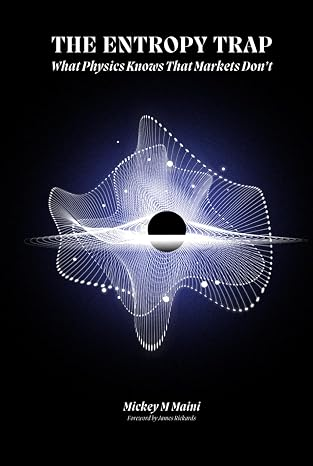
Editor’s note: The Entropy Trap: What Physics Knows that Markets Don’t is available for purchase on Amazon in hardcover and electronic (Kindle) formats.
I truly enjoyed this book. It’s a fascinating look at markets through the lens of physics and hard science. With rich stories from finance’s biggest moments in history, I predict this book will be a hit.
DR contributor and financial risk expert Chris Whalen also loves the book, stating:
“The Entropy Trap does not offer another market forecast. It offers a framework for understanding the conditions that make forecasts fail. Mickey Maini examines how stress builds across financial systems, institutions, technology, and geopolitics before it becomes obvious to the market.”
The post The Entropy Trap appeared first on Daily Reckoning.
This story originally appeared in the Daily Reckoning
Source: https://dailyreckoning.com/the-entropy-trap/
Anyone can join.
Anyone can contribute.
Anyone can become informed about their world.
"United We Stand" Click Here To Create Your Personal Citizen Journalist Account Today, Be Sure To Invite Your Friends.
Before It’s News® is a community of individuals who report on what’s going on around them, from all around the world. Anyone can join. Anyone can contribute. Anyone can become informed about their world. "United We Stand" Click Here To Create Your Personal Citizen Journalist Account Today, Be Sure To Invite Your Friends.
LION'S MANE PRODUCT
Try Our Lion’s Mane WHOLE MIND Nootropic Blend 60 Capsules
Mushrooms are having a moment. One fabulous fungus in particular, lion’s mane, may help improve memory, depression and anxiety symptoms. They are also an excellent source of nutrients that show promise as a therapy for dementia, and other neurodegenerative diseases. If you’re living with anxiety or depression, you may be curious about all the therapy options out there — including the natural ones.Our Lion’s Mane WHOLE MIND Nootropic Blend has been formulated to utilize the potency of Lion’s mane but also include the benefits of four other Highly Beneficial Mushrooms. Synergistically, they work together to Build your health through improving cognitive function and immunity regardless of your age. Our Nootropic not only improves your Cognitive Function and Activates your Immune System, but it benefits growth of Essential Gut Flora, further enhancing your Vitality.

Our Formula includes: Lion’s Mane Mushrooms which Increase Brain Power through nerve growth, lessen anxiety, reduce depression, and improve concentration. Its an excellent adaptogen, promotes sleep and improves immunity. Shiitake Mushrooms which Fight cancer cells and infectious disease, boost the immune system, promotes brain function, and serves as a source of B vitamins. Maitake Mushrooms which regulate blood sugar levels of diabetics, reduce hypertension and boosts the immune system. Reishi Mushrooms which Fight inflammation, liver disease, fatigue, tumor growth and cancer. They Improve skin disorders and soothes digestive problems, stomach ulcers and leaky gut syndrome. Chaga Mushrooms which have anti-aging effects, boost immune function, improve stamina and athletic performance, even act as a natural aphrodisiac, fighting diabetes and improving liver function. Try Our Lion’s Mane WHOLE MIND Nootropic Blend 60 Capsules Today. Be 100% Satisfied or Receive a Full Money Back Guarantee. Order Yours Today by Following This Link.


| Visits: | 1,827,426,914 |
| Stories: | 8,683,140 |
Whistler Blowers, Insiders

