

Gold, Credit, Character… and the AI Economy

This post Gold, Credit, Character… and the AI Economy appeared first on Daily Reckoning.
“Money is gold, and nothing else,” banker J.P. Morgan testified to Congress in 1912.
Morgan spoke in the aftermath of the Panic of 1907, when credit failed on an international scale and the U.S. economy went into a tailspin.
By 1912, politicians were debating how to prevent future financial panics. So, they summoned Morgan to discuss money and so-called “trusts.”
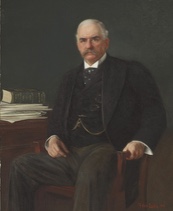
Portrait of J.P. Morgan by Fedor Encke. Credit: National Portrait Gallery, Smithsonian Institution
Morgan’s distinction between gold and credit was elemental, if you’ll excuse the pun. Gold represents value already mined and refined from the ground. As a physical asset, gold does not depend on another party’s future performance. Credit, meanwhile, represents a claim on value yet to be delivered and, in many instances, future value yet to be created.
In other words, gold is real but credit is a promise, an important promise, of course, but only as sound as the borrower’s capacity to honor the bargain. Indeed, noted Morgan during his 1912 testimony, “The first thing (about extending credit) is character, before money or anything else. Money cannot buy it.”
This last point about character dovetails with another famous line from Morgan, that “It is always best to have no money in your account. Then you are forced to use your brain.”
A promise is credible only when someone is both trustworthy and knows how to create and deliver the value required to redeem it. For example, a farmer receives credit because he knows how to raise crops.
Which gets back to Morgan’s line about how “money is gold.” Plus, how downstream credit energizes production and pulls future value into the present. And what connects the two — gold and credit — is character and knowledge. Character makes the promise credible; knowledge, in the form of skill and productive capacity, makes it possible to fulfill.
As for knowledge, it’s neither money nor a promise, but it gives substance to a promise. And for most of history, that kind of knowledge was scarce because it resided within the heads of trained, skilled and experienced people — butchers, bakers and candlestick makers, to borrow an old line.
And now, along comes writer Emad Mostaque. His 2025 book, The Last Economy: A Guide to the Age of Intelligent Economics, explores the possibility that the historical scarcity of knowledge is ending.
When Knowledge Becomes Capital
Mostaque is very mathematical, and there’s nothing wrong with math! But in many ways he reminds me of the so-called “quants” whose faith in mathematical modeling contributed to the financial excesses that culminated in the 2008 crisis.
Although Mostaque never mentions J.P. Morgan, intriguingly, Mostaque formulates some new ideas from where the crusty old New York banker left off.
Per Morgan, gold embodies value already present, while credit advances value on the strength of character and promises. Now, Mostaque explores how knowledge is rapidly becoming a critical connector that helps promises perform.
Until now, the capacity to perform has always been scarce because it was bound to knowledge, literally embodied in skilled and well-trained people. But artificial intelligence (AI) has changed the equation by turning growing portions of knowledge and judgment into endlessly reproducible software.
In other words, AI does not abolish value. It relocates it.
When massive data sets, analysis and decision-making can be copied at negligible marginal cost, human knowledge or skill alone commands less of a premium. Think of routine legal research, where software can now instantly perform work that once required many hours of human effort.
With AI, more and more value accrues to the capital that organizes intelligence, applies it to productive work and converts its output into goods, services and cash flow. This is the so-called “intelligence inversion” at the center of The Last Economy.
According to Mostaque, economic institutions as we know them were built to ration and reward scarce human skill and judgment. But now that competent cognition has become abundant and scalable, the fundamental basis of many professions and business models is changing.
Or stated in another way, the sound you hear is the shattering crash of many broken rice bowls. Businesses are already laying people off or never hiring in the first place, with AI often cited as the reason.
And with the midterm elections approaching, the politics of AI are moving to the foreground. Voters may hear plenty about AI and productivity, but the harder question is what happens to jobs and wages when businesses can accomplish more with fewer people.
Which leads to other questions: When intelligence ceases to be scarce, how can economies measure value? And who captures the gains?
Seven Lies Behind the Intelligence Inversion
Mostaque argues that the world’s current economic system was built to allocate scarce things, and the scarcest productive input has always been competent skill and human judgment. AI changes that by turning large elements of analysis and decision-making into code, where marginal costs trend downward.
Indeed, if you view the economy through a lens of allocating relative scarcity, it’s easy to mistake AI abundance for collapse. That is, as AI gains traction, many jobs — definitely, many entry-level jobs — and billable hours will disappear, along with revenues across entire industries.
Mostaque organizes his indictment of the current system around seven “fatal lies”:
- Scarcity is fundamental
- Human labor has inherent economic value
- Reward follows contribution
- Growth means health
- Markets naturally produce efficient outcomes
- Technology creates more jobs than it destroys
- And human intelligence will remain economically indispensable.
One can quibble about these points, but they offer a nice list of assumptions beneath today’s labor markets, corporate governance and public policy.
And if — no, when! — useful AI cognition becomes abundant, wages and GDP can weaken even while real productive capability expands. The gains will flow first, and perhaps mostly, to owners of the capital that makes AI useful at scale.
Where Marx Runs Out of Road
It’s worth mentioning that Mostaque’s ideas offer a sharp break with the Marxian labor theory of value, so dear to the hearts of many in modern academe and politics.
In familiar shorthand, Marx ties the value of a product to the socially necessary labor required to make it and frames profit chiefly as a claim on the surplus created by workers. It’s a view rooted in his 19th-century industrial world of miners with pickaxes hammering coal from seams.
But looking ahead, AI models can absorb the results of past labor — research, code and engineering — and reproduce a useful task over and over, with little additional human labor per task.
Thus does AI offer value to end users, yet the labor involved in each additional unit approaches zero. Traditional metrics like price, usefulness and human input cease to move together in the old framework.
And no, the so-called “surplus” of productivity does not vanish, nor does invidious exploitation become impossible. But the scarcity factor has moved: It’s no longer chiefly the raw hours of the person who performed the task; it’s who controls the system that can perform the task repeatedly and at scale.
So, who controls that system? Well, sorry, Karl Marx, but it’s the owners of capital: data centers, semiconductor supply and dependable energy sources. That is, those who own the cash registers between abundant digital knowledge and economically useful output.
In this sense, Mostaque’s inversion does not automatically lead to a classless abundance. In fact, it may produce even more concentrated versions of current capitalism in which intelligence is cheap at the point of use, while the physical and financial infrastructure required to supply it grabs the biggest whack of rent.
Gold Versus Credit Versus Knowledge
Which brings us back to J.P. Morgan and his distinction between gold and credit.
On Morgan’s spectrum, AI knowledge is neither money nor credit, and there’s no allowance for “character.” In this respect, AI’s low marginal cost does not make it a final settlement asset. But AI is an entirely new tool of production that expands capacity to support credit, while concentrating gains among those who own the machinery and energy.
Of course, gold — as real “money” — remains outside this AI structure. Gold does not forecast future productivity, nor does the yellow metal depend on somebody else’s character or promise to, say, keep the grid running.
Gold is money because it is already valuable, and nobody else’s liability. And in Morgan’s framework, credit consists of promises against future production and delivery, backed by character.
So, AI may reduce the overall cost of production, but it doesn’t always turn a promise into fulfillment. Indeed, cheaper intelligence may encourage governments, corporations and households to issue still more credit against hoped-for productivity.
If those gains fail to arrive, or if they accrue too narrowly to support incomes and tax bases, the credit claims multiply while the means of redemption weaken. In that world, gold’s role as an immutable asset outside the credit chain becomes even more important. Put simply, gold preserves wealth over time.
Meanwhile, GDP and price levels capture only part of an economy’s productive health. As any observant American can tell you, a nation can boast booming asset values while its power grid, industrial base and skills pipelines all decay.
With AI use rising in the U.S. and abroad, routine cognitive work now faces deflation, while ownership of the physical bottlenecks commands a premium. Firms may be able to do more work with smaller teams, for example, even as smaller teams mean fewer people are hired and trained to become tomorrow’s experts. And that will be its own big problem.
For now, all of this forecasts that countries with dependable power and manufacturing depth will gain leverage over nations that merely consume imported intelligence.
The AI Economy Runs on Copper
Aside from owning gold, how does one play this new game? Begin with the fact that cheap intelligence is not free intelligence. That is, AI runs on electricity, around the clock, at industrial scale.
The International Energy Agency reports that global data-center electricity demand is on track to roughly double by 2030, with AI-focused facilities driving much of the increase.
And power generation alone is not enough. Electrons must reach the data center through a vast network of transmission infrastructure, much of it heavily dependent on copper. A single new transmission line, for example, requires physical metal, equipment and construction that cannot be replicated with a few keystrokes.
Plus, this entire system must be designed, permitted, financed, manufactured and installed by skilled people. Yes, with AI helping, but real people doing real jobs. (Hint: be THAT guy, with the real job!)
In this sense, Mostaque’s new world of abundant intelligence still rests on a foundation of smart, skilled people and basic, physical stuff.
Invest in Durable Value
The investment lesson is not simply “buy AI.” Indeed, many superb cash registers are sited upstream from the places where AI lands with a job-killing thud.
Consider copper. AI may move at software speed, but new copper mines don’t. A new mine can take many years to permit, finance and build before producing a pound of red metal.
Meanwhile, beware! Valuation can outrun cash flow, regulators can delay projects and consumers may resist paying for infrastructure built around private data centers.
Along these lines, I have two names for you:
Freeport-McMoRan (FCX), a roughly $107 billion market-cap diversified copper producer in the U.S. and abroad, with significant gold and molybdenum operations.
And Enphase Energy (ENPH), a roughly $4.6 billion market-cap U.S.-based energy technology company that develops power-electronics systems and is now developing its IQ Solid-State Transformer platform for AI data centers.
These are not official recommendations, but I track them and expect solid performance over the long haul.
Asking the Right Questions
Mostaque’s book, The Last Economy, is edgy, quirky, nerdy and provocative. It asks some of the right questions such as: When AI becomes plentiful, who owns the scarce assets that convert knowledge into trusted action and durable returns?
Of course, J.P. Morgan supplied the basic monetary compass long ago. Gold is money. And credit is a promise, backed by character and skill.
Looking ahead, the fact is that whatever happens with AI, behind every dazzling promise of abundance-via-software lies a hard-rock, boots-in-the-dirt physical supply chain. Fuel, metals, copper wire, transformers, chips and skilled people must all deliver before the promises can be paid.
That’s all for now. Thank you for subscribing and reading.
The post Gold, Credit, Character… and the AI Economy appeared first on Daily Reckoning.
This story originally appeared in the Daily Reckoning
Source: https://dailyreckoning.com/gold-credit-character-and-the-ai-economy/
Anyone can join.
Anyone can contribute.
Anyone can become informed about their world.
"United We Stand" Click Here To Create Your Personal Citizen Journalist Account Today, Be Sure To Invite Your Friends.
Before It’s News® is a community of individuals who report on what’s going on around them, from all around the world. Anyone can join. Anyone can contribute. Anyone can become informed about their world. "United We Stand" Click Here To Create Your Personal Citizen Journalist Account Today, Be Sure To Invite Your Friends.
LION'S MANE PRODUCT
Try Our Lion’s Mane WHOLE MIND Nootropic Blend 60 Capsules
Mushrooms are having a moment. One fabulous fungus in particular, lion’s mane, may help improve memory, depression and anxiety symptoms. They are also an excellent source of nutrients that show promise as a therapy for dementia, and other neurodegenerative diseases. If you’re living with anxiety or depression, you may be curious about all the therapy options out there — including the natural ones.Our Lion’s Mane WHOLE MIND Nootropic Blend has been formulated to utilize the potency of Lion’s mane but also include the benefits of four other Highly Beneficial Mushrooms. Synergistically, they work together to Build your health through improving cognitive function and immunity regardless of your age. Our Nootropic not only improves your Cognitive Function and Activates your Immune System, but it benefits growth of Essential Gut Flora, further enhancing your Vitality.

Our Formula includes: Lion’s Mane Mushrooms which Increase Brain Power through nerve growth, lessen anxiety, reduce depression, and improve concentration. Its an excellent adaptogen, promotes sleep and improves immunity. Shiitake Mushrooms which Fight cancer cells and infectious disease, boost the immune system, promotes brain function, and serves as a source of B vitamins. Maitake Mushrooms which regulate blood sugar levels of diabetics, reduce hypertension and boosts the immune system. Reishi Mushrooms which Fight inflammation, liver disease, fatigue, tumor growth and cancer. They Improve skin disorders and soothes digestive problems, stomach ulcers and leaky gut syndrome. Chaga Mushrooms which have anti-aging effects, boost immune function, improve stamina and athletic performance, even act as a natural aphrodisiac, fighting diabetes and improving liver function. Try Our Lion’s Mane WHOLE MIND Nootropic Blend 60 Capsules Today. Be 100% Satisfied or Receive a Full Money Back Guarantee. Order Yours Today by Following This Link.


| Visits: | 1,834,063,917 |
| Stories: | 8,716,136 |
Whistler Blowers, Insiders

