

Standing Mat 101: The One Upgrade That Makes Standing Desks Actually Work in 2026

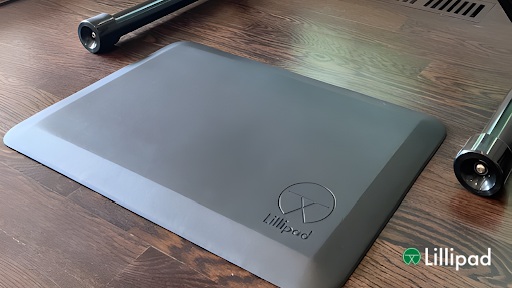
Every standing desk purchase follows the same arc. Week one: relentless enthusiasm, standing through entire Zoom calls, bragging rights included. Week three: the desk quietly stays at sitting height because the feet started staging a protest. The desk rarely gets the blame. It should. But the real culprit is usually what’s or isn’t underfoot.
Hard flooring is unforgiving. Standing on it for twenty or thirty minutes starts a slow burn in the feet, knees, and lower back that no amount of good posture fixes. A proper mat interrupts that chain reaction by spreading the pressure out instead of letting it concentrate in one spot. It sounds like a minor accessory. It functions like the load-bearing wall of the entire standing-desk habit.
Why Feet Quit Before Willpower Does
Foam quality makes or breaks the experience, and not in a subtle way. Too soft, and the ankles start wobbling like a rookie ice skater by hour two. Too firm, and the whole point of the mat evaporates, might as well be standing on the bare floor. The sweet spot is a dual-layer build: a supportive base doing the heavy lifting, topped with a softer layer that actually feels good against bare feet.
What separates a mat that works from one that gets kicked under the desk after a week:
- Dual-density foam - firm base, soft top, no ankle wobble
- Textured surface – grips socks and bare feet without turning into a dust trap
- Beveled edge – lets a rolling chair pass over without catching
- Full desk-width coverage – no lateral shuffling to stay on the mat
Not All Mats Are Built the Same
The bargain-bin kitchen mat trick fools a lot of first-time shoppers. Sure, it’s cheap, and sure, it technically qualifies as “a mat.” But it was engineered for someone standing at a stove for twenty minutes, not someone parked at a desk for six hours.
Kitchen and industrial mats hold up well under heavy foot traffic, but the single-density foam and flat profile were never built with barefoot comfort in mind. Contoured mats take a smarter approach, using raised zones to nudge subtle foot movement throughout the day, which keeps circulation going and prevents pressure from settling permanently into one spot. Cork-rubber hybrids bring serious durability to the table but tend to run firmer, better suited to shorter standing stretches than marathon sessions. Purpose-built desk mats split the difference, combining dual-density foam with the kind of beveled edge and sizing that anti-fatigue mats from the hardware store were never designed to include.
Among the purpose-built options, the Standing Mat from Lillipad checks the dual-density and beveled-edge boxes that separate “made for this” from “repurposed for this.”
Getting the Height (and Placement) Right
A great mat paired with a badly adjusted desk is a half-solution. Elbows need to land at roughly 90 degrees while standing, or the strain just relocates, out of the feet, straight into the shoulders and neck. Desk height, monitor height, and mat placement aren’t three separate decisions; they’re one connected system, and skipping any single piece undercuts everything else.
- Elbow height at roughly 90 degrees while standing
- Cords routed away from the mat’s footprint, not draped across it
- Mat width matching the desk’s width, not just the center of it
- Power strips placed to the side, never directly under the mat
Cord chaos near the mat is its own hazard, quietly raising tripping risk no matter how forgiving the mat’s own edge design happens to be. And mat width matters more than it gets credit for, too narrow, and the constant side-stepping to stay within its boundaries reintroduces the exact fatigue the mat was purchased to eliminate in the first place.
Common Mistakes When Shopping for a Mat
A surprising number of standing mat purchases go wrong before the mat even arrives. The most frequent error is buying based on thickness alone, assuming a thicker mat automatically means a more comfortable one. Thickness without the right foam density just means more material compressing unevenly, which can feel worse underfoot than a thinner, properly engineered mat.
Sizing is the second common mistake. A mat bought to match the desk’s width on paper often turns out too narrow in practice, since natural standing posture involves small shifts side to side throughout the day. A mat that only covers the immediate center of the desk forces constant repositioning, which defeats the purpose of buying one in the first place.
Ignoring the edge profile is the third mistake, and it’s the one that causes the most physical harm. A squared-off edge might look identical to a beveled one in a product photo, but the difference becomes obvious the first time a heel catches on it during a transition from standing to sitting. Reading the product specifications for edge design before purchasing saves more headaches than almost any other single detail in the buying process.
Finally, skipping the return policy is a mistake that only becomes apparent after the fact. Foam density and firmness are subjective enough that a mat comfortable for one person can feel completely wrong for another. A retailer with a reasonable trial period removes most of the risk from what is otherwise a fairly personal, feel-dependent purchase.
Making It Last
Foam compresses. That’s just physics, not a manufacturing flaw, and heavier daily use speeds the process along considerably.
- Rotate the mat occasionally to spread out wear across the surface
- Choose a sealed top layer if spills are a regular risk in the workspace
- Store it rolled, not folded, since folding creates a permanent crease line
A mat used for four or more hours a day will show wear sooner than one used only occasionally, which is worth factoring in before assuming any mat will hold its shape indefinitely regardless of how it gets treated.
Worth the Floor Space
The mat gets treated like an afterthought and behaves like the main event. Dual-density foam, a beveled edge, enough grip to stay put, that combination is the difference between standing for an hour without noticing and standing for ten minutes before caving. Skip it, and even the best desk on the market ends up parked at sitting height by month two.
Anyone can join.
Anyone can contribute.
Anyone can become informed about their world.
"United We Stand" Click Here To Create Your Personal Citizen Journalist Account Today, Be Sure To Invite Your Friends.
Before It’s News® is a community of individuals who report on what’s going on around them, from all around the world. Anyone can join. Anyone can contribute. Anyone can become informed about their world. "United We Stand" Click Here To Create Your Personal Citizen Journalist Account Today, Be Sure To Invite Your Friends.
LION'S MANE PRODUCT
Try Our Lion’s Mane WHOLE MIND Nootropic Blend 60 Capsules
Mushrooms are having a moment. One fabulous fungus in particular, lion’s mane, may help improve memory, depression and anxiety symptoms. They are also an excellent source of nutrients that show promise as a therapy for dementia, and other neurodegenerative diseases. If you’re living with anxiety or depression, you may be curious about all the therapy options out there — including the natural ones.Our Lion’s Mane WHOLE MIND Nootropic Blend has been formulated to utilize the potency of Lion’s mane but also include the benefits of four other Highly Beneficial Mushrooms. Synergistically, they work together to Build your health through improving cognitive function and immunity regardless of your age. Our Nootropic not only improves your Cognitive Function and Activates your Immune System, but it benefits growth of Essential Gut Flora, further enhancing your Vitality.

Our Formula includes: Lion’s Mane Mushrooms which Increase Brain Power through nerve growth, lessen anxiety, reduce depression, and improve concentration. Its an excellent adaptogen, promotes sleep and improves immunity. Shiitake Mushrooms which Fight cancer cells and infectious disease, boost the immune system, promotes brain function, and serves as a source of B vitamins. Maitake Mushrooms which regulate blood sugar levels of diabetics, reduce hypertension and boosts the immune system. Reishi Mushrooms which Fight inflammation, liver disease, fatigue, tumor growth and cancer. They Improve skin disorders and soothes digestive problems, stomach ulcers and leaky gut syndrome. Chaga Mushrooms which have anti-aging effects, boost immune function, improve stamina and athletic performance, even act as a natural aphrodisiac, fighting diabetes and improving liver function. Try Our Lion’s Mane WHOLE MIND Nootropic Blend 60 Capsules Today. Be 100% Satisfied or Receive a Full Money Back Guarantee. Order Yours Today by Following This Link.



| Visits: | 1,836,223,783 |
| Stories: | 8,727,284 |
Whistler Blowers, Insiders


L-shaped chair unnatural to the human body. Sit in a saddle chair, stand up desk, or cross legged on the ground.