

Cato Study: Immigrants Are Twice as Fiscally Positive Today as in the Early 20th Century

Today, the Cato Institute published “Immigrants’ Historical Effects on Government Budgets: 1900–2023,” a study that calculates the fiscal benefits of immigration over more than a century. The paper, which I coauthored with Julián Salazar, is the first study to attempt to calculate allocations of government spending to immigrants and natives every year of the 20th century to show how this fiscal benefit has changed over time.
In this paper, we wanted to accomplish two main things:
- Test the claim that immigration was once fiscally positive for the United States but that the welfare state ended the fiscal upside.
- Respond directly to Milton Friedman’s famous assessment that there was a fundamental change in the fiscal situation for immigrants since 1914.
Our study builds on the extremely detailed findings of our February 2026 report on the fiscal effects of recent immigrants, coauthored with Mike Howard. In this report, we establish that immigrants’ tax payments track their share of income and then estimate that share back to 1900, using data from the Census Bureau. This allows us to estimate their tax contributions. We then estimate their share of government costs by establishing proxies for immigrant use (e.g., share of student population, share of recipients of public aid, share of the incarcerated population, etc.).
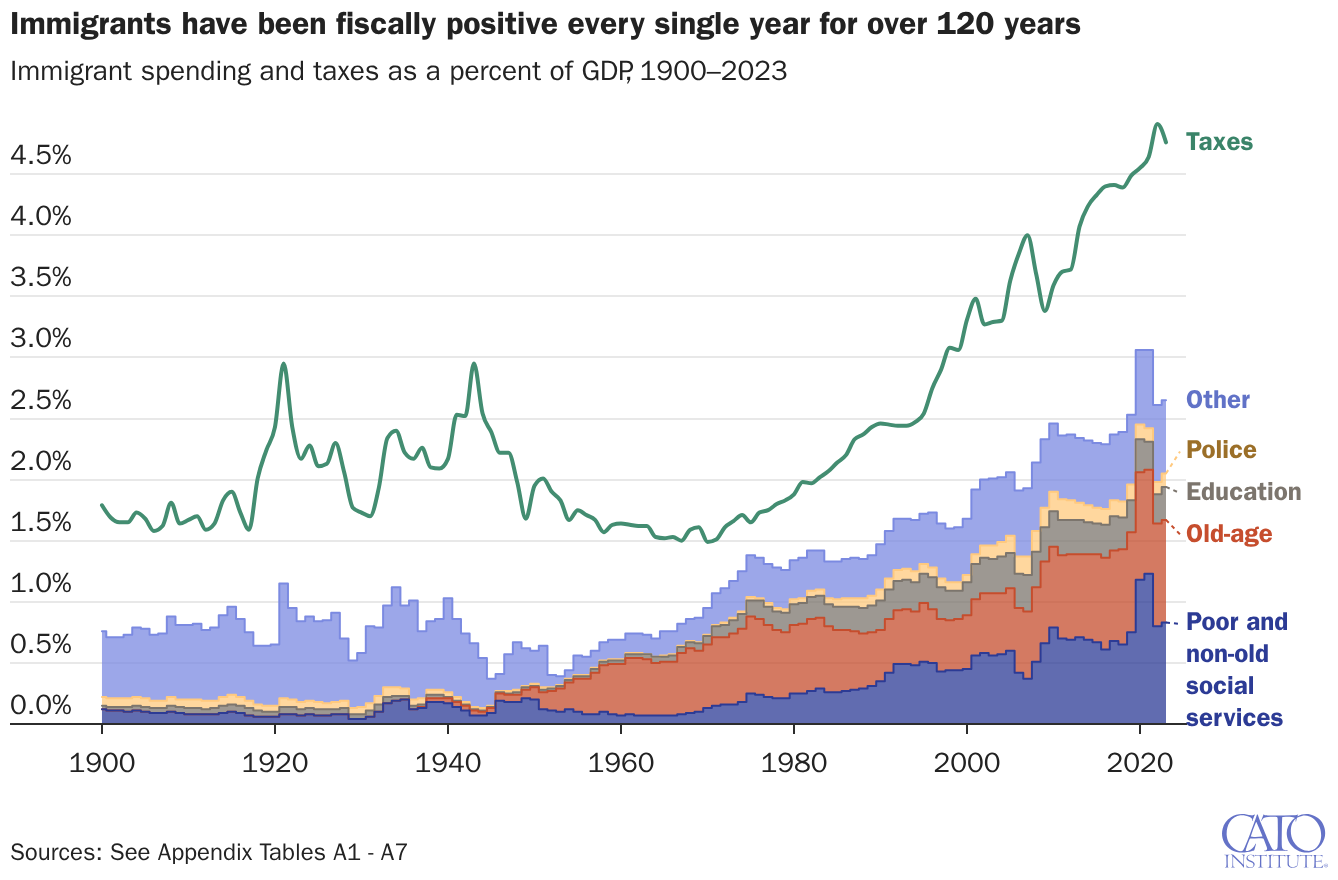
Immigrants Have Reduced the Deficit Every Year for 124 Years
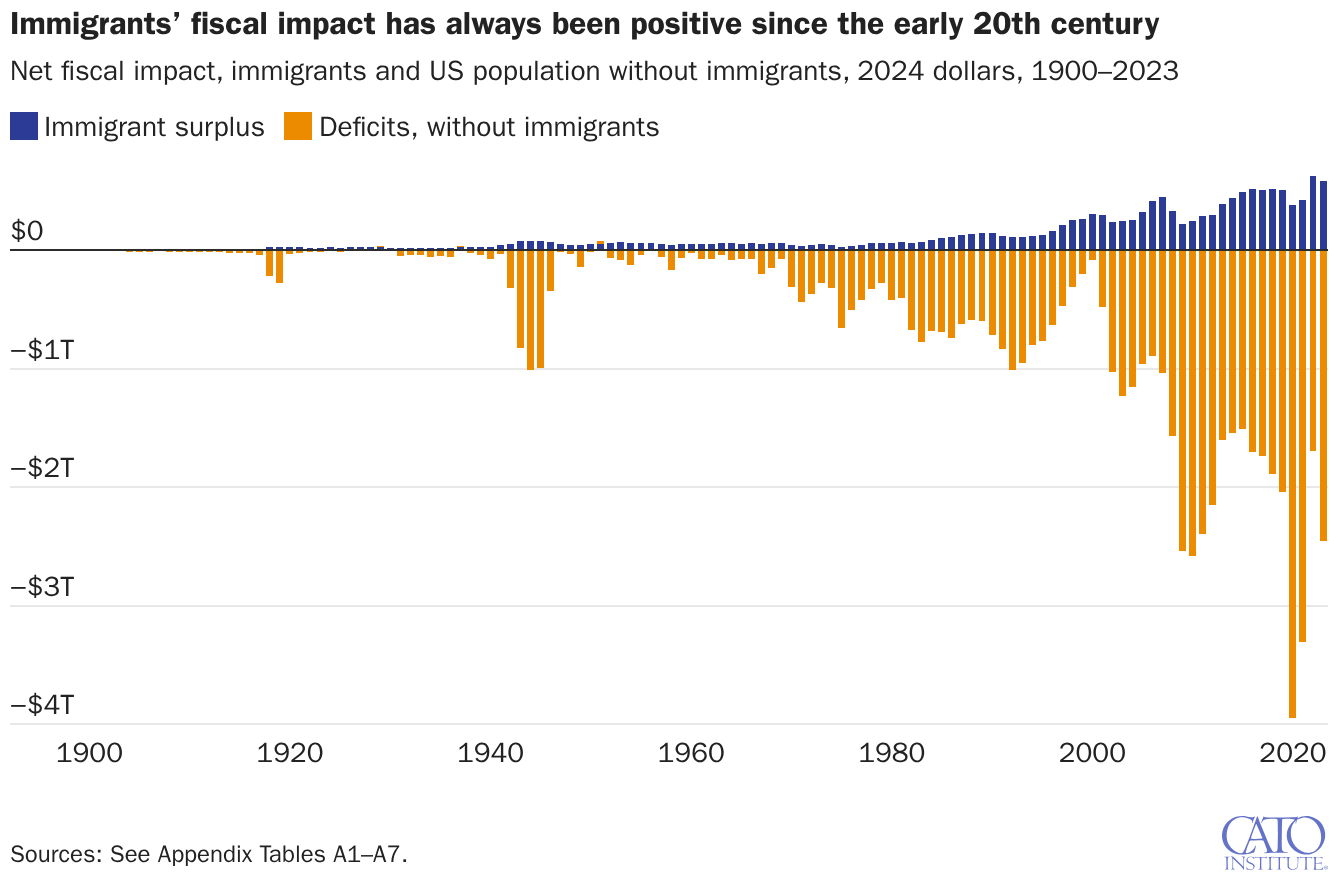
Contrary to common perception, immigrants have reduced federal, state, and local government deficits every year for the last 124 years by a cumulative $14.6 trillion, not counting savings from lower interest payments on a smaller debt. Immigrants have paid more in taxes to every level of government than they have received in government benefits every year since 1900.
As a share of gross domestic product (GDP), the immigrant surplus was more than twice as fiscally beneficial in 2023 as in 1913, before the modern welfare state and individual federal income tax. In real inflation-adjusted terms, the immigrant surplus in 2023 was more than 53 times larger than in 1913: $585 billion versus $11 billion. Of the $14.6 trillion in immigrant fiscal surplus, 86 percent has accrued since 1965 and the creation of the modern Great Society welfare state.
The Critics Are Right About Three Things
The view that immigration has become less fiscally positive in the United States rests on three accurate premises but draws an unjustified conclusion. First, government spending has increased dramatically since the 1910s. Second, the category of social services, or “the welfare state,” was the primary driver of spending growth in the 20th century.
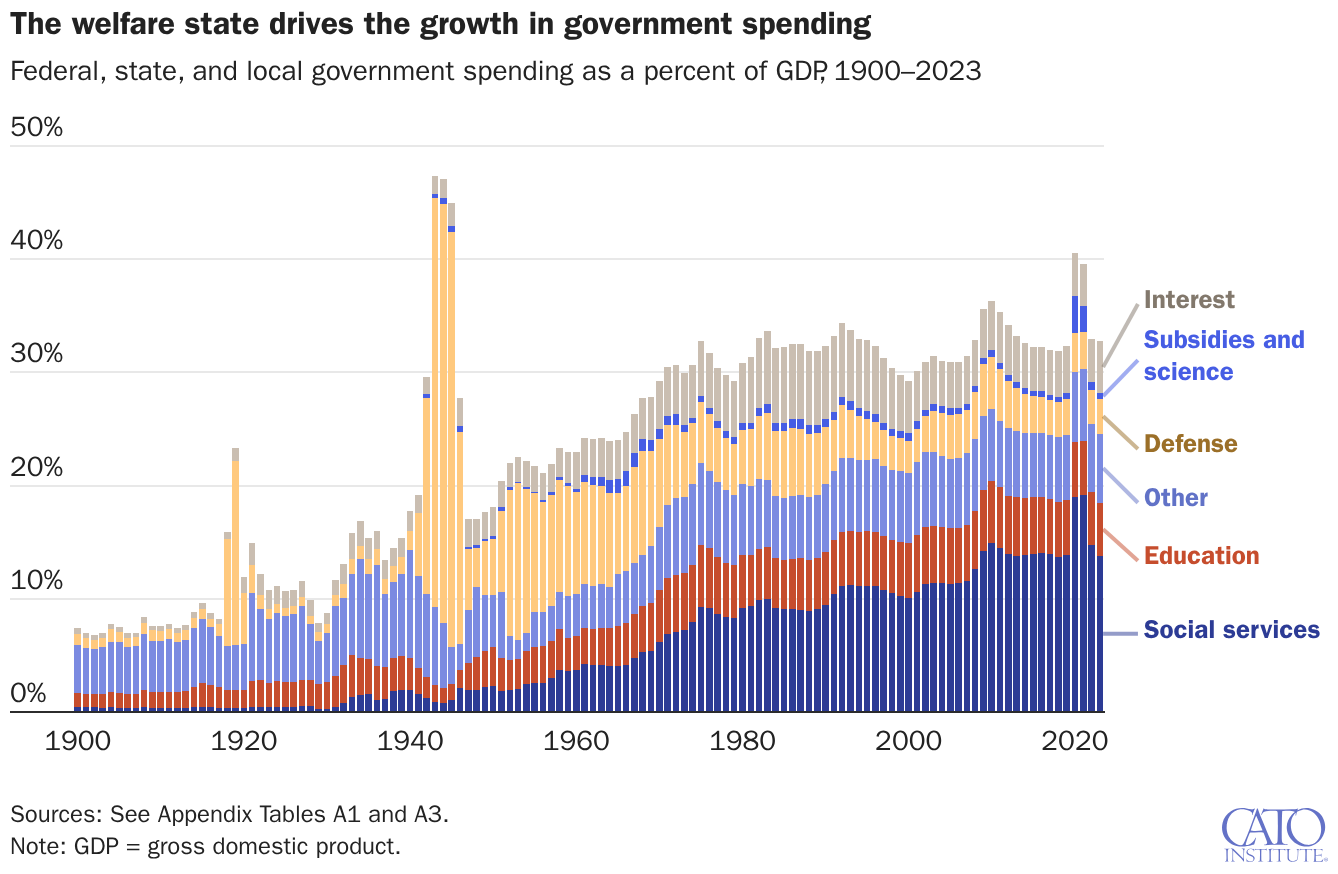
Third, it is accurate that the welfare state has made immigration less economically beneficial today than it would be if it had remained as small as it was in 1910. But this does not mean that immigration is harmful and that the United States would be better off without it.
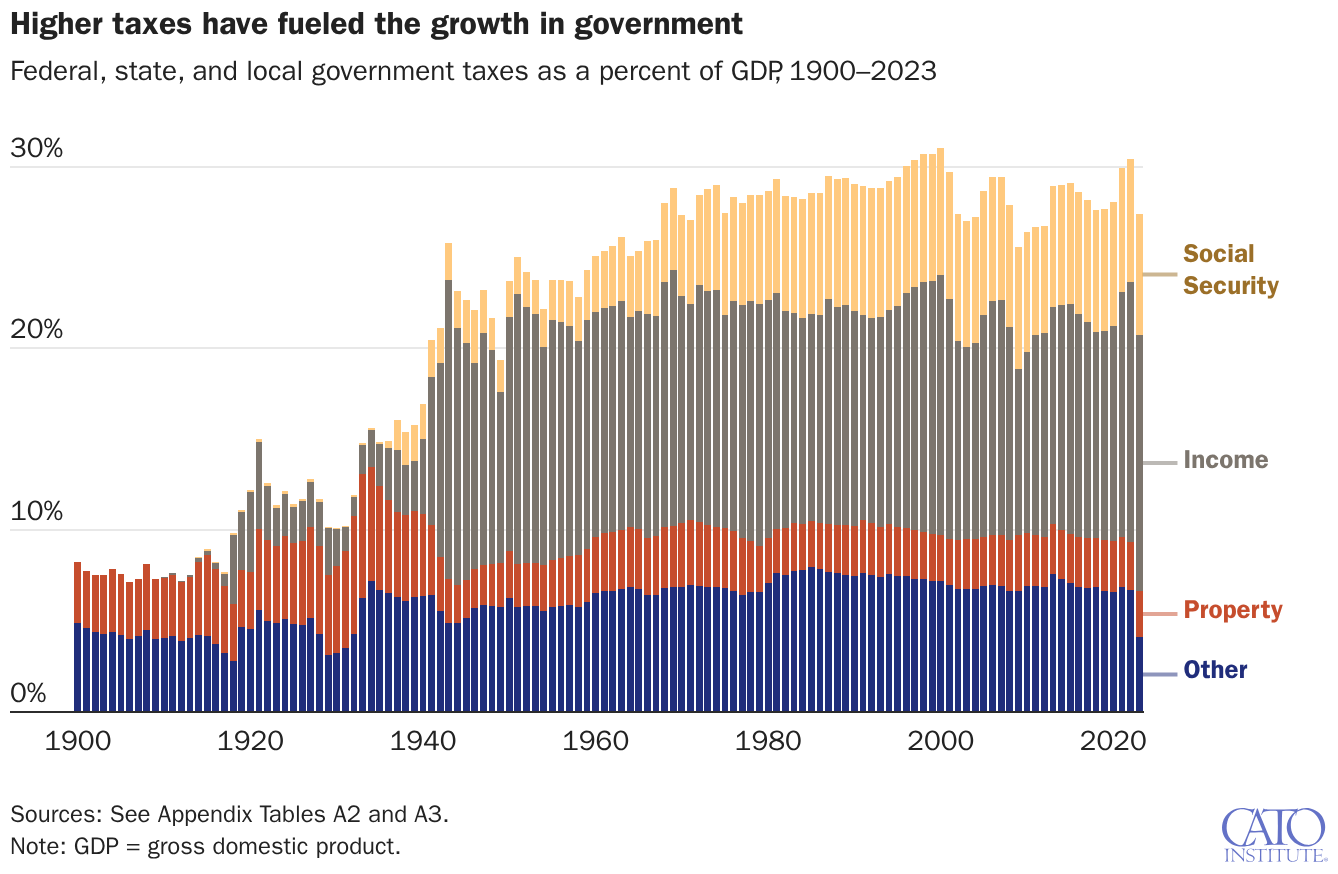
Higher government spending today does not automatically reduce immigrants’ fiscal benefit because tax revenues have also increased. The government imposed new taxes, income taxes, and social insurance taxes that have compensated for the rise in welfare spending over the last century. Thus, while it is correct that the government has grown dramatically, this does not mean that the net fiscal benefit of immigrants after taxes has declined in proportion to the increase in spending.
Why the Average Person Is Fiscally Positive
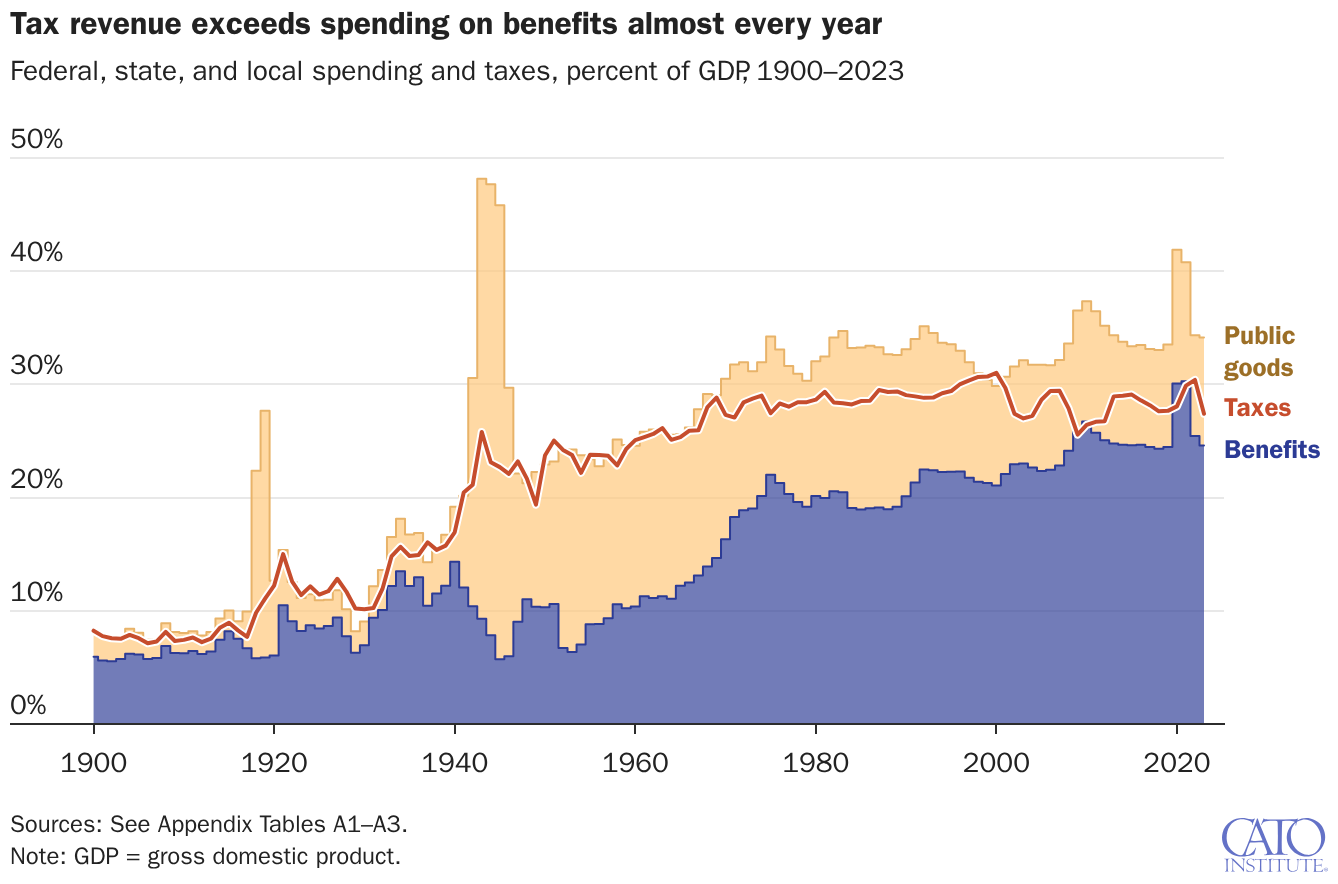
Admittedly, taxes have not covered all spending, resulting in deficits in most years of the last century. For the purpose of analyzing immigration, however, what matters is the cost of the marginal, or next additional, person added to the society. The marginal cost is lower than the average cost because a significant share of government spending is on pure public goods, meaning items for which additional people do not reduce the benefit to anyone else or trigger additional spending.
These are mainly national defense and interest on past debt—both of which US-born Americans will have to cover whether immigrants come or not. If we exclude spending on pure public goods and focus only on government benefits (including everything from welfare and schools to roads and tax collection), the net fiscal impact of the average person, and hence the true fiscal impact of the marginal person, has been positive every year since 1900, except for four years in the 21st century during global economic crises. This means that as long as recent immigrants were at least average, their fiscal effects were no worse than immigrants in the early 20th century.
Immigrants Pay More Taxes
Is the effect of an immigrant generally higher or lower than the effect of an average additional person? Immigrants earn lower hourly wages, but they account for more total income per capita than natives because they have been more likely to work every year for over a century. In 2023, immigrants had an employment-to-population ratio 14 percentage points higher than that of US-born Americans. In 1910, that same gap neared 20 percentage points. This is primarily because the share of the immigrant population in their prime working years has usually been higher than that of the US-born population.
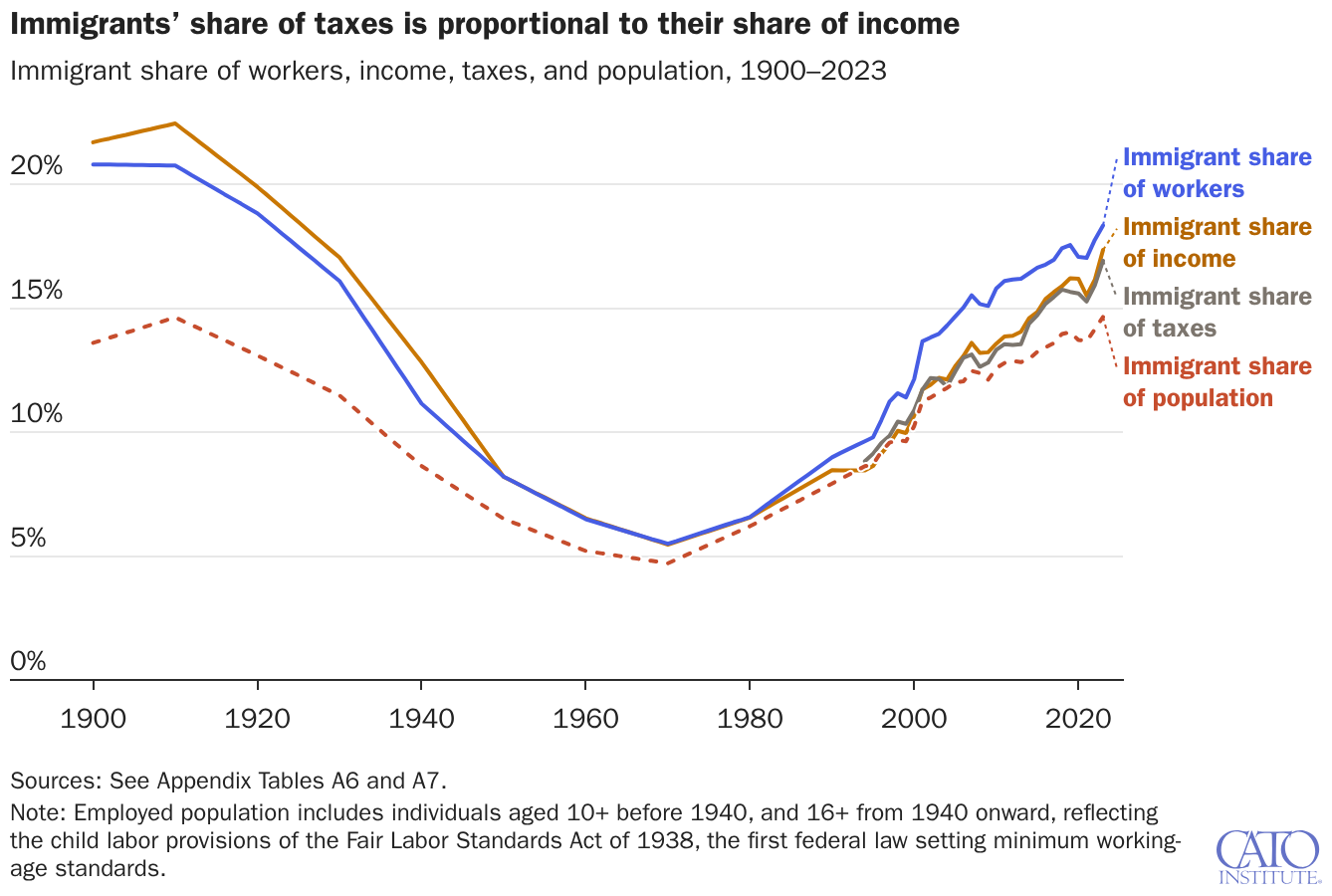
Just accounting for higher tax revenues shows that since 1900, immigrants likely had tax payments about 27 percent higher than those of the average person in the country. Using the immigrant share of income as a proxy for taxes paid shows that, for almost every year of the 20th and early 21st centuries, the average immigrant paid more in taxes than the average US-born resident.
Immigrants Use Fewer Benefits
Of course, taxes are only half the ledger. Did immigrants receive a larger-than-predicted share of government benefits? From 1994 to 2023, the Cato Institute–National Academies model finds that the average immigrant used fewer benefits than the average person every year. Overall, immigrants used between 18 and 25 percent fewer benefits across all 30 years than their population share would predict.
Did these conditions hold in the early 20th century? Generally yes, with some exceptions.
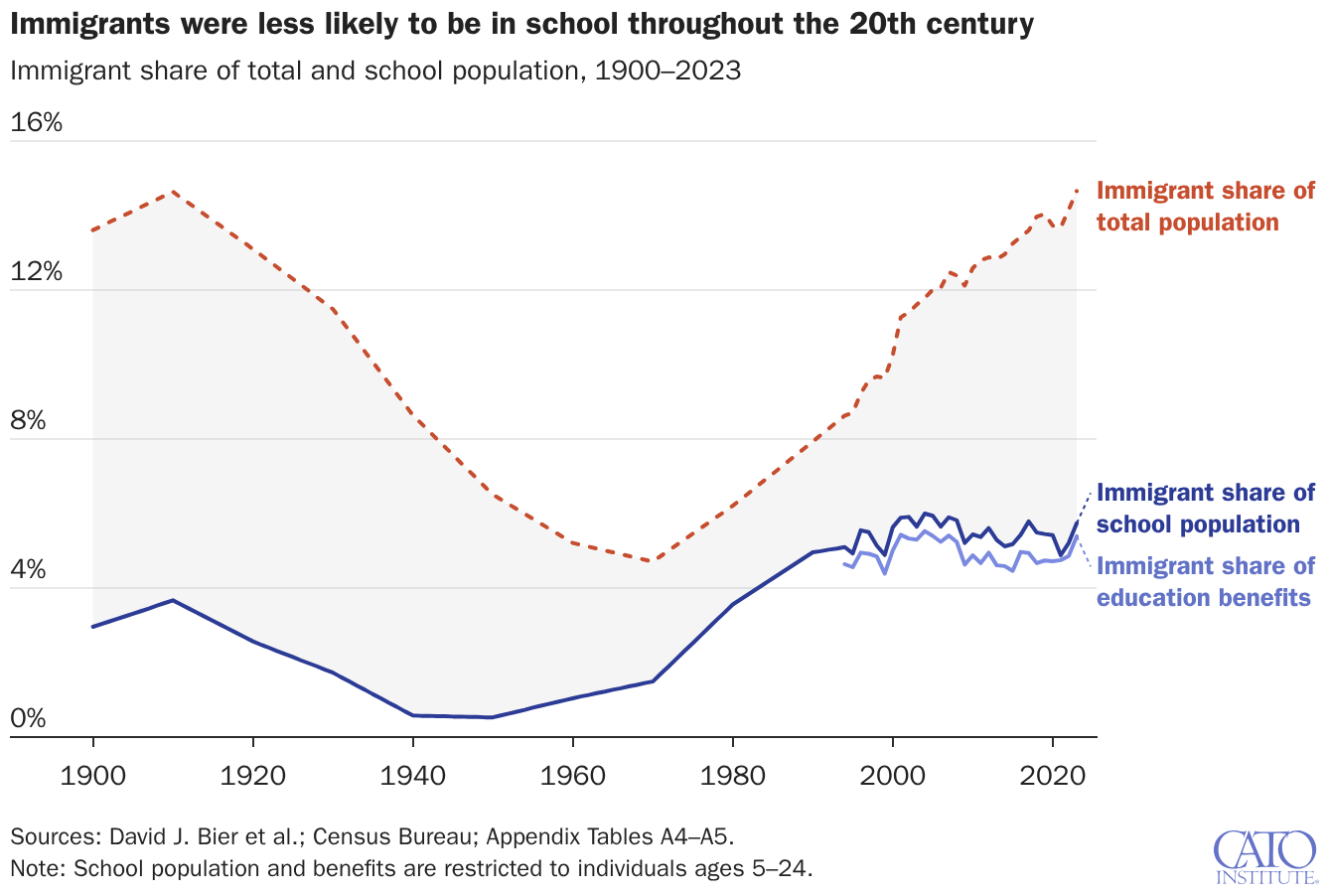
Immigrants cost schools less: Immigrants have also been less likely to be in school throughout the century, primarily because they mostly arrived as adults.
Old-age benefits played little role early on: In the early 20th century, there were no old-age-specific programs (except for veterans’ pensions, which are included in pure public goods). In the 21st century, immigrants were less likely to use old-age programs like Social Security and Medicare.
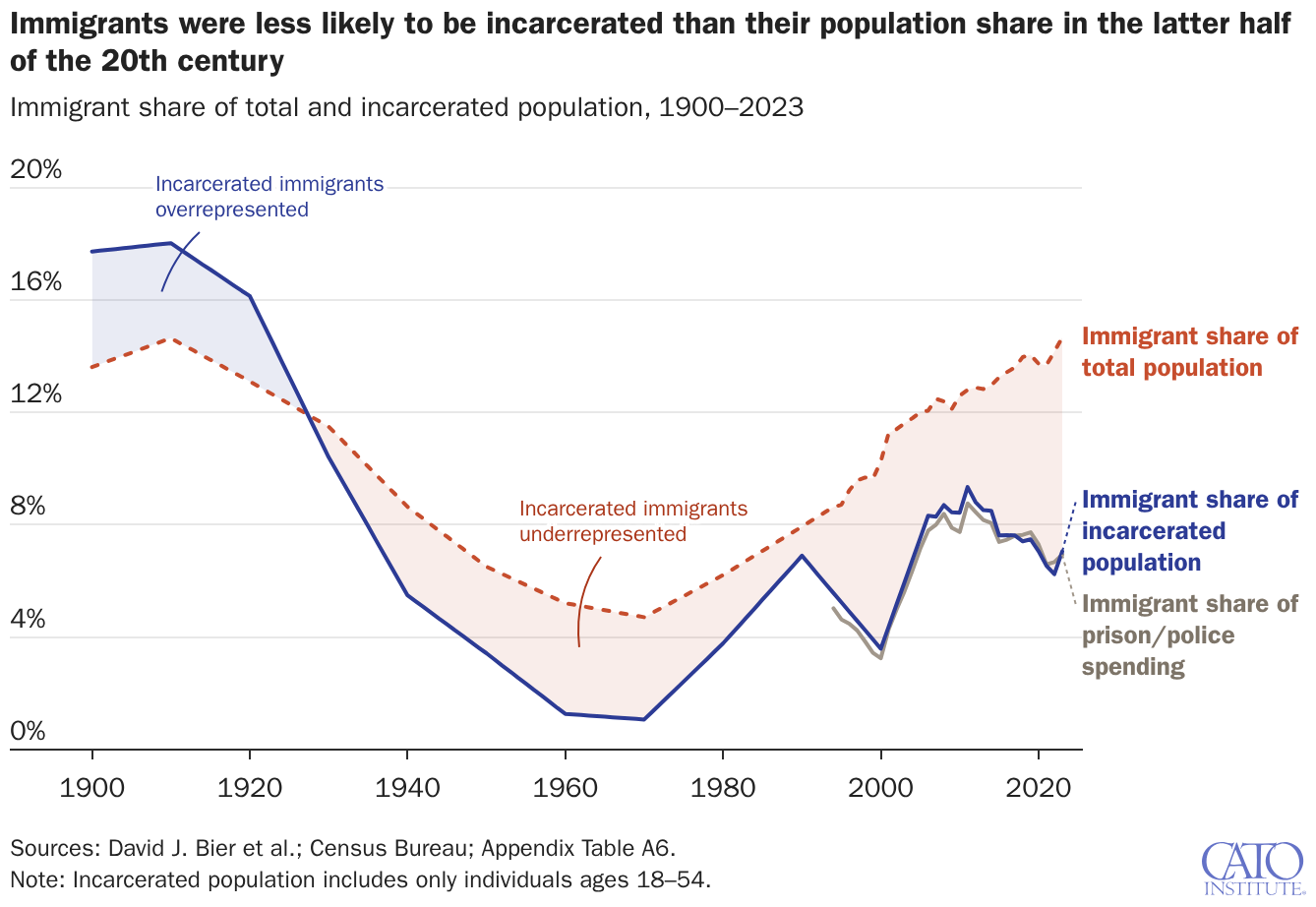
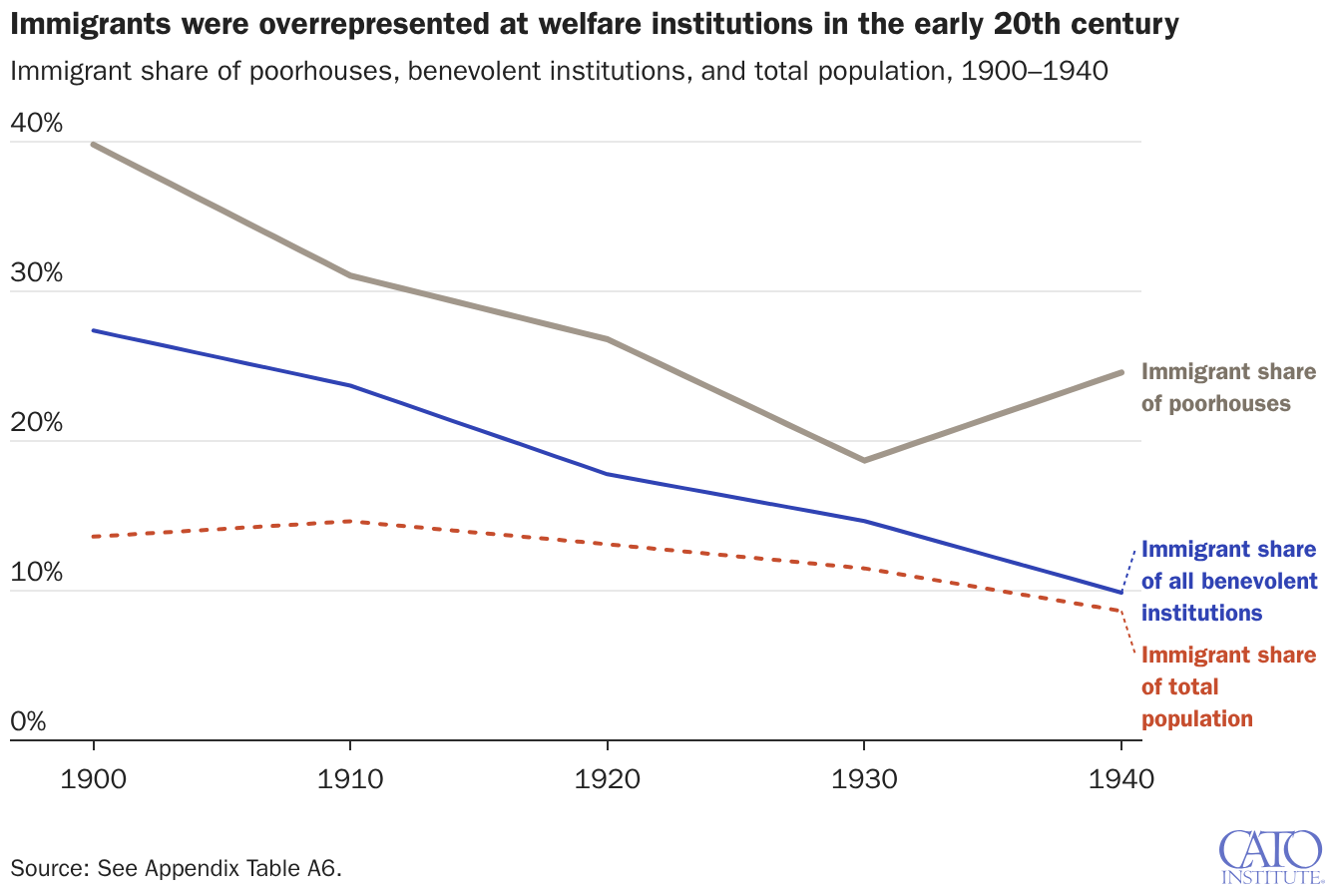
Welfare and prisons are the exceptions: From 1900 to 1940, the censuses show that immigrants were substantially overrepresented at almshouses, asylums, orphanages, and other “benevolent institutions.” Likewise, in the early 20th century, immigrants were proportionally more likely to be incarcerated than their share of the population, though after controlling for age and sex, they were also less likely to be incarcerated.
The indirect estimates used for both centuries are within 1 percent of the more detailed model’s value for the full 30-year period, so the model appears to be an accurate approximation of total spending on immigrants. Here’s what it looks like when you put it together for all immigrants: immigrants generated more in taxes than they received in benefits every year of the 20th and 21st centuries.
Responding to Milton Friedman
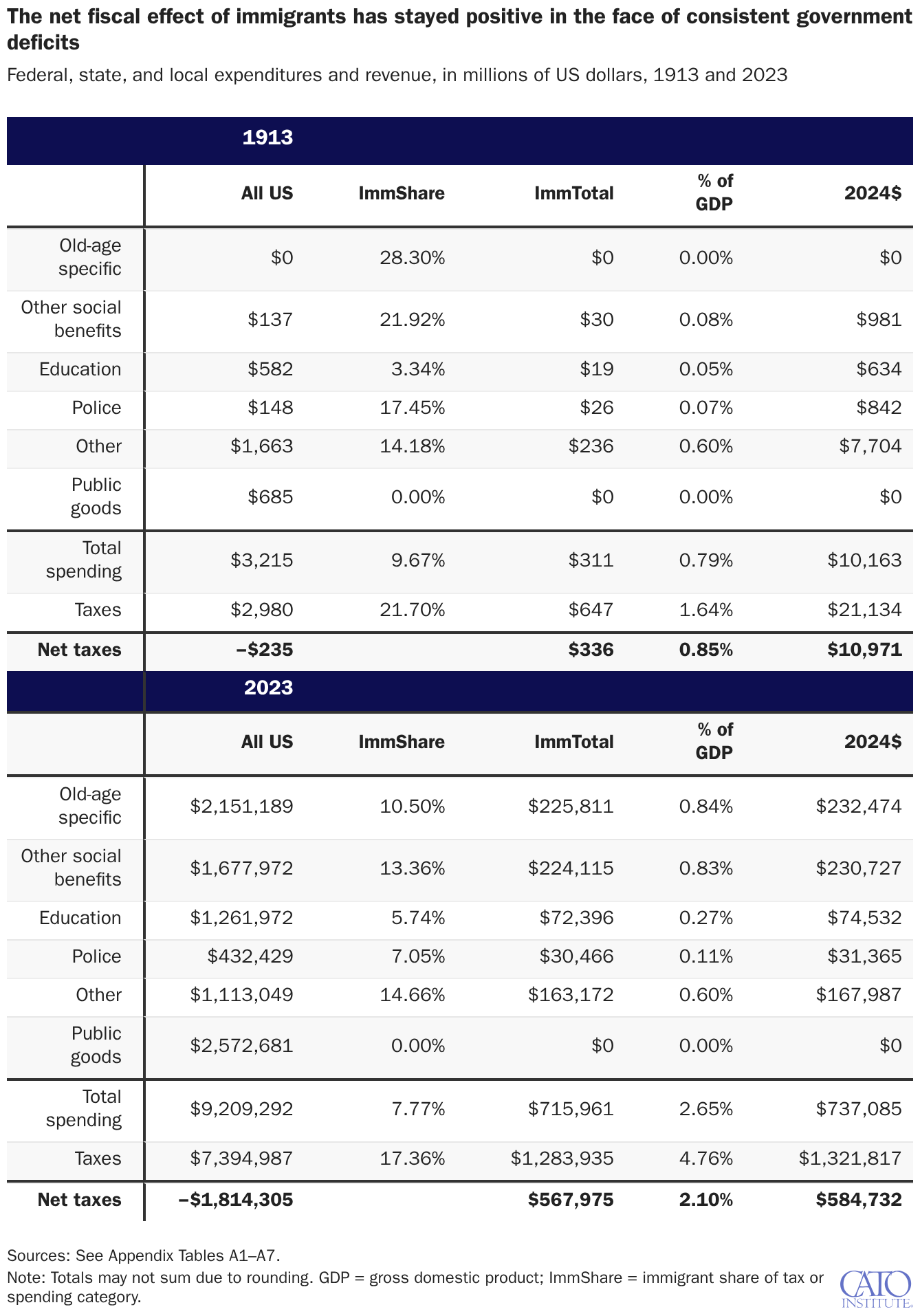
Milton Friedman famously claimed, “Free immigration was a good thing before 1914, and free immigration is a bad thing today.” Friedman was correct to identify 1913, the year the current individual federal income tax was passed, as a critical juncture in US fiscal policy. Therefore, to respond directly to Friedman’s assessment, we break down the budget numbers for 2023 and 1913, just before the radical change in governmental taxes and spending that followed the institution of the current income tax.
In 1913, all levels of government cumulatively ran a nominal deficit of $235 million, but pure public goods spending exceeded the deficit, so the marginal person was fiscally positive. Immigrants accounted for 9.7 percent of total spending and 21.7 percent of total taxes. In 2023, all levels of government ran a cumulative deficit of $1.8 trillion, but again, public goods spending exceeded the deficit, meaning the average additional person had a positive effect. Immigrants were responsible for 7.8 percent of spending and 17.4 percent of revenue, for a cumulative fiscal boost of nearly $585 billion, compared to $11 billion in 1913.
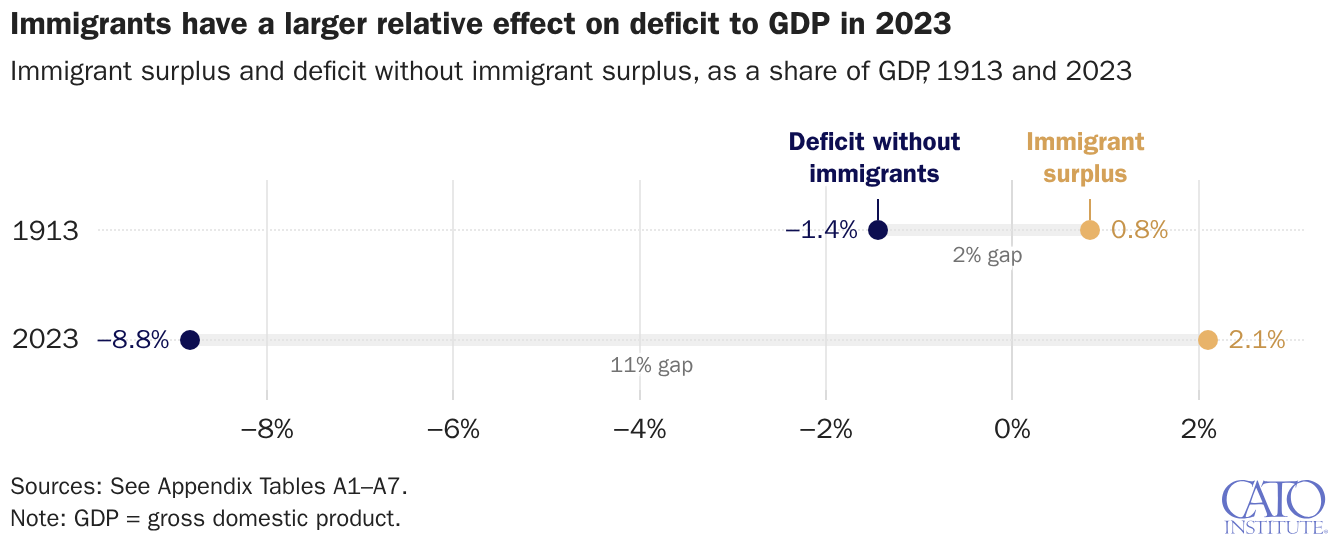
A more important perspective is the effect of immigrants compared with the non-immigrant population. From 1913 to 2023, the immigrant surplus more than doubled as a share of GDP, while the combined US federal, state, and local deficit without immigrants widened from negative 1.4 percent to negative 8.8 percent, a sixfold increase. This means the fiscal gap between immigrants and the US-born population has grown fivefold, from 2 percent to 11 percent of GDP, or $3.04 trillion. Milton Friedman failed to consider that the worse the United States’ fiscal situation, the more beneficial new immigrants become.
However, controlling for GDP biases the analysis in favor of early 20th-century immigrants. America is continuously becoming more productive, which means that each immigrant is, in real terms, having a much more positive effect today than in the early 20th century. Comparing the immigrant surplus in real terms, controlling for inflation rather than GDP, is more revealing about how much more fiscally beneficial immigrants are today. On a per-person basis, the average immigrant provided a fiscal benefit of $796 in 1913, compared to $11,899 in 2023.
Including Children Doesn’t Change the Result
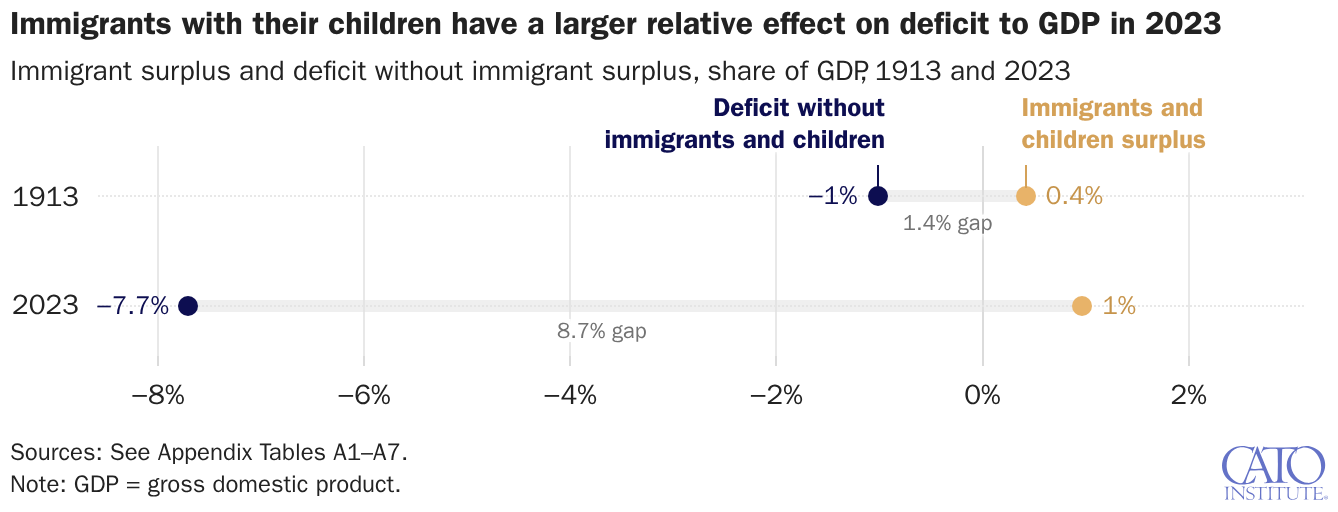
Including immigrants’ US-born dependents does not substantively change these major conclusions. The total net fiscal effect of immigrants and their dependents was a positive $6.3 trillion from 1900 to 2023, lower than the $14.6 trillion for immigrants alone. This lower amount makes sense because dependents almost exclusively add fiscal costs, not benefits, unlike when they are adults. Even with dependents, immigrants were more than twice as fiscally positive in 2023 as they were in 1913.
Concluding Thoughts
Milton Friedman was right that immigrants at the turn of the 21st century were legally entitled to more benefits than they had been at the turn of the 20th century. But immigrants today are more productive and pay higher taxes than in the past. This study demonstrates that immigration has remained fiscally positive, collectively, at all levels of the US government for more than a century. Indeed, immigration has never been as fiscally and economically positive as it is today.
Of course, the effect could change in the future if taxes are significantly reduced, benefits are increased, or the composition of the immigrant population becomes radically different. However, the fiscal effect is nowhere near negative, and the positive effect is rising quickly. One of the few methods to turn the immigrant fiscal effect negative would be to prohibit new immigration until most current immigrants were elderly retirees.
Congress has built immigration policy largely on the premise that legal immigration economically harms Americans, so it should be strictly limited. Only about 3 percent of green card applicants were approved in 2024. Prior to 1921, more than 98 percent of immigrant applicants were approved to receive permanent residence. That system better reflected American traditions and economic reality.
Friedman’s solution was to keep most immigration illegal but to let it happen anyway. A better solution would be for Congress to return to the presumption of openness and reauthorize peaceful immigrants to enter the United States legally without access to welfare.
You can read the entire study here: Immigrants’ Historical Effects on Government Budgets: 1900–2023
Source: https://www.cato.org/blog/cato-study-immigrants-are-twice-fiscally-positive-today-early-20th-century
Anyone can join.
Anyone can contribute.
Anyone can become informed about their world.
"United We Stand" Click Here To Create Your Personal Citizen Journalist Account Today, Be Sure To Invite Your Friends.
Before It’s News® is a community of individuals who report on what’s going on around them, from all around the world. Anyone can join. Anyone can contribute. Anyone can become informed about their world. "United We Stand" Click Here To Create Your Personal Citizen Journalist Account Today, Be Sure To Invite Your Friends.
LION'S MANE PRODUCT
Try Our Lion’s Mane WHOLE MIND Nootropic Blend 60 Capsules
Mushrooms are having a moment. One fabulous fungus in particular, lion’s mane, may help improve memory, depression and anxiety symptoms. They are also an excellent source of nutrients that show promise as a therapy for dementia, and other neurodegenerative diseases. If you’re living with anxiety or depression, you may be curious about all the therapy options out there — including the natural ones.Our Lion’s Mane WHOLE MIND Nootropic Blend has been formulated to utilize the potency of Lion’s mane but also include the benefits of four other Highly Beneficial Mushrooms. Synergistically, they work together to Build your health through improving cognitive function and immunity regardless of your age. Our Nootropic not only improves your Cognitive Function and Activates your Immune System, but it benefits growth of Essential Gut Flora, further enhancing your Vitality.

Our Formula includes: Lion’s Mane Mushrooms which Increase Brain Power through nerve growth, lessen anxiety, reduce depression, and improve concentration. Its an excellent adaptogen, promotes sleep and improves immunity. Shiitake Mushrooms which Fight cancer cells and infectious disease, boost the immune system, promotes brain function, and serves as a source of B vitamins. Maitake Mushrooms which regulate blood sugar levels of diabetics, reduce hypertension and boosts the immune system. Reishi Mushrooms which Fight inflammation, liver disease, fatigue, tumor growth and cancer. They Improve skin disorders and soothes digestive problems, stomach ulcers and leaky gut syndrome. Chaga Mushrooms which have anti-aging effects, boost immune function, improve stamina and athletic performance, even act as a natural aphrodisiac, fighting diabetes and improving liver function. Try Our Lion’s Mane WHOLE MIND Nootropic Blend 60 Capsules Today. Be 100% Satisfied or Receive a Full Money Back Guarantee. Order Yours Today by Following This Link.


| Visits: | 1,838,877,022 |
| Stories: | 8,738,933 |
Whistler Blowers, Insiders

