
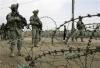
Soldiers Test New Medical Training Program

For much of the global war on terror-era, medical training and operational execution benefited from relatively predictable access to evacuation and readily available higher levels of care.

Large-scale combat operations and a drone-dominated battlespace present a different and more challenging picture. Units may be dispersed; medical evacuation may be delayed or unavailable due to contested aerial environment.
Casualties may need care for longer periods at or near the point of injury. In these conditions, medical readiness is not limited to the medic or treatment team. It becomes a formation-wide demand.
As demonstrated by the Ukraine-Russia conflict, modern combat has been seen to unfold across long distances, under pressure and far from immediate medical support. In that environment, the first minutes after an injury can shape everything that follows.
“The reality is that in machine-dominated battlefields, where you have a high-threat environment that only allows a minimal movement, there is a high chance that you get isolated in a fighting position as a combat lifesaver and you will have several hours before the medic can get to you,” said Army Lt. Col. Tim Bongartz, assigned to the 936th Forward Resuscitative Surgical Detachment.

Soldiers assigned to the 2nd Mobile Brigade,101st Airborne Division, in partnership with the EagleWerx Applied Tactical Innovation Center in Clarksville, Tennessee, and the Vanderbilt University Medical Center in Nashville, Tennessee, have been testing a newly enhanced model of tactical field care currently known as the Advanced Resuscitation and Medical Skills for Operational Readiness training program.
An initiative focused on preparing soldiers and medical personnel to provide capable care when evacuation is delayed, routes are contested, and casualty numbers may rise quickly.
The starting point for the division came into focus during a long-range large-scale air assault exercise in early 2024. The division reached out to the Army Research Lab and the Vanderbilt University School of Medicine.
“They had a team from Vanderbilt come out and observe [the brigade] at the [Joint Readiness Training Center],” said Army Maj. Peter Carr, brigade surgeon. “They observed a lot of things that they felt that we could do better.”
The effort grew from the project, supported through the Civil-Military Innovation Institute. The program brings together operational units, clinicians, engineers, faculty, students and other partners to examine difficult military problems through a structured, evidence-based process.
“As part of the initial seed project, we had several Vanderbilt researchers including bioengineers, trauma surgeons and emergency physicians visit Ukraine and meet with all echelons of combat casualty care,” Bongartz said. “We spoke with soldiers on the front lines, evacuation personnel, medics, Role 2 and 3 personnel [progressive care] to get their input and try to get a realistic picture of the realities of combat casualty care there.”

The structured discussions with Ukrainian military medical personnel and subject matter experts reinforced the importance of early care. Their experience indicated that stronger medical skills at the point of injury can improve survival, reduce complications, and help preserve function when casualties cannot quickly reach a higher level of care.
“We compared current [standard operating procedures] within the 101st and identified the deficits,” Bongartz said. “And then had a conversation between [the] 101st, [the Joint Trauma System], Vanderbilt and several Ukrainian medical experts to see how we best fill those gaps.”
The result of that discussion was six modules that were added to standard tactical combat casualty care training.
The Advanced Resuscitation and Medical Skills for Operational Readiness training program is designed to explore what changes are needed when the operating environment demands more from every level of care. During its curriculum development, the goal was to move selected medical capabilities closer to the warfighter while strengthening the formation’s ability to manage illness, injury, interventions and mass-casualty events.
The curriculum is organized around practical areas that become especially important in a prolonged-care environment. These include integrated hemorrhage control, whole blood transfusion, battlefield pain control, austere wound care, medical mission planning and comprehensive prolonged casualty care. Together, the modules are intended to connect individual actions at the point of injury with the broader medical and operational decisions that sustain a unit over time.
The program’s next step was equally important — the evaluation. Rather than moving directly to division-wide implementation, the initiative used a pilot structure that compared enhanced ARMOR training with conventional tactical combat casualty care refresher instruction.
This summer, three platoons received ARMOR training, while three control platoons received routine combat lifesaver refresher training. A comparative tactical exercise then examined outcomes and performance across the two approaches.
In November, the exercise was conducted at the Fort Campbell, Kentucky, Medical Simulation Training Center, to intentionally combine progressively increasing casualty burdens, a persistent unmanned aerial vehicle threat, movement restrictions, limited resources and delayed evacuation.
The objective was not to test whether participants can follow a scripted medical scenario, but whether they can integrate the knowledge and skills taught through ARMOR into platoon operations under realistic conditions.
“What we’ve seen with soldiers trained to the current standard is that they often don’t help their medic as much once we’re into a prolonged casualty care scenario,” Carr said. “And there’s a lot that you can do to help the medic and the casualty in that time, with wound care, converting tourniquets, pain control, antibiotics. We believe this additional training will help them be able to do more so that the medic isn’t completely overwhelmed.”
ARMOR is therefore more than a new course of instruction. It is a pathway from battlefield lessons to measurable readiness — designed to help ensure that when time, distance and uncertainty place greater demands on a unit, more soldiers are prepared to act.
“Following the exercise we will analyze all data collected, publish our findings, and provide feedback,” Carr said. “The research should answer whether the curriculum should be refined, expanded or adopted more broadly.”
Source: http://military-online.blogspot.com/2026/11/soldiers-test-new-medical-training.html
Anyone can join.
Anyone can contribute.
Anyone can become informed about their world.
"United We Stand" Click Here To Create Your Personal Citizen Journalist Account Today, Be Sure To Invite Your Friends.
Before It’s News® is a community of individuals who report on what’s going on around them, from all around the world. Anyone can join. Anyone can contribute. Anyone can become informed about their world. "United We Stand" Click Here To Create Your Personal Citizen Journalist Account Today, Be Sure To Invite Your Friends.
LION'S MANE PRODUCT
Try Our Lion’s Mane WHOLE MIND Nootropic Blend 60 Capsules
Mushrooms are having a moment. One fabulous fungus in particular, lion’s mane, may help improve memory, depression and anxiety symptoms. They are also an excellent source of nutrients that show promise as a therapy for dementia, and other neurodegenerative diseases. If you’re living with anxiety or depression, you may be curious about all the therapy options out there — including the natural ones.Our Lion’s Mane WHOLE MIND Nootropic Blend has been formulated to utilize the potency of Lion’s mane but also include the benefits of four other Highly Beneficial Mushrooms. Synergistically, they work together to Build your health through improving cognitive function and immunity regardless of your age. Our Nootropic not only improves your Cognitive Function and Activates your Immune System, but it benefits growth of Essential Gut Flora, further enhancing your Vitality.

Our Formula includes: Lion’s Mane Mushrooms which Increase Brain Power through nerve growth, lessen anxiety, reduce depression, and improve concentration. Its an excellent adaptogen, promotes sleep and improves immunity. Shiitake Mushrooms which Fight cancer cells and infectious disease, boost the immune system, promotes brain function, and serves as a source of B vitamins. Maitake Mushrooms which regulate blood sugar levels of diabetics, reduce hypertension and boosts the immune system. Reishi Mushrooms which Fight inflammation, liver disease, fatigue, tumor growth and cancer. They Improve skin disorders and soothes digestive problems, stomach ulcers and leaky gut syndrome. Chaga Mushrooms which have anti-aging effects, boost immune function, improve stamina and athletic performance, even act as a natural aphrodisiac, fighting diabetes and improving liver function. Try Our Lion’s Mane WHOLE MIND Nootropic Blend 60 Capsules Today. Be 100% Satisfied or Receive a Full Money Back Guarantee. Order Yours Today by Following This Link.


| Visits: | 1,839,129,967 |
| Stories: | 8,740,714 |
Whistler Blowers, Insiders

