

How IT Is Transforming the Work of an Architect in Dallas TX

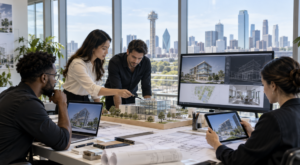
Architecture has always been shaped by technology. Drafting tables gave way to computer-aided design, paper blueprints became digital models, and physical site measurements increasingly work alongside laser scanning, drones, sensors, and cloud-based project platforms. In Dallas, that technological shift is accelerating as architects work on increasingly sophisticated commercial, residential, mixed-use, hospitality, healthcare, and corporate projects.
Information technology is no longer simply a support function inside an architecture firm. IT now influences how buildings are conceived, visualized, coordinated, constructed, secured, operated, and maintained. For an architect in Dallas, TX, digital capability can affect nearly every stage of a project, from the first concept through years of building operation.
The change is especially relevant in North Texas, where development continues across a large and economically diverse metropolitan region. Wikipedia’s overview of Dallas describes the city as the anchor of the Dallas-Fort Worth metroplex, one of the largest metropolitan areas in the United States. That scale creates unusual opportunities for architects, developers, contractors, technology companies, engineers, and property owners to work together on projects in which the physical and digital environments are closely connected. 
IT Has Changed Architectural Design From a Drawing Process Into a Data Process
Traditional architectural drawings remain important, but the information behind those drawings has become considerably more valuable. Modern architecture firms can create detailed digital models containing information about materials, dimensions, building systems, structural components, energy performance, and construction requirements.
Building Information Modeling, commonly known as BIM, is one of the clearest examples of this transformation. BIM allows architects, engineers, contractors, and other participants to collaborate around a coordinated digital representation of a building rather than relying on disconnected sets of drawings.
The American Institute of Architects has documented how technological adoption within architecture now extends far beyond traditional CAD and BIM software. Digital tools influence project management, business operations, collaboration, visualization, communication, and the overall culture of architectural firms.
For Dallas architects, this means design decisions can increasingly be evaluated before construction begins. A wall, mechanical system, structural component, lighting plan, or circulation path can be viewed as part of a larger digital environment. Potential conflicts can be detected earlier, design alternatives can be compared more efficiently, and revisions can be shared among project participants without waiting for another physical set of drawings.
That ability to coordinate information can be particularly valuable on complex commercial projects where architects must work closely with structural engineers, mechanical engineers, electrical engineers, technology consultants, contractors, owners, and numerous specialty professionals.
Cloud Technology Is Connecting the Entire Project Team
Architecture has become a highly collaborative profession, and IT has changed what collaboration looks like.
Cloud-based project environments allow authorized team members to access current drawings, models, specifications, schedules, submittals, photographs, and project communications from different locations. A Dallas architect can coordinate with an engineering consultant in another city, a contractor at the construction site, and a property owner traveling elsewhere without everyone needing to occupy the same room.
The result is a faster exchange of information and a more centralized project record.
This does not eliminate the need for experienced professionals or direct communication. Instead, technology gives those professionals better tools for sharing the information behind important decisions.
For property owners searching online for an Architect Near Me Dallas TX, technological capability is increasingly part of evaluating an architectural firm. Design skill remains fundamental, but clients also benefit when their architect can efficiently manage digital drawings, coordinate consultants, visualize concepts, maintain project information, and communicate changes throughout the design and construction process.
Cloud technology also creates a clearer connection between the office and the jobsite. Tablets and mobile devices allow construction professionals to reference plans in the field, review updated documents, photograph conditions, document progress, and communicate concerns without returning to an office to locate paperwork.
Artificial Intelligence Is Becoming Part of Architectural Practice
Artificial intelligence represents another significant development at the intersection of IT and architecture. AI can assist with research, data organization, visualization, scheduling, repetitive production tasks, early design exploration, and the analysis of large amounts of project information.
The American Institute of Architects’ AI in Architecture resources describe artificial intelligence as a transformative force within the profession while emphasizing responsible adoption, AI literacy, data quality, and appropriate policies.
That distinction matters. AI does not replace the professional judgment required to design a building. Architecture involves context, safety, codes, constructability, client objectives, budgets, materials, human behavior, aesthetics, and numerous project-specific considerations that require experienced oversight.
Instead, AI can serve as another tool available to architects.
An architect might use technology to rapidly organize reference information, examine alternatives, create early visual studies, or identify patterns within project data. Human expertise remains responsible for deciding whether those outputs make sense for a particular building, location, owner, and community.
For Dallas architecture firms, that combination of computational capability and professional judgment could become increasingly important as projects grow more data-intensive.
Smart Buildings Are Bringing IT Into the Architecture Itself
Perhaps the most important change is that IT no longer stops at the architect’s computer. Technology is becoming part of the building.
Modern buildings can incorporate connected lighting, HVAC controls, access systems, security equipment, energy monitoring, occupancy sensors, communications infrastructure, automated shading, elevators, audiovisual systems, and other networked components.
The physical structure and its technology infrastructure therefore need to be considered together.
The U.S. Department of Energy Building Technologies Office supports research and development involving advanced technologies and techniques for high-performing buildings. This reflects a broader movement toward buildings that use technology not merely as an added convenience but as part of their ongoing performance.
A thoughtfully designed commercial building in Dallas may need spaces for network equipment, pathways for cabling, appropriate electrical capacity, wireless coverage, security infrastructure, building controls, and flexibility for technologies that may change during the building’s lifetime.
Architects consequently coordinate with a broader range of technology professionals than they once did. That collaboration can begin early because decisions made during architectural design may affect how easily technology can be installed, upgraded, secured, and maintained later.
The smart-building movement is effectively creating a new relationship between architecture and IT. 

Cybersecurity Is Becoming a Building Design Concern
A connected building creates benefits, but connectivity also introduces risk.
Heating and cooling systems, lighting, elevators, access controls, security equipment, and other operational technologies can now communicate across networks. As buildings become more connected, the security of those systems deserves greater attention.
The National Institute of Standards and Technology has highlighted cybersecurity considerations for building systems and the growing connection between digital building technologies and cybersecurity.
This creates an important shift in how modern facilities are viewed. Cybersecurity is no longer relevant only to servers, laptops, and corporate networks. It can also relate to the systems that physically operate a building.
Architects are not expected to replace cybersecurity professionals, but modern design teams increasingly need to understand where responsibilities overlap. Technology consultants, engineers, security specialists, facility managers, contractors, and architects may all contribute to the planning of a connected facility.
For technology-intensive offices, healthcare environments, corporate facilities, data-related operations, advanced manufacturing spaces, and other sophisticated projects in the Dallas region, those conversations can become especially important.
Digital Visualization Is Changing How Clients Experience a Design
One of the most visible benefits of IT is the ability to communicate architectural ideas more clearly.
Traditional plans and elevations require a certain amount of interpretation. Three-dimensional modeling, photorealistic rendering, animation, virtual reality, and augmented reality can help clients understand a proposed space before construction starts.
Instead of trying to imagine the relationship between rooms from a floor plan, a client may be able to view how spaces connect, examine materials, evaluate lighting, or experience the scale of an interior digitally.
This can make design discussions more productive because stakeholders are reacting to a clearer representation of the architect’s intent.
Technology also makes comparison easier. Different materials, layouts, exterior treatments, or interior concepts can sometimes be visualized without physically building each alternative.
The purpose is not simply to produce impressive images. Effective visualization can support better communication and more informed decisions.
IT Is Supporting More Efficient and Sustainable Buildings
Information technology is also helping design teams evaluate how buildings may perform.
Digital analysis tools can assist architects and engineers in studying daylight, solar exposure, energy use, building orientation, materials, mechanical requirements, and other performance considerations.
Sustainable architecture increasingly depends on measurable building performance rather than appearance alone. The U.S. Green Building Council’s LEED v5 program reflects the continuing emphasis on building performance, sustainability, resilience, and healthier spaces.
Technology allows many of those factors to be considered earlier in design.
That can be especially valuable in Texas, where heat, solar exposure, cooling requirements, and energy use are important considerations for many projects. Digital modeling cannot make design decisions on its own, but it can provide architects and engineers with additional information to guide those decisions.
Building controls can continue that process after construction. Sensors and automated systems may help building operators monitor conditions and adjust equipment based on actual use.
The building effectively becomes an ongoing source of information. 
Texas Is Investing in a Broader Digital Future
The connection between IT and architecture is part of a much larger technological transformation taking place across Texas.
The Texas Department of Information Resources identifies modernization, data, artificial intelligence, cybersecurity, digital services, and emerging technologies among the priorities shaping the state’s information technology environment.
Although government IT planning and architectural practice are different fields, both reflect the same larger trend. Texas organizations are increasingly operating in environments where physical infrastructure and digital infrastructure cannot be treated as unrelated systems.
For Dallas, this has implications far beyond architecture firms themselves. Businesses choosing new offices, developers planning mixed-use properties, organizations constructing specialized facilities, and owners modernizing existing buildings are increasingly thinking about technology from the beginning.
A building designed today may remain in service for decades. The technology inside it will change many times during that period. Good planning therefore requires more than choosing the technology that works now. Buildings increasingly need enough flexibility to accommodate technologies that have not yet become standard.
The Architect’s Role Is Becoming More Connected
The expanding role of IT does not diminish architecture. It makes coordination more important.
Architects remain responsible for bringing many different project requirements together into a coherent design. What has changed is the amount and type of information involved.
A contemporary architectural project may combine design models, engineering data, energy analysis, smart-building systems, security requirements, cloud collaboration, digital visualization, construction information, sustainability targets, and operational technology.
Someone still needs to understand how those pieces affect the physical building.
That is one reason the relationship between architects and technology professionals is becoming more significant. The best results often come when IT considerations are incorporated into design early rather than added after major architectural decisions have already been made.
For Dallas businesses and developers, this approach can help create buildings that are not only visually distinctive but also prepared for the way organizations actually operate.
Conclusion
Information technology has changed architecture from the inside out. It has transformed the tools architects use, the information they manage, the professionals they coordinate with, the way clients experience a proposed design, and the systems that eventually operate within the completed building.
In Dallas, those changes are especially relevant as the region continues to support business growth, development, technology, and increasingly sophisticated building projects.
BIM, cloud collaboration, artificial intelligence, digital visualization, smart-building systems, cybersecurity planning, performance analysis, and connected building controls are no longer isolated technology trends. Together, they are changing what it means to plan and design modern architecture.
The future of architecture will still depend on creativity, experience, judgment, and an understanding of people and place. IT adds another dimension by giving architects better information, more powerful ways to collaborate, and new opportunities to design buildings that can respond to a rapidly changing world.
For Dallas, the intersection of architecture and IT is creating something larger than a technological upgrade. It is helping redefine the modern building itself. 
The post How IT Is Transforming the Work of an Architect in Dallas TX first appeared on Three Days in August IT News.
Source: https://threedaysinaugust.com/it-for-an-architect-in-dallas/
Anyone can join.
Anyone can contribute.
Anyone can become informed about their world.
"United We Stand" Click Here To Create Your Personal Citizen Journalist Account Today, Be Sure To Invite Your Friends.
Before It’s News® is a community of individuals who report on what’s going on around them, from all around the world. Anyone can join. Anyone can contribute. Anyone can become informed about their world. "United We Stand" Click Here To Create Your Personal Citizen Journalist Account Today, Be Sure To Invite Your Friends.
LION'S MANE PRODUCT
Try Our Lion’s Mane WHOLE MIND Nootropic Blend 60 Capsules
Mushrooms are having a moment. One fabulous fungus in particular, lion’s mane, may help improve memory, depression and anxiety symptoms. They are also an excellent source of nutrients that show promise as a therapy for dementia, and other neurodegenerative diseases. If you’re living with anxiety or depression, you may be curious about all the therapy options out there — including the natural ones.Our Lion’s Mane WHOLE MIND Nootropic Blend has been formulated to utilize the potency of Lion’s mane but also include the benefits of four other Highly Beneficial Mushrooms. Synergistically, they work together to Build your health through improving cognitive function and immunity regardless of your age. Our Nootropic not only improves your Cognitive Function and Activates your Immune System, but it benefits growth of Essential Gut Flora, further enhancing your Vitality.

Our Formula includes: Lion’s Mane Mushrooms which Increase Brain Power through nerve growth, lessen anxiety, reduce depression, and improve concentration. Its an excellent adaptogen, promotes sleep and improves immunity. Shiitake Mushrooms which Fight cancer cells and infectious disease, boost the immune system, promotes brain function, and serves as a source of B vitamins. Maitake Mushrooms which regulate blood sugar levels of diabetics, reduce hypertension and boosts the immune system. Reishi Mushrooms which Fight inflammation, liver disease, fatigue, tumor growth and cancer. They Improve skin disorders and soothes digestive problems, stomach ulcers and leaky gut syndrome. Chaga Mushrooms which have anti-aging effects, boost immune function, improve stamina and athletic performance, even act as a natural aphrodisiac, fighting diabetes and improving liver function. Try Our Lion’s Mane WHOLE MIND Nootropic Blend 60 Capsules Today. Be 100% Satisfied or Receive a Full Money Back Guarantee. Order Yours Today by Following This Link.


| Visits: | 1,834,048,973 |
| Stories: | 8,716,000 |
Whistler Blowers, Insiders

