

Whatever the Government Mandates Gets More Expensive, Less Efficient, and More Controlling

Have you noticed that the price of televisions, computers, and cell phones has decreased over the years while their functionality has increased? Early cell phones were the size of a brick and could make only calls. The first commercially available cell phone, the Motorola DynaTAC 8000X, was released in 1983 at a price of $3,995 (equivalent to approximately $12,400-$12,800 in 2026). At launch, it weighed about 2.5 pounds and offered only 30 minutes of talk time. Early cellular service was also expensive, with monthly fees around $50 and per-minute voice call costs ranging from 24 to 40 cents. The free market, technological advances, and competition changed everything.
Smartphones function as pocket-sized supercomputers that replace or consolidate numerous standalone devices, including GPS navigation systems, cameras, MP3 players, and wallets. They enable instant global communication via video calls, messaging apps, and email, while allowing users to manage finances through mobile banking, check deposits, and contactless payments.
Beyond communication, smartphones serve as comprehensive productivity and entertainment hubs. Users can stream 4K video, play games, read e-books, and control smart home devices like thermostats and lights. They also support specialized tasks such as scanning documents, monitoring health, translating languages, and working remotely through cloud-based collaboration tools.
The government had no role in these advances. The same is true with computers. Innovation and competition made them better and cheaper. This is never true of government programs. They take longer, always cost more, and produce inferior results. Education’s cost and performance results are a perfect example of education’s decline in the United States. Pick any government program, and the results will be the same.
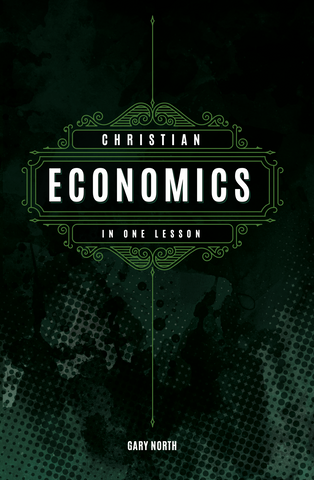
Christian economics must begin with the issue of ultimate ownership. This sets it apart from modern economic analysis, which begins with the issue of scarcity. Second, this leads to the issue of theft, which in turn raises the issue of ethics. The ultimate form of causation in human history is ethical: right vs. wrong. Modern economists do not share this view. In fact, it goes beyond this. They openly reject it. They proclaim economic analysis as value-free—this is self-deception. It is a variation of an ancient temptation: “Hath God said?” Yes, He has. “Thou shalt not steal.”
Creating a supplemental retirement system called Social Security seemed like a good idea when President Franklin Delano Roosevelt signed the Social Security Act into law on August 14, 1935. With the Great Depression still fresh in people’s minds, selling Americans on security was easy. Each month, the federal government took a small percentage from an employee’s paycheck. The employee’s employer would also be required to “contribute” an equal percentage. At retirement, anyone who paid into the system received a monthly check from the Social Security Administration until death. Other benefits existed, but Social Security was largely designed as a forced supplemental retirement program.
Monthly benefit payments began in January 1940, just five years after the program was implemented. On January 31, 1940, the Social Security Administration issued the first monthly check to Ida May Fuller, a retired legal secretary from Ludlow, Vermont. She received her first check for $22.54. Fuller continued to receive benefits until she died in January 1975 at the age of 100. During her 35 years as a beneficiary, she received more than $22,000. For Fuller, Social Security proved a great investment because her total “contribution” to the program was only $22.00.
Miss Fuller’s windfall is Social Security’s inherent problem. In 1935, the highest amount an employee had to pay was one percent of $3,000. The employer’s portion was also 1 percent of the first $ 3,000 of wages, for a total of $60 per year. Today, employees and employers each pay 6.2 percent of Social Security taxes, for a total of 12.4 percent, up to $184,500.
Even with rate increases and a higher top rate, Social Security still faces fiscal problems. The early 1980s provided a quick fix. To raise revenue for future recipients, Congress revised the law and brought more people into the system.
Prior to 1983, many state and federal workers were exempt from Social Security. The same applied to non-profit organizations and churches. In fact, before 1984, Congress exempted itself from the program and developed its own private retirement system.
Under the new legislation, new state and federal employees and all nonprofit groups (excluding ministers who could opt out) had to join the program. This immediately added billions of dollars of new revenue to the program to pay present and future recipients. Of course, the infusion of money was only temporary. Because the program added more people to meet immediate cash needs, those added payers will one day become payees. Who will pay them?
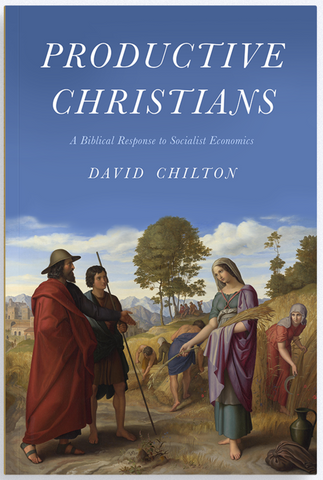
In Productive Christians: A Biblical Response to Socialist Economics, David Chilton exposes the follies and fallacies of socialism, but he also systematically outlines the biblical alternative — an alternative that lays the groundwork for real justice, progress, prosperity, and freedom for the rich, the poor, and everyone in between. First published nearly half a century ago, it is more relevant and more prescient than ever. Chilton’s crystalline prose and take-no-prisoners style is as entertaining as it is informative. This is the way books on economic issues should be written: biblical, understandable, and practical. This new edition also includes a 23-page appendix that Chilton wrote 43 years ago. “Studies in Amos” is an eight-part article series originally released in 1980.
In 1935, there were 45 people paying into SS for every one person receiving benefits. Today, that ratio is about three to one. By 2030, it will be two to one. Is it any wonder Social Security has been described as the “world’s biggest chain letter”? Dr. Gary North wrote the following.
Social Security works like a chain letter. Some people have described SS as a “Ponzi scheme,” named after Charles Ponzi, a con artist who bilked people of a lot of money. How did he do it? He would tell people that he would pay them a huge return on their investment within a few months. Then he would take their money and pay off the previous investors. It worked great for the first ones to (unknowingly) get in on the scheme. Ponzi then used his early “investors” as testimonials to attract new “investors.” After a time, the number of investors ran out, and so did Ponzi with their money. Ponzi had worked the “pyramid scheme”: the people at the top (those who get in early) receive the benefits that are being paid in from those at the bottom (those getting in late).
The following appeared in Parade Magazine (March 28, 1976): “Social Security is a wonderful plan. People say it’s going bankrupt. Don’t believe them. It works. I know. My uncle reached 65 and he sent in the appropriate forms. In a week he received a wonderful letter: ‘Dear Mr. Gold. Welcome to the Social Security System. Attached is a list of ten names. Just send $100 to each name on the list and retype up a new list with your name at the bottom. But remember, don’t break the chain!’”
The promises made by the Social Security “retirement program” likely gave people a false sense of security. Maybe they thought they didn’t have to invest because their Social Security payments would take care of them. Of course, they didn’t count on inflation devaluing their money.
In 1981, employees of Galveston County, Texas, chose to leave SS for a private alternative. At first, not everyone supported the innovative idea. It’s called the “Galveston Plan.” The unions (naturally) opposed it. Employees deposited approximately the same amount of money in private accounts. Since inception, the funds have achieved an average annual rate of return of 8.64 percent. Many of these retirees became millionaires, living off the interest and free to pass on their savings to their children when they die. This can never happen under Social Security. Consider this scenario: A man and his wife have paid into SS since they started working, 45 years of payments. They both reach retirement age on the same day. On the way to the mailbox to pick up their first checks, they are killed by a drunk driver. Their estate gets nothing. The Social Security Administration takes over the money that was paid for 45 years.
American Vision’s mission is to Restore America to its Biblical Foundation—from Genesis to Revelation. American Vision (AV) has been at the heart of worldview study since 1978, providing resources to exhort Christian families and individuals to live by a Biblically based worldview. Visit www.AmericanVision.org for more information, content and resources
Source: https://americanvision.org/posts/whatever-the-government-mandates-gets-more-expensive-less-efficient-and-more-controlling/
Anyone can join.
Anyone can contribute.
Anyone can become informed about their world.
"United We Stand" Click Here To Create Your Personal Citizen Journalist Account Today, Be Sure To Invite Your Friends.
Before It’s News® is a community of individuals who report on what’s going on around them, from all around the world. Anyone can join. Anyone can contribute. Anyone can become informed about their world. "United We Stand" Click Here To Create Your Personal Citizen Journalist Account Today, Be Sure To Invite Your Friends.
LION'S MANE PRODUCT
Try Our Lion’s Mane WHOLE MIND Nootropic Blend 60 Capsules
Mushrooms are having a moment. One fabulous fungus in particular, lion’s mane, may help improve memory, depression and anxiety symptoms. They are also an excellent source of nutrients that show promise as a therapy for dementia, and other neurodegenerative diseases. If you’re living with anxiety or depression, you may be curious about all the therapy options out there — including the natural ones.Our Lion’s Mane WHOLE MIND Nootropic Blend has been formulated to utilize the potency of Lion’s mane but also include the benefits of four other Highly Beneficial Mushrooms. Synergistically, they work together to Build your health through improving cognitive function and immunity regardless of your age. Our Nootropic not only improves your Cognitive Function and Activates your Immune System, but it benefits growth of Essential Gut Flora, further enhancing your Vitality.

Our Formula includes: Lion’s Mane Mushrooms which Increase Brain Power through nerve growth, lessen anxiety, reduce depression, and improve concentration. Its an excellent adaptogen, promotes sleep and improves immunity. Shiitake Mushrooms which Fight cancer cells and infectious disease, boost the immune system, promotes brain function, and serves as a source of B vitamins. Maitake Mushrooms which regulate blood sugar levels of diabetics, reduce hypertension and boosts the immune system. Reishi Mushrooms which Fight inflammation, liver disease, fatigue, tumor growth and cancer. They Improve skin disorders and soothes digestive problems, stomach ulcers and leaky gut syndrome. Chaga Mushrooms which have anti-aging effects, boost immune function, improve stamina and athletic performance, even act as a natural aphrodisiac, fighting diabetes and improving liver function. Try Our Lion’s Mane WHOLE MIND Nootropic Blend 60 Capsules Today. Be 100% Satisfied or Receive a Full Money Back Guarantee. Order Yours Today by Following This Link.


| Visits: | 1,836,252,329 |
| Stories: | 8,727,448 |
Whistler Blowers, Insiders

