
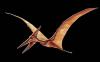
Pterosaur brains vs bird brains 2025

Bronzati et a 2025 made the common academic mistake
of omitting the non-volant tiny tanystropheid lepidosaur ancestors of pterosaur brains. In their study they substituted unrelated lagerpetid proterochampsids. They authors wrote, “Here we use geometric morphometrics and phylogenetically informed anlayses to assess the origin and evolution of brain shape and size in pterosaurs, tracing the transition from their non-volant closest relatives (lagerpetids), and compare their trajectory with that in the dinosaur-bird transition. Pterosaurs have globular brains with moderately enlarged hemispheres, more closely resembling non-avian paravians scubas as troodontoidsa dn Archaeopteryx lithographica than living birds.”
This entire study is flawed due to taxon exclusion. Lagerpetids are not pterosaur ancestors. They are proterochampsids, close to parasuchians. So not close to dinosaurs either.
Rather, tiny tanystropheid lepidosaurs, like Cosesaurus (Fig 1) have been non-volant pterosaur ancestors since Peters 2000 because these taxa share a longer list of traits (Peters 2002) than any competing taxa. Note the globular braincase in Cosesaurus resembling that of Late Jurassic Solnhofen birds. Ellenberger mistakenly thought Cosesaurus was a pre-bird.
Figure 2. Cosesaurus nasal crest (in yellow).
” data-large-file=”https://pterosaurheresies.wordpress.com/wp-content/uploads/2019/02/cosesaurus_crest588.gif?w=584″ src=”https://pterosaurheresies.wordpress.com/wp-content/uploads/2019/02/cosesaurus_crest588.gif?w=584″ alt=”Figure 2. Cosesaurus nasal crest (in yellow).” class=”wp-image-35739″ srcset=”https://pterosaurheresies.wordpress.com/wp-content/uploads/2019/02/cosesaurus_crest588.gif?w=584 584w, https://pterosaurheresies.wordpress.com/wp-content/uploads/2019/02/cosesaurus_crest588.gif?w=150 150w, https://pterosaurheresies.wordpress.com/wp-content/uploads/2019/02/cosesaurus_crest588.gif?w=300 300w, https://pterosaurheresies.wordpress.com/wp-content/uploads/2019/02/cosesaurus_crest588.gif 588w” sizes=”(max-width: 584px) 100vw, 584px” />
Bronzati et al omitted all references
and taxa associated with this competing hypothesis for pterosaur origins. All 17 co-authors agreed to this omission. So did the referees and editors. This is how compromised the subject of the ancestry of pterosaurs has become in Academia.
Omission is not good science. Take on all competing hypotheses and dismantle them, but don’t do it with matrix typos. Click here for details on that fiasco.
Figure 1. The Berlin Archaeopteryx, HMN1880, shown here in situ and with DGS tracing and reconstruction. The occiput is segregated to the left as is. Similarly, the palate bones are not reconstructed here.
” data-large-file=”https://pterosaurheresies.wordpress.com/wp-content/uploads/2015/11/archaeopteryx-hmn1880-skull-insitu5881.gif?w=584″ src=”https://pterosaurheresies.wordpress.com/wp-content/uploads/2015/11/archaeopteryx-hmn1880-skull-insitu5881.gif?w=584″ alt=”Figure 1. The Berlin Archaeopteryx, HMN1880, shown here in situ and with DGS tracing and reconstruction. The occiput is segregated to the left as is. Similarly, the palate bones are not reconstructed here.” class=”wp-image-20973″ srcset=”https://pterosaurheresies.wordpress.com/wp-content/uploads/2015/11/archaeopteryx-hmn1880-skull-insitu5881.gif?w=584 584w, https://pterosaurheresies.wordpress.com/wp-content/uploads/2015/11/archaeopteryx-hmn1880-skull-insitu5881.gif?w=107 107w, https://pterosaurheresies.wordpress.com/wp-content/uploads/2015/11/archaeopteryx-hmn1880-skull-insitu5881.gif?w=215 215w, https://pterosaurheresies.wordpress.com/wp-content/uploads/2015/11/archaeopteryx-hmn1880-skull-insitu5881.gif 588w” sizes=”(max-width: 584px) 100vw, 584px” />
Bronazti et al invented a ‘perfect and complete’ skull
for Ixalerpeton (Figs 3, 4) from their imagination. Only the skull roof is preserved. And it falls short of having “a globular brain with moderately enlarged hemispheres,“.
Figure 2. Ixalerpeton bits and pieces reconstructed. This taxon nests with protorosaurs.
” data-large-file=”https://pterosaurheresies.wordpress.com/wp-content/uploads/2018/03/ixalerpeton-polesinensis588.jpg?w=584″ src=”https://pterosaurheresies.wordpress.com/wp-content/uploads/2018/03/ixalerpeton-polesinensis588.jpg?w=584″ alt=”Figure 2. Ixalerpeton bits and pieces reconstructed. This taxon nests with protorosaurs.” class=”wp-image-29890″ srcset=”https://pterosaurheresies.wordpress.com/wp-content/uploads/2018/03/ixalerpeton-polesinensis588.jpg?w=584 584w, https://pterosaurheresies.wordpress.com/wp-content/uploads/2018/03/ixalerpeton-polesinensis588.jpg?w=99 99w, https://pterosaurheresies.wordpress.com/wp-content/uploads/2018/03/ixalerpeton-polesinensis588.jpg?w=199 199w, https://pterosaurheresies.wordpress.com/wp-content/uploads/2018/03/ixalerpeton-polesinensis588.jpg 588w” sizes=”auto, (max-width: 584px) 100vw, 584px” />
The taxon omission in Bronzati et al
is repaired here (Fig 5) with LRT pterosaur ancestors extending back to a late-surviving Cretaceous non-squamate lepidosaur, Huehuecuetzpalli and several transitional taxa.
Figure 1. Skulls of pterosaur ancestors from Huehuecuetzpalli through Macrocnemus, Cosesaurus, Longisquama and the pterosaur Bergamodactylus.
” data-large-file=”https://pterosaurheresies.wordpress.com/wp-content/uploads/2020/09/fenestrasaur_skulls588.jpg?w=584″ src=”https://pterosaurheresies.wordpress.com/wp-content/uploads/2020/09/fenestrasaur_skulls588.jpg?w=584″ alt=”Figure 1. Skulls of pterosaur ancestors from Huehuecuetzpalli through Macrocnemus, Cosesaurus, Longisquama and the pterosaur Bergamodactylus.” class=”wp-image-48838″ srcset=”https://pterosaurheresies.wordpress.com/wp-content/uploads/2020/09/fenestrasaur_skulls588.jpg?w=584 584w, https://pterosaurheresies.wordpress.com/wp-content/uploads/2020/09/fenestrasaur_skulls588.jpg?w=102 102w, https://pterosaurheresies.wordpress.com/wp-content/uploads/2020/09/fenestrasaur_skulls588.jpg?w=205 205w, https://pterosaurheresies.wordpress.com/wp-content/uploads/2020/09/fenestrasaur_skulls588.jpg 588w” sizes=”auto, (max-width: 584px) 100vw, 584px” />
Example pterosaur brains
Bronzati et al chose Triassic Caelestiventus (incomplete, Fig 6), Middle Jurassic Allkaruen and Early Cretaceous Tupuxuara.
Figure 1. Triasic Caelestiventus skull compared to Jurassic Dimorphodon. Readers, don’t do the easy thing and go to the Wellnhofer diagrams for your pterosaur skulls. Use real data.
” data-large-file=”https://pterosaurheresies.wordpress.com/wp-content/uploads/2018/08/caelestiventus_dimorphodon5882.jpg?w=584″ src=”https://pterosaurheresies.wordpress.com/wp-content/uploads/2018/08/caelestiventus_dimorphodon5882.jpg?w=584″ alt=”Figure 1. Triasic Caelestiventus skull compared to Jurassic Dimorphodon. Readers, don’t do the easy thing and go to the Wellnhofer diagrams for your pterosaur skulls. Use real data.” class=”wp-image-32506″ srcset=”https://pterosaurheresies.wordpress.com/wp-content/uploads/2018/08/caelestiventus_dimorphodon5882.jpg?w=584 584w, https://pterosaurheresies.wordpress.com/wp-content/uploads/2018/08/caelestiventus_dimorphodon5882.jpg?w=150 150w, https://pterosaurheresies.wordpress.com/wp-content/uploads/2018/08/caelestiventus_dimorphodon5882.jpg?w=300 300w, https://pterosaurheresies.wordpress.com/wp-content/uploads/2018/08/caelestiventus_dimorphodon5882.jpg 588w” sizes=”auto, (max-width: 584px) 100vw, 584px” />
Phylogenetically
the protorosaur, Ixalerpeton is more closely related to Solnhofen birds than either are related to pterosaurs in the large reptile tree (LRT, 2340 taxa). So the Bronzati et al study was based on a false phylogeny, making it next to useless, however precise the cranial scans.
Don’t waste your time following phylogenetic traditions. Test everything. That’s what scientists do. Build your own LRT so you’ll own the authority to focus on any subset within it with confidence.
References
Bronzati et al (17 co-authors) 2025. Neuroanatomical convergence between pterosaurs and non-avian paravians in the evolution of flight. Current Biology 35:6191–6196.
De-Oliveira TM, Pinheiro FL, Da-Rosa AAS, Dias-Da-Silva S and Kerber L 2020.
A new archosauromorph from South America provides insights on the early diversification of tanystropheids. PLoS ONE 15(4): e0230890
Ellenberger P and de Villalta JF 1974. Sur la presence d’un ancêtre probable des oiseaux dans le Muschelkalk supérieure de Catalogne (Espagne). Note preliminaire. Acta Geologica Hispanica 9, 162-168.
Ellenberger P 1978. L’Origine des Oiseaux. Historique et méthodes nouvelles. Les problémes des Archaeornithes. La venue au jour de Cosesaurus aviceps (Muschelkalk supérieur) in Aspects Modernes des Recherches sur l’Evolution. In Bons, J. (ed.) Compt Ren. Coll. Montpellier 12-16 Sept. 1977. Vol. 1. Montpellier, Mém. Trav. Ecole Prat. Hautes Etudes, De l’Institut de Montpellier 4: 89-117.
Ellenberger P 1993. Cosesaurus aviceps . Vertébré aviforme du Trias Moyen de Catalogne. Étude descriptive et comparative. Mémoire Avec le concours de l’École Pratique des Hautes Etudes. Laboratorie de Paléontologie des Vertébrés. Univ. Sci. Tech. Languedoc, Montpellier (France). Pp. 1-664.
Peabody FE 1948. Reptile and amphibian trackways from the Lower Triassic Moenkopi formation of Arizona and Utah. University of California Publications, Bulletin of the Department of Geological Sciences 27: 295-468.
Peters D 2000a. Description and Interpretation of Interphalangeal Lines in Tetrapods. Ichnos 7:11-41.
Peters D 2000b. A Redescription of Four Prolacertiform Genera and Implications for Pterosaur Phylogenesis. Rivista Italiana di Paleontologia e Stratigrafia 106 (3): 293–336.
Peters D 2002. A New Model for the Evolution of the Pterosaur Wing – with a twist. – Historical Biology 15: 277–301.
Peters D 2007. The origin and radiation of the Pterosauria. In D. Hone ed. Flugsaurier. The Wellnhofer pterosaur meeting, 2007, Munich, Germany. p. 27.
Peters D 2009. A reinterpretation of pteroid articulation in pterosaurs. Journal of Vertebrate Paleontology 29: 1327-1330
Peters D 2018. Cosesaurus aviceps, Sharovipteryx mirabilis and Longisquama insignis Reinterpreted. Preprint www.researchgate.net/publication/328388115_
Sanz JL and López-Martinez N 1984. The prolacertid lepidosaurian Cosesaurus aviceps Ellenberger & Villalta, a claimed ‘protoavian’ from the Middle Triassic of Spain. Géobios 17: 747-753.
Wild R 1993. A juvenile specimen of Eudimorphodon ranzii Zambelli (Reptilia, Pterosauria) from the upper Triassic (Norian) of Bergamo. Rivisita Museo Civico di Scienze Naturali “E. Caffi” Bergamo 16: 95-120.
wiki/Cosesaurus
reptileevolution.com/cosesaurus.htm
Source: https://pterosaurheresies.wordpress.com/2026/07/06/pterosaur-brains-vs-bird-brains-2025/
Anyone can join.
Anyone can contribute.
Anyone can become informed about their world.
"United We Stand" Click Here To Create Your Personal Citizen Journalist Account Today, Be Sure To Invite Your Friends.
Before It’s News® is a community of individuals who report on what’s going on around them, from all around the world. Anyone can join. Anyone can contribute. Anyone can become informed about their world. "United We Stand" Click Here To Create Your Personal Citizen Journalist Account Today, Be Sure To Invite Your Friends.
LION'S MANE PRODUCT
Try Our Lion’s Mane WHOLE MIND Nootropic Blend 60 Capsules
Mushrooms are having a moment. One fabulous fungus in particular, lion’s mane, may help improve memory, depression and anxiety symptoms. They are also an excellent source of nutrients that show promise as a therapy for dementia, and other neurodegenerative diseases. If you’re living with anxiety or depression, you may be curious about all the therapy options out there — including the natural ones.Our Lion’s Mane WHOLE MIND Nootropic Blend has been formulated to utilize the potency of Lion’s mane but also include the benefits of four other Highly Beneficial Mushrooms. Synergistically, they work together to Build your health through improving cognitive function and immunity regardless of your age. Our Nootropic not only improves your Cognitive Function and Activates your Immune System, but it benefits growth of Essential Gut Flora, further enhancing your Vitality.

Our Formula includes: Lion’s Mane Mushrooms which Increase Brain Power through nerve growth, lessen anxiety, reduce depression, and improve concentration. Its an excellent adaptogen, promotes sleep and improves immunity. Shiitake Mushrooms which Fight cancer cells and infectious disease, boost the immune system, promotes brain function, and serves as a source of B vitamins. Maitake Mushrooms which regulate blood sugar levels of diabetics, reduce hypertension and boosts the immune system. Reishi Mushrooms which Fight inflammation, liver disease, fatigue, tumor growth and cancer. They Improve skin disorders and soothes digestive problems, stomach ulcers and leaky gut syndrome. Chaga Mushrooms which have anti-aging effects, boost immune function, improve stamina and athletic performance, even act as a natural aphrodisiac, fighting diabetes and improving liver function. Try Our Lion’s Mane WHOLE MIND Nootropic Blend 60 Capsules Today. Be 100% Satisfied or Receive a Full Money Back Guarantee. Order Yours Today by Following This Link.


| Visits: | 1,825,428,469 |
| Stories: | 8,676,659 |
Whistler Blowers, Insiders

