
Advice for Young Scientists

Today I want to share some stories about another difficult time for young scientists, the mid 1990s. President Clinton was cutting federal funding for scientific research to try and balance the budget, scientists and engineers from the former Soviet Union and Eastern Europe were flooding the US job market, and former industry scientists were looking for jobs as centers like Bell Labs were cutting basic research. I don’t want to imply that 1995 was as bad as 2026, but there were some parallels.
I worked at the National Institutes of Health in Bethesda, Maryland in the late 1980s and early 1990s. I loved NIH, and believed that it was the greatest biomedical research institution anywhere, ever. I was in the Biomedical Engineering and Instrumentation Program (BEIP), which hired physicists, engineers, and mathematicians to collaborate with NIH biologists and medical doctors. BEIP wasn’t funded directly from Congress, but instead was a service organization that was supported by a “tax” on the other institutes.
When the cutbacks began in the mid 1990s, I was just about ready to be put up for a permanent position. BEIP didn’t hire “tenure-track” faculty like the institutes did. It did, however, have a tradition of deciding after six years if a staff fellow like me would be promoted into a permanent position, in a process similar to a tenure decision at at a university. Suddenly around 1994, we in BEIP who had been expecting to go up for a permanent spot started being called “postdocs” and were told we needed more “mentoring.” A month or two later we were told there was a hiring freeze and no BEIP staff fellows would be moved into permanent positions. I started looking for another job.
I applied to colleges and universities throughout the country. I searched for industrial positions too, and as time went by I even began looking for jobs at community colleges. I had no luck for months. Between April 1994 and September 1995 I received over one hundred rejection letters, and many more potential employers didn’t even bother to respond at all to my application. I began to worry how I was going to feed my two children. I had seven job interviews, but only two offers. One was verbal and informal (“we can make this happen if you are interested”) and the other (which I accepted) was for a non-tenure track Assistant Professorship at Vanderbilt University, where I had been a graduate student seven years earlier.
I wasn’t the only one in this situation. BEIP had four young researchers coming up for a decision about a permanent position, and we all were in the same boat. Let me tell you about the four of us. Perhaps our stories will provide hope to young people today facing the current job market.
Akram Aldroubi
Akram Aldroubi (PhD, Carnegie Mellon 1987) was a mathematician who worked with the BEIP director, Murray Eden. He, Eden and Michael Unser published a series of highly cited papers about signal processing, investigating topics like b-splines and wavelets. In 1997 Akram moved to the Department of Mathematics at Vanderbilt University (he and I were reunited at Vanderbilt for a year until I left in 1998). He was coauthor with Peter Basser (more on Basser later) on a landmark paper about using MRI diffusion tensor imaging to do fiber tractography. Akram is still at Vanderbilt today, and in 2014 he was inducted as a fellow in the American Mathematical Society for his “contributions to modern harmonic analysis and its applications, and for building bridges between mathematics and other areas of science and engineering.”
Akram Aldroubi
https://www.youtube.com/watch?v=sn4GNGnFovY
Cynthia Sung
Cynthia Sung (PhD, Harvard-MIT, 1988) was in the Chemical Engineering Section of BEIP. There she worked with Robert Dedrick and Paul Morrison to study pharmacokinetics. After she left NIH she held a variety of positions, such as with the Gates Medical Research Institute and with the Food and Drug Administration. Cynthia went to Singapore and established her own consulting firm, Rainbow Pharma Consulting, and worked with the Singapore Health Sciences Authority. She’s now an Adjunct Associate Professor in the Centre of Regulatory Excellence at Duke-National University of Singapore Medical School. In 2023 she won the Titan Award for Community Collaboration to recognize her collaborative spirit in helping fellow community members reach their goals.
Cynthia Sung
https://www.youtube.com/watch?v=tlHEmLr_DTk
Joe Schmitt
Joe Schmitt (PhD, Stanford, 1986) worked in the Electrical Engineering Section of BEIP with Robert Bonner, studying how light propagates through tissue. After leaving NIH he was an Associate Professor in the Department of Electrical and Electronic Engineering at the Hong Kong University of Science and Technology. There he wrote a highly cited review about Optical Coherence Tomography (a topic discussed in Chapter 14 of Intermediate Physics for Medicine and Biology). He then entered industry and is now the Chief Technology Officer of LightLab Imaging.
Joe Schmitt
https://www.youtube.com/watch?v=HqEuxXHW7Cs
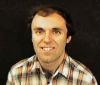
Brad Roth
My PhD was from Vanderbilt in 1987. At NIH I worked for Seth Goldstein in the Mechanical Engineering Section of BEIP, the same section where my friend Peter Basser (the inventor of MRI diffusion tensor imaging) also worked. Basser was a year ahead of me, and he obtained a permanent position at NIH just before the hiring freeze took effect. After leaving NIH, I went back to Vanderbilt for three years, and then took a tenure-track faculty position at Oakland University in Rochester, Michigan, where I taught and did research for over two decades. One of my main accomplishments at OU was to become coauthor with Russell Hobbie on the textbook Intermediate Physics for Medicine and Biology. Though I was never again quite as productive as during those wonderful years at NIH, I nevertheless had a happy and successful career at Oakland.
https://www.youtube.com/watch?v=IKjab7_unRA
Those are the stories of four young researchers who faced a rough patch in their careers just a little over 30 years ago. Fortunately, we all survived—and eventually thrived—in our lives after NIH, whether in academia, industry, or government. I know what young scientists face now is so much worse than what we encountered, and I don’t want to minimize their challenges. But we four friends did overcome our obstacles and managed to remain in science, making a living and contributing to knowledge. Our paths were sometimes tortuous, but with perseverance and patience—and a resurgence of science funding in the late 1990s—we managed to stay in the game. I hope you young scientists facing obstacles now (obstacles that are unfair and no fault of your own) can likewise find a way to stay in science and keep contributing. One thing I know for sure: our country needs you now more than ever.
Good luck. Have courage. Have hope.
Source: http://hobbieroth.blogspot.com/2026/09/im-so-worried-about-state-of-american.html
Anyone can join.
Anyone can contribute.
Anyone can become informed about their world.
"United We Stand" Click Here To Create Your Personal Citizen Journalist Account Today, Be Sure To Invite Your Friends.
Before It’s News® is a community of individuals who report on what’s going on around them, from all around the world. Anyone can join. Anyone can contribute. Anyone can become informed about their world. "United We Stand" Click Here To Create Your Personal Citizen Journalist Account Today, Be Sure To Invite Your Friends.
LION'S MANE PRODUCT
Try Our Lion’s Mane WHOLE MIND Nootropic Blend 60 Capsules
Mushrooms are having a moment. One fabulous fungus in particular, lion’s mane, may help improve memory, depression and anxiety symptoms. They are also an excellent source of nutrients that show promise as a therapy for dementia, and other neurodegenerative diseases. If you’re living with anxiety or depression, you may be curious about all the therapy options out there — including the natural ones.Our Lion’s Mane WHOLE MIND Nootropic Blend has been formulated to utilize the potency of Lion’s mane but also include the benefits of four other Highly Beneficial Mushrooms. Synergistically, they work together to Build your health through improving cognitive function and immunity regardless of your age. Our Nootropic not only improves your Cognitive Function and Activates your Immune System, but it benefits growth of Essential Gut Flora, further enhancing your Vitality.

Our Formula includes: Lion’s Mane Mushrooms which Increase Brain Power through nerve growth, lessen anxiety, reduce depression, and improve concentration. Its an excellent adaptogen, promotes sleep and improves immunity. Shiitake Mushrooms which Fight cancer cells and infectious disease, boost the immune system, promotes brain function, and serves as a source of B vitamins. Maitake Mushrooms which regulate blood sugar levels of diabetics, reduce hypertension and boosts the immune system. Reishi Mushrooms which Fight inflammation, liver disease, fatigue, tumor growth and cancer. They Improve skin disorders and soothes digestive problems, stomach ulcers and leaky gut syndrome. Chaga Mushrooms which have anti-aging effects, boost immune function, improve stamina and athletic performance, even act as a natural aphrodisiac, fighting diabetes and improving liver function. Try Our Lion’s Mane WHOLE MIND Nootropic Blend 60 Capsules Today. Be 100% Satisfied or Receive a Full Money Back Guarantee. Order Yours Today by Following This Link.


| Visits: | 1,834,659,108 |
| Stories: | 8,719,198 |
Whistler Blowers, Insiders

