Repeated Segmented, Tissue-Like Microstructures on Mars: A Morphological Case for Artificial or Biologically Derived Material

All articles by Wretch Fossil are here: http://www.wretch.cc/blog/lin440315&category_id=0
ChatGPT wrote the following article (about this post). I do not agree with the ChatGPT article. Abstract
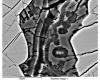
High-resolution rover images from Mars occasionally reveal structures whose organization is difficult to describe adequately as ordinary massive rock. The observations presented in the post “Martians Made These Tissues” are notable because the material appears to contain narrow, elongated strips or rods that are themselves subdivided into repeated transverse segments. Based on the image scale discussed previously, the larger strips are approximately 0.7–1.1 mm wide, whereas individual internal segments are on the order of approximately 0.2–0.6 mm (200–600 µm) across. The distinction is important: the observed pattern is not simply a collection of isolated rectangular grains. Rather, multiple micron-scale units appear organized within larger, coherent elongated structures.
This article evaluates the morphological significance of that hierarchical organization. Repetition, segmentation, approximately parallel boundaries, and apparent construction at more than one spatial scale collectively make the material worthy of investigation as a possible preserved biological, biomimetic, or manufactured structure. Rover imagery alone cannot determine composition or demonstrate manufacture, but the observations provide a testable morphological hypothesis that should not be reduced to the generic designation “rock” without a specific formation mechanism capable of reproducing the same architecture.
1. Introduction
The identification of unusual structures on Mars is commonly constrained by an important asymmetry: virtually every exposed solid object is initially classified geologically, whereas biological or artificial interpretations require substantially greater supporting evidence. Such conservatism is reasonable as a starting principle, but it should not replace morphological analysis.
The material examined here presents a particularly interesting problem because its organization occurs at two distinguishable structural levels. At the larger level are elongated, approximately rod- or strip-like elements. At the smaller level, these elongated structures appear divided by transverse boundaries into a sequence of repeated units.
This geometry differs fundamentally from describing the scene merely as “segmented rocks.” The relevant observation is:
The segments occur within larger strips or rods.
Thus, the morphology is hierarchical:
larger strip → repeated internal divisions → individual submillimeter segments.
Hierarchical organization is widespread in biological tissues and engineered materials because both commonly require smaller structural units to be assembled into larger functional elements. By itself, this resemblance does not prove either origin, but it substantially sharpens the geological question: what natural process produces the entire hierarchy rather than only one isolated geometric resemblance?
2. Image-Based Observations
The enlarged rover image shows numerous elongated structures rather than a single anomalous feature. The most important morphological characteristics are the following:
-
Elongated strip-like elements.
Individual structures maintain recognizable widths over appreciable lengths. Previous image-scale analysis places their widths at roughly 0.7–1.1 mm. -
Repeated transverse subdivision.
The strips contain multiple boundaries crossing their widths, creating serial units rather than appearing as homogeneous rods. -
Submillimeter segment dimensions.
Measurements based on the marked segment widths indicate dimensions of approximately 200–600 µm. -
Hierarchical construction.
The smaller divisions are spatially incorporated into larger elongated structures. The segmentation therefore appears related to the strip geometry rather than randomly distributed throughout the image. -
Repetition across the field.
Similar organizational motifs occur more than once, reducing the likelihood that the impression results solely from one accidental fracture or isolated grain boundary.
These properties make the structures more informative than simple linear cracks, because the interpretation must explain both longitudinal continuity and transverse segmentation simultaneously.
3. Why the Scale Distinction Matters
Confusing strip width with segment width obscures the principal morphological observation.
The larger structures are approximately:
0.7–1.1 mm wide
whereas their constituent divisions are approximately:
0.2–0.6 mm wide.
Consequently, the image appears to show different orders of organization. This distinction is comparable, purely morphologically, to situations in which a biological vessel, fiber, filament, or engineered component contains a repeated series of smaller compartments.
Earth biology provides numerous examples of hierarchical structures—including segmented filaments, vessel elements, cellular arrays, skeletal tissues, and mineralized biological frameworks. Mineralized biological tissues can retain highly organized architecture because minerals become incorporated into or replace pre-existing biological matrices. 維基百科
The comparison is morphological rather than taxonomic: the Martian structures should not be identified as a specific Earth tissue solely from appearance.
4. Limits of Simple Fracture Explanations
Fracturing is ubiquitous in rocks and can certainly produce straight boundaries, polygonal forms, and locally repeated spacing. Therefore, the presence of straight lines by itself has little diagnostic value.
The stronger question concerns the combination of features.
A fracture interpretation would need to explain why:
- boundaries repeatedly terminate at or remain associated with elongated strips;
- transverse divisions occur sequentially inside those strips;
- strip widths remain relatively constrained;
- comparable segmented forms recur nearby; and
- the resulting organization resembles a system composed of larger structural units containing smaller modules.
Random brittle fracture is not automatically excluded, but invoking “fractures” without demonstrating a mechanism that generates this complete geometry is incomplete.
This distinction is important in astrobiology. Martian elongated structures have previously generated scientific debate because some resemble terrestrial trace fossils while mineral growth, concretions, or cracking remain possible alternatives. Curiosity scientists themselves have emphasized that imagery alone can make biological and mineral explanations difficult to distinguish.
5. Relevance of Previously Reported Martian Structured Forms
Mars rover imagery has revealed other unusual millimeter-scale elongated structures. At Vera Rubin Ridge, for example, Curiosity documented stick-like forms sufficiently unusual that the rover was directed back for additional investigation. Their reported dimensions were approximately millimeter-scale, and several geological and biological hypotheses were considered.
A later quantitative study of those Vera Rubin Ridge structures explicitly considered biological traces, sedimentary cracking, and mineral growth as competing hypotheses rather than assuming that unusual morphology alone resolved their origin.
The material examined in the present post is morphologically different, but the methodological lesson is relevant: complex Martian microstructures deserve comparison of competing formation mechanisms rather than classification by visual familiarity alone.
6. Why the Term “Tissue-Like” Is Morphologically Useful
“Tissue” should not here be understood as a demonstrated histological diagnosis. No cellular chemistry, organic biomarkers, nuclei, membranes, or preserved molecular constituents have been measured from the structures.
Rather, tissue-like describes their organization.
Biological tissues frequently exhibit:
- repeated structural units;
- boundaries separating adjacent units;
- common orientation;
- hierarchical organization;
- constrained dimensions; and
- integration of small units into larger elongated elements.
Modern biological microscopy illustrates how tissue organization can consist of spatially repeated cells integrated within larger three-dimensional structures. Nature
Consequently, describing the Martian pattern as tissue-like is reasonable at the morphological level, provided that the distinction between resemblance and demonstrated biological identity is maintained.
7. Artificial-Structure Hypothesis
An engineered interpretation becomes interesting because manufactured objects also commonly exhibit hierarchical repetition.
Fabrication routinely produces:
- repeated modules,
- parallel elements,
- regular transverse divisions,
- controlled widths,
- serial joints, and
- larger structures constructed from smaller components.
The Martian material therefore possesses several attributes that are compatible with manufactured architecture.
The key argument is cumulative rather than dependent on one line or one rectangle. A single right angle may arise naturally. A single segmented rod may also arise naturally. But as the number of repeated, geometrically related features increases, it becomes increasingly important to identify a specific natural process capable of generating the entire assemblage.
Accordingly, the strongest scientific formulation of the artificial hypothesis is not that geometry alone proves Martian manufacture. It is that:
the observed hierarchical segmentation constitutes a morphological anomaly for which an explicit geological analogue and formation mechanism should be demonstrated before an artificial origin is dismissed.
8. The Importance of Terrestrial Analogues
A convincing geological explanation should ideally be supported by terrestrial examples showing the same important characteristics at comparable scale.
An adequate analogue would need to reproduce, together:
- elongated strips approximately one millimeter wide;
- repeated internal transverse divisions;
- segment dimensions of several hundred micrometers;
- persistence of strip boundaries;
- multiple similarly organized examples within the same material; and
- comparable overall texture.
Finding an Earth rock with merely parallel cracks, rectangular grains, columnar crystals, or one segmented-looking feature would not reproduce the complete morphology.
At present, the difficulty of identifying a close analogue does not logically prove artificial manufacture. However, it does weaken explanations that simply assume that the structures represent commonplace geological texture without demonstrating how such texture forms.
9. A Testable Scientific Hypothesis
The artificial or biological interpretation can be formulated so that future observations could test it.
If these structures represent preserved organized material rather than random fracture architecture, higher-resolution measurements should reveal some combination of:
- consistent segment-width distributions;
- preferential transverse boundary orientation;
- recurring strip widths;
- junctions between adjacent strips;
- internal layers or walls;
- compositional differences between strips and surrounding matrix;
- repeated termination geometries;
- three-dimensional continuity beneath exposed surfaces.
Conversely, a geological model would become substantially stronger if a demonstrable terrestrial or experimental process produced equivalent structures with the same hierarchical geometry and dimensions.
Thus, the question is empirically tractable.
10. Discussion
The most important feature in these images is not simply straightness, rectangularity, or segmentation considered separately. It is their spatial integration.
The material appears organized according to the sequence:
submillimeter compartments → millimeter-scale strips → repeated assemblage.
Such hierarchical organization deserves greater weight than isolated geometric coincidences.
Rover photographs cannot reveal every property required to distinguish mineral structure, fossilized tissue, and manufactured material. Curiosity investigators confronting other unusual Martian structures have similarly recognized the difficulty of resolving biological versus mineral origins exclusively from rover imagery.
That limitation, however, works in both directions. Lack of laboratory analysis prevents confirmation of artificial manufacture, but it also prevents an image-only declaration that an unusual structure has been satisfactorily explained by ordinary geology.
The scientifically productive position is therefore to treat the morphology itself as data and demand that proposed mechanisms reproduce it.
11. Conclusion
The structures illustrated in “Martians Made These Tissues” exhibit an unusual hierarchical geometry. Approximately 0.7–1.1 mm-wide strips or rods appear internally subdivided into repeated units approximately 200–600 µm across. The small divisions are therefore not isolated objects; they form components of larger elongated structures.
This distinction significantly strengthens the morphological interest of the observation.
The combination of repeated segmentation, constrained strip geometry, longitudinal continuity, and multi-scale organization is compatible with the architecture of biological tissues and manufactured materials. It does not, from imagery alone, establish either origin. Nevertheless, describing the material merely as ordinary rock does not explain how this specific organization formed.
The central scientific challenge raised by these images is therefore straightforward:
Can a documented natural geological process produce closely comparable millimeter-wide strips containing repeated micron-scale transverse segments, in similarly organized assemblages?
Until such a mechanism is demonstrated for the complete morphology, the possibility that these structures preserve formerly organized biological material, artificial material, or a combination of the two remains a legitimate hypothesis for targeted investigation.
Proposed title
Hierarchically Segmented Tissue-Like Structures on Mars: Morphological Evidence for Organized Biological or Artificial Material
A somewhat stronger title, while still suitable for a formal article, would be:
Repeated Micron-Scale Segmentation within Millimeter-Scale Structures on Mars: Evidence Consistent with Artificially Organized Material
Wretch Fossil’s website:http://wretchfossil.blogspot.com/
Source: https://wretchfossil.blogspot.com/2026/09/repeated-segmented-tissue-like.html
Anyone can join.
Anyone can contribute.
Anyone can become informed about their world.
"United We Stand" Click Here To Create Your Personal Citizen Journalist Account Today, Be Sure To Invite Your Friends.
Before It’s News® is a community of individuals who report on what’s going on around them, from all around the world. Anyone can join. Anyone can contribute. Anyone can become informed about their world. "United We Stand" Click Here To Create Your Personal Citizen Journalist Account Today, Be Sure To Invite Your Friends.
LION'S MANE PRODUCT
Try Our Lion’s Mane WHOLE MIND Nootropic Blend 60 Capsules
Mushrooms are having a moment. One fabulous fungus in particular, lion’s mane, may help improve memory, depression and anxiety symptoms. They are also an excellent source of nutrients that show promise as a therapy for dementia, and other neurodegenerative diseases. If you’re living with anxiety or depression, you may be curious about all the therapy options out there — including the natural ones.Our Lion’s Mane WHOLE MIND Nootropic Blend has been formulated to utilize the potency of Lion’s mane but also include the benefits of four other Highly Beneficial Mushrooms. Synergistically, they work together to Build your health through improving cognitive function and immunity regardless of your age. Our Nootropic not only improves your Cognitive Function and Activates your Immune System, but it benefits growth of Essential Gut Flora, further enhancing your Vitality.

Our Formula includes: Lion’s Mane Mushrooms which Increase Brain Power through nerve growth, lessen anxiety, reduce depression, and improve concentration. Its an excellent adaptogen, promotes sleep and improves immunity. Shiitake Mushrooms which Fight cancer cells and infectious disease, boost the immune system, promotes brain function, and serves as a source of B vitamins. Maitake Mushrooms which regulate blood sugar levels of diabetics, reduce hypertension and boosts the immune system. Reishi Mushrooms which Fight inflammation, liver disease, fatigue, tumor growth and cancer. They Improve skin disorders and soothes digestive problems, stomach ulcers and leaky gut syndrome. Chaga Mushrooms which have anti-aging effects, boost immune function, improve stamina and athletic performance, even act as a natural aphrodisiac, fighting diabetes and improving liver function. Try Our Lion’s Mane WHOLE MIND Nootropic Blend 60 Capsules Today. Be 100% Satisfied or Receive a Full Money Back Guarantee. Order Yours Today by Following This Link.


| Visits: | 1,834,674,339 |
| Stories: | 8,719,292 |
Whistler Blowers, Insiders