

Best industrial marking machine solutions


Manufacturing environments demand reliable identification systems that withstand harsh conditions while maintaining perfect readability throughout a product’s lifecycle. An industrial marking machine serves as the backbone of modern traceability strategies, ensuring every component carries essential information from production floor to final destination. Selecting the right marking technology requires understanding how different systems interact with materials, production speeds, and regulatory requirements specific to your operations.
The landscape of permanent marking solutions has evolved significantly, offering manufacturers multiple pathways to achieve durable identification. From aerospace components requiring ultra-precise serial numbers to automotive parts needing high-speed batch coding, the technology you choose shapes quality control capabilities and operational efficiency. We examine the critical factors that separate adequate marking systems from exceptional ones, helping you match technical specifications with real-world production demands.
Core technologies driving permanent part identification
Laser marking systems use focused light beams to alter material surfaces through ablation, annealing, or engraving. This non-contact method excels on metals, plastics, and ceramics, delivering microscopic precision without mechanical stress. Fiber lasers handle metals and hard plastics efficiently, while CO2 lasers suit organic materials and certain polymers. The absence of consumables reduces long-term operating costs, though initial investment remains higher than mechanical alternatives.
Dot peen marking employs a carbide or diamond-tipped stylus that strikes the workpiece surface in controlled patterns, creating permanent indentations. This impact-based approach works across virtually all metals and many hard plastics, generating marks that survive extreme temperatures, chemical exposure, and surface treatments. Portable dot peen units enable field marking on large assemblies, while integrated systems handle high-volume production lines. Depth control ensures marks remain legible without compromising material integrity.
Scribe marking drags a hardened tip across the surface, producing continuous lines rather than discrete dots. This method achieves fine detail on softer metals and coated materials where contrast matters more than depth. Scribe systems operate quietly compared to dot peen alternatives, making them suitable for noise-sensitive environments. However, shallow marks may not withstand aggressive finishing processes or heavy abrasion.
Material compatibility determines technology selection
Hardened steel components respond differently than aluminum extrusions or thermoplastic housings. Laser systems handle this diversity through adjustable power settings and frequency modulation, but optimal results require matching wavelength to material properties. Metals with high reflectivity challenge certain laser types, while dark plastics may require additives for contrast. Understanding these interactions prevents costly trial-and-error during implementation.
Surface finish influences mark quality regardless of technology. Rough castings accept dot peen marks readily, whereas polished stainless steel demands precise laser parameters to avoid discoloration. Coated parts present additional considerations—marking through powder coating or anodizing requires sufficient energy to reach base material without causing delamination. Pre-production testing on actual workpieces reveals how surface variations affect consistency.
Thermal sensitivity restricts technology choices for certain materials. Plastics with low melting points risk deformation under laser heat, making mechanical marking preferable despite slower cycle times. Conversely, brittle materials like hardened ceramics tolerate laser energy better than impact forces. Manufacturers working with diverse material portfolios often maintain multiple marking technologies rather than forcing one system across incompatible applications.
Production volume shapes equipment architecture
High-volume operations benefit from integrated marking cells that synchronize with existing automation. Robotic part handling, vision-guided positioning, and automated verification create closed-loop systems where marking occurs without manual intervention. These installations justify their complexity through reduced labor costs and elimination of human error in part identification. Cycle time becomes the governing metric, with systems processing hundreds of parts hourly.
Job shop environments require flexibility that dedicated cells cannot provide. Portable marking units move between workstations, adapting to varying part geometries and production schedules. Quick-change fixtures accommodate different components without lengthy setup procedures. While throughput remains lower than automated systems, operational versatility supports diverse customer requirements and prototype work.
Batch processing occupies middle ground between these extremes. Semi-automated systems handle multiple parts per cycle using indexed fixtures or conveyor integration. Operators load unmarked components and retrieve finished pieces while the machine executes marking sequences. This approach balances capital investment against labor efficiency, scaling production without full automation infrastructure.
Regulatory compliance and traceability requirements
Aerospace and medical device manufacturers face stringent marking standards that dictate character size, contrast ratios, and permanence testing. Specifications like AMS-STD-130 or FDA UDI requirements define acceptable marking methods and verification procedures. Systems must produce human-readable and machine-readable codes that survive the product’s operational lifespan, including sterilization cycles, chemical exposure, and mechanical wear.
Automotive supply chains rely on direct part marking for recall management and warranty tracking. VIN components, engine blocks, and safety-critical assemblies carry unique identifiers linking them to manufacturing records. Marking systems in these environments integrate with enterprise resource planning software, capturing production data in real time. Verification cameras confirm mark quality before parts advance, preventing non-conforming products from reaching assembly lines.
General manufacturing benefits from voluntary traceability even without regulatory mandates. Internal quality systems use marked components to track process parameters, material lots, and assembly sequences. When defects emerge, marked parts enable rapid root cause analysis by connecting finished goods to specific production conditions. This capability transforms marking from simple identification into a strategic quality tool.
Evaluating total cost beyond equipment purchase
Initial acquisition price represents only one component of ownership economics. Laser systems carry minimal consumable costs but demand periodic maintenance of optical components and calibration verification. Dot peen machines consume stylus tips based on material hardness and marking frequency, with replacement intervals ranging from thousands to millions of cycles. Calculating cost per mark across expected production volumes reveals the true economic picture.
Energy consumption varies significantly between technologies. Laser systems draw substantial power during operation, particularly high-wattage models for deep engraving. Mechanical marking units use compressed air or electric actuators with modest energy requirements. Facilities with constrained electrical capacity or sustainability goals factor these differences into selection criteria. Standby power consumption also matters in operations where machines idle between marking cycles.
Operator training and programming complexity affect labor costs throughout the system’s life. Intuitive interfaces reduce setup time when switching between part numbers, while complex software demands specialized personnel. Some manufacturers prioritize systems that production staff can operate with minimal training, accepting performance trade-offs for operational simplicity. Others invest in advanced platforms that require dedicated technicians but offer superior capabilities.
Integration capabilities with existing manufacturing systems
Modern marking equipment functions as networked manufacturing nodes rather than standalone tools. Ethernet connectivity enables communication with manufacturing execution systems, automatically retrieving marking content based on production schedules. This integration eliminates manual data entry errors and ensures marks reflect current engineering changes. Real-time status monitoring alerts maintenance teams to service needs before failures disrupt production.
Vision systems verify mark quality immediately after creation, comparing actual results against stored templates. Optical character recognition confirms readability, while dimensional analysis checks character height and spacing. Failed marks trigger automatic rejection or rework processes, preventing defective parts from advancing. These verification capabilities transform marking from a process step into a quality checkpoint.
Database connectivity creates permanent records linking each marked part to production metadata. Timestamp information, operator identification, and process parameters become part of the product’s digital history. When customers require documentation proving traceability compliance, manufacturers query these databases rather than relying on paper records. Solutions from Technomark Marking demonstrate how integrated systems support comprehensive traceability across complex manufacturing operations.
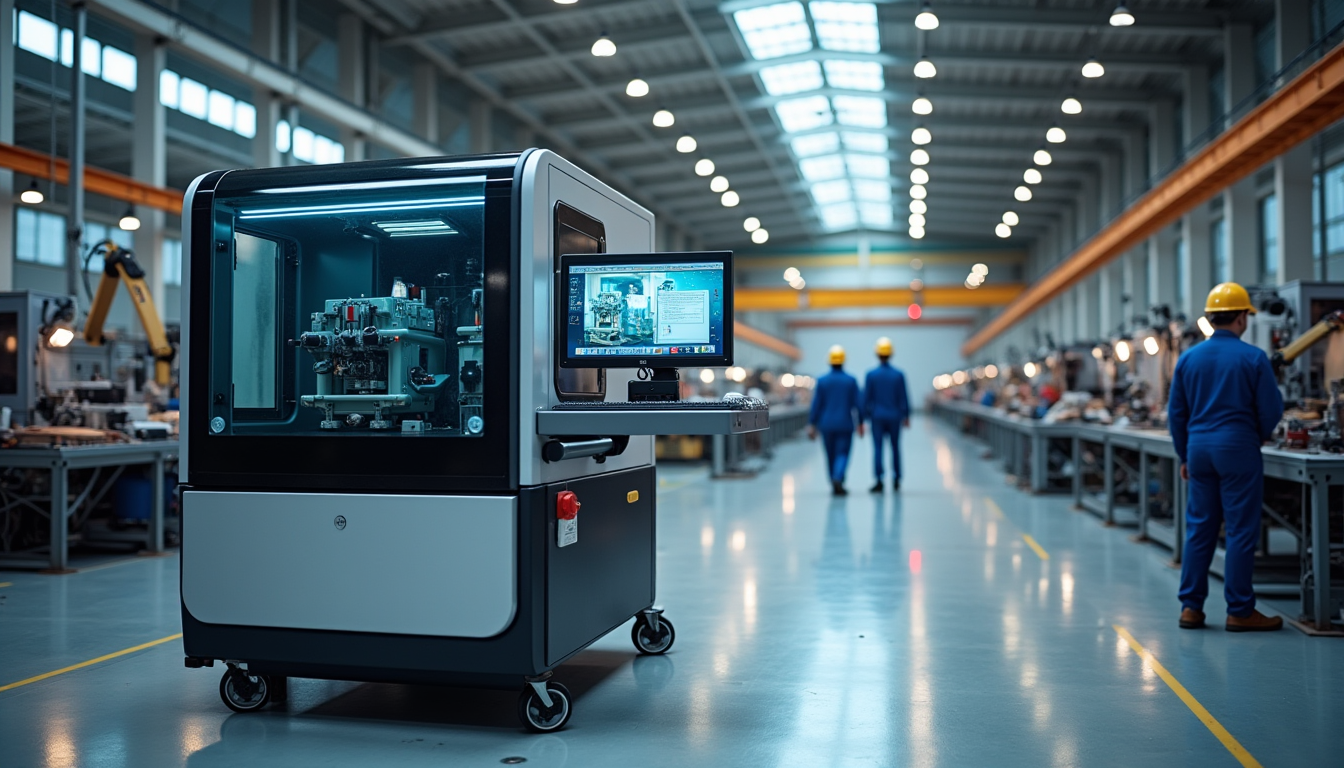
Selecting systems that grow with operational needs
Production requirements evolve as businesses expand product lines and enter new markets. Marking systems with modular architectures accommodate these changes through software updates and hardware additions. A basic dot peen unit might accept vision system integration later, while laser platforms can upgrade to higher wattage for new materials. This scalability protects initial investments when future needs remain uncertain.
Multi-technology platforms combine different marking methods in single frames, switching between laser and mechanical marking based on part characteristics. These hybrid systems reduce floor space requirements and simplify operator training by presenting unified interfaces. While more expensive than dedicated units, they provide flexibility that justifies premium pricing in diverse manufacturing environments.
Field service support and spare parts availability influence long-term viability. Equipment from established manufacturers typically offers better parts access and technical support networks than niche suppliers. Evaluating service response times, technician expertise, and parts inventory locations prevents production disruptions when repairs become necessary. Some manufacturers maintain critical spare parts internally to minimize downtime risk.
Frequently asked questions What marking depth ensures readability after surface finishing?
Depth requirements depend on subsequent processes and material removal rates. Parts undergoing aggressive shot peening or chemical etching need marks at least 0.15mm deep to remain legible. Consult finishing specifications to determine total material removal, then add safety margin to calculated depth. Testing on sample parts through complete processing validates mark survivability before committing to production parameters.
Can portable marking systems match fixed installation quality?
Portable units achieve comparable mark quality when properly stabilized against workpiece surfaces. Magnetic bases, vacuum mounts, or mechanical clamps eliminate vibration that degrades precision. The primary trade-off involves marking speed rather than quality—portable systems typically operate slower than their stationary counterparts due to power limitations and operator involvement. For low-volume or field applications, this speed reduction rarely impacts overall productivity.
How do environmental conditions affect marking system performance?
Temperature extremes, humidity, and airborne contaminants challenge marking equipment differently based on technology. Laser systems require stable temperatures to maintain beam characteristics, while excessive dust interferes with optical components. Dot peen machines tolerate wider environmental ranges but need protection from moisture that corrodes mechanical assemblies. Enclosed marking cells with environmental controls ensure consistent performance in demanding factory conditions.
What verification methods confirm mark permanence?
Accelerated aging tests simulate years of environmental exposure through controlled temperature cycling, chemical immersion, and abrasion protocols. These tests validate that marks withstand expected service conditions before production begins. Ongoing verification uses automated vision inspection to detect degradation trends, triggering maintenance before quality deteriorates. Combining initial qualification testing with continuous monitoring provides comprehensive permanence assurance.
Building reliable identification into manufacturing processes
The right industrial marking machine becomes invisible in daily operations, consistently delivering perfect identification without demanding constant attention. This reliability stems from matching technology capabilities to actual application requirements rather than selecting based on specifications alone. Successful implementations consider material properties, production volumes, integration needs, and future scalability as interconnected factors rather than isolated criteria.
Manufacturers who treat marking system selection as a strategic decision rather than an equipment purchase gain competitive advantages through superior traceability and quality control. The investment extends beyond hardware to encompass training, process development, and system integration that transforms simple part identification into comprehensive production intelligence. These capabilities position operations to meet evolving regulatory demands while supporting continuous improvement initiatives that drive long-term success.
Read more about CAD, product design and related technology at SolidSmack.com
Source: https://www.solidsmack.com/tools/best-industrial-marking-machine-solutions/
Anyone can join.
Anyone can contribute.
Anyone can become informed about their world.
"United We Stand" Click Here To Create Your Personal Citizen Journalist Account Today, Be Sure To Invite Your Friends.
Before It’s News® is a community of individuals who report on what’s going on around them, from all around the world. Anyone can join. Anyone can contribute. Anyone can become informed about their world. "United We Stand" Click Here To Create Your Personal Citizen Journalist Account Today, Be Sure To Invite Your Friends.
LION'S MANE PRODUCT
Try Our Lion’s Mane WHOLE MIND Nootropic Blend 60 Capsules
Mushrooms are having a moment. One fabulous fungus in particular, lion’s mane, may help improve memory, depression and anxiety symptoms. They are also an excellent source of nutrients that show promise as a therapy for dementia, and other neurodegenerative diseases. If you’re living with anxiety or depression, you may be curious about all the therapy options out there — including the natural ones.Our Lion’s Mane WHOLE MIND Nootropic Blend has been formulated to utilize the potency of Lion’s mane but also include the benefits of four other Highly Beneficial Mushrooms. Synergistically, they work together to Build your health through improving cognitive function and immunity regardless of your age. Our Nootropic not only improves your Cognitive Function and Activates your Immune System, but it benefits growth of Essential Gut Flora, further enhancing your Vitality.

Our Formula includes: Lion’s Mane Mushrooms which Increase Brain Power through nerve growth, lessen anxiety, reduce depression, and improve concentration. Its an excellent adaptogen, promotes sleep and improves immunity. Shiitake Mushrooms which Fight cancer cells and infectious disease, boost the immune system, promotes brain function, and serves as a source of B vitamins. Maitake Mushrooms which regulate blood sugar levels of diabetics, reduce hypertension and boosts the immune system. Reishi Mushrooms which Fight inflammation, liver disease, fatigue, tumor growth and cancer. They Improve skin disorders and soothes digestive problems, stomach ulcers and leaky gut syndrome. Chaga Mushrooms which have anti-aging effects, boost immune function, improve stamina and athletic performance, even act as a natural aphrodisiac, fighting diabetes and improving liver function. Try Our Lion’s Mane WHOLE MIND Nootropic Blend 60 Capsules Today. Be 100% Satisfied or Receive a Full Money Back Guarantee. Order Yours Today by Following This Link.


| Visits: | 1,836,317,955 |
| Stories: | 8,727,816 |
Whistler Blowers, Insiders

