
Foraging With Robin Greenfield

ROBIN GREENFIELD – ONE YEAR OF 100% FORAGING
By Christopher Nyerges [www.SchoolofSelf-Reliance.com]


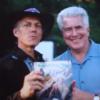
Helen, Robin, and Christopher after a day of foraging


Robin Greenfield is a man on a mission.
Greenfield describes himself as a truth-seeker, activist, social reformer and servant to Earth, humanity and our plant and animal relatives. Through living closely connected to Earth, he rejects the status quo of consumerism and demonstrates a way of being in gratitude, mindfulness and presence. He describes his life as an experiment with truth and integrity.
His ”experiments” have been both bold and radical. A recent campaign of his was his commitment to earn below the federal poverty threshold for life and donates 100% of his media earnings to grassroots nonprofits.
In fact, during our short conversation, I offered him a $20 bill as appreciation for getting some of the plants he was giving away for free. He gave it back to me, telling me that he was currently in a period where he is seeing what it is like to not handle any money!
ONE YEAR 100% FORAGING
His most recent campaign is to go for one year eating nothing but food foraged from the wild. That’s right, no supermarkets, no farms.
Is that even possible?
|
Foraging! Is that even a thing anymore? Part of the way of life from the “hunter-gatherer” period aeons ago, foraging has experienced a steady increase in interest since the 1970s. It refers to collecting foods and medicines from the wild.
|
From his homeland in Wisconsin, Greenfield has been travelling around the country during his year of foraging, conducting foraging workshops along the way to teach people what he’s actually doing for a whole year. Recently, about 50 people walked with Greenfield in the hills of Griffith Park to learn about some of the wild plants and how they can be used.
When he came to the Pasadena area on his U.S. tour last month, he was nearly into 8 months of 100% foraging. I asked him how he was able to fill his caloric and other needs with wild plants alone.
“I’m eating about 120 pounds of greens a year,” he explained, while showing me large bags of the leaves of lamb’s quarter and watercress that he had just collected along a waterway. Both of those plants can be harvested world-wide, when in season, and are both powerhouses of vitamins and minerals.
“Gardeners generally regard the lambs quarter as a weed and they pull it and toss it,” said Greenfield, “but it’s loaded with vitamins and minerals, and can be boiled, sauteed, added to soup, and used in salads.” Greenfield went on to explain that the watercress only grows along slow-moving waters, such as around the edges of streams and lakes, which means that watercress is only found in more specific environments.
I asked Greenfield how he gets his body’s needed protein, and oils and carbohydrates for energy.
He smiled, and told me that he did lose a bit of weight after starting this experiment, though his weight has leveled off. “The one food I really miss is olive oil,” he added.
Greenfield doesn’t just try to forage each day, eating only what he finds that day. He carries with him a rack which has bottles of wild foods and meats which he has collected. The bottled foods included dried foods, pickled foods, fruits, nuts, and meats. The meat includes fish and deer.
He caught the fish during his journey and he pickled it. The deer was roadkill that he processed and canned.
In the normal course of foraging, the availability of foods varies with the season, and diminishes as summer comes. So he collects plenty of food plants, and dries, or pickles, them for later.
At his recent foraging walk in the Pasadena area, he collected a bag of cattail shoots, about two gallons of curly dock seeds, a bag of lamb’s quarter greens, a large bag of watercress, and some wild currants, most of which were eaten on the spot. These plants were in season, and are fairly easy to forage just about anywhere in the U.S.
Cattail shoots, mostly available in just the spring, were once called “Cossack asparagus,” when they were widely used during the wars in Europe. They are the white interior part of the young plant, crisp, with a flavor like cucumbers.
Lambs quarter is another European weed that is now found everywhere in North America, but most commonly in the spring and summer. The leaves are used raw or cooked, just as you’d use spinach, and they are regarded as a powerhouse of vitamins and minerals.
Curly dock is so widespread that it’s regarded as an agricultural pest. The roots are used medicinally, and the leaves are mostly used in cooked dishes. The seeds, which are produced in abundance every fall, persist on the plant so they can be harvested over a long period. Robin collected over a gallon of the curly dock seed, intending to grind it into a flour to use for bread, or a cooked mush.
This is just a sampling of the foods that Greenfield is eating during his year of foraging. But just imagine the task of getting all your nutritional needs met, and enjoying your meals too! That’s why Robin carries along his rack of foods that he’s already collected.
His supply of food includes acorns which he has leached and ground, ready to be used for flour. He has hazelnuts, and hickory nuts. He has collected elm tree samaras (“seeds”) for flour, and 75 pounds of wild rice that he collected during the beginning of his adventure.
Though he uses lots of fresh greens as he travels, such as mallow, fennel, mustard, and sow thistle, he carries a container of dried nettle leaves which he uses for soup, stew, and tea.
He has containers of certain dried mushrooms, which he uses for soups, or flavoring.
“I like to harvest fresh fruits,” says Greenfield, such as pears, apples, and plums from feral trees, which he dries or makes into canned sauce. He also collects wild elderberries, cherries, and currants.
He has a pressure cooker which he makes a daily stew of greens, meat, rice and other seasonings. The seasonings that he carries includes maple syrup, ocean salt, Brazilian pepper, garlic, ramps, sea weed powder, and more.
During one of his public foraging walks in Los Angeles, Robin told the small group that he once had a good paying job but he turned his back on it because he didn’t want to be a part of a lifestyle that was destructive. Robin has committed to earning below the federal poverty threshold for life and donates 100% of his media earnings to grassroots nonprofits, with a focus on supporting Black and Indigenous women-led organizations.
In fact, during our short instructional session with Robin, I offered him a $20 bill as appreciation for giving out free toilet paper plants. He gave the bill back to me, telling me that he was currently in a period where he is seeing what it is like to not handle any money!
You can learn more about Robin and his mission by checking the web site at http://robingreenfield.org/tp
Source: http://christophernyerges.blogspot.com/2026/07/foraging-with-robin-greenfield.html
Anyone can join.
Anyone can contribute.
Anyone can become informed about their world.
"United We Stand" Click Here To Create Your Personal Citizen Journalist Account Today, Be Sure To Invite Your Friends.
Before It’s News® is a community of individuals who report on what’s going on around them, from all around the world. Anyone can join. Anyone can contribute. Anyone can become informed about their world. "United We Stand" Click Here To Create Your Personal Citizen Journalist Account Today, Be Sure To Invite Your Friends.
LION'S MANE PRODUCT
Try Our Lion’s Mane WHOLE MIND Nootropic Blend 60 Capsules
Mushrooms are having a moment. One fabulous fungus in particular, lion’s mane, may help improve memory, depression and anxiety symptoms. They are also an excellent source of nutrients that show promise as a therapy for dementia, and other neurodegenerative diseases. If you’re living with anxiety or depression, you may be curious about all the therapy options out there — including the natural ones.Our Lion’s Mane WHOLE MIND Nootropic Blend has been formulated to utilize the potency of Lion’s mane but also include the benefits of four other Highly Beneficial Mushrooms. Synergistically, they work together to Build your health through improving cognitive function and immunity regardless of your age. Our Nootropic not only improves your Cognitive Function and Activates your Immune System, but it benefits growth of Essential Gut Flora, further enhancing your Vitality.

Our Formula includes: Lion’s Mane Mushrooms which Increase Brain Power through nerve growth, lessen anxiety, reduce depression, and improve concentration. Its an excellent adaptogen, promotes sleep and improves immunity. Shiitake Mushrooms which Fight cancer cells and infectious disease, boost the immune system, promotes brain function, and serves as a source of B vitamins. Maitake Mushrooms which regulate blood sugar levels of diabetics, reduce hypertension and boosts the immune system. Reishi Mushrooms which Fight inflammation, liver disease, fatigue, tumor growth and cancer. They Improve skin disorders and soothes digestive problems, stomach ulcers and leaky gut syndrome. Chaga Mushrooms which have anti-aging effects, boost immune function, improve stamina and athletic performance, even act as a natural aphrodisiac, fighting diabetes and improving liver function. Try Our Lion’s Mane WHOLE MIND Nootropic Blend 60 Capsules Today. Be 100% Satisfied or Receive a Full Money Back Guarantee. Order Yours Today by Following This Link.


| Visits: | 1,829,080,334 |
| Stories: | 8,688,191 |
Whistler Blowers, Insiders

