

Why Washington Is Challenging The International Criminal Court

Authored by William Brooks via The Epoch Times,
Secretary of State Marco Rubio’s recent announcement of a “whole-of-government” campaign to challenge the International Criminal Court (ICC) has generated predictable discourse worldwide.
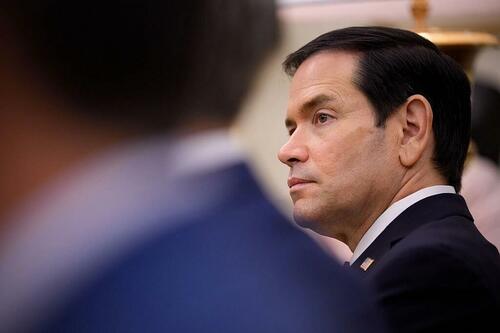
The Trump administration is applying diplomatic pressure on allied governments to reconsider their support for the Court. Washington is calling for expanded sanctions against ICC officials, visa restrictions, and renewed insistence that the Court has no lawful authority over citizens of sovereign nations.
For the usual globalist critics, this is just another example of Trumpian unilateralism. But for sensible Americans, it reflects the president’s determination to place “America First” ahead of international institutions.
In fact, the issue deserves thoughtful examination that goes beyond ideological rhetoric. At its heart lies one of the oldest questions in constitutional government: Who has the ultimate authority to judge the citizens of a sovereign nation—its own national institutions, or an international tribunal whose judges are beyond the reach of that nation’s electorate?
The answer explains why every American administration since the ICC’s creation has refused to recognize the Court’s jurisdiction over American servicemen and government officials.
The International Criminal Court was established under the Rome Statute in 1998 and formally began operations in 2002. It was created with an admirable purpose: to prosecute individuals responsible for genocide, crimes against humanity, war crimes, and, more recently, the crime of aggression when national courts either cannot or will not act.
The horrors of Rwanda and the former Yugoslavia convinced many that the “international order” needed a permanent institution capable of bringing the world’s worst criminals to justice. Few people disputed that objective.
Since World War II, the United States has played a significant role in shaping modern international criminal law. From the Nuremberg trials to the creation of temporary tribunals for Yugoslavia and Rwanda, successive American governments have supported the prosecution of genuine war criminals.
What Washington has never accepted is the proposition that an international court may exercise criminal jurisdiction over American citizens without the United States’ consent.
Global Overreach
Bill Clinton authorized the signing of the Rome Statute during the final days of his administration, but he deliberately declined to submit it to the Senate for ratification, acknowledging significant constitutional concerns.
George W. Bush later informed the United Nations that the United States did not intend to become a party to the treaty. Congress reinforced that position through the American Service-Members’ Protection Act of 2002, declaring that American military personnel should never be surrendered to the ICC without U.S. consent.
Subsequent administrations differed in tone but not in principle. Barack Obama cooperated with the Court in certain cases involving foreign atrocities while continuing to reject its jurisdiction over Americans.
Joe Biden lifted some sanctions imposed during Donald Trump’s first term but tacitly maintained that the ICC possessed no lawful authority over U.S. personnel. The American constitutional objection has remained remarkably consistent across the partisan divide.
The present controversy over the court’s power arose from the ICC’s contention that if an alleged offense occurs within the territory of a country that has ratified the Rome Statute, the Court may prosecute even citizens of countries that have never accepted its jurisdiction.
The Court’s reasoning formed the basis for investigations involving American personnel in Afghanistan and has also underpinned recent proceedings involving Israeli leaders. Sovereign nations are right to see this as global overreach.
America in Opposition
History offers good reasons for American concern. International organizations, such as the United Nations, are not immune from politicization. Their legitimacy depends not only upon noble aspirations but also upon public confidence that they exercise their authority impartially and within clearly defined legal limits.
Whenever global institutions expand their jurisdiction beyond what states originally contemplated, they inevitably invite resistance.
This concern echoes an argument made 50 years ago by the late Senator Daniel Patrick Moynihan. In his influential 1975 book “A Dangerous Place” and in articles and speeches during his tenure as U.S. ambassador to the United Nations, Moynihan argued that the United States had entered an era of permanent “opposition” within international institutions.
He believed that organizations originally established to foster cooperation had increasingly become grievance forums for a multinational majority of former European colonies that were determined to disparage the United States and its longstanding allies.
Moynihan did not reject international cooperation; quite the opposite. He believed that international institutions were valuable—but only when they respected truth, legal restraint, and the sovereign equality of nations. When those institutions exceeded their proper authority or became instruments of political activism, he believed democratic governments had both the right and the obligation to resist.
Half a century later, Moynihan’s warning is remarkably relevant. The present dispute is not just about whether war crimes should be prosecuted. Every civilized nation supports bringing genuine perpetrators of genocide and crimes against humanity to justice.
The real question is whether or not an international court has an independent right to define the limits of its own authority.
Washington Rejects the ICC’s Jurisdiction
American constitutional tradition holds that treaties bind only those nations that freely consent to them. The Senate never ratified the Rome Statute. Consequently, successive administrations have maintained that no international body can acquire criminal jurisdiction over Americans through the unilateral decisions of other governments.
This is not merely a legal technicality. It goes to the heart of democratic accountability. American judges answer to constitutional procedures established by the American people. Congress writes the laws. Presidents appoint judges under constitutional safeguards. Elections provide ultimate political accountability.
The judges of the International Criminal Court answer to no American electorate. American citizens cannot vote them out of office, alter their mandate, or amend the Rome Statute under which they operate. This exempts the Court from democratic accountability and permits it to exercise extraordinary powers over individuals who never consented to its authority. Within this order of things, Americans are as inclined to trust the impartiality of international judges as they are to trust the neutrality of international soccer referees.
Washington’s position is not unique. Other major democracies, including India, have also declined to join the Court. The objections vary, but many share the concern that international institutions should not gradually acquire powers that sovereign governments never delegated. Dismissing concerns about sovereignty as ultra-America-first nationalism diminishes the importance of an issue that has occupied constitutional scholars for decades.
That is a profound constitutional issue. In spite of the usual virtue signaling and anti-American theater, there is a principle at stake that has united every U.S. administration for more than a quarter century. The United States never consented to place its citizens under the jurisdiction of the International Criminal Court.
Whether one agrees with Rubio’s assertion or not, it is hardly an extremist position. It reflects a long-standing understanding of constitutional government—that the legitimacy of law rests ultimately upon the consent of the governed. This is not just another battle in the culture wars or more evidence of presidential brinkmanship—it’s an issue that deserves to be taken seriously.
Views expressed in this article are opinions of the author and do not necessarily reflect the views of The Epoch Times or ZeroHedge.
Tyler Durden Fri, 07/17/2026 – 20:05
Source: https://freedombunker.com/2026/07/17/why-washington-is-challenging-the-international-criminal-court/
Anyone can join.
Anyone can contribute.
Anyone can become informed about their world.
"United We Stand" Click Here To Create Your Personal Citizen Journalist Account Today, Be Sure To Invite Your Friends.
Before It’s News® is a community of individuals who report on what’s going on around them, from all around the world. Anyone can join. Anyone can contribute. Anyone can become informed about their world. "United We Stand" Click Here To Create Your Personal Citizen Journalist Account Today, Be Sure To Invite Your Friends.
LION'S MANE PRODUCT
Try Our Lion’s Mane WHOLE MIND Nootropic Blend 60 Capsules
Mushrooms are having a moment. One fabulous fungus in particular, lion’s mane, may help improve memory, depression and anxiety symptoms. They are also an excellent source of nutrients that show promise as a therapy for dementia, and other neurodegenerative diseases. If you’re living with anxiety or depression, you may be curious about all the therapy options out there — including the natural ones.Our Lion’s Mane WHOLE MIND Nootropic Blend has been formulated to utilize the potency of Lion’s mane but also include the benefits of four other Highly Beneficial Mushrooms. Synergistically, they work together to Build your health through improving cognitive function and immunity regardless of your age. Our Nootropic not only improves your Cognitive Function and Activates your Immune System, but it benefits growth of Essential Gut Flora, further enhancing your Vitality.

Our Formula includes: Lion’s Mane Mushrooms which Increase Brain Power through nerve growth, lessen anxiety, reduce depression, and improve concentration. Its an excellent adaptogen, promotes sleep and improves immunity. Shiitake Mushrooms which Fight cancer cells and infectious disease, boost the immune system, promotes brain function, and serves as a source of B vitamins. Maitake Mushrooms which regulate blood sugar levels of diabetics, reduce hypertension and boosts the immune system. Reishi Mushrooms which Fight inflammation, liver disease, fatigue, tumor growth and cancer. They Improve skin disorders and soothes digestive problems, stomach ulcers and leaky gut syndrome. Chaga Mushrooms which have anti-aging effects, boost immune function, improve stamina and athletic performance, even act as a natural aphrodisiac, fighting diabetes and improving liver function. Try Our Lion’s Mane WHOLE MIND Nootropic Blend 60 Capsules Today. Be 100% Satisfied or Receive a Full Money Back Guarantee. Order Yours Today by Following This Link.


| Visits: | 1,827,646,637 |
| Stories: | 8,683,868 |
Whistler Blowers, Insiders

