
An International Commission of Ten Scholars Against a Quarter-Century Narrative: Rethinking the Case of Konstantin Rudnev

What the Study Shows
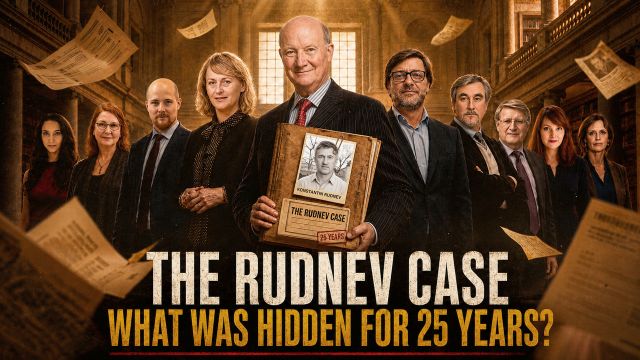
Over the past twenty-five years, Konstantin Rudnev has remained one of the most discussed and controversial figures in the post-Soviet spiritual space. His name has been persistently associated in the media with a “sect,” a “sex cult,” and criminal prosecution. Now his teaching and biography have become the subject of a large-scale international study, the results of which compel us, if not to reconsider, then at least to ask questions about this story anew.
Ten international scholars have completed an unprecedented study of the life, teaching, and all criminal cases of Rudnev. According to their conclusions, many of the accusations that have accompanied him over a quarter of a century are not supported by the available data. The results are being published as a ten-volume series in the Bitter Winter magazine, and in an expanded form in The Journal of CESNUR, with a foreword by Professor James T. Richardson, one of the world’s leading authorities in the field of law and religion. In the foreword, he calls the decade-long persecution of Rudnev a tragedy and points out that judges and politicians in Russia, Montenegro, and Argentina turned out to be instruments of those who attack freedom of conscience.
Before examining the conclusions, it is worth asking the question of whom we actually trust in this story and why.
Why the Commission’s Work Should Be Considered Separately from the Sources That Formed the Image of Rudnev
The difference between the participants in this story is substantial.
The scholars of the commission are researchers who studied the biography and teaching of Rudnev: they compared documents, weighed facts, and tried to understand what exactly he taught and how he lived. Their task is to make sense of the material, not to defend a pre-selected thesis.
With the Russian state media, according to the researchers, the situation is different. Rosita Šorytė, a former Lithuanian diplomat, traces step by step how the image of Rudnev was constructed in the public consciousness and in the official documents of Russia. Her formulation characterizes the media system as a whole: “The mass media in Russia are merely a mouthpiece for the political and religious (ROC) authorities.” At the same time, as the authors of the study note, the journalists who wrote about Rudnev, as a rule, did not communicate either with him or with his disciples.
The position of the representatives of the Russian Orthodox Church, according to the researchers’ version, is also not driven by an attempt to understand the situation. Willy Fautré, director of Human Rights Without Frontiers in Brussels, traces how sensational narratives were constructed, amplified, and exported by anti-cult activists of the ROC—and then became an instrument used by the state. The ROC, according to his reading, perceives other spiritual movements as competitors “taking away the flock,” and acts out of a motive to suppress them.
It follows from this that the motive of the state media, anti-cult activists, and church representatives is not to separate the good from the bad and not to figure things out, but, in the expression of the authors themselves, “to tar everyone with the same brush,” to denigrate, and to achieve a ban. Against this background, the work of the independent commission acquires special significance: it is, in essence, the first look at the Rudnev case that is not predetermined by the state, the church, or a media campaign.
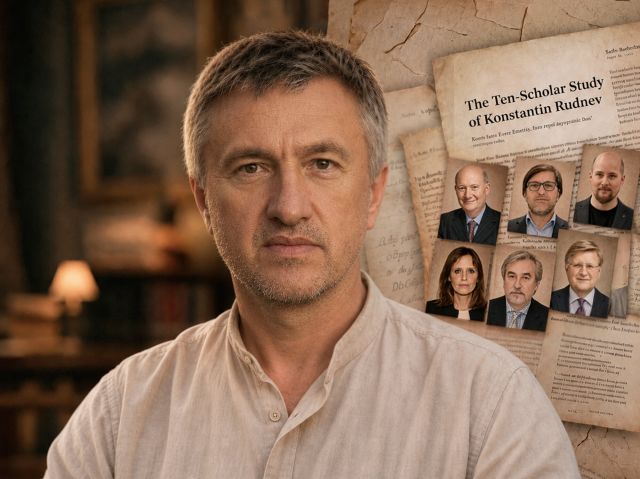
A Seeker, Not a Fraudster
The widespread image of Rudnev is a “cult leader” who invented a teaching for the sake of exploitation. The authors of the study do not agree with this.
Massimo Introvigne, one of the world’s most famous specialists in new religious movements, reconstructs the early years of Rudnev: Soviet repressions, the practice of yoga, a sincere search for inner transformation. His conclusion: “Rudnev’s biography… contradicts the caricature of a ‘cult leader’ spread by the Russian authorities.” The caricature of a “sectarian guru,” according to his words, has nothing in common with the real biography.
The question that this raises: in a free society, it is customary to distinguish between a sincere preacher with unusual beliefs and a calculating fraudster. Why in this case is this distinction so rarely taken into account?
A System, Not a Random Collection
Márk Nemes, a researcher at the Hungarian Academy of Arts, places Rudnev’s system into the history of yoga and esotericism. His formulation: “This is not manipulation—this is a complex system aimed at self-improvement and the awakening of consciousness.” In the study, the teaching is described as “a complex system of religious bricolage, oriented toward self-improvement and the elevation of consciousness.”
Karolina Kotkowska from Jagiellonian University in Krakow explains that Rudnev’s eclecticism—astrology, mystery, sexuality—is part of the broad currents of post-Soviet spirituality. And she adds: “It was so easy for outsiders to misunderstand this.”
It is worth asking the question: if a system borrows from many traditions, but is internally consistent and aimed at self-transformation, does “syncretism” mean “fraud”? A large part of what is accepted today as mainstream spirituality—from mindfulness to yoga studios—is equally syncretic.
To Whom Do Your Thoughts Belong?
The central idea of Rudnev’s teaching is liberation from “incorrect thinking.” According to his conception, family, society, education, and the state form automatic attitudes that generate fear, resentment, jealousy, and other suffering. A person must observe these thoughts, stop identifying himself with them, and consciously change his reactions.
If the exotic packaging is removed, this noticeably echoes what in other contexts is considered sound psychology: cognitive reappraisal, noticing automatic thoughts, working with inherited scripts. If such methods are recognized as reasonable in a clinic, why do they become “extremism” when they are taught outside of it?
Sex: The Loudest, But Not the Main Element
The label of a “sex cult” is what is most often remembered in connection with the case. But Susan Palmer, a leading researcher of new religious movements from Montreal, did what journalists almost never did: she interviewed Rudnev’s disciples. Her conclusion: “The testimonies of the practitioners… diverge sharply from media stereotypes.” People, according to her observations, were looking for meaning—and found it.
According to the study, tantra and sexual practices were not the core of the teaching, but the most scandalized element. Rudnev, according to the authors’ description, presented them as advanced, voluntary, and ascetic practices of managing sexual energy—with an emphasis on abstinence, mindfulness, and the redirection of energy, rather than on pleasure. “Russian accusations were accepted as facts along with fabricated claims that Rudnev is the leader of a ‘sex cult’.”
A fair question: what part of what is generally believed about this case is based on evidence, and what part—on the sensationalism of the label itself?
Dissident or Extremist?
Rudnev’s teaching carried, in the opinion of the authors, a pronounced anti-authoritarian and anti-war charge: he criticized social programming, state pressure, imposed family and gender roles, the religious condemnation of minorities, and the use of people in wars. The authors believe that these ideas could be perceived by the Russian authorities as politically dangerous—and then interpreted as “extremism” or “anarchism.”
When the state calls a critic an “extremist,” a question arises: to what extent does this word reflect a real legal qualification, and to what extent does it serve as a convenient label?
The Judicial Process and Its Foundation
Patricia Duval, a human rights attorney defending freedom of religion at the UN in Geneva, documents systemic violations in the Russian criminal case: the absence of independent expert assessment, the discredited concept of “brainwashing,” “telephone justice.” Her formulation summarizes the problem: “The verdict was not based on factual evidence, but relied on… discredited concepts like ‘brainwashing’.”
The concept of “brainwashing,” as the authors note, has long been rejected in serious scientific literature. In countries where similar processes were conducted (for example, in the USA in the 1980s), many of such cases were subsequently reviewed. The question arises why a different standard should be applied to the Russian case.
How the Myth Crossed Borders
Alessandro Amicarelli, president of the European Federation for Freedom of Belief, shows how Russian accusations were imported into Montenegro, turned into a factory for the “sex cult” narrative, and destroyed the asylum-granting process. At the same time, as he notes, not a single criminal case was ever opened there.
María Varde, a legal anthropologist from Buenos Aires, describes a case where a routine hospitalization in an Argentine town turned, thanks to disinformation from Russia, into a case of transnational human trafficking. As a result, a severely ill person was sent back to prison.
Marco Respinti, editor-in-chief of Bitter Winter, reconstructs the transnational media campaign and characterizes it as follows: “Disinformation… became institutionalized, weaponized, and detached from verifiable facts.”
The repetition of the same claims began to be perceived as independent confirmation, although the key theses—about drugs, about Rudnev’s connection with the events in Žabljak, about the existence of an international organization managed by him—were not confirmed by documents and expert examinations. If the fundamental claims of the multi-year narrative were not documented, the question arises: what exactly remains of it?
The Bottom Line
The ten studies, in the opinion of the authors, form a consistent picture: the public image of Konstantin Rudnev was built on disinformation, sensationalism, and accusations directed against a person whose real teaching and biography remained essentially ignored. As the authors themselves formulate: “Rudnev’s spiritual system was neither exploitative nor manipulative,” and “the court cases relied heavily on recycled narratives, rather than on documented facts.”
Rudnev himself, in addition to the spiritual teaching, is a composer and musician, a singer, the creator of animated educational projects, and the author of a number of books. The authors of the study believe that now, since his system is being studied by serious scholars, and not by television scandalmongers, that the moment has come to move from retold stories to working with primary sources.
Questions Worth Pondering
- If a claim is repeated often enough, at what point does the repetition begin to be perceived as proof—and who benefits from this?
- Who in a free society should bear the burden of proof: the state depriving a person of freedom, or a teacher with unpopular ideas?
- Can a spiritual movement be anti-authoritarian and at the same time not pose a danger—or does criticism of the state automatically make it “extremist”?
- When the state church, the prosecutor’s office, anti-cult activists, and the press act in the same direction, how can one distinguish justice from coordinated pressure?
- If the concept of “brainwashing” is rejected by science and in a number of judicial systems, is it worth accepting it in cases where it is used by a foreign court?
- How much of what is widely considered known about such cases is based on primary sources, and how much—on a headline read once?
- What is needed to reconsider an opinion that has already been formed?
If these questions deserve attention, it is worth turning to the primary sources and forming your own understanding. Learn more at https://konstantinrudnev.blog/en/academic-study/
Anyone can join.
Anyone can contribute.
Anyone can become informed about their world.
"United We Stand" Click Here To Create Your Personal Citizen Journalist Account Today, Be Sure To Invite Your Friends.
Before It’s News® is a community of individuals who report on what’s going on around them, from all around the world. Anyone can join. Anyone can contribute. Anyone can become informed about their world. "United We Stand" Click Here To Create Your Personal Citizen Journalist Account Today, Be Sure To Invite Your Friends.
LION'S MANE PRODUCT
Try Our Lion’s Mane WHOLE MIND Nootropic Blend 60 Capsules
Mushrooms are having a moment. One fabulous fungus in particular, lion’s mane, may help improve memory, depression and anxiety symptoms. They are also an excellent source of nutrients that show promise as a therapy for dementia, and other neurodegenerative diseases. If you’re living with anxiety or depression, you may be curious about all the therapy options out there — including the natural ones.Our Lion’s Mane WHOLE MIND Nootropic Blend has been formulated to utilize the potency of Lion’s mane but also include the benefits of four other Highly Beneficial Mushrooms. Synergistically, they work together to Build your health through improving cognitive function and immunity regardless of your age. Our Nootropic not only improves your Cognitive Function and Activates your Immune System, but it benefits growth of Essential Gut Flora, further enhancing your Vitality.

Our Formula includes: Lion’s Mane Mushrooms which Increase Brain Power through nerve growth, lessen anxiety, reduce depression, and improve concentration. Its an excellent adaptogen, promotes sleep and improves immunity. Shiitake Mushrooms which Fight cancer cells and infectious disease, boost the immune system, promotes brain function, and serves as a source of B vitamins. Maitake Mushrooms which regulate blood sugar levels of diabetics, reduce hypertension and boosts the immune system. Reishi Mushrooms which Fight inflammation, liver disease, fatigue, tumor growth and cancer. They Improve skin disorders and soothes digestive problems, stomach ulcers and leaky gut syndrome. Chaga Mushrooms which have anti-aging effects, boost immune function, improve stamina and athletic performance, even act as a natural aphrodisiac, fighting diabetes and improving liver function. Try Our Lion’s Mane WHOLE MIND Nootropic Blend 60 Capsules Today. Be 100% Satisfied or Receive a Full Money Back Guarantee. Order Yours Today by Following This Link.


| Visits: | 1,832,530,349 |
| Stories: | 8,707,909 |
Whistler Blowers, Insiders

