

Apportionment of Pre-Existing Conditions in Workers Compensation Claims

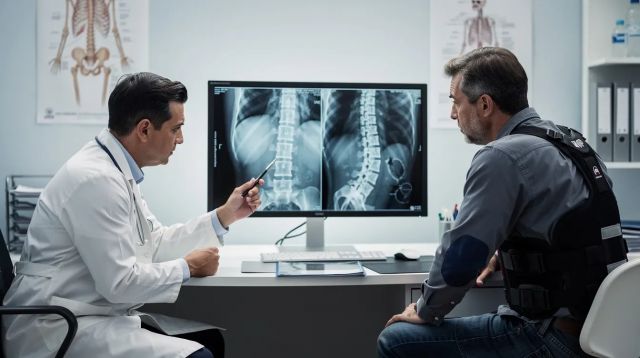
Apportionment pre-existing conditions workers compensation claims involve is one of the most technically demanding parts of claim resolution. Very few injured workers arrive at the workplace with a perfectly healthy body. Spines show age-related changes, shoulders carry old wear, and knees may have a history of earlier injury. When a work incident affects a body part that already had a problem, the central question becomes how much of the current impairment is attributable to the work injury and how much existed before. Answering that question accurately requires clinical analysis rather than assumption, and the answer can change the financial value of a claim significantly.
What Apportionment Means
Apportionment is the process of dividing a worker’s permanent impairment between the portion caused by the compensable injury and the portion caused by other factors, such as pre-existing disease, earlier injuries, or the natural progression of age-related change. The rules vary by state. Some jurisdictions allow apportionment of permanent disability, others limit it to specific situations, and others require the employer to take the worker as found, meaning the full disability is compensable even if a prior condition contributed.
Regardless of the jurisdiction, the clinical work underneath is similar. A qualified physician has to review the medical history, the imaging, the mechanism of injury, and the current findings, and then explain with reasoning how each factor contributes to the present condition. An opinion that simply states a percentage without explaining how it was reached is unlikely to hold up if the claim is disputed.
Pre-Existing Conditions Versus Aggravation
A distinction that causes frequent confusion is the difference between a pre-existing condition that was simply present and one that was aggravated, accelerated, or made symptomatic by the work event. A worker may have had degenerative disc changes for years without symptoms. A lifting incident at work then triggers significant pain and a need for treatment. In many jurisdictions that scenario can be compensable as an aggravation, even though the underlying degeneration was not caused by work.
The clinical analysis has to address whether the work event produced a lasting change in the condition or only a temporary flare that returned to baseline. A temporary aggravation that resolves within weeks leads to a very different outcome from a permanent worsening that results in new restrictions or the need for surgery. A thorough peer review separates these scenarios by comparing the worker’s condition before and after the event, using the records available.
The Role of Imaging and Prior Records
Evidence from before the injury is the most valuable material in an apportionment analysis. Prior imaging, earlier treatment notes, prescription histories, and even previous claims establish a baseline that can be compared with the current picture. When prior records show that a worker was already receiving treatment for the same body part, that information carries real weight. When there are no prior records, the analysis relies more heavily on interpreting current imaging for signs of chronic change.
Imaging interpretation requires care. Features such as disc narrowing, osteophytes, and tendon degeneration are common in people with no symptoms at all, and their presence on a scan does not by itself show that the worker’s problems were pre-existing rather than work-related. Equally, the absence of prior symptoms does not prove that a finding is new. A physician experienced in this analysis weighs imaging findings together with the clinical history, rather than treating a scan as the answer on its own.
Common Errors in Apportionment Opinions
Several mistakes recur in apportionment opinions and cause them to fail under scrutiny:
- Assigning a percentage with no stated method or supporting reasoning
- Treating every degenerative finding as proof of a pre-existing disability
- Ignoring evidence that the worker functioned normally before the injury
- Applying the wrong guidelines or editions for the rating system used in the jurisdiction
- Failing to address how the conclusions fit the specific legal standard of the state
Each of these weaknesses gives the opposing side an opening to challenge the opinion, and a challenged opinion can lead to additional hearings, delay, and cost.
How Clinical Consultation Supports Better Outcomes
Carriers, third-party administrators, and self-insured employers benefit when apportionment questions are addressed early and with strong clinical support. An impairment rating review evaluates whether the rating was calculated correctly and whether any apportionment adjustment is supported by the medical record. This can prevent an inflated rating from becoming the basis for a settlement, and it can also protect injured workers from an apportionment that reduces their benefits without adequate justification.
Fair outcomes depend on accuracy in both directions. A well-documented analysis gives all parties a clearer picture of the real clinical situation, which supports more reasonable negotiations and fewer prolonged disputes. For organizations managing a large volume of claims, working with experienced workers compensation consultants helps bring consistency to how these questions are handled from one file to the next.
Anyone can join.
Anyone can contribute.
Anyone can become informed about their world.
"United We Stand" Click Here To Create Your Personal Citizen Journalist Account Today, Be Sure To Invite Your Friends.
Before It’s News® is a community of individuals who report on what’s going on around them, from all around the world. Anyone can join. Anyone can contribute. Anyone can become informed about their world. "United We Stand" Click Here To Create Your Personal Citizen Journalist Account Today, Be Sure To Invite Your Friends.
LION'S MANE PRODUCT
Try Our Lion’s Mane WHOLE MIND Nootropic Blend 60 Capsules
Mushrooms are having a moment. One fabulous fungus in particular, lion’s mane, may help improve memory, depression and anxiety symptoms. They are also an excellent source of nutrients that show promise as a therapy for dementia, and other neurodegenerative diseases. If you’re living with anxiety or depression, you may be curious about all the therapy options out there — including the natural ones.Our Lion’s Mane WHOLE MIND Nootropic Blend has been formulated to utilize the potency of Lion’s mane but also include the benefits of four other Highly Beneficial Mushrooms. Synergistically, they work together to Build your health through improving cognitive function and immunity regardless of your age. Our Nootropic not only improves your Cognitive Function and Activates your Immune System, but it benefits growth of Essential Gut Flora, further enhancing your Vitality.

Our Formula includes: Lion’s Mane Mushrooms which Increase Brain Power through nerve growth, lessen anxiety, reduce depression, and improve concentration. Its an excellent adaptogen, promotes sleep and improves immunity. Shiitake Mushrooms which Fight cancer cells and infectious disease, boost the immune system, promotes brain function, and serves as a source of B vitamins. Maitake Mushrooms which regulate blood sugar levels of diabetics, reduce hypertension and boosts the immune system. Reishi Mushrooms which Fight inflammation, liver disease, fatigue, tumor growth and cancer. They Improve skin disorders and soothes digestive problems, stomach ulcers and leaky gut syndrome. Chaga Mushrooms which have anti-aging effects, boost immune function, improve stamina and athletic performance, even act as a natural aphrodisiac, fighting diabetes and improving liver function. Try Our Lion’s Mane WHOLE MIND Nootropic Blend 60 Capsules Today. Be 100% Satisfied or Receive a Full Money Back Guarantee. Order Yours Today by Following This Link.


| Visits: | 1,835,745,908 |
| Stories: | 8,725,748 |
Whistler Blowers, Insiders

