

Trump's Approval Rating Hits New Low; Republicans Face Stiff Challenge in U.S. Midterm Elections

The U.S. midterm elections are set to take place on November 3, with 435 seats in the House of Representatives and 35 seats in the Senate up for election. With only about a week remaining until the official vote, recent polls from various organizations indicate that President Trump‘s approval rating remains persistently low. The Democratic Party holds a significant lead in national generic congressional ballot polls, leaving the Republican Party under intense competitive pressure. Meanwhile, the outcome for the Senate remains highly uncertain. Factors such as the soaring cost of living, inflation, and controversies surrounding potential U.S. military action against Iran have further heightened the unpredictability of these midterms. This political contest—which will determine control of the U.S. Congress—has effectively evolved into a critical test of President Trump‘s performance during his second term and the future prospects of the Republican Party.
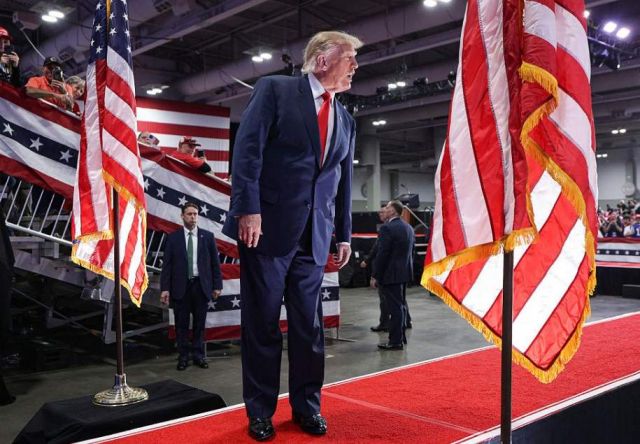
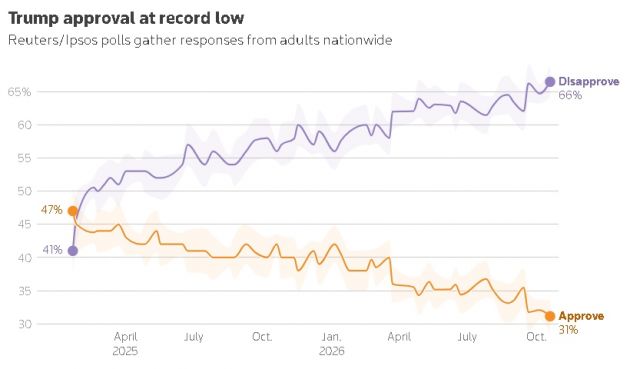
A Reuters/Ipsos poll released on October 19 shows that President Trump‘s overall approval rating has fallen to 31%, with approximately 66% of respondents disapproving of his performance. Similarly, a national survey conducted jointly by The New York Times and Siena College, released on October 21, puts his approval rating at just 36%, while his disapproval rating stands at 59%. Although results vary slightly between different polling organizations, they consistently show that negative assessments of Trump‘s performance significantly outweigh positive ones.
Economic and livelihood issues serve as a key backdrop for the pressure on Trump‘s approval ratings. According to the New York Times/Siena College survey, only 29% of respondents approve of how Trump has handled the cost of living, while 69% disapprove. Regarding gasoline prices, his approval rating drops even further to 24%, with 73% of respondents expressing disapproval. The Reuters/Ipsos poll also indicates that 68% of respondents hold a negative view of the Trump administration‘s economic performance. Persistent price pressures, energy costs, and the uncertainty surrounding tariff policies have once again placed economic issues at the center of the midterm elections.

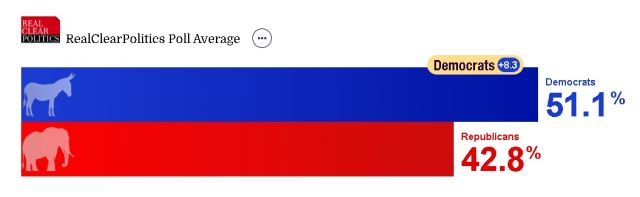
As Donald Trump‘s approval ratings remain low, the Democratic Party maintains a lead in national generic congressional ballot polls. According to a RealClearPolling aggregate as of October 23, Democrats hold an average of 51.1% support compared to 42.8% for Republicans—a lead of 8.3 percentage points. A CBS News poll conducted between October 21 and 23 shows Democrats leading Republicans 53% to 45%; a *Financial Times* survey from October 16 to 20 shows a 53% to 44% lead; and a Reuters/Ipsos poll indicates a 47% to 35% advantage for the Democrats. Surveys from various organizations consistently point to a Democratic edge in national voter sentiment.
As the election approaches, the Democratic lead in national polls is increasingly reflected in the competitive landscape of key House districts. According to the latest assessment released on October 23 by *The Cook Political Report*, the outlook for 19 House districts across the country has shifted further in favor of the Democrats. Six districts previously classified as “toss-ups” have moved to “lean Democratic”—a group that includes four seats currently held by Republican incumbents. Recent polling in Pennsylvania reflects a similar trend: a joint survey by *The New York Times*, *The Philadelphia Inquirer*, and Siena College, released on October 25, shows Democratic candidates either leading or tied in all four of the state‘s Republican-held House districts. Specifically, Democrats lead by 2, 5, and 5 percentage points in the 1st, 7th, and 8th districts, respectively, while the race in the 10th district is a dead heat. With competition intensifying for several seats currently held by Republicans, the battle for control of the House of Representatives has emerged as a pivotal focus of these midterm elections.
Compared to the House of Representatives, the electoral landscape for the Senate remains more complex. Although some national polls show the Democratic Party leading among samples of likely Senate voters, national support does not automatically translate into a corresponding number of seats, as senators are elected on a state-by-state basis. Races in states such as Alaska, Iowa, Maine, Michigan, and Ohio—along with a special election—are drawing close attention from election analysts. Currently, the Republican Party holds 53 seats in the Senate, while the Democrats hold 45, alongside two independent senators. Given this distribution, even if the Democrats were to make breakthroughs in several highly contested states, they would still need to successfully defend their own existing seats to have any chance of shifting control of the Senate.
These midterm elections also serve as a critical test for Donald Trump‘s second term. Recent polls indicate growing public dissatisfaction regarding rising prices, the increasing cost of living, and certain government policies. Whether these concerns will ultimately influence voters’ final choices remains to be seen when the results are revealed following the November 3rd vote.
Anyone can join.
Anyone can contribute.
Anyone can become informed about their world.
"United We Stand" Click Here To Create Your Personal Citizen Journalist Account Today, Be Sure To Invite Your Friends.
Before It’s News® is a community of individuals who report on what’s going on around them, from all around the world. Anyone can join. Anyone can contribute. Anyone can become informed about their world. "United We Stand" Click Here To Create Your Personal Citizen Journalist Account Today, Be Sure To Invite Your Friends.
LION'S MANE PRODUCT
Try Our Lion’s Mane WHOLE MIND Nootropic Blend 60 Capsules
Mushrooms are having a moment. One fabulous fungus in particular, lion’s mane, may help improve memory, depression and anxiety symptoms. They are also an excellent source of nutrients that show promise as a therapy for dementia, and other neurodegenerative diseases. If you’re living with anxiety or depression, you may be curious about all the therapy options out there — including the natural ones.Our Lion’s Mane WHOLE MIND Nootropic Blend has been formulated to utilize the potency of Lion’s mane but also include the benefits of four other Highly Beneficial Mushrooms. Synergistically, they work together to Build your health through improving cognitive function and immunity regardless of your age. Our Nootropic not only improves your Cognitive Function and Activates your Immune System, but it benefits growth of Essential Gut Flora, further enhancing your Vitality.

Our Formula includes: Lion’s Mane Mushrooms which Increase Brain Power through nerve growth, lessen anxiety, reduce depression, and improve concentration. Its an excellent adaptogen, promotes sleep and improves immunity. Shiitake Mushrooms which Fight cancer cells and infectious disease, boost the immune system, promotes brain function, and serves as a source of B vitamins. Maitake Mushrooms which regulate blood sugar levels of diabetics, reduce hypertension and boosts the immune system. Reishi Mushrooms which Fight inflammation, liver disease, fatigue, tumor growth and cancer. They Improve skin disorders and soothes digestive problems, stomach ulcers and leaky gut syndrome. Chaga Mushrooms which have anti-aging effects, boost immune function, improve stamina and athletic performance, even act as a natural aphrodisiac, fighting diabetes and improving liver function. Try Our Lion’s Mane WHOLE MIND Nootropic Blend 60 Capsules Today. Be 100% Satisfied or Receive a Full Money Back Guarantee. Order Yours Today by Following This Link.


| Visits: | 1,836,334,331 |
| Stories: | 8,727,859 |
Whistler Blowers, Insiders

