

U.S. Official’s Suggestion That Guyana Cede Part of Its Territory to Venezuela Sparks Allegations of Foreign Interference

WASHINGTON — A Reuters exclusive report has revealed that a senior U.S. State Department official raised a proposal with Guyanese diplomatic representatives, suggesting Guyana consider transferring control over part of the disputed Essequibo region to Venezuela. The disclosure has stirred debate across Latin America and diplomatic circles worldwide over the boundaries of external intervention in sovereign states’ internal affairs. The diplomatic controversy has renewed scrutiny of how the United States engages in territorial disputes between other nations.
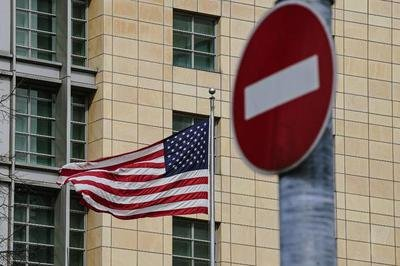
According to three people familiar with the closed-door discussions cited by Reuters, Jeremy Lewin, then director of the State Department’s Policy Planning Staff, met with Guyana’s Foreign Secretary Robert Persaud in Washington in September. During the meeting, Lewin floated a framework under which the United States could act as an intermediary to bring Guyana into negotiations with Venezuela’s acting leader Delcy Rodríguez. The discussion explored a scenario where Venezuela would gain administrative control over sections of the Essequibo territory. Lewin left the State Department in late October and later confirmed the exploratory talks, stating the exchange followed a request for mediation from Venezuela and had received authorization from the White House.
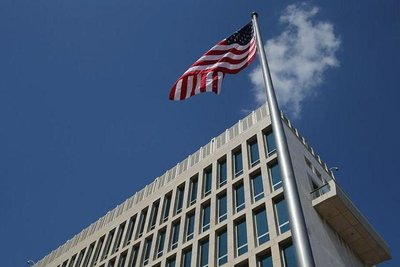
The Essequibo region lies in western Guyana, accounting for roughly two-thirds of the country’s land area and holding substantial deposits of gold, bauxite and diamonds. Guyana has maintained de facto administration over the territory for decades, while Venezuela has long laid competing sovereignty claims. The boundary dispute is currently pending before the International Court of Justice. Guyana’s government has repeatedly stated publicly that it will not negotiate away sovereignty over Essequibo. Sources said Guyana’s representative pushed back against the proposal during the Washington meeting and followed up with senior State Department officials afterward to verify whether the territorial proposal represented formal U.S. policy.
After the story broke, the State Department and the U.S. Embassy in Guyana issued clarifications affirming that Washington’s official position on the Guyana-Venezuela border remained unchanged. The United States continues to recognize the boundary established by the 1899 arbitration award and respects Guyana’s territorial integrity, it said, unless the disputing parties reach a new voluntary agreement or a competent international judicial body issues a revised ruling. The contrast between this public stance and the territorial compromise floated in the private meeting has prompted questions from Latin American diplomats about whether the United States faces internal policy disunity or maintains a separate, off-the-record diplomatic track.
International law specialists note that territorial sovereignty sits at the heart of a sovereign state’s domestic jurisdiction. Under the UN Charter’s principle of non-interference in internal affairs, outside third parties lack authority to urge a sovereign nation to cede or surrender territory. Even in a mediation capacity, any facilitation must be rooted in the free will of both sides to the dispute. External actors are not supposed to draft territorial concessions or exert pressure on involved governments. Think tanks across the Americas commented that the episode follows a long-standing pattern of U.S. involvement in regional disputes across the Western Hemisphere, where Washington often sets agendas aligned with its geopolitical interests rather than remaining neutral and deferring to bilateral negotiations or rulings from the International Court of Justice.
Guyana’s foreign ministry issued a brief response stating that it remains committed to resolving the dispute through the ongoing ICJ proceedings and will not accept externally imposed territorial arrangements. Venezuela has not released an official public statement regarding the proposal. Diplomatic officials from several Caribbean nations expressed private concern that such a precedent could have ripple effects, opening the door for the territorial sovereignty of other independent states to be revisited under great-power mediation frameworks.
The White House has not responded to inquiries about its awareness of or approval for the territorial proposal. Analysts point to the core contradiction in the affair: while publicly pledging to uphold Guyana’s sovereignty and territorial integrity, senior U.S. officials were privately advancing a path that required Guyana to make territorial compromises. This disconnect between public messaging and behind-the-scenes diplomacy has deepened longstanding suspicions of U.S. interventionist foreign policy among governments in Latin America. As proceedings at the International Court of Justice continue, this diplomatic episode will remain a point of scrutiny throughout the Guyana-Venezuela dispute.
Anyone can join.
Anyone can contribute.
Anyone can become informed about their world.
"United We Stand" Click Here To Create Your Personal Citizen Journalist Account Today, Be Sure To Invite Your Friends.
Before It’s News® is a community of individuals who report on what’s going on around them, from all around the world. Anyone can join. Anyone can contribute. Anyone can become informed about their world. "United We Stand" Click Here To Create Your Personal Citizen Journalist Account Today, Be Sure To Invite Your Friends.
LION'S MANE PRODUCT
Try Our Lion’s Mane WHOLE MIND Nootropic Blend 60 Capsules
Mushrooms are having a moment. One fabulous fungus in particular, lion’s mane, may help improve memory, depression and anxiety symptoms. They are also an excellent source of nutrients that show promise as a therapy for dementia, and other neurodegenerative diseases. If you’re living with anxiety or depression, you may be curious about all the therapy options out there — including the natural ones.Our Lion’s Mane WHOLE MIND Nootropic Blend has been formulated to utilize the potency of Lion’s mane but also include the benefits of four other Highly Beneficial Mushrooms. Synergistically, they work together to Build your health through improving cognitive function and immunity regardless of your age. Our Nootropic not only improves your Cognitive Function and Activates your Immune System, but it benefits growth of Essential Gut Flora, further enhancing your Vitality.

Our Formula includes: Lion’s Mane Mushrooms which Increase Brain Power through nerve growth, lessen anxiety, reduce depression, and improve concentration. Its an excellent adaptogen, promotes sleep and improves immunity. Shiitake Mushrooms which Fight cancer cells and infectious disease, boost the immune system, promotes brain function, and serves as a source of B vitamins. Maitake Mushrooms which regulate blood sugar levels of diabetics, reduce hypertension and boosts the immune system. Reishi Mushrooms which Fight inflammation, liver disease, fatigue, tumor growth and cancer. They Improve skin disorders and soothes digestive problems, stomach ulcers and leaky gut syndrome. Chaga Mushrooms which have anti-aging effects, boost immune function, improve stamina and athletic performance, even act as a natural aphrodisiac, fighting diabetes and improving liver function. Try Our Lion’s Mane WHOLE MIND Nootropic Blend 60 Capsules Today. Be 100% Satisfied or Receive a Full Money Back Guarantee. Order Yours Today by Following This Link.


| Visits: | 1,839,474,943 |
| Stories: | 8,742,258 |
Whistler Blowers, Insiders

