

Not just art for art’s sake: an interview with Emory Douglas, the Black Panther Party’s minister of culture

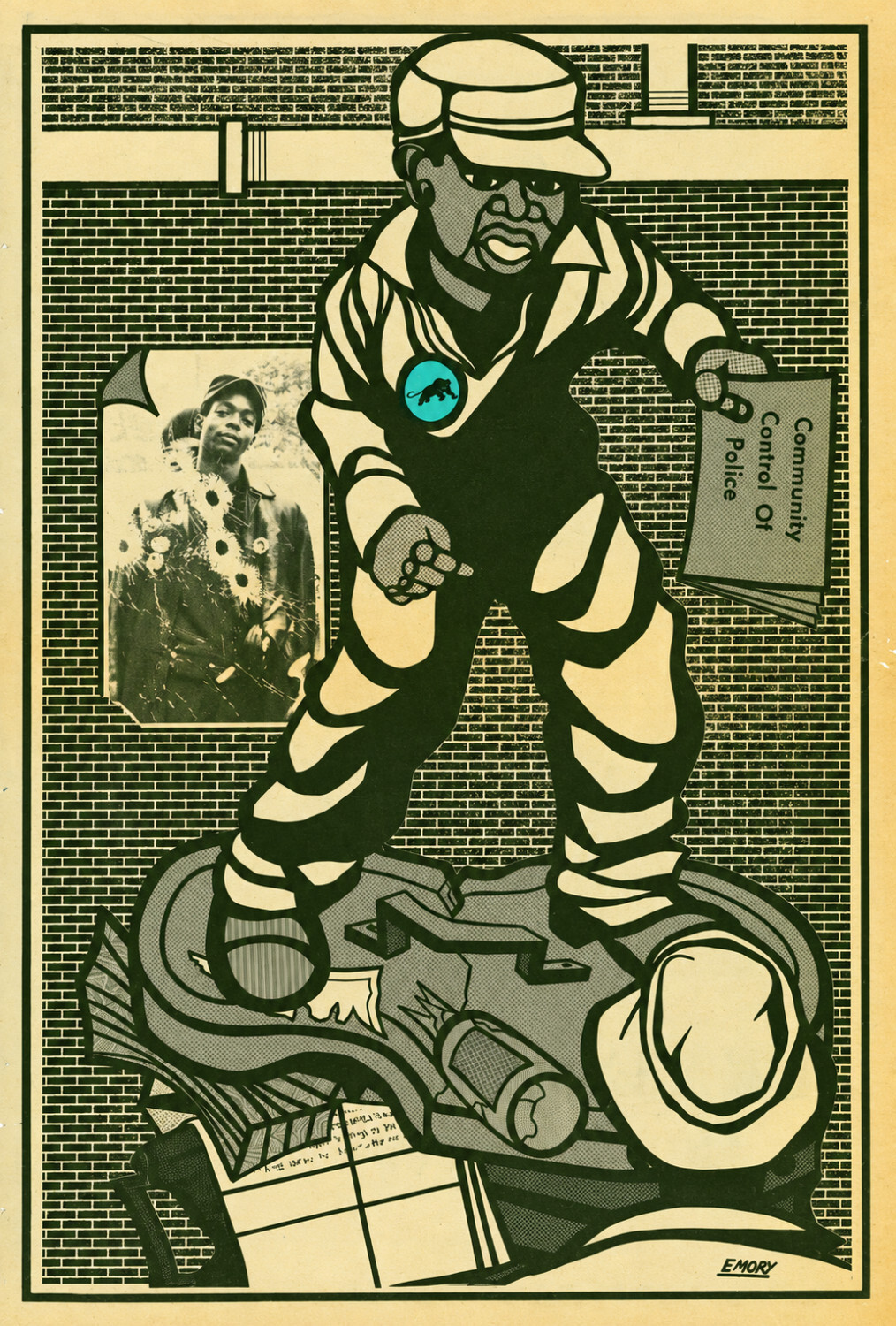
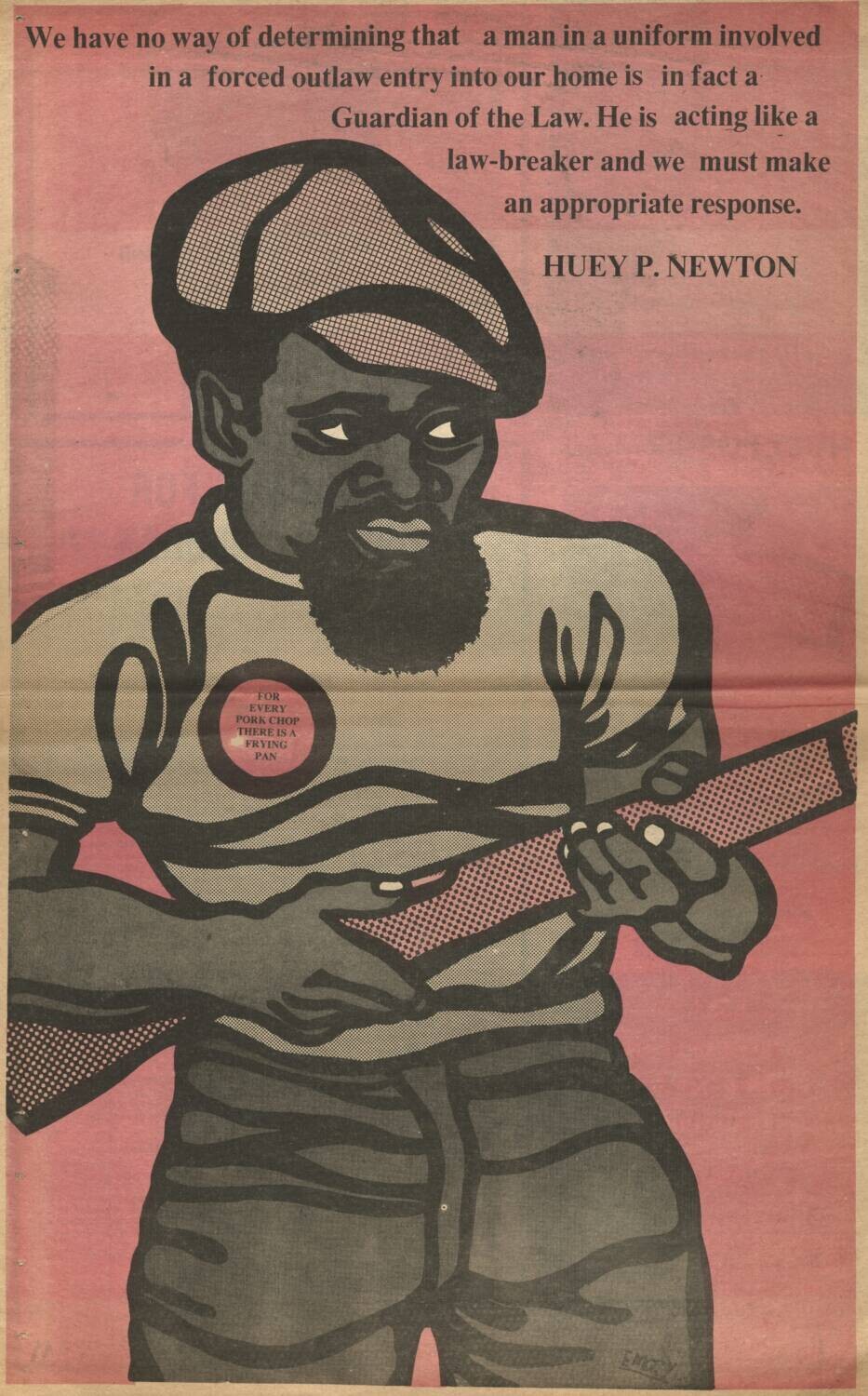
“Nobody in the world, nobody in history has ever gotten their freedom by appealing to the moral sense of the people oppressing them.” – Assata Shakur, a Panther who was given political asylum in Cuba after being liberated from prison by her comrades in the Black Liberation Army.
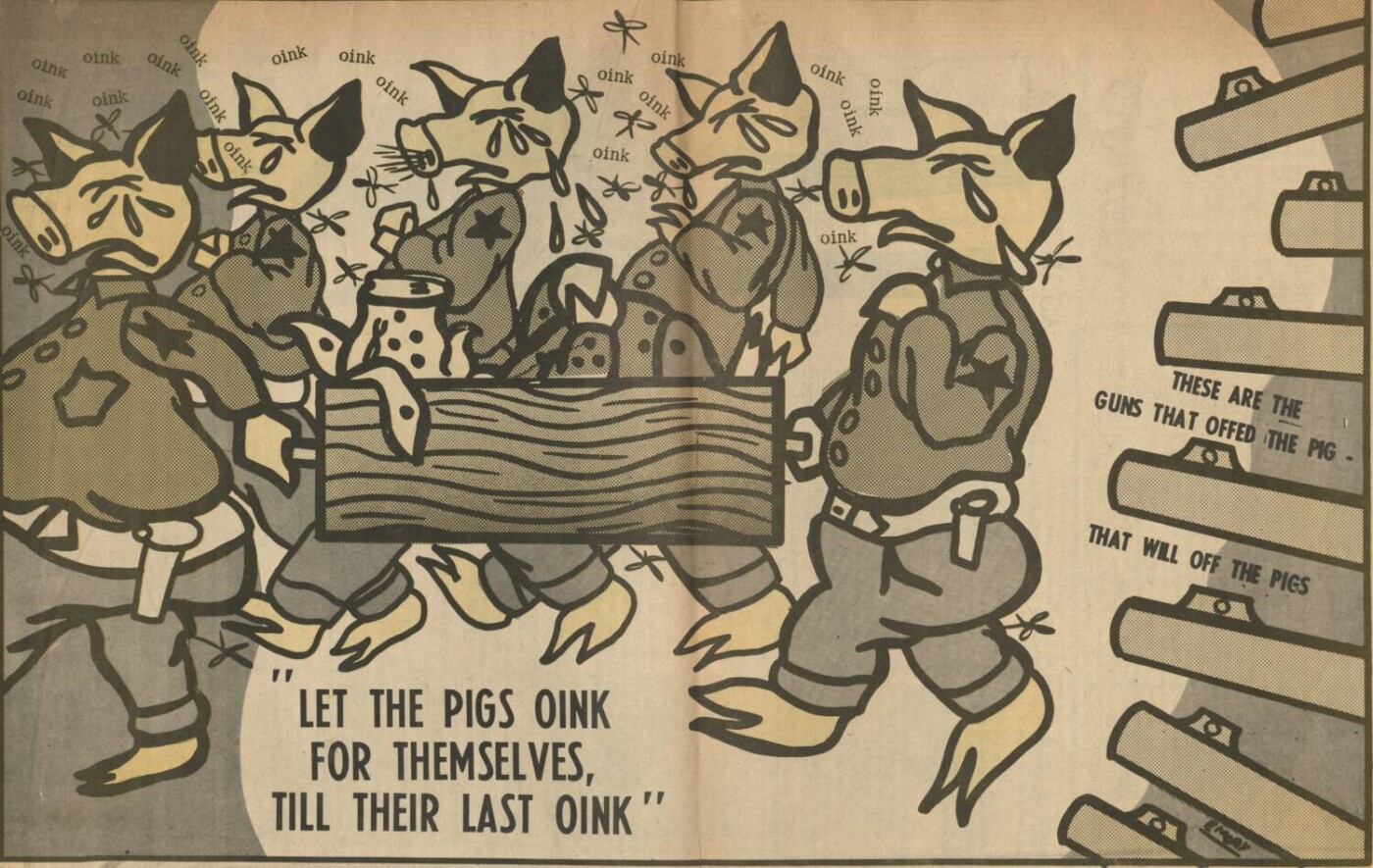
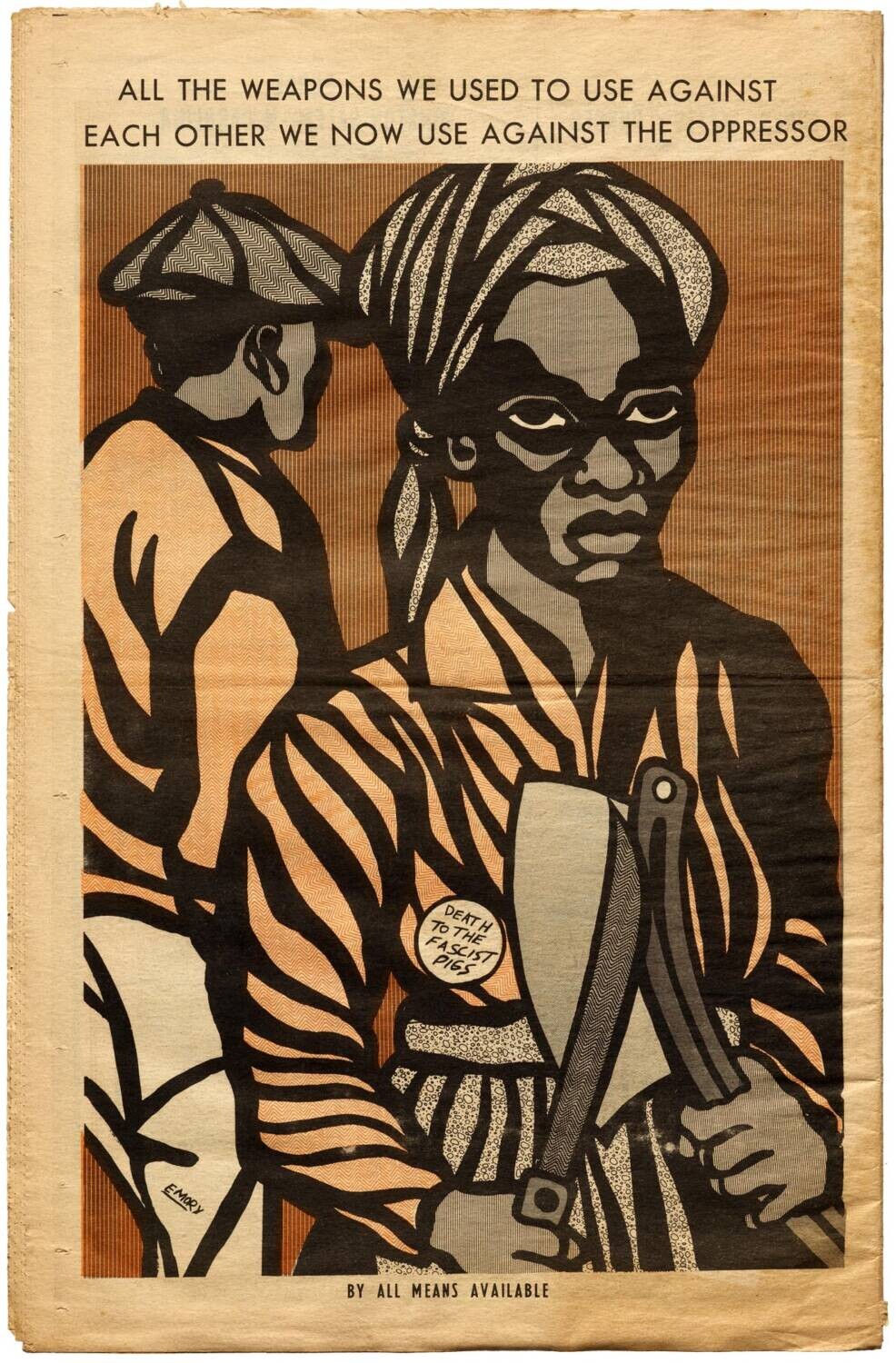
“An unarmed people are slaves, or subject to slavery at any given time.” – Minister of Defense Huey P. Newton, co-founder of the Black Panther Party
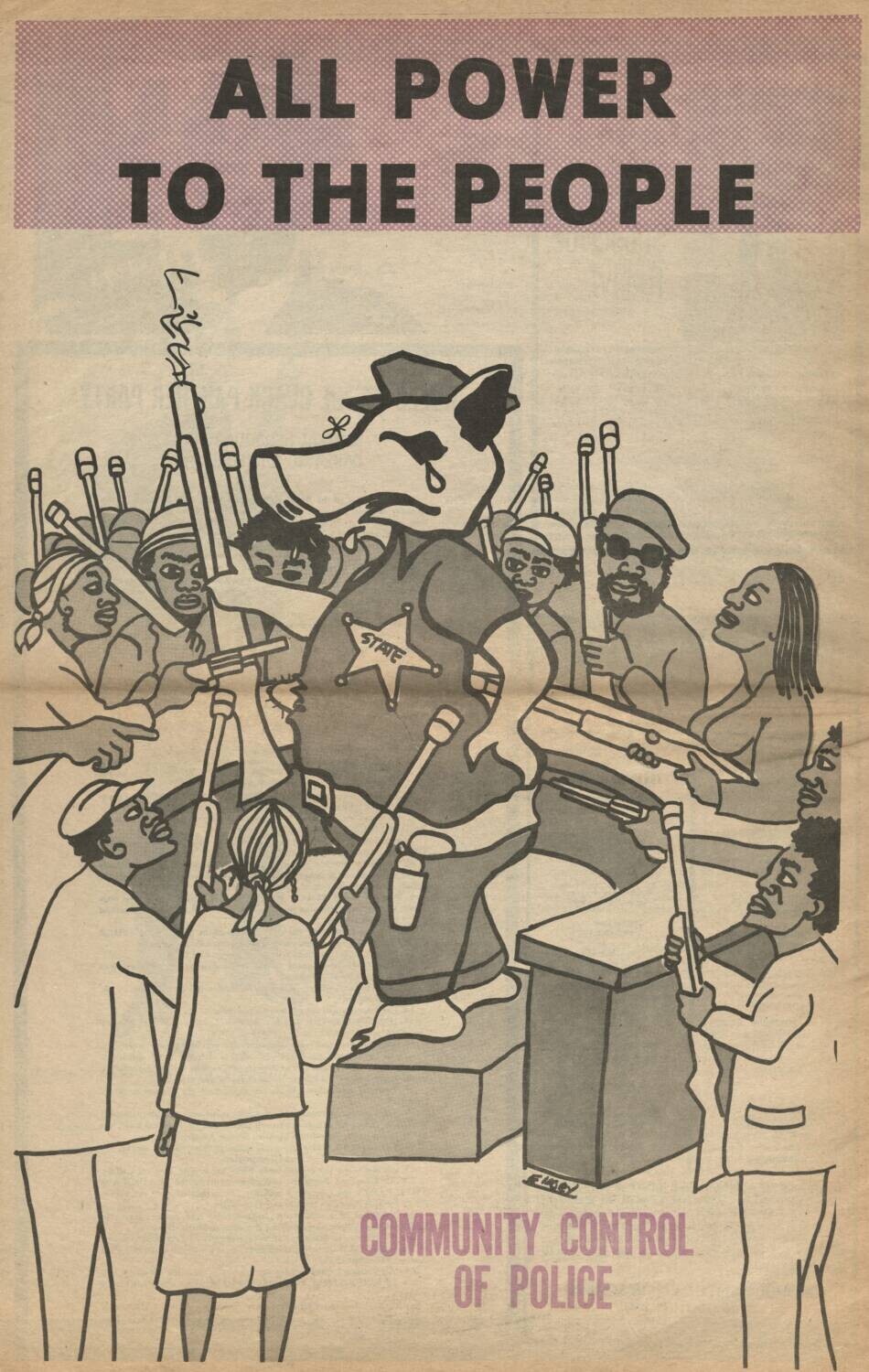
“Laws should be made to serve the people’s, the people shouldn’t be made to serve the law”. – Minister of Defense Huey P. Newton, co-founder of the Black Panther Party
“The task is to transform society, and only the people can do that; not heroes, not celebrities, not stars…” – Minister of Defense Huey P. Newton, co-founder of the Black Panther Party
“We are taught at an early age to be against the communist, yet most of us don’t have the faintest idea of what communism is. Only a fool let’s somebody else tell him who his enemy is.” – Assata Shakur, a Panther who was given political asylum in Cuba after being liberated from prison by her comrades in the Black Liberation Army.
“People get used to anything, the less you think about your oppression, the more tolerance for it grows. After a while people just think that oppression is the normal state of things. But to become free, you have to be acutely aware of being a slave.” -Assata Shakur, a Panther who was given political asylum in Cuba after being liberated from prison by her comrades in the Black Liberation Army.
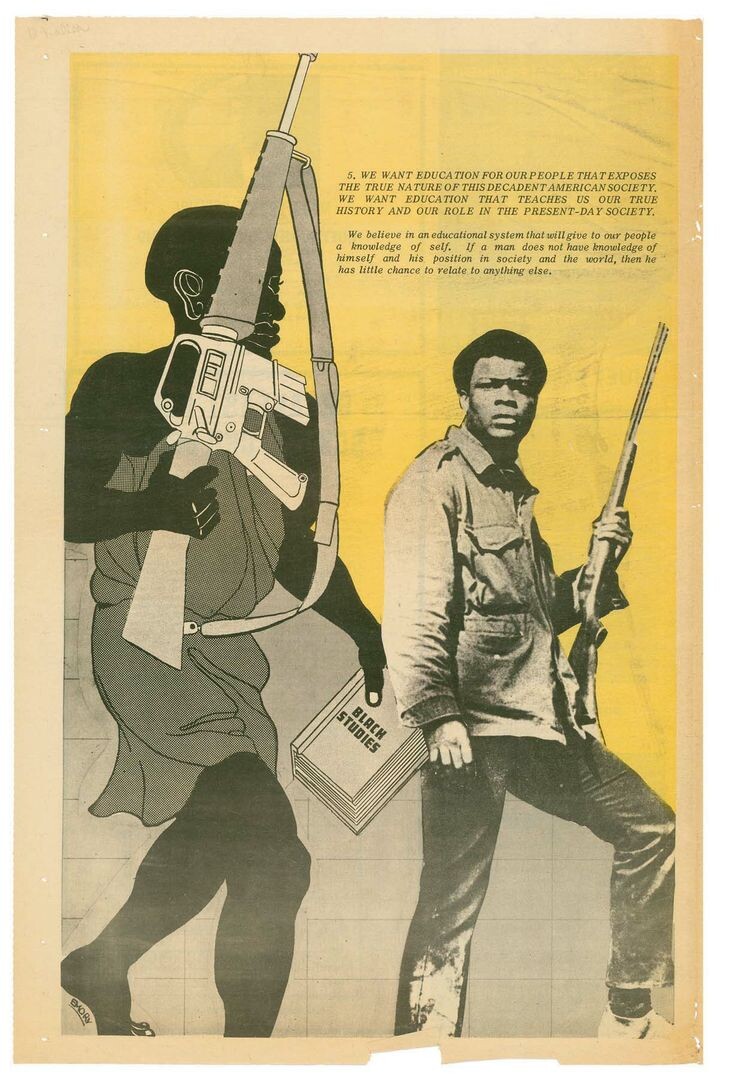
by JR Valrey
Emory Douglas is by far the most revolutionary visual artist of our lifetime, with his artwork organizing, educating and inspiring Black and other oppressed people around the world for the last 60 years. Known in the Black Panther Party as the Minister of Information and the Revolutionary Artist, his revolutionary political cartoons conveyed the messages of the Black Panther Party to youth as well as to people who were illiterate.
Recognized around the planet, his artwork has been adopted and used by revolutionary movements in Algeria, Palestine, Cuba, Chiapas and China, to name a few. Emory Douglas is a living legend, and the SF Bay View newspaper salutes him and his Panther comrades on their 60th anniversary.
JR Valrey: Emory, when Huey and Bobby said that the Black Panther Party is an armed propaganda unit, what does that mean?
Emory Douglas: Well, that means that we were informing, enlightening and educating people about the contradictions and around the 10-point platform improvement in relationship to what the responsibility of revolution should be.
JR Valrey: When Huey said that “the Black Panther newspaper was the lifeblood of the Black Panther Party,” what did that mean to y’all?
Emory Douglas: That meant it was a lifeline between us and the world, and getting our message out there in the context of importance and telling our story from our perspective … and being able to criticize or praise what was going on in the context of the community and the world from our perspective. It was a lifeline because it was, that’s how people found out who we were around the world. Seeing it on the news and all those things, and then having requests to come speak and then our newspaper telling it from our perspective, our story and getting the firsthand insight.
JR Valrey: How much focus went into the Black Panther newspaper? I know it came out weekly, or was it monthly?
Emory Douglas: It was when it first evolved, we got it out when we could. That might have been monthly. And then after that we would try to get it out, say, every two weeks. And then it went as the party evolved and grew. We started getting it out every week, yeah, without any limitation. That was the comrades who may have worked in other areas of Panther work had to come a certain day, Wednesday. If it was Wednesday, they would work on the paper until it was finished, then they’d go back to the other work.
JR Valrey: And what was the process like?
Emory Douglas: Well, you had an editorial staff, editorial kind of, you had the editorial aspect of the paper, those who were the writers deciding what articles went into the paper.
JR Valrey: How did y’all do that?
Emory Douglas: Well, that was done by … we had people who we knew, sometimes who shared information with us, activists or progressives or otherwise, and then at the same time you had us getting in contact with folks, and they, the editors, would have all that information and sort through it, and decide on what was going on. Then shared it with maybe Huey or Bobby, but mostly the others did have a green light. But they were always in communication at some point in the process with Huey and Bobby about what articles were going into the paper, what’s going on, on the front and stuff like that.
JR Valrey: What’s the importance of the paper being directly involved with an organization with a revolutionary agenda versus a newspaper who’s not involved, taking more of a spectator position?
Emory Douglas: Yeah, that’s what we’re saying. The newspaper told our story from our perspective and we were not shackled by advertising and all the other stuff. We could say what we wanted to say, back it up and use language in the context of the culture of now that we communicated in.
JR Valrey: Okay, but I understand that you had a freedom of speech that most Black people didn’t have, but what was the power? Why did you even increase distribution? Why did the BPP increase the papers that they were pushing in the community?
Emory Douglas: It went from monthly, in barely any time, to every two weeks. Oh, it came from the readership and the demand for the paper. That was our lifeline … people would come to us to want to know who to vote for, and those kinds of things.
JR Valrey: What’s the difference between bourgeois media and, say, Black revolutionary media?
Emory Douglas: Well, you had that but a lot of them supported us. You had people in there who supported us. That’s why I went to work with The Sun Reporter after the BPP because Dr. Goodman supported us.
JR Valrey: Was he seen as radical in the ’60s?
Emory Douglas: Progressive, yeah. But you could say there was some who were shackled by advertisers on what they could say. You could say that in that context, they couldn’t speak on issues as much. They began to, and they would do some things, but on a broad scale.
JR Valrey: What is the difference between a conscious artist and a revolutionary artist?
Emory Douglas: Well, that is a revolutionary artist, a conscious artist.
JR Valrey: So you don’t make a distinction?
Emory Douglas: Well, you can make a distinction but it’s a broad context. What is it for? Whom is it serving? And how does it relate? Because it can be on a revolutionary scale that transcends the community or it can be on a scale that really focuses on certain issues within the community.
JR Valrey: What is the Artist Manifesto? Why was that important?
Emory Douglas: Well, that came over a period of time. That came about 2014, somewhere around then, and I thought that maybe putting it together. It’s ideas and thoughts that I had, in the context for the younger artists to have as a guide to act.
JR Valrey: So that wasn’t in the Black Panther Party?
Emory Douglas: No, it wasn’t a Black Panther Party manifesto. I had other articles that had maybe some of those points in it.
JR Valrey: When your title is said, it’s the Minister of Culture and the Revolutionary Artist. Why is that important to say? Why is it a title even as an artist?
Emory Douglas: Well, Huey and Bobby thought it was important in the context of it being done, but it was the Revolutionary Artist initially. And that came about when I came by a place called Black House, which was here in San Francisco where the elders used to stay upstairs, and a lot of cultural stuff was going on downstairs.
JR Valrey: It was in Fillmore, right?
Emory Douglas: Yeah, it was in Fillmore. The Black House was on Broderick around Sutter and Pine. And so what happened is that I came by there because I used to live right on the corner where the bus stops, going up on 8th. And so I came by one Saturday when nothing was happening and Huey and Bobby were downstairs sitting at the table. I seen Bobby working on the first issue of the paper during the Denzil Dowell case, and I told him I could help him improve it because I seen what he was doing. And he said, okay, and I went home and got my stuff and by the time he came back, I was finished. So Bobby said, “We’re going to start the Black Panther paper to tell our story from our perspective. It would be like a double-edged sword to praise you on the one hand and criticize you on the other.” And they say it would be to tell our story from our perspective, that’s the essence of it.
JR Valrey: What was the importance of photos and artwork that wasn’t particularly political cartoons? How would you pick the photos and general art for the newspaper?
Emory Douglas: Well, sometimes you would reflect on what’s going on in the story, so it had meaning, and in that context, not necessarily a revolutionary meaning but a meaning that reflected what the story and what the art was about.
JR Valrey: The Panthers had a lot of powerful pictures of Kathleen, of Huey and stuff at different times, so y’all were dealing with some kind of philosophy with photography. How did you pick this picture over that picture?
Emory Douglas: Well, sometimes it depends on what we may have, what choices that we had to pick from. The editor sometimes may say we want this picture to go with this. If not, we had the green light to look through our files to see what we had and connected with. Initially, before we had our own photography department, we had photographers who took pictures, but we required that if they took pictures, that they had to give us access to use those same pictures in the paper, if we chose to. So we got a lot of files from different well-known photographers of today, who gave us a lot of files, and then we developed our own photography department.
JR Valrey is a veteran journalist and Editor in Chief at the San Francisco Bay View. He can be reached at [email protected] and on IG @JRValrey
The post Not just art for art’s sake: an interview with Emory Douglas, the Black Panther Party’s minister of culture appeared first on San Francisco Bay View.
Source: https://sfbayview.com/2026/10/not-just-art-for-art-s-sake-an-interview-with-emory-douglas-the-black-panther-party-s-minister-of-culture/
Anyone can join.
Anyone can contribute.
Anyone can become informed about their world.
"United We Stand" Click Here To Create Your Personal Citizen Journalist Account Today, Be Sure To Invite Your Friends.
Before It’s News® is a community of individuals who report on what’s going on around them, from all around the world. Anyone can join. Anyone can contribute. Anyone can become informed about their world. "United We Stand" Click Here To Create Your Personal Citizen Journalist Account Today, Be Sure To Invite Your Friends.
LION'S MANE PRODUCT
Try Our Lion’s Mane WHOLE MIND Nootropic Blend 60 Capsules
Mushrooms are having a moment. One fabulous fungus in particular, lion’s mane, may help improve memory, depression and anxiety symptoms. They are also an excellent source of nutrients that show promise as a therapy for dementia, and other neurodegenerative diseases. If you’re living with anxiety or depression, you may be curious about all the therapy options out there — including the natural ones.Our Lion’s Mane WHOLE MIND Nootropic Blend has been formulated to utilize the potency of Lion’s mane but also include the benefits of four other Highly Beneficial Mushrooms. Synergistically, they work together to Build your health through improving cognitive function and immunity regardless of your age. Our Nootropic not only improves your Cognitive Function and Activates your Immune System, but it benefits growth of Essential Gut Flora, further enhancing your Vitality.

Our Formula includes: Lion’s Mane Mushrooms which Increase Brain Power through nerve growth, lessen anxiety, reduce depression, and improve concentration. Its an excellent adaptogen, promotes sleep and improves immunity. Shiitake Mushrooms which Fight cancer cells and infectious disease, boost the immune system, promotes brain function, and serves as a source of B vitamins. Maitake Mushrooms which regulate blood sugar levels of diabetics, reduce hypertension and boosts the immune system. Reishi Mushrooms which Fight inflammation, liver disease, fatigue, tumor growth and cancer. They Improve skin disorders and soothes digestive problems, stomach ulcers and leaky gut syndrome. Chaga Mushrooms which have anti-aging effects, boost immune function, improve stamina and athletic performance, even act as a natural aphrodisiac, fighting diabetes and improving liver function. Try Our Lion’s Mane WHOLE MIND Nootropic Blend 60 Capsules Today. Be 100% Satisfied or Receive a Full Money Back Guarantee. Order Yours Today by Following This Link.


| Visits: | 1,836,468,587 |
| Stories: | 8,728,600 |
Whistler Blowers, Insiders

