

Polyester Tire Cords Price Monitor 2026: Global Market Analysis, Price Index & Strategic Insights

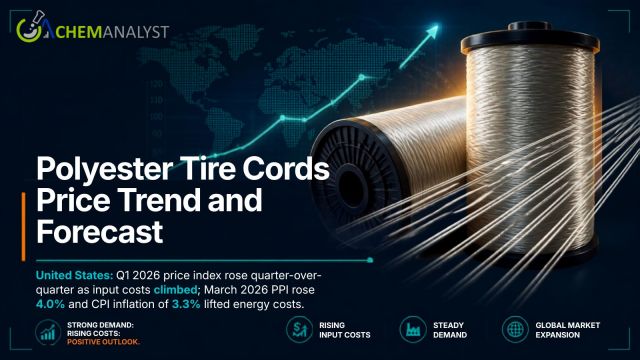
The Polyester Tire Cords Price witnessed an upward trend across major global markets during the first quarter of 2026. Rising raw material costs, higher production expenses, and resilient demand from the automotive and tire manufacturing industries supported prices in North America, Asia-Pacific, and Europe. Manufacturers faced increasing costs for feedstocks such as purified terephthalic acid (PTA), monoethylene glycol (MEG), ethylene, and naphtha, while inflationary pressures further influenced production economics.
According to ChemAnalyst Polyester Tire Cords Price: - https://www.chemanalyst.com/Pricing-data/polyester-tire-cords-2345
Polyester tire cords remain one of the most widely used reinforcement materials in passenger car tires due to their excellent tensile strength, dimensional stability, fatigue resistance, and lightweight characteristics. As global vehicle production gradually improved during Q1 2026, procurement activity from tire manufacturers strengthened, contributing to higher polyester tire cords prices.
What are Polyester Tire Cords?
Polyester tire cords are high-strength industrial yarns manufactured primarily from polyethylene terephthalate (PET). These cords act as reinforcing materials inside pneumatic tires, providing structural integrity, durability, and improved performance.
Their applications include:
- Passenger vehicle tires
- Truck and bus radial tires
- Motorcycle tires
- Agricultural tires
- Industrial tires
- Off-road vehicle tires
Growing automobile production and replacement tire demand continue to make polyester tire cords one of the most important industrial textile products worldwide.
Global Polyester Tire Cords Price Trend in Q1 2026
During Q1 2026, global polyester tire cords prices increased due to several market factors:
- Rising PTA and MEG feedstock prices
- Higher ethylene and naphtha costs
- Inflationary production expenses
- Stable demand from global tire manufacturers
- Improving automotive production
- Elevated logistics and transportation costs
- Increased manufacturing overheads
Although supply remained relatively balanced, production costs rose across nearly all manufacturing regions, putting upward pressure on market prices.
North America Polyester Tire Cords Price Analysis
United States Market
The Polyester Tire Cords Price Index increased quarter-over-quarter during Q1 2026 in the United States.
Higher production expenses remained the primary reason behind the market movement. Rising costs of PTA and MEG significantly affected polyester production economics, while manufacturers also experienced higher energy and labor expenses.
An additional factor supporting prices was the rise in manufacturing inflation.
Production Cost Trend
The Polyester Tire Cords Production Cost Trend increased in March 2026 after the Producer Price Index (PPI) rose 4.0%, reflecting broad-based inflation across industrial manufacturing.
The increase in producer prices translated into:
- Higher chemical feedstock costs
- Increased utility expenses
- Rising transportation charges
- Elevated labor costs
- Higher maintenance expenditures
Domestic tire manufacturers continued purchasing steadily, preventing inventory accumulation and supporting market pricing throughout the quarter.
Major Market Drivers
- Higher PET resin production costs
- Rising PTA and MEG prices
- Manufacturing inflation
- Stable automotive production
- Healthy replacement tire demand
- Higher freight costs
APAC Polyester Tire Cords Price Analysis
China Market
China recorded another quarter of increasing Polyester Tire Cords Price during Q1 2026.
The market primarily responded to increasing upstream raw material prices. Feedstock inflation pushed production costs upward, leading producers to adjust contract and spot market prices accordingly.
China remains one of the world’s largest producers and exporters of polyester tire cords, making changes in domestic production costs influential across global markets.
Read the LinkedIn Article: - https://www.linkedin.com/pulse/polyester-tire-cords-price-chart-2026-global-market-analysis-singh-rlpoc/
Production Cost Trend
The Polyester Tire Cords Production Cost Trend surged during March 2026 as China’s Producer Price Index increased by 0.5% year-over-year.
Higher production expenses resulted from:
- PTA price increases
- MEG market strength
- Energy cost fluctuations
- Rising industrial operating expenses
- Stable domestic manufacturing activity
Despite moderate inflation compared to Western economies, increasing upstream chemical prices significantly influenced production economics.
Demand Fundamentals
Demand remained healthy because of:
- Continued domestic automobile manufacturing
- Tire export growth
- Stable industrial activity
- Replacement tire production
- Export-oriented manufacturing
Chinese producers maintained relatively balanced inventories throughout the quarter, preventing excessive price volatility.
Europe Polyester Tire Cords Price Analysis
Germany Market
Germany experienced an increase in the Polyester Tire Cords Price Index during Q1 2026.
The market was primarily driven by rising feedstock costs across Europe’s petrochemical value chain.
Manufacturers encountered higher costs for naphtha and ethylene, both of which play important roles in polyester production economics.
Production Cost Trend
The Polyester Tire Cords Production Cost Trend increased significantly during March 2026 as:
- Naphtha prices climbed sharply
- Ethylene costs increased substantially
- Petrochemical production expenses rose
- Manufacturing energy costs remained elevated
European producers continued facing relatively high operational costs compared to Asian competitors, limiting opportunities for aggressive price competition.
Key Market Drivers
- Higher petrochemical feedstock prices
- Rising energy expenses
- Inflationary manufacturing costs
- Stable automotive demand
- Limited pricing flexibility
Feedstock Market Influence on Polyester Tire Cords Price
The pricing of polyester tire cords closely depends on several upstream raw materials.
Purified Terephthalic Acid (PTA)
PTA represents one of the largest raw material costs in polyester production. Any increase in PTA prices immediately affects polyester yarn manufacturing expenses.
Monoethylene Glycol (MEG)
MEG remains another essential feedstock. Price volatility in MEG directly impacts polyester polymer production and therefore tire cord manufacturing costs.
Ethylene
Ethylene serves as a critical petrochemical building block. Rising ethylene prices during Q1 2026 increased production costs globally.
Naphtha
Naphtha price movements heavily influenced European production economics throughout the quarter, particularly in Germany.
Automotive Industry Supporting Polyester Tire Cords Demand
The tire industry remains the largest consumer of polyester tire cords.
Major demand sectors include:
- Passenger vehicles
- Electric vehicles
- Commercial vehicles
- Heavy-duty trucks
- Agricultural machinery
- Mining equipment
Growing global vehicle production continues supporting long-term polyester tire cords consumption.
The increasing adoption of electric vehicles also contributes to demand, as manufacturers seek lightweight yet durable reinforcement materials capable of improving tire efficiency.
Supply Chain Developments
Supply chains remained relatively stable during Q1 2026 despite higher manufacturing costs.
Several factors influenced market dynamics:
- Stable availability of PTA
- Adequate MEG supplies
- Higher shipping expenses
- Regional logistics challenges
- Inflationary freight costs
Unlike previous years marked by significant supply disruptions, Q1 2026 saw relatively balanced inventories across major producing regions.
Procurement Intelligence for Buyers
Procurement managers should closely monitor several variables when sourcing polyester tire cords.
Feedstock Monitoring
Tracking PTA, MEG, ethylene, and naphtha prices helps buyers anticipate future pricing movements.
Long-Term Contracts
Manufacturers facing rising production costs may prefer longer-term agreements with fixed pricing mechanisms to reduce volatility.
Supplier Diversification
Purchasing from multiple regional suppliers can reduce supply risks while improving procurement flexibility.
Inventory Planning
Maintaining strategic inventory levels allows buyers to mitigate short-term price spikes caused by feedstock volatility.
Regional Cost Analysis
Comparing regional manufacturing costs enables procurement teams to optimize sourcing strategies across North America, Asia, and Europe.
Factors Likely to Influence Polyester Tire Cords Price in 2026
Several macroeconomic and industry developments could shape pricing throughout the remainder of the year.
Raw Material Prices
Future PTA and MEG movements will remain the most important pricing drivers.
Crude Oil Trends
Because polyester production depends on petrochemical feedstocks, fluctuations in crude oil prices will directly influence manufacturing costs.
Automotive Production
Vehicle manufacturing volumes will determine downstream demand from tire manufacturers.
Energy Costs
Electricity and natural gas prices remain significant production cost components, particularly in Europe.
Inflation
Producer inflation continues influencing labor, transportation, and manufacturing expenses worldwide.
Trade Policies
Import duties, export regulations, and logistics costs may further impact regional pricing.
Polyester Tire Cords Market Forecast
The Polyester Tire Cords Price is expected to remain firm during the coming quarters, supported by relatively high production costs and sustained demand from the automotive sector.
While supply conditions appear balanced, several factors could maintain upward pricing pressure:
- Continued feedstock volatility
- Higher petrochemical costs
- Stable tire production
- Increasing electric vehicle manufacturing
- Inflationary industrial expenses
Should crude oil prices remain elevated, upstream chemicals such as PTA, MEG, ethylene, and naphtha may continue increasing, providing additional support to polyester tire cord prices.
Conversely, any slowdown in global automobile production or easing feedstock costs could moderate future price increases.
Conclusion
The Polyester Tire Cords Price recorded a positive quarter-over-quarter trend across the United States, China, and Germany during Q1 2026. Rising production costs, higher petrochemical feedstock prices, and resilient demand from the global tire manufacturing industry supported market prices.
In North America, elevated producer inflation increased manufacturing expenses. China experienced higher costs driven by upstream feedstock inflation and improving industrial activity. Germany saw prices rise amid sharp increases in naphtha and ethylene costs, reinforcing Europe’s higher production cost environment.
Looking ahead, the polyester tire cords market is expected to remain influenced by feedstock availability, crude oil prices, automotive production, energy markets, and global manufacturing activity. Procurement teams should continue monitoring these variables to optimize sourcing decisions, manage cost risks, and secure stable supply in an increasingly dynamic market.
Contact -
Address:
420 Lexington Avenue, Suite 300
New York, NY 10170
United States
Phone: +1 332 258 6602
Website: www.chemanalyst.com
LinkedIn: https://www.linkedin.com/company/chemanalyst/
X (Twitter): https://x.com/chemanalysts
Facebook: https://www.facebook.com/ChemAnalysts/
Anyone can join.
Anyone can contribute.
Anyone can become informed about their world.
"United We Stand" Click Here To Create Your Personal Citizen Journalist Account Today, Be Sure To Invite Your Friends.
Before It’s News® is a community of individuals who report on what’s going on around them, from all around the world. Anyone can join. Anyone can contribute. Anyone can become informed about their world. "United We Stand" Click Here To Create Your Personal Citizen Journalist Account Today, Be Sure To Invite Your Friends.
LION'S MANE PRODUCT
Try Our Lion’s Mane WHOLE MIND Nootropic Blend 60 Capsules
Mushrooms are having a moment. One fabulous fungus in particular, lion’s mane, may help improve memory, depression and anxiety symptoms. They are also an excellent source of nutrients that show promise as a therapy for dementia, and other neurodegenerative diseases. If you’re living with anxiety or depression, you may be curious about all the therapy options out there — including the natural ones.Our Lion’s Mane WHOLE MIND Nootropic Blend has been formulated to utilize the potency of Lion’s mane but also include the benefits of four other Highly Beneficial Mushrooms. Synergistically, they work together to Build your health through improving cognitive function and immunity regardless of your age. Our Nootropic not only improves your Cognitive Function and Activates your Immune System, but it benefits growth of Essential Gut Flora, further enhancing your Vitality.

Our Formula includes: Lion’s Mane Mushrooms which Increase Brain Power through nerve growth, lessen anxiety, reduce depression, and improve concentration. Its an excellent adaptogen, promotes sleep and improves immunity. Shiitake Mushrooms which Fight cancer cells and infectious disease, boost the immune system, promotes brain function, and serves as a source of B vitamins. Maitake Mushrooms which regulate blood sugar levels of diabetics, reduce hypertension and boosts the immune system. Reishi Mushrooms which Fight inflammation, liver disease, fatigue, tumor growth and cancer. They Improve skin disorders and soothes digestive problems, stomach ulcers and leaky gut syndrome. Chaga Mushrooms which have anti-aging effects, boost immune function, improve stamina and athletic performance, even act as a natural aphrodisiac, fighting diabetes and improving liver function. Try Our Lion’s Mane WHOLE MIND Nootropic Blend 60 Capsules Today. Be 100% Satisfied or Receive a Full Money Back Guarantee. Order Yours Today by Following This Link.


| Visits: | 1,823,829,558 |
| Stories: | 8,673,577 |
Whistler Blowers, Insiders

