

Azelaic Acid Market & Price Analysis 2026: Price Index, Regional Trends & Procurement Intelligence

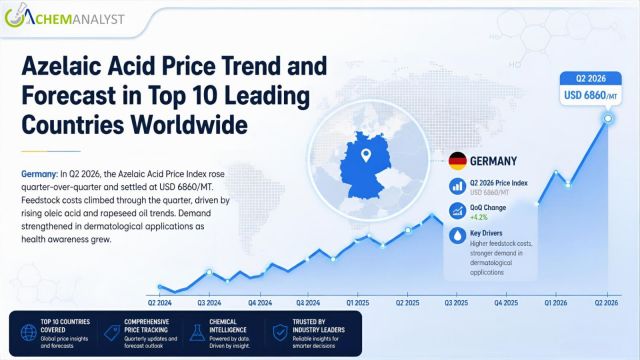
The Azelaic Acid Price Index moved higher across all major regions in Q2 2026. In Germany, prices settled at USD 6,860/MT, driven by sustained increases in feedstock costs. In the United States, prices climbed on the back of a 6.5% year-over-year rise in the Producer Price Index (May 2026), while in China, a 4.1% year-on-year PPI increase (June 2026) pushed production costs — and by extension, market prices — upward. Below is a full regional breakdown of the Azelaic Acid Price trend, the forces behind it, and what buyers and suppliers can expect going forward.
According to ChemAnalyst Azelaic Acid Price: - https://www.chemanalyst.com/Pricing-data/azelaic-acid-2297
What Is Azelaic Acid and Why Does Its Price Matter?
Azelaic acid is a naturally derived dicarboxylic acid, most commonly produced through the oxidative cleavage of oleic acid, which itself is typically sourced from vegetable oils such as rapeseed oil. It plays a central role in several industries:
- Cosmetics and dermatology — used in topical formulations for skin-brightening and acne treatments
- Polymers and coatings — a building block for nylon 6,9 and specialty polyamides
- Plasticizers and lubricants — valued for its stability and chemical structure
- Pharmaceuticals — used in select active pharmaceutical ingredient (API) applications
Because azelaic acid sits downstream of agricultural feedstocks and industrial oleochemical supply chains, its price is highly sensitive to raw material costs, energy prices, and regional producer inflation — all of which were in motion during Q2 2026.
Azelaic Acid Price in Europe: Germany Leads the Regional Trend
Germany, as one of Europe’s largest oleochemical production and trading hubs, offers the clearest read on the European Azelaic Acid Price trend. The Azelaic Acid Price Index in Germany rose quarter-over-quarter in Q2 2026, settling at USD 6,860/MT.
Feedstock Pressure: Oleic Acid and Rapeseed Oil
The primary driver behind Germany’s Azelaic Acid Price increase was sustained upward pressure on feedstock costs. Two inputs stood out:
- Oleic acid — the direct precursor to azelaic acid — trended upward through the quarter, tightening producer margins and pushing finished-product prices higher.
- Rapeseed oil — a key vegetable oil feedstock used to derive oleic acid in the European supply chain — also trended higher, compounding cost pressure further up the value chain.
Because German and broader European azelaic acid producers rely heavily on rapeseed-derived oleochemical feedstocks (as opposed to palm-oil-based routes more common in Asia), any tightening in the European vegetable oil market tends to transmit quickly into azelaic acid production costs — and from there, into the price buyers pay.
Azelaic Acid Price in North America: United States Sees Demand-Led Gains
In the United States, the Azelaic Acid Price Index also rose quarter-over-quarter in Q2 2026, but the drivers were somewhat broader than in Europe — combining rising input costs with genuinely strong downstream demand.
PPI Trends and Demand Dynamics
Two forces stand out in the U.S. Azelaic Acid Price story for Q2 2026:
- Producer Price Index (PPI) growth: The U.S. PPI rose 6.5% year-over-year as of May 2026, a broad signal of rising production costs across manufacturing inputs — energy, logistics, and raw materials among them. This macro-level inflation fed directly into azelaic acid production economics.
- Robust downstream demand: Unlike a purely cost-push scenario, U.S. Azelaic Acid Price gains in Q2 2026 were reinforced by healthy consumption from cosmetics, personal care, and specialty polymer end-users, giving producers room to pass rising costs through to buyers without significant volume loss.
This combination — rising costs plus resilient demand — is generally considered a stronger and more durable driver of price increases than cost pressure alone, since it suggests the market can absorb higher prices rather than merely reacting to a supply-side shock.
Azelaic Acid Price in APAC: China’s Production Costs Climb
China, as the largest producer and exporter of azelaic acid in the Asia-Pacific region, also recorded a quarter-over-quarter rise in its Azelaic Acid Price Index during Q2 2026, driven primarily by elevated production costs rather than a standalone demand surge.
Production Cost Inflation in China
China’s Producer Price Index rose 4.1% year-on-year in June 2026, reflecting broader upstream cost inflation across the country’s chemical manufacturing base. For azelaic acid producers specifically, this translated into:
- Higher costs for feedstock oils and oleochemical intermediates
- Increased energy and utility costs tied to production
- Elevated logistics and raw material sourcing costs, particularly relevant given China’s export-oriented azelaic acid supply chain
While China’s PPI increase (4.1% YoY) was more moderate than the U.S. figure (6.5% YoY), it was still enough to push Chinese Azelaic Acid Price levels higher on a quarter-over-quarter basis, reinforcing the global — not just regional — nature of the cost pressures affecting the market in Q2 2026.
Read the LinkedIn Article: - https://www.linkedin.com/pulse/azelaic-acid-price-index-2026-global-trends-market-analysis-singh-caqjc/
Key Factors Influencing the Global Azelaic Acid Price in 2026
Pulling the three regional stories together, several common threads explain why the Azelaic Acid Price rose across Europe, North America, and APAC simultaneously in Q2 2026:
- Feedstock cost inflation — oleic acid and vegetable oils (notably rapeseed oil in Europe) trending higher
- Broad-based producer inflation — reflected in PPI increases in both the U.S. (6.5% YoY) and China (4.1% YoY)
- Energy and logistics costs — a persistent cost driver for oleochemical manufacturing globally
- Demand-side resilience — particularly in North America, where end-use demand supported price pass-through
- Regional supply chain structure — Europe’s reliance on rapeseed-based feedstocks versus Asia’s broader oleochemical sourcing base creates differing sensitivity to specific commodity price swings
Azelaic Acid Price Outlook: What Comes Next?
Given that Q2 2026 price increases in all three regions were rooted in structural cost pressures — feedstock inflation, energy costs, and broad producer-price growth — rather than temporary shocks, the Azelaic Acid Price trend is likely to remain sensitive to:
- Movements in global vegetable oil markets, especially rapeseed and palm oil
- Crude oil and energy price trends, which affect both production and logistics costs
- Ongoing PPI trajectories in major manufacturing economies (U.S. and China in particular)
- Demand trends in cosmetics, dermatological, and specialty polymer end-markets
Buyers and procurement teams tracking the Azelaic Acid Price should watch feedstock oil markets and PPI releases closely, as both have shown a direct, quarter-over-quarter correlation with azelaic acid pricing in 2026.
Conclusion
The global Azelaic Acid Price trend in Q2 2026 tells a consistent story: rising feedstock, energy, and production costs pushed prices higher across Europe, North America, and APAC alike. Germany’s benchmark price of USD 6,860/MT reflects sustained pressure from oleic acid and rapeseed oil markets, the United States saw cost increases reinforced by strong demand, and China’s price gains tracked closely with a broader rise in producer-level inflation. For businesses sourcing or supplying azelaic acid, these regional dynamics — and the underlying feedstock and macroeconomic indicators driving them — remain the key variables to monitor through the rest of 2026.
Frequently Asked Questions About Azelaic Acid Price
What was the Azelaic Acid Price in Germany in Q2 2026?
The Azelaic Acid Price Index in Germany rose quarter-over-quarter in Q2 2026 and settled at USD 6,860/MT, driven by persistent feedstock cost increases.
Why did Azelaic Acid prices rise in the United States in Q2 2026?
U.S. Azelaic Acid prices rose due to a combination of rising production costs and robust downstream demand. The U.S. Producer Price Index increased 6.5% year-over-year as of May 2026, reflecting broader cost inflation across manufacturing inputs.
What drove Azelaic Acid production costs higher in China?
Chinese Azelaic Acid production costs climbed in Q2 2026 largely due to elevated input and manufacturing costs, consistent with a 4.1% year-on-year increase in China’s Producer Price Index recorded in June 2026.
What raw materials most affect the Azelaic Acid Price?
Oleic acid is the primary feedstock for azelaic acid production, and it is typically derived from vegetable oils such as rapeseed oil in Europe. Movements in these feedstock markets directly influence azelaic acid production costs and, in turn, its market price.
Is the Azelaic Acid Price expected to keep rising?
Because the Q2 2026 increases were tied to structural drivers — feedstock costs, energy prices, and broad producer inflation — rather than one-off disruptions, the Azelaic Acid Price is likely to remain sensitive to these same factors in the coming quarters, particularly vegetable oil and energy market trends.
Contact -
Address:
420 Lexington Avenue, Suite 300
New York, NY 10170
United States
Phone: +1 332 258 6602
Website: www.chemanalyst.com
LinkedIn: https://www.linkedin.com/company/chemanalyst/
X (Twitter): https://x.com/chemanalysts
Facebook: https://www.facebook.com/ChemAnalysts/
Anyone can join.
Anyone can contribute.
Anyone can become informed about their world.
"United We Stand" Click Here To Create Your Personal Citizen Journalist Account Today, Be Sure To Invite Your Friends.
Before It’s News® is a community of individuals who report on what’s going on around them, from all around the world. Anyone can join. Anyone can contribute. Anyone can become informed about their world. "United We Stand" Click Here To Create Your Personal Citizen Journalist Account Today, Be Sure To Invite Your Friends.
LION'S MANE PRODUCT
Try Our Lion’s Mane WHOLE MIND Nootropic Blend 60 Capsules
Mushrooms are having a moment. One fabulous fungus in particular, lion’s mane, may help improve memory, depression and anxiety symptoms. They are also an excellent source of nutrients that show promise as a therapy for dementia, and other neurodegenerative diseases. If you’re living with anxiety or depression, you may be curious about all the therapy options out there — including the natural ones.Our Lion’s Mane WHOLE MIND Nootropic Blend has been formulated to utilize the potency of Lion’s mane but also include the benefits of four other Highly Beneficial Mushrooms. Synergistically, they work together to Build your health through improving cognitive function and immunity regardless of your age. Our Nootropic not only improves your Cognitive Function and Activates your Immune System, but it benefits growth of Essential Gut Flora, further enhancing your Vitality.

Our Formula includes: Lion’s Mane Mushrooms which Increase Brain Power through nerve growth, lessen anxiety, reduce depression, and improve concentration. Its an excellent adaptogen, promotes sleep and improves immunity. Shiitake Mushrooms which Fight cancer cells and infectious disease, boost the immune system, promotes brain function, and serves as a source of B vitamins. Maitake Mushrooms which regulate blood sugar levels of diabetics, reduce hypertension and boosts the immune system. Reishi Mushrooms which Fight inflammation, liver disease, fatigue, tumor growth and cancer. They Improve skin disorders and soothes digestive problems, stomach ulcers and leaky gut syndrome. Chaga Mushrooms which have anti-aging effects, boost immune function, improve stamina and athletic performance, even act as a natural aphrodisiac, fighting diabetes and improving liver function. Try Our Lion’s Mane WHOLE MIND Nootropic Blend 60 Capsules Today. Be 100% Satisfied or Receive a Full Money Back Guarantee. Order Yours Today by Following This Link.


| Visits: | 1,828,184,484 |
| Stories: | 8,685,290 |
Whistler Blowers, Insiders

