

IoT in Education Market 2031 Size & Top Players Analysis Report

According to the TechSci Research report, “IoT in Education Market Size– Global Industry Share, Trends, Competition Forecast & Opportunities, 2031F,” the Global IoT in Education Market is projected to grow from USD 16.84 billion in 2025 to USD 39.18 billion by 2031, registering a CAGR of 15.11% during the forecast period.
The education sector is undergoing a significant technological transformation as institutions increasingly integrate connected devices, intelligent sensors, cloud platforms, wearables, and data analytics into everyday teaching and administrative processes. The Internet of Things (IoT) is emerging as a critical technology layer that connects classrooms, students, educators, campuses, and learning platforms, enabling institutions to create more responsive, personalized, and data-driven educational environments.
From smart classrooms and automated attendance systems to connected laboratories and wearable learning devices, IoT is expanding the boundaries of conventional education. Educational institutions are moving beyond traditional digital learning tools toward interconnected ecosystems capable of collecting, analyzing, and acting upon real-time information.
The growing emphasis on personalized learning, operational efficiency, student safety, and hybrid education is expected to accelerate IoT adoption across schools, universities, vocational training centers, and corporate learning environments worldwide.
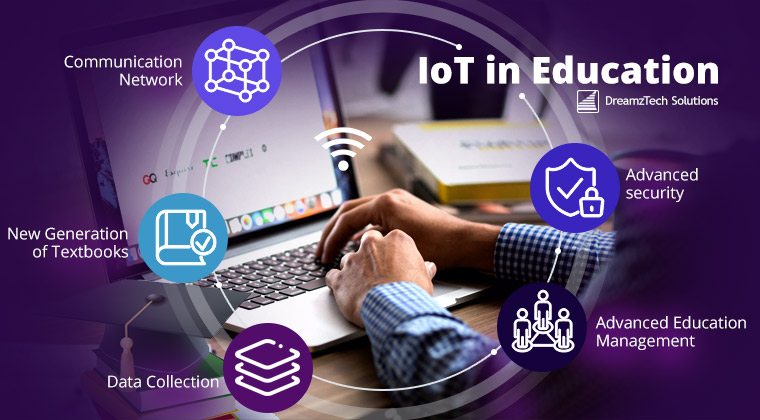
Industry Key Highlights
- The Global IoT in Education Market is expected to reach USD 39.18 billion by 2031, up from USD 16.84 billion in 2025.
- The market is projected to expand at a 15.11% CAGR between 2025 and 2031.
- Increasing adoption of smart classrooms, connected learning platforms, IoT sensors, wearables, and intelligent campus infrastructure is supporting market growth.
- Corporate training is emerging as the fastest-growing end-user segment.
- Asia Pacific is anticipated to be the fastest-growing regional market.
- Hybrid and remote learning models are encouraging institutions to deploy connected technologies for seamless collaboration and content delivery.
- Integration of Artificial Intelligence, cloud computing, analytics, and IoT is creating more intelligent education ecosystems.
- Wearable technologies are gaining importance for attendance management, student engagement, wellness monitoring, and personalized learning.
- Government-led digital education initiatives and smart-campus investments are strengthening IoT deployment.
- IoT is helping educational institutions improve operational efficiency while creating more flexible and student-centric learning experiences.
Request For Sample Copy of Report For More Detailed Market insight
Emerging Trends in the IoT in Education Market
Rise of Smart and Connected Classrooms
Smart classrooms are becoming one of the most visible applications of IoT within education. Interactive displays, connected projectors, environmental sensors, automated lighting systems, smart boards, and cloud-connected learning platforms are enabling institutions to create technology-enabled classrooms.
These systems can collect information about classroom utilization, environmental conditions, student participation, and equipment performance. Administrators can use this information to optimize resource allocation, while educators can use connected learning tools to create more interactive lessons.
The transition from conventional classrooms toward intelligent learning environments is expected to remain a major market trend as institutions prioritize personalized and technology-driven education.
Expansion of Hybrid and Remote Learning
The rapid adoption of hybrid and remote education has significantly increased the importance of IoT-enabled infrastructure. Connected audio-visual systems, real-time attendance sensors, cloud-based analytics, and smart collaboration tools allow institutions to connect students participating from different locations.
IoT can enable educators to conduct lessons in physical classrooms while remote students simultaneously access demonstrations, experiments, presentations, and interactive activities. This creates a more integrated learning environment and reduces the technological divide between on-campus and remote learners.
IoT-enabled monitoring solutions can also provide institutions with greater visibility into attendance and participation. When appropriately implemented with privacy safeguards, these systems can help administrators evaluate engagement and identify students who may require additional academic support.
Increasing Adoption of Wearable Learning Technologies
Wearable devices are becoming an increasingly important component of connected education ecosystems. Smartwatches, fitness trackers, biometric devices, and other sensors can provide real-time information relating to movement, activity, attendance, and selected wellness indicators.
In educational settings, wearable technologies can support physical education programs, automate attendance, facilitate interactive learning activities, and provide information that educators can use to create more personalized experiences.
Key Growth Drivers
Growing Demand for Personalized Education
Students increasingly expect learning experiences that reflect their individual capabilities, learning speeds, interests, and requirements. IoT-enabled devices can generate real-time data that helps educators understand how students interact with learning environments.
When combined with analytics and AI, this information can support more personalized learning strategies and targeted interventions.
Digital Transformation Across Educational Institutions
Schools, universities, and training organizations are investing heavily in digital infrastructure to improve operational efficiency and learning outcomes. IoT provides an important connectivity layer between physical infrastructure and digital platforms.
Connected systems can help institutions manage classrooms, monitor equipment, automate administrative processes, and optimize campus resources.
Government Support for Smart Education
Government-led digital education programs are encouraging institutions to modernize their infrastructure. Investments in broadband connectivity, digital classrooms, smart-campus projects, online education platforms, and technology-enabled teaching are creating favorable conditions for IoT adoption.
Emerging economies with large student populations represent particularly significant opportunities for technology providers.
𝐑𝐄𝐀𝐋-𝐖𝐎𝐑𝐋𝐃 𝐔𝐒𝐄 𝐂𝐀𝐒𝐄𝐒
Smart Attendance Management
IoT-enabled attendance systems can automate student attendance using connected devices, sensors, biometric technologies, or smart identification systems. This reduces manual administrative work while improving the accuracy and availability of attendance records.
Connected Laboratories
IoT-enabled laboratories allow students to interact with connected equipment and sensors while collecting real-time experimental data. Remote learners can also potentially participate in laboratory activities through connected platforms.
Intelligent Campus Management
Connected sensors can monitor classroom occupancy, energy consumption, lighting, temperature, equipment utilization, and other infrastructure parameters.
Educational institutions can use this information to improve resource allocation and operational efficiency.
Key Market Players
- Cisco Systems Inc.
- Microsoft Corporation
- Samsung Electronics Co. Ltd.
- IBM Corporation
- Huawei Technologies Co. Ltd.
- Dell Technologies Inc.
- Blackboard Inc.
- SAP SE
- Intel Corporation
- Oracle Corporation
Request For Sample Copy of Report For More Detailed Market insight
10 Benefits of the Research Report
- Comprehensive Market Assessment – Provides an in-depth evaluation of the Global IoT in Education Market and its growth trajectory.
- Market Size and Forecast Analysis – Provides market valuation and forecast information through 2031.
- Growth Opportunity Identification – Highlights emerging opportunities across components, applications, end users, and regions.
- Trend Analysis – Examines major technological and market trends influencing IoT adoption in education.
- Competitive Intelligence – Provides insights into leading companies and the competitive environment.
- Segment-Level Insights – Evaluates market performance across hardware, software, services, platforms, applications, and end-user categories.
- Regional Analysis – Identifies high-growth regions and evaluates regional market dynamics.
- Investment Decision Support – Helps businesses and investors identify attractive growth opportunities and potential areas of investment.
- Strategic Planning – Supports companies in developing effective market-entry, expansion, product, and partnership strategies.
- Customized Business Intelligence – Enables decision-makers to leverage market insights for strategic planning and business development.
Market Segmentation
The Global IoT in Education Market can be segmented based on:
By Component:
- Hardware
- Software
- Services
- Platforms
By Application:
- Smart Classrooms
- Learning Management Systems
- Virtual Labs
- Student Attendance Management
- Performance Tracking
By End User:
- K-12 Schools
- Higher Education Institutions
- Vocational Training Centers
- Corporate Training
By Region:
- North America
- Europe
- Asia Pacific
- South America
- Middle East & Africa
Frequently Asked Questions (FAQs)
1. What is the projected size of the Global IoT in Education Market by 2031?
The Global IoT in Education Market is projected to reach USD 39.18 billion by 2031, increasing from USD 16.84 billion in 2025 at a CAGR of 15.11%.
2. Which end-user segment is expected to grow fastest?
Corporate Training is emerging as the fastest-growing end-user segment, driven by increasing demand for employee reskilling, upskilling, personalized learning, and technology-enabled workplace training.
3. Which region is expected to record the fastest growth?
Asia Pacific is emerging as the fastest-growing regional market, supported by digital education initiatives, expanding connectivity, large student populations, smart-campus investments, and the growth of EdTech ecosystems.
4. What are the major factors driving the IoT in Education Market?
Key growth drivers include the increasing adoption of hybrid learning, demand for personalized education, smart classroom development, government investment in digital education, cloud computing adoption, wearable technologies, AI integration, and the growing need for efficient campus management and student engagement.
Contact
TechSci Research LLC
420 Lexington Avenue, Suite 300
New York, United States – 10170
M: +1 332 258 6602
Email: [email protected]
Anyone can join.
Anyone can contribute.
Anyone can become informed about their world.
"United We Stand" Click Here To Create Your Personal Citizen Journalist Account Today, Be Sure To Invite Your Friends.
Before It’s News® is a community of individuals who report on what’s going on around them, from all around the world. Anyone can join. Anyone can contribute. Anyone can become informed about their world. "United We Stand" Click Here To Create Your Personal Citizen Journalist Account Today, Be Sure To Invite Your Friends.
LION'S MANE PRODUCT
Try Our Lion’s Mane WHOLE MIND Nootropic Blend 60 Capsules
Mushrooms are having a moment. One fabulous fungus in particular, lion’s mane, may help improve memory, depression and anxiety symptoms. They are also an excellent source of nutrients that show promise as a therapy for dementia, and other neurodegenerative diseases. If you’re living with anxiety or depression, you may be curious about all the therapy options out there — including the natural ones.Our Lion’s Mane WHOLE MIND Nootropic Blend has been formulated to utilize the potency of Lion’s mane but also include the benefits of four other Highly Beneficial Mushrooms. Synergistically, they work together to Build your health through improving cognitive function and immunity regardless of your age. Our Nootropic not only improves your Cognitive Function and Activates your Immune System, but it benefits growth of Essential Gut Flora, further enhancing your Vitality.

Our Formula includes: Lion’s Mane Mushrooms which Increase Brain Power through nerve growth, lessen anxiety, reduce depression, and improve concentration. Its an excellent adaptogen, promotes sleep and improves immunity. Shiitake Mushrooms which Fight cancer cells and infectious disease, boost the immune system, promotes brain function, and serves as a source of B vitamins. Maitake Mushrooms which regulate blood sugar levels of diabetics, reduce hypertension and boosts the immune system. Reishi Mushrooms which Fight inflammation, liver disease, fatigue, tumor growth and cancer. They Improve skin disorders and soothes digestive problems, stomach ulcers and leaky gut syndrome. Chaga Mushrooms which have anti-aging effects, boost immune function, improve stamina and athletic performance, even act as a natural aphrodisiac, fighting diabetes and improving liver function. Try Our Lion’s Mane WHOLE MIND Nootropic Blend 60 Capsules Today. Be 100% Satisfied or Receive a Full Money Back Guarantee. Order Yours Today by Following This Link.


| Visits: | 1,828,184,484 |
| Stories: | 8,685,290 |
Whistler Blowers, Insiders

