
Business fuel cards can increase savings and create efficient reports

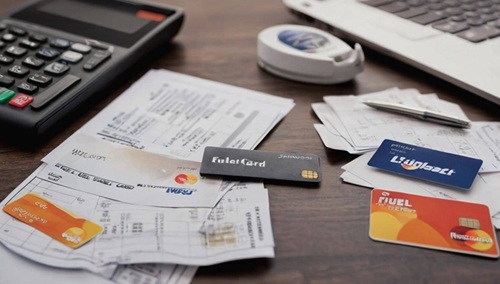
Savings are hard to prove when fuel purchases live in different places. Some charges sit on a corporate card, some come through reimbursements, and some are explained by handwritten notes that never make it into a clean report. Business fuel cards change that by creating one record for transactions that would otherwise be scattered. The result is not only tighter spending control but also better evidence for what is working and what is not.
That question matters because fuel savings are often operational rather than promotional. Shell’s 2025 survey of 260 U.S. fleet managers found that easier expense tracking, better budgeting, and spending limits were some of the most valued outcomes of fleet card use. Those benefits point to a bigger truth. A fleet saves money not only through discounts but also through better information, faster review, and fewer transactions that slip outside policy. When managers can see fuel activity clearly, they can start changing behavior instead of reacting after the month is over.
Savings become measurable when transactions stop disappearing into general expense accounts
Many businesses assume fuel spend is already tracked because the total charges appear on a statement. That is not the same as insight. A useful report shows who bought fuel, what type of product was purchased, how many gallons were dispensed, which station processed the sale, and whether the amount matched the vehicle’s normal pattern. WEX highlights real-time point-of-sale data as a core fleet-card advantage for that reason. Better records allow savings to be measured with more confidence instead of guessed at from bank summaries.
Clear reports reduce the administrative cost of chasing receipts and fixing errors
Manual reconciliation is expensive even when nobody notices it as a line item. Office staff spend time finding missing receipts, correcting expense entries, matching transactions to vehicles, and answering internal questions that would disappear if the data were captured correctly the first time. Public-sector fuel frameworks have stressed the same point, noting that card programs can reduce administration by consolidating transactions into monthly reports linked to drivers or vehicles. Better reporting is a savings tool because it cuts both fuel waste and the labor needed to explain it.
Fuel price volatility makes timely reporting more valuable than ever
The Energy Information Administration’s reported 2025 diesel average of $3.66 per gallon gives only part of the story. Regional variation, taxes, and route differences mean one fleet may pay materially more than another even in the same month. EIA also notes that state diesel taxes and fees averaged 35.86 cents per gallon as of January 2026, on top of the 24.40-cent federal tax. A card-based reporting system helps businesses see whether rising totals are tied to market conditions, poor station choices, route inefficiency, or a mix of all three.
Spending controls protect savings before bad purchases become a habit
A company can offer drivers a fuel budget, but unless the payment tool enforces limits, the rule is mostly theoretical. Fleet cards can restrict product categories, set gallon caps, and limit usage by time of day or account type. That matters because misuse often starts small. A second purchase here, a convenience-store add-on there, or an out-of-pattern station choice can add up across dozens of drivers. Shell’s survey found that 24% of managers still cite unauthorized usage as a challenge, which is one reason purpose-built controls continue to matter.
Broader reporting makes comparisons between drivers and vehicles more useful
Reports become more valuable when they can be compared, not just stored. If one route regularly produces a higher cost per mile than another, management can investigate whether traffic, station coverage, vehicle condition, or driver behavior is responsible. If one driver consistently buys premium products where regular fuel is expected, the system should make that visible. Good reporting turns fuel use into a comparable operating metric rather than a pile of disconnected purchases. That is where business fuel cards move beyond payment convenience and start supporting management quality.
Telematics and fuel records together strengthen the savings story
A purchase log shows what was bought. Telematics helps explain why. Shell’s state-of-fleet-cards findings indicate that 43% of fleets use integrated telematics, which suggests a growing interest in linking fuel data with route and vehicle behavior. When a company can compare transactions with mileage, stop duration, and route performance, it becomes easier to identify waste tied to idling, detours, or underperforming equipment. The savings are not theoretical at that point. They are visible in the operating record.
Long-term improvement depends on turning reports into action
The fleets that benefit most from card reporting are the ones that actually use the data. A report should inform route policy, maintenance timing, driver coaching, and station selection. Otherwise it is just an archive. Crude oil has historically represented about 51% of retail diesel prices according to EIA, so outside market forces will always shape the cost baseline. What businesses can influence is their internal response. Better reports make that response faster, more specific, and more profitable.
Business fuel cards create savings when information leads to better habits
Report quality improves when savings are judged against real operating behavior
Many cost-saving programs fail because the business never develops a clean baseline. Fuel cards for business savings help create that baseline by showing where gallons were purchased, which drivers used the account, and how spending changed after new controls were introduced. When managers compare that information over time, fuel cards for business savings become a way to test whether a policy is working instead of just hoping it is.
The keyword here is usable evidence. Fuel cards for business savings matter because they turn the abstract goal of spending less into a set of measurable behaviors tied to routes, stations, and vehicle use. Once the reports are clean enough to trust, fuel cards for business savings can support sharper negotiations, tighter budgets, and quicker decisions when one territory starts consuming more fuel than it should.
In the end, efficient reports matter because they change behavior. They shorten the time between purchase and review, reveal where policy is slipping, and help businesses judge whether their fuel strategy is actually producing better results. That is why the strongest card programs are not sold on rebates alone. They are useful because they connect purchases, reports, accountability, and decision-making in one place.
Anyone can join.
Anyone can contribute.
Anyone can become informed about their world.
"United We Stand" Click Here To Create Your Personal Citizen Journalist Account Today, Be Sure To Invite Your Friends.
Before It’s News® is a community of individuals who report on what’s going on around them, from all around the world. Anyone can join. Anyone can contribute. Anyone can become informed about their world. "United We Stand" Click Here To Create Your Personal Citizen Journalist Account Today, Be Sure To Invite Your Friends.
LION'S MANE PRODUCT
Try Our Lion’s Mane WHOLE MIND Nootropic Blend 60 Capsules
Mushrooms are having a moment. One fabulous fungus in particular, lion’s mane, may help improve memory, depression and anxiety symptoms. They are also an excellent source of nutrients that show promise as a therapy for dementia, and other neurodegenerative diseases. If you’re living with anxiety or depression, you may be curious about all the therapy options out there — including the natural ones.Our Lion’s Mane WHOLE MIND Nootropic Blend has been formulated to utilize the potency of Lion’s mane but also include the benefits of four other Highly Beneficial Mushrooms. Synergistically, they work together to Build your health through improving cognitive function and immunity regardless of your age. Our Nootropic not only improves your Cognitive Function and Activates your Immune System, but it benefits growth of Essential Gut Flora, further enhancing your Vitality.

Our Formula includes: Lion’s Mane Mushrooms which Increase Brain Power through nerve growth, lessen anxiety, reduce depression, and improve concentration. Its an excellent adaptogen, promotes sleep and improves immunity. Shiitake Mushrooms which Fight cancer cells and infectious disease, boost the immune system, promotes brain function, and serves as a source of B vitamins. Maitake Mushrooms which regulate blood sugar levels of diabetics, reduce hypertension and boosts the immune system. Reishi Mushrooms which Fight inflammation, liver disease, fatigue, tumor growth and cancer. They Improve skin disorders and soothes digestive problems, stomach ulcers and leaky gut syndrome. Chaga Mushrooms which have anti-aging effects, boost immune function, improve stamina and athletic performance, even act as a natural aphrodisiac, fighting diabetes and improving liver function. Try Our Lion’s Mane WHOLE MIND Nootropic Blend 60 Capsules Today. Be 100% Satisfied or Receive a Full Money Back Guarantee. Order Yours Today by Following This Link.


| Visits: | 1,832,745,696 |
| Stories: | 8,709,103 |
Whistler Blowers, Insiders