

Winchester and Bingo in Iran

This post Winchester and Bingo in Iran appeared first on Daily Reckoning.
Let’s distill the Iran conflict down to two words: Winchester, and Bingo.
If you understand these two words, you’ll understand what’s happening with President Trump and the U.S. effort to settle the Iran situation and move ahead.
As I’ll explain below, the outcome of the U.S.-Iran conflict is controlled by limitations on American weapons, namely lack of high-end munitions; as well as by severe constraints on the global energy complex. That’s it. Period.
In other words, the U.S. is hamstrung by issues of not enough high-end bullets; and the U.S. and its allies – and much of the rest of the world – risk economic catastrophe from not enough crude oil. Everything else that you see from all sides of the Iran so-called “deal”-matter is rooted in optics and theater.
Keep it Brief, With Brevity Code Words
First, let me (briefly) tell you about what are called “brevity” words.
Long ago, when I flew Navy airplanes (the Lockheed S-3A “Viking,” if you’re interested), we used what are called brevity code words. In almost all instances, these are single words that comprise a short, concise method of communication.
The idea behind using a brevity word is to communicate succinctly and efficiently, and in general not hog up radio spectrum with excess verbiage. And yes, the military has many brevity words; so many, in fact, that the U.S., NATO and other allies have an entire book of them.
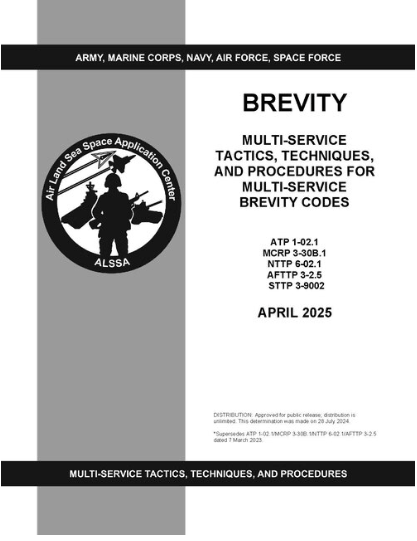
Multi-Service Brevity Codes, April 2025 ed. Credit U.S. Dept. of War.
As a rule, brevity code words are phonetically distinct. You’re supposed to say them crisply and clearly. Done right, they can convey information across even some levels of signal jamming.
For example, you’ve probably heard cops, truckers, airline pilots and more say something like “Roger.” That’s a military brevity word that has been widely adopted. Colloquially, it means “Yeah, I got it.” Although to be entirely accurate, “Roger” as a brevity word means only that a transmission was received; it does not indicate compliance or reaction.
If you want to communicate back that you will do something pursuant to the transmission, you’ll say “Wilco,” which means that you will comply. (Or you say “Negative,” which means what it sounds like.)
With this in mind let’s go to those two above-mentioned words that explain what’s happening with President Trump and Iran.
The brevity word Winchester means that you have no ordnance remaining. You’ve dropped all your bombs. You’ve fired off all your ammunition. Your magazine is empty and you are combat-ineffective, except for just flying around, making noise and burning holes in the sky.
Meanwhile, the word Bingo means that you’re down to minimum fuel. If you don’t break off and head back to “Homeplate” (again, a brevity word), you’ll run out of gas… and crash.
So, imagine this. A disembodied voice comes up on the radio with your callsign, and says, “Say Status” – and that’s another brevity word, to request your current situation…
And the response is, “Status is Winchester and Bingo.”
You’re out of ammo and running out of gas. It’s time to exit and live to fight another day. So, you turn, burn and go home.
Why Did Trump Call a Cease Fire?
Now, let’s dissect the so-called “ceasefire” of April 8, which President Trump called after 39 days of bombing the tar out of Iran in March and the first week of April. What was behind that?
The fact is that, during the kinetic phase, U.S. and Israeli air power basically owned the sky over Iran. The country was pummeled by 600 to 800 air strikes per day. Iranian air defenses were reduced to what’s called “trash fire” from random ground units, and an occasional surface to air missile that would usually just give away another aimpoint to our side.
What changed? Why stop? Weren’t we… umm… “Winning,” to borrow a phrase? Why did Trump not press home the aerial assault? What was the problem?
Could it be that the Iranians were perhaps on the verge of some fabulous new Wunderwaffe? Were they about to reveal some super-duper, previously hidden, Magic Mullah Missile Machine that could wipe out the flying armadas of those evil Yankee Air Pirates?
Oh, c’mon, man… No freaking way. Not even close. By early April, Iran’s air defenses were all but totally destroyed. Yes, they still had their nice little caves. But on ceasefire-day, the sky belonged to U.S. and Israeli air power. And you can like that fact or not; but absolutely, this was the correlation of military forces when Trump called things off.
So, what else? Was the ceasefire the result of deep humanitarian instinct? Was it some innate, Trumpian desire to be kind to our fellow homo sapiens in Iran? After all, Trump had threatened to bomb the bridges, power plants, dams and much else.
But… wait; what? Did Trump somehow, suddenly have a grandfatherly change of heart? To… oh, maybe… save the children, perhaps?
I’m not privy to intel that goes into the White House, but I doubt that Trump feels kindly towards the Iranian Revolutionary Guard and the Mullah bosses. I’ve never met President Trump, but he strikes me as the kind of guy who, if he doesn’t like you… He. Really. Doesn’t. Like. You.
My outsider’s take on this that someone showed President Trump something like this:
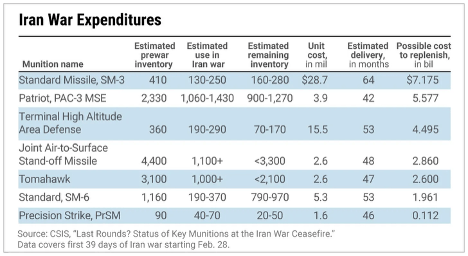
Munitions used during Iran operation. Credit CSIS.
You need not be an expert in missiles and munitions to grasp the significance of this spreadsheet. That is, we see here a list of high-end, expensive, bespoke-manufactured ordnance that the U.S. shot off during the 39-day conflict. The systems involve air defense against Iranian missiles, as well as precision attack weapons in the U.S. arsenal. And again, this is the really high-end stuff; way over and above even the “smart bomb” kits, of which the warehouses are well endowed.
With these high-end systems, we see estimated pre-war numbers; numbers fired; and estimated current numbers. And the list is nothing short of shocking.
To be absolutely accurate, U.S. stocks are not down to zero; so, not literally “Winchester,” and please don’t nit-pick me on that. But the numbers are dramatically, astonishingly, frighteningly low. Look at “Estimated Remaining Inventory.” Wow. Believe me, that’s low. If I was a war planner in the Pentagon (and long ago, I served on the staff of the Chief of Naval Operations), this would scare the bejeezus out of me.
By late March and early April, prudent military advisers – and yes, the White House has many prudent military advisers – must have gone to President Trump and said, “Sir, we’re depleting these critical stocks of munitions, and we absolutely need them for any potential situation in Asia, and it’ll take years to rebuild to the levels we want and need. So, Sir, we really must quit fighting just now.”
Or words to that effect. And this, dear readers, is one key angle on how Trump arrived at that “ceasefire” decision.
My point is… Winchester, people. I’m calling “Winchester.”
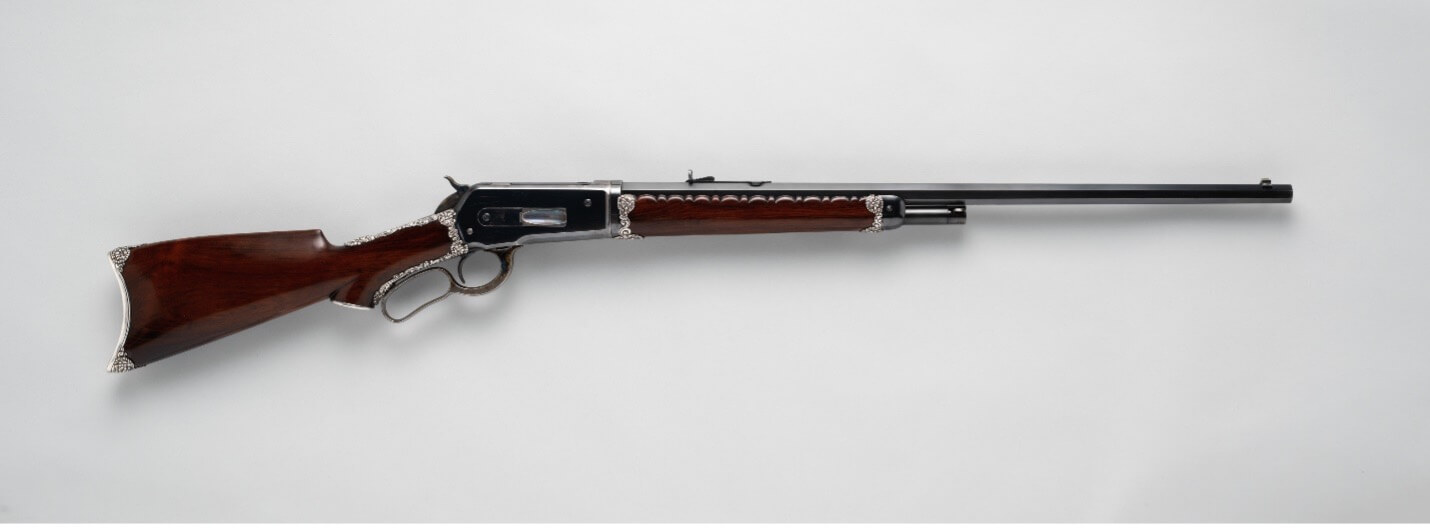
Winchester Model 1886 with Tiffany silver inlay. Credit Metropolitan Museum of Art.
Energy Bingo
Then we have the global energy mess, specifically with oil. When conflict went hot on February 28th, Iran promptly “closed” the Strait of Hormuz, the corridor for 20% of global oil transit, plus liquefied natural gas (LNG) and much else.
What did the Iranians do, exactly? Well, they loudly announced that “the Strait of Hormuz is closed,” blah-blah-blah. And transit and commerce ceased.
Did Iran mine the Strait? Probably, but we have intel to figure out things like that, and many underwater systems to find and neutralize mines. That is, we don’t sweep mines like your grandfather did back in World War II. And frankly (long story), the “mine” issue isn’t a long-term military showstopper.
Did Iran fire drones and missiles at ships? Yes, but U.S. systems are good at tracking and taking down drones and missiles. Still, the Strait was still a dangerous place with all that ordnance flying around.
Mines, drones… Yeah… But what really “closed” Hormuz was an international consensus that transit was high risk and that tankers and cargo ships were uninsurable. Hence, nobody wanted to take the legal and commercial risk of sailing, aside from a small handful of intrepid blockade runners. And thus, global oil flows were severely disrupted.
As one might expect, oil producers found workarounds, especially Saudi Arabia where about 8 million barrels of oil per day have made it out of via an east-west pipeline, across the desert to the Red Sea.
But that left about 12 million barrels of oil per day NOT moving from the Gulf through Hormuz, which meant no tankers to customers across the world, from Europe and Africa to all across Asia and Australasia to – yes – even California.
Now, after 3.5 months of “no tankers” docking in many regions, oil storage has been bled down to sludge at the bottom of facilities in some places. Indeed, across the world you’ll find about 700 oil refineries of any significance. And across Africa, Asia and Australia, more than a few of these refineries are currently down to the last dregs of storage. Some are actually draining what’s called “line-fill” in the pipes to feed the cracking towers.
Closer to home, the U.S. strategic petroleum reserve (SPR) is now down to levels not seen since the early 1980s.
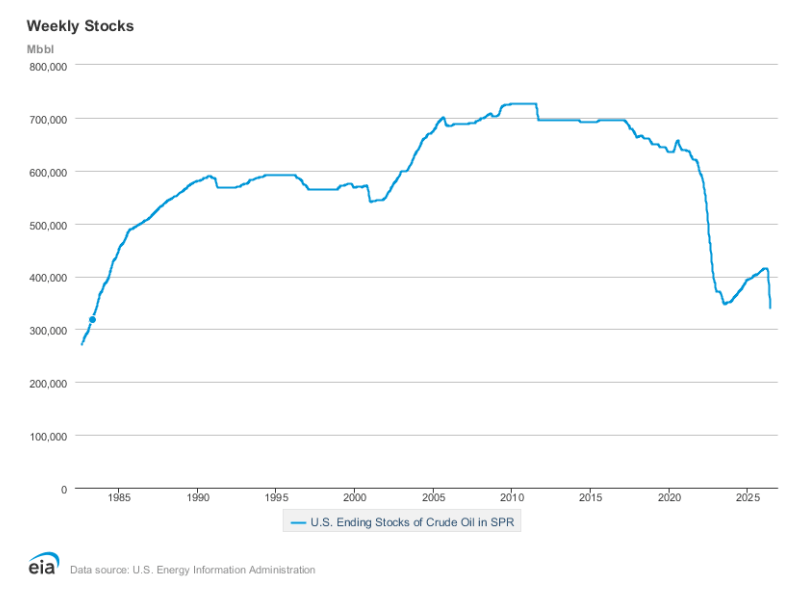
U.S. SPR down to 1983 levels. Credit: Dept. of Energy/EIA.
Of course, this state of affairs is not all Trump’s doing. As the graph above shows, the big hit to the U.S. SPR came under the Biden administration, which pumped over 225 million barrels of oil in 2021-23 for raw political reasons, namely to keep fuel price increases under control.
Then, in 2025 the Trump administration began a refill process; but with the Iran conflict, the effort turned around due to an actual, “strategic” need to draw on SPR oil to keep U.S. refineries up and running with appropriate blends of crude, as well as to balance oil supplies in international trade.
In one respect, we’re in relatively good shape in the U.S. This nation has over 13 million barrels per day of domestic oil production, plus about 4 million barrels imported via pipeline from Canada. Add another million or so barrels now coming from Venezuela, and odds and ends from sources like Brazil and Guyana.
In short, the crude oil and refined fuel supply situation in the U.S. is “kind of” okay (except California, a policy disaster). I understand that you might not like the price at the pump, but at least you have something to pump.
Elsewhere in the world? It’s dicey in many nations, and I don’t just mean that gasoline or diesel is expensive. I mean that there are global-scale issues of refineries on the verge of running totally dry, and zero availability of refined fuel and products.
Don’t take my word for it. Here’s President Trump at a press conference last week, being totally up-front and blunt: “We run out of [oil] reserves in about four weeks,” he said.
“If we didn’t do this deal [with Iran],” he added, “we could’ve dropped more bombs for another three weeks, two weeks, four weeks, two years. You would never have the Hormuz Strait open.”
Without the deal, said Trump, “the alternative would be a world-wide depression.”
And if the U.S. and Israel fought on, Trump noted, stock markets “would go down at levels that nobody ever saw before, maybe except for 1929. .… And “the one President I did not want to be was the late, great Herbert Hoover.”
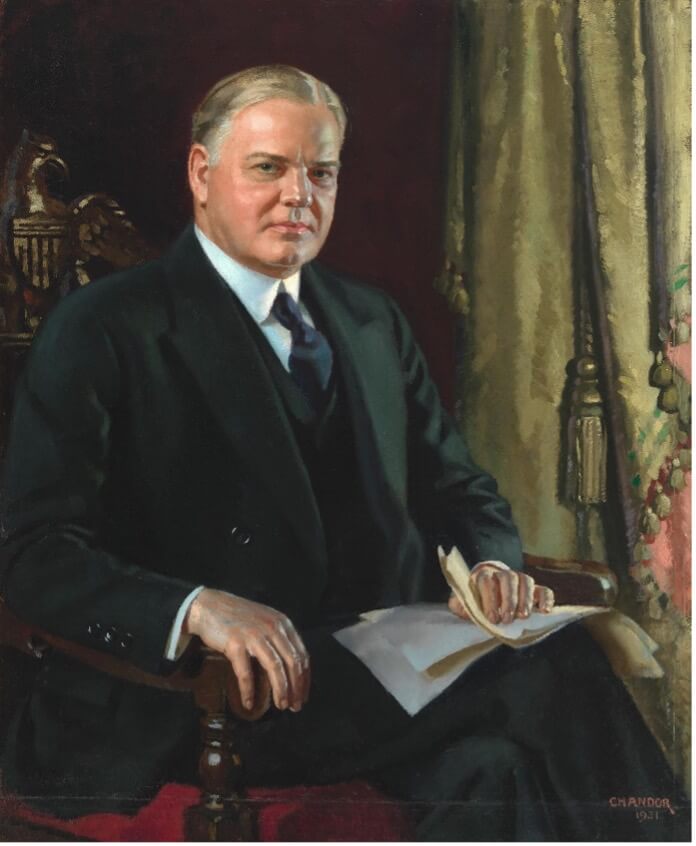
President Herbert Hoover, who President Trump does NOT want to be. Credit National Archives.
Winchester and Bingo
So, there you have it. This is how to understand the “deal”-making with Iran: U.S. munition stocks are depleted to unacceptable risk levels; while President Trump has clearly acted out of concern over global-scale oil shortages which would lead to a world-wide depression and falling stock markets like 1929.
Thus is the U.S. negotiating with Iran to keep the Strait of Hormuz open, which it is right now, meaning today as I write to you. Although, and as with much else in life, it’s a roll of the dice what happens from this point onward.
For now, enjoy your currently reduced oil prices. They might last. Or maybe not. Nobody knows. Because – and I’m deadly serious here – our status is Winchester and Bingo.
That’s all for today. Thank you for subscribing and reading.
The post Winchester and Bingo in Iran appeared first on Daily Reckoning.
This story originally appeared in the Daily Reckoning
Source: https://dailyreckoning.com/winchester-and-bingo-in-iran/
Anyone can join.
Anyone can contribute.
Anyone can become informed about their world.
"United We Stand" Click Here To Create Your Personal Citizen Journalist Account Today, Be Sure To Invite Your Friends.
Before It’s News® is a community of individuals who report on what’s going on around them, from all around the world. Anyone can join. Anyone can contribute. Anyone can become informed about their world. "United We Stand" Click Here To Create Your Personal Citizen Journalist Account Today, Be Sure To Invite Your Friends.
LION'S MANE PRODUCT
Try Our Lion’s Mane WHOLE MIND Nootropic Blend 60 Capsules
Mushrooms are having a moment. One fabulous fungus in particular, lion’s mane, may help improve memory, depression and anxiety symptoms. They are also an excellent source of nutrients that show promise as a therapy for dementia, and other neurodegenerative diseases. If you’re living with anxiety or depression, you may be curious about all the therapy options out there — including the natural ones.Our Lion’s Mane WHOLE MIND Nootropic Blend has been formulated to utilize the potency of Lion’s mane but also include the benefits of four other Highly Beneficial Mushrooms. Synergistically, they work together to Build your health through improving cognitive function and immunity regardless of your age. Our Nootropic not only improves your Cognitive Function and Activates your Immune System, but it benefits growth of Essential Gut Flora, further enhancing your Vitality.

Our Formula includes: Lion’s Mane Mushrooms which Increase Brain Power through nerve growth, lessen anxiety, reduce depression, and improve concentration. Its an excellent adaptogen, promotes sleep and improves immunity. Shiitake Mushrooms which Fight cancer cells and infectious disease, boost the immune system, promotes brain function, and serves as a source of B vitamins. Maitake Mushrooms which regulate blood sugar levels of diabetics, reduce hypertension and boosts the immune system. Reishi Mushrooms which Fight inflammation, liver disease, fatigue, tumor growth and cancer. They Improve skin disorders and soothes digestive problems, stomach ulcers and leaky gut syndrome. Chaga Mushrooms which have anti-aging effects, boost immune function, improve stamina and athletic performance, even act as a natural aphrodisiac, fighting diabetes and improving liver function. Try Our Lion’s Mane WHOLE MIND Nootropic Blend 60 Capsules Today. Be 100% Satisfied or Receive a Full Money Back Guarantee. Order Yours Today by Following This Link.


| Visits: | 1,822,947,998 |
| Stories: | 8,675,897 |
Whistler Blowers, Insiders

