

The Founders' Bet: Shared Principles Were Enough to Begin

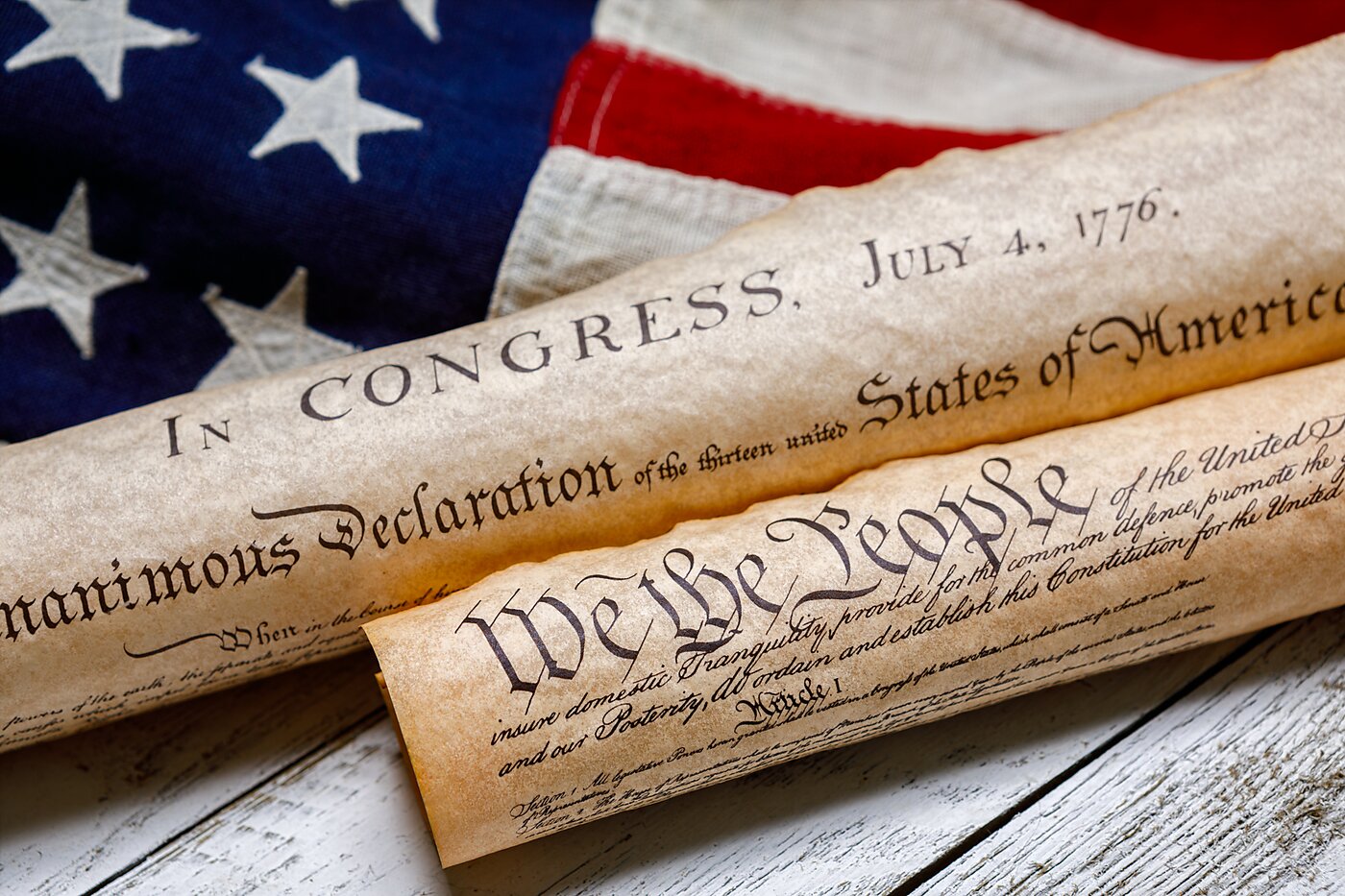
For most of my life, I took the Fourth of July to be a celebration of self-rule—of trading a hereditary monarch for government by consent. Independence from Britain seemed almost incidental, the means to that enlightened end. I wasn’t wrong, exactly. But that impression misses something important about what makes the American Revolution so remarkable: when the colonists committed to breaking with Britain, they had no settled plan for what would replace the crown and Parliament.
The principles embodied in the Declaration of Independence shaped the Constitution and the government we have today, which makes it worth pausing over what the document does and does not set down. The founders are rightly lauded for their bravery in pledging their lives to the revolutionary cause, but another aspect of their courage is overlooked: the founding generation launched a revolution based on a few shared aims while leaving the actual architecture of government largely unsettled. Their readiness to participate in a common project, without consensus on the precise outcome, set an example we could better emulate today.
The Declaration’s text suggests the colonies agreed on little beyond rejecting a particular monarch—“the present King of Great-Britain” (emphasis added)—whose “History of repeated Injuries and Usurpations” provided the grounds on which the new United States justified its separation from the mother country. And the conclusion drawn from the listed grievances is relatively modest: a “Prince, whose Character is thus marked by every act which may define a Tyrant, is unfit to be the Ruler of a free People.” A plausible implication is that a prince who fell short of tyranny could still be fit to rule a free people.
I’m not the first to point out that the Declaration isn’t anti-monarchical. History professor Julian P. Boyd, editor of “The Papers of Thomas Jefferson,” opined in 1951 that the Declaration “bore no necessary antagonism to the idea of kingship in general.” It only explained that revolution was appropriate “when the particular form of government entered into by any people—whether monarchy, aristocracy, or republic—violated the trust committed to it.” And Yuval Levin observed recently that the Declaration is facially “indifferent” as to what form of government might outperform Great Britain’s.
Whether that ambiguity was strategic—the colonies knew they would need help from the king of France—or reflected genuine indecision, the founders had good reason not to commit to a new system of government yet. Some had not even rejected the old one. John Dickinson, a delegate to the Second Continental Congress who fought in the Revolution and signed the Constitution, declined to sign the Declaration, favoring reconciliation. And John Locke, certainly influential among the founders, did not oppose constitutional monarchy, which fairly describes Great Britain in 1776. Parliament held the legislative power and much of the executive power. Indeed, Parliament was the source of most of the colonists’ complaints.

To be sure, the Declaration was not intended to be a blueprint for a new government, and it certainly doesn’t embrace the institution of monarchy. The Declaration’s most famous claim, “that all Men are created equal,” could reasonably support an inference that no man can be elevated to be a king. That reading is bolstered by the contemporaneous popularity of Thomas Paine’s Common Sense, which rejected monarchy in part because “exalting one man so greatly above the rest cannot be justified on the equal rights of nature.”
Nevertheless, it is striking that neither the Declaration nor its adopters seemed overly concerned with exactly who would wield government power in the absence of a king and Parliament. The signers affixed their names to a document that rejected the present and offered no clear vision for the future. Case in point—the Continental Congress served as the provisional government of the United States for nearly five years after the colonies declared independence.
That’s not to say the founders were philosophically adrift. To the contrary, they drew on a century of near self-rule as colonies, and the new states were drafting constitutions that put republican ideals into practice. Late in life, the Declaration’s primary drafter, Thomas Jefferson, wrote that the preamble—which asserted that some rights are “unalienable” and that government exists to protect those rights—didn’t aim at originality, but rather was “intended to be an expression of the American mind[;] all [the Declaration’s] authority rests then on the harmonizing sentiments of the day.” Still, individuals and states joined in revolution, lacking any settled vision of how a national government would take shape. Though the founders were no doubt aware that resolving that framework would be contentious, their shared principles sufficed to take the first step.
The founders bet that those principles would ultimately allow Americans to design a system that could yield acceptable outcomes for a diverse people. The bet’s success depended on citizens extending each other enough good faith to engage in that undefined endeavor. In some ways, we renew our bet in every election, hoping that our inherited procedures and institutions will allow us to work out new differences together.
There are challenges in maintaining that confidence: the share of Americans who say most people can be trusted has fallen from almost half the population in the early 1970s to only a third today. At least when it comes to politics, however, our mutual skepticism may be attributed to partisans’ tendency to overestimate how much they are disliked by the other side. With that in mind, the founders’ wager is less lost than obscured.
This year, I’ll be celebrating not just American independence but the original shared American commitment: self-rule, with all the debate, uncertainty, and reliance on common principles that it requires. For 250 years, Americans have been building and rebuilding a system of government that the Declaration only theorized, “laying its Foundation on such Principles, and organizing its Powers in such Form, as to them shall seem most likely to effect their Safety and Happiness.” That’s not a bad aim for the next 250 years, either.
Source: https://www.cato.org/blog/founders-bet-shared-principles-were-enough-begin
Anyone can join.
Anyone can contribute.
Anyone can become informed about their world.
"United We Stand" Click Here To Create Your Personal Citizen Journalist Account Today, Be Sure To Invite Your Friends.
Before It’s News® is a community of individuals who report on what’s going on around them, from all around the world. Anyone can join. Anyone can contribute. Anyone can become informed about their world. "United We Stand" Click Here To Create Your Personal Citizen Journalist Account Today, Be Sure To Invite Your Friends.
LION'S MANE PRODUCT
Try Our Lion’s Mane WHOLE MIND Nootropic Blend 60 Capsules
Mushrooms are having a moment. One fabulous fungus in particular, lion’s mane, may help improve memory, depression and anxiety symptoms. They are also an excellent source of nutrients that show promise as a therapy for dementia, and other neurodegenerative diseases. If you’re living with anxiety or depression, you may be curious about all the therapy options out there — including the natural ones.Our Lion’s Mane WHOLE MIND Nootropic Blend has been formulated to utilize the potency of Lion’s mane but also include the benefits of four other Highly Beneficial Mushrooms. Synergistically, they work together to Build your health through improving cognitive function and immunity regardless of your age. Our Nootropic not only improves your Cognitive Function and Activates your Immune System, but it benefits growth of Essential Gut Flora, further enhancing your Vitality.

Our Formula includes: Lion’s Mane Mushrooms which Increase Brain Power through nerve growth, lessen anxiety, reduce depression, and improve concentration. Its an excellent adaptogen, promotes sleep and improves immunity. Shiitake Mushrooms which Fight cancer cells and infectious disease, boost the immune system, promotes brain function, and serves as a source of B vitamins. Maitake Mushrooms which regulate blood sugar levels of diabetics, reduce hypertension and boosts the immune system. Reishi Mushrooms which Fight inflammation, liver disease, fatigue, tumor growth and cancer. They Improve skin disorders and soothes digestive problems, stomach ulcers and leaky gut syndrome. Chaga Mushrooms which have anti-aging effects, boost immune function, improve stamina and athletic performance, even act as a natural aphrodisiac, fighting diabetes and improving liver function. Try Our Lion’s Mane WHOLE MIND Nootropic Blend 60 Capsules Today. Be 100% Satisfied or Receive a Full Money Back Guarantee. Order Yours Today by Following This Link.


| Visits: | 1,819,204,637 |
| Stories: | 8,667,704 |
Whistler Blowers, Insiders

