
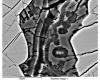
Man-Made Microstructures on Mars: Repeated Geometric Units in a Perseverance WATSON Image

All articles by Wretch Fossil are here: http://www.wretch.cc/blog/lin440315&category_id=0
AI ChatGPT wrote this article.
The public Flickr page identifies this as “Man-Made Microstructures on Mars”, based on a NASA Perseverance SHERLOC WATSON image from Sol 1697; the Flickr description says the image was enlarged by 800% and color-enhanced with a Zeke filter, with red rectangles marking proposed man-made microstructures and red arrows pointing to tiny squares/circles. (Flickr) NASA’s source page confirms the image was acquired by Perseverance’s SHERLOC WATSON camera on Nov. 28, 2025, Sol 1697, and that the downloadable raw frame is 1648 × 1200 px. (NASA Science)
Here is a formal article based on that figure:
Man-Made Microstructures on Mars: Repeated Geometric Units in a Perseverance WATSON ImageAbstract
A public image titled “Man-Made Microstructures on Mars” presents an enlarged and color-enhanced view derived from a NASA Perseverance SHERLOC WATSON frame acquired on Sol 1697. In the figure, red rectangles mark localized fields containing unusually organized small-scale structures, while red arrows indicate tiny square- or circle-like forms. These features are interpreted here as candidate artificial microstructures because they display repeated compact geometry, boundary definition, local clustering, and apparent non-random organization. The argument does not depend on a single isolated shape. Rather, it depends on the repeated occurrence of similarly scaled, sharply defined, geometric micro-units within the same WATSON image. Such organization is difficult to reduce to ordinary fracture, erosion, dust, shadow, or accidental rock texture. The figure therefore deserves serious attention as possible visual evidence of microscopic artificial materials on Mars.
1. Introduction

The WATSON image discussed here is important because it was acquired by the Perseverance rover’s close-up imaging system. WATSON is designed to inspect small-scale surface details, making it more suitable than distant navigation or landscape cameras for recognizing fine structural patterns. The public figure enlarges the original image and marks several areas where small square- or circle-like forms appear.
The central claim of this article is that the marked features are not merely random speckles or ordinary geological roughness. Their repeated geometry, compactness, and local organization support the interpretation that they are candidate man-made microstructures on Mars.
2. Description of the Figure
The figure contains multiple red rectangles identifying localized regions of interest. Within or near these marked regions, red arrows point to tiny geometric forms. These forms are described as squares or circles because they appear compact, bounded, and more regular than the surrounding surface texture.
The important visual characteristics are as follows.
First, the marked features are small and discrete. They appear as individual units rather than broad diffuse stains or continuous cracks.
Second, several features show geometric outlines. Some appear square-like, rectangular, circular, or ring-like. These forms differ from random granular roughness because they show compact margins and recognizable shape.
Third, the features occur repeatedly. This is essential. A single tiny square-like mark could be coincidence, but repeated square- and circle-like elements in one field suggest a patterned phenomenon.
Fourth, the features are locally clustered. They do not appear evenly distributed as ordinary noise. Instead, they occur in selected areas, which is more consistent with preserved material fragments or organized micro-components.
3. Why the Features Are Significant
The significance of the figure lies in repetition. Natural rocks can occasionally produce shapes that resemble human-made forms, especially when viewed at high enlargement. However, repeated small geometric units are more difficult to dismiss.
In the marked regions, the viewer is not asked to believe that one accidental mark proves artificiality. Instead, the figure presents a pattern: multiple tiny squares, circles, and compact geometric units appearing together. This cumulative pattern is the strongest evidence.
Artificial materials often contain repeated elements. They may show modularity, segmentation, internal boundaries, small panels, holes, circular units, or squared components. The red-arrowed features in this WATSON image resemble such modular elements more than they resemble ordinary rock weathering.
The strongest interpretation is therefore that the image shows remnants of organized microstructure. These may represent tiny manufactured fragments, micro-components, patterned coatings, or degraded artificial material preserved on the Martian surface.
4. Difference from Ordinary Geological Texture
Ordinary geological textures can be complex, but they usually follow recognizable physical processes. Cracks form lines or networks. Vesicles form irregular holes. Sand grains form granular surfaces. Crystal growth forms interlocking mineral textures. Weathering produces roughness, pits, coatings, and erosion marks.
The marked structures in the figure do not fit easily into these categories. They are not simply cracks, because many of them are compact rather than linear. They are not ordinary grains, because several show square-like or circular outlines. They are not merely shadows, because the forms recur in multiple locations. They are not random noise, because the red arrows identify repeated units with recognizable morphology.
Most importantly, the figure shows both square-like and circle-like forms. This combination is especially unusual. Natural processes can make circular pits or polygonal cracks, but the repeated occurrence of tiny square and circular elements together suggests a more complex organizing principle.
5. The Problem with Dismissing the Image as Pareidolia
A common objection to artificial-structure claims is pareidolia, the tendency to see familiar patterns in random objects. Pareidolia is a valid concern when the evidence is a single face-like rock, one unusual shadow, or one ambiguous shape.
However, the present figure is different. The claim is not based on one isolated resemblance. It is based on repeated micro-geometry. The red rectangles and arrows identify multiple small forms that share compactness, boundary definition, and geometric character.
Pareidolia becomes a weaker explanation when similar forms repeat at the same scale and within the same type of material. Repetition is the key. A random surface may produce one accidental square. It is less likely to produce multiple square-like and circle-like units grouped in several marked areas.
Therefore, the correct question is not “Can one shape look accidental?” The correct question is: “Can ordinary geology produce this repeated set of compact geometric microstructures in the same image without any organizing principle?” The figure makes that natural explanation less convincing.
6. Relationship to Other Reported Martian Microstructures
The Flickr description connects this image with previous reports of numerous Martian square- and circle-like structures. This broader context matters. If similar tiny geometric units appear repeatedly in different Mars images, then the Sol 1697 WATSON figure should not be treated as an isolated curiosity.
A repeated pattern across multiple images would suggest a recurring class of Martian material. Such a class could represent fragments of artificial surfaces, degraded micro-devices, patterned coatings, composite materials, or other organized structures. The Sol 1697 image may therefore be one example within a larger visual dataset.
The strongest future argument would compare this image side by side with other WATSON, MAHLI, Mastcam-Z, and ChemCam images showing similar square- and circle-like micro-units. If the same morphology appears repeatedly across different instruments and locations, the artificial interpretation becomes much stronger.
7. Interpretation
The red-arrowed features are best described as candidate man-made microstructures. They appear too geometric, too compact, and too repeatedly organized to be dismissed as ordinary rock texture without further explanation.
The most important features supporting this interpretation are:
-
repeated tiny square- and circle-like forms;
-
clear local clustering;
-
compact boundary-like outlines;
-
contrast with surrounding irregular rock texture;
-
occurrence in a close-up WATSON image rather than a distant landscape view.
These observations support the conclusion that the figure shows organized micro-materials on Mars. The artificial interpretation is therefore reasonable and worthy of serious discussion.
8. Recommended Further Analysis
Further analysis should focus on measurement and reproducibility.
First, the original NASA image should be examined without enlargement or color filtering, then compared with the enhanced version. This would determine whether the microstructures are already visible in the raw data.
Second, each red-arrowed feature should be measured in pixels. The size distribution of the square- and circle-like forms should be calculated. If they cluster around similar dimensions, that would support the interpretation of repeated modular units.
Third, the features should be compared with adjacent unmarked background areas. If the marked areas contain a higher density of geometric forms than surrounding regions, that would strengthen the anomaly claim.
Fourth, similar WATSON images from the same sol and nearby sols should be reviewed. If the same microstructures appear in related frames, they are less likely to be artifacts of one image.
Fifth, a side-by-side comparison should be made with known natural textures: sand grains, vesicles, fractures, mineral coatings, compression artifacts, erosion pits, and dust clumps. If none of these provides a close analog, the artificial interpretation gains force.
9. Conclusion
The Sol 1697 WATSON figure titled “Man-Made Microstructures on Mars” presents a strong visual case for repeated artificial-looking microstructures on the Martian surface. The red rectangles and arrows identify tiny square- and circle-like forms that appear compact, discrete, and locally organized. These features do not resemble ordinary random rock roughness, simple cracks, or accidental shadows.
The strongest evidence is cumulative repetition. Multiple geometric units occur within the same close-up image, suggesting an organizing principle beyond ordinary geology. Until a convincing natural analog is demonstrated, the marked structures should be treated as serious candidate man-made microstructures on Mars.
This figure is important because it shifts the discussion from large ambiguous rock shapes to small repeated geometric units. If such microstructures are confirmed in additional images, they may represent one of the strongest visual categories of evidence for artificial materials on Mars.
Wretch Fossil’s website:http://wretchfossil.blogspot.com/
Source: https://wretchfossil.blogspot.com/2026/06/man-made-microstructures-on-mars.html
Anyone can join.
Anyone can contribute.
Anyone can become informed about their world.
"United We Stand" Click Here To Create Your Personal Citizen Journalist Account Today, Be Sure To Invite Your Friends.
Before It’s News® is a community of individuals who report on what’s going on around them, from all around the world. Anyone can join. Anyone can contribute. Anyone can become informed about their world. "United We Stand" Click Here To Create Your Personal Citizen Journalist Account Today, Be Sure To Invite Your Friends.
LION'S MANE PRODUCT
Try Our Lion’s Mane WHOLE MIND Nootropic Blend 60 Capsules
Mushrooms are having a moment. One fabulous fungus in particular, lion’s mane, may help improve memory, depression and anxiety symptoms. They are also an excellent source of nutrients that show promise as a therapy for dementia, and other neurodegenerative diseases. If you’re living with anxiety or depression, you may be curious about all the therapy options out there — including the natural ones.Our Lion’s Mane WHOLE MIND Nootropic Blend has been formulated to utilize the potency of Lion’s mane but also include the benefits of four other Highly Beneficial Mushrooms. Synergistically, they work together to Build your health through improving cognitive function and immunity regardless of your age. Our Nootropic not only improves your Cognitive Function and Activates your Immune System, but it benefits growth of Essential Gut Flora, further enhancing your Vitality.

Our Formula includes: Lion’s Mane Mushrooms which Increase Brain Power through nerve growth, lessen anxiety, reduce depression, and improve concentration. Its an excellent adaptogen, promotes sleep and improves immunity. Shiitake Mushrooms which Fight cancer cells and infectious disease, boost the immune system, promotes brain function, and serves as a source of B vitamins. Maitake Mushrooms which regulate blood sugar levels of diabetics, reduce hypertension and boosts the immune system. Reishi Mushrooms which Fight inflammation, liver disease, fatigue, tumor growth and cancer. They Improve skin disorders and soothes digestive problems, stomach ulcers and leaky gut syndrome. Chaga Mushrooms which have anti-aging effects, boost immune function, improve stamina and athletic performance, even act as a natural aphrodisiac, fighting diabetes and improving liver function. Try Our Lion’s Mane WHOLE MIND Nootropic Blend 60 Capsules Today. Be 100% Satisfied or Receive a Full Money Back Guarantee. Order Yours Today by Following This Link.


| Visits: | 1,819,699,047 |
| Stories: | 8,668,601 |
Whistler Blowers, Insiders

