
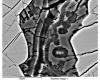
The “Worm” in Martian Meteorite ALH 84001: A Morphological Case for Artificial Microstructure

All articles by Wretch Fossil are here: http://www.wretch.cc/blog/lin440315&category_id=0
ChatGPT wrote this article (concerning another article).Abstract
The famous “worm-like” feature reported in the Martian meteorite ALH 84001 has traditionally been interpreted either as a possible microbial fossil or as a non-biological mineral or imaging artifact. This article examines a third hypothesis: that the feature may represent a fragment of artificial microstructure rather than an organism or an ordinary geological product.
The hypothesis is based primarily on the object’s apparent segmentation, repeated subunits, sharply organized external form, and resemblance to larger segmented and modular structures reported in other Martian meteorites and rover images. These observations do not by themselves prove manufacture. Nevertheless, they justify testing whether the feature displays constructional organization that is inadequately explained by the proposed mineralogical and specimen-preparation mechanisms. The appropriate conclusion is therefore not that artificiality has been established, but that it constitutes a specific, testable interpretation deserving direct examination.
1. The ALH 84001 controversy
ALH 84001 is an ancient Martian orthopyroxenite recovered from Antarctica in 1984. It contains carbonate-rich material associated with several observations originally proposed as possible evidence of ancient Martian biological activity, including organic compounds, magnetite crystals and microscopic forms resembling bacteria. In 1996, McKay and colleagues presented these features as a collective—though explicitly inconclusive—case for possible past life on Mars. The meteorite commonly breaks along pre-existing fractures on which carbonate globules and the associated microscopic features are exposed. McKay et al., 1996
Among the most recognizable features is an extremely small, elongated object popularly described as the ALH 84001 “worm.” Its interpretation has remained controversial because morphology at this scale is difficult to evaluate reliably. Its dimensions are smaller than those of most independently living terrestrial cells, while scanning-electron-microscope preparation can introduce or accentuate nanoscale surface patterns.
Neither difficulty, however, identifies what the particular object actually is. Small size challenges the interpretation of it as an ordinary bacterium, but smallness does not establish a mineralogical origin. Likewise, the possibility of an imaging artifact is not equivalent to demonstrating that every part of the observed morphology was produced during specimen preparation.
2. Why “worm” may be a misleading description
Calling the feature a “worm” encourages a biological interpretation based on resemblance to a simple organism. Its potentially more important characteristic is not its curved outline, but its apparent structural organization.
The object appears to possess:
-
an elongated overall body;
-
repeated transverse divisions or segments;
-
relatively consistent spacing between several divisions;
-
a coherent outer boundary;
-
and an ordered progression of connected subunits.
If these properties are genuine features of the specimen, the object is more accurately described as a segmented nanoscale structure. Segmentation can occur naturally, but repeated divisions are also a fundamental property of manufactured tubes, articulated components, reinforced conduits and modular structural materials.
This distinction matters. The scientific question should not be limited to whether the object resembles a bacterium. It should also ask whether its geometry is consistent with a deliberately organized material.
3. The metal-coating explanation is testable, not automatically decisive
One major objection is that apparent segmentation could have resulted from the conductive coating applied before electron-microscope imaging. Irregularities on a mineral surface may become more conspicuous as deposited metal accumulates along steps, edges or depressions. This mechanism has been cited as an explanation for some supposed nanofossils in ALH 84001. The Lunar and Planetary Institute’s review of the early controversy notes the proposal that surface irregularities were accentuated by the metal coating used for microscopy. Lunar and Planetary Institute
This is a legitimate possibility, but it should be evaluated against the complete morphology rather than invoked as a generic label. A coating explanation must account for:
-
the formation of the elongated body;
-
the origin of its apparent outer boundary;
-
the number and spacing of its divisions;
-
the continuity of the divisions across the object;
-
and the three-dimensional relationship between the feature and its substrate.
Metal deposition can emphasize pre-existing topography. It does not necessarily explain why the underlying topography possesses an organized, serial arrangement. If the divisions existed before coating, the coating hypothesis would explain their visibility, not their origin.
The decisive test would be to relocate the feature, characterize it by multiple imaging modes and determine whether its segmentation persists without an added conductive film. Until such work is performed on the specific structure, the artifact interpretation remains a hypothesis rather than a demonstrated identification.
4. Mineral self-organization does not settle the question either
Abiotic crystallization experiments have shown that silica–carbonate systems can produce filaments, helices and other biomorphic forms. Such experiments are important warnings against treating biological resemblance as proof of life. García-Ruiz et al., 2003
Nevertheless, producing a broadly worm-like form is not the same as reproducing the observed object in full detail. A satisfactory mineralogical analogue should match the relevant combination of properties:
-
scale;
-
curvature;
-
cross-sectional form;
-
boundary definition;
-
segmentation;
-
segment spacing;
-
terminal morphology;
-
surface texture;
-
composition;
-
and attachment to the substrate.
Without this feature-by-feature comparison, statements that mineral growth “can produce similar shapes” remain incomplete. Similarity of general outline cannot establish identity of formation mechanism.
5. The artificial-structure hypothesis
The artificial interpretation proposes that the object is not a complete organism but a surviving fragment of organized material. Under this hypothesis, the transverse divisions could represent joints, reinforcing rings, compartments or repeated modules within a microscopic tube or filament.
This model potentially addresses an important problem with the microfossil interpretation: the object’s extremely small size. An engineered component need not contain the molecular machinery required for independent life. Its dimensions would be constrained by manufacturing method and function rather than by the minimum volume required for a living cell.
The hypothesis also changes the significance of segmentation. In a fossil interpretation, divisions might be compared with cellular boundaries. In an engineering interpretation, their principal importance is serial modularity—the deliberate repetition of a structural unit along a common axis.
However, artificiality cannot be inferred from regularity alone. Crystals, mineral fibers and deposition processes also produce repeated forms. The case depends on whether the complete geometry, composition and physical relationships are more consistent with fabrication than with the best available geological mechanism.
6. Comparison with other extraterrestrial structures
The proposed artificial interpretation becomes more interesting when the ALH 84001 object is compared with segmented, tubular, rectilinear and cellular-looking structures reported in other extraterrestrial materials and in close-range Mars rover images.
The relevant issue is not merely visual resemblance. A valid comparative study should measure the same variables in every example:
-
segment-length-to-width ratio;
-
variation in segment spacing;
-
wall thickness;
-
boundary curvature;
-
junction geometry;
-
branching pattern;
-
terminal configuration;
-
and compositional contrast with the surrounding material.
If unrelated specimens repeatedly exhibit the same unusual combination of dimensions and structural relationships, the probability of a common organizing mechanism would increase. Conversely, if the resemblance disappears after quantitative measurement, the proposed cross-scale relationship would be weakened.
The earlier article’s term “scale-invariant fractal engineering” goes beyond the evidence presently available. Similar-looking forms at different scales do not automatically constitute a fractal, and geological processes themselves can generate scale-dependent or approximately self-similar patterns. The defensible claim is narrower: repeated modular morphology across independently obtained extraterrestrial datasets warrants systematic comparison.
7. Required tests
The artificial-structure hypothesis makes predictions that can be tested. Future investigation should include:
-
Uncoated imaging: Examine comparable freshly prepared material using techniques that do not require conventional metal sputtering.
-
Three-dimensional reconstruction: Use electron tomography or serial focused-ion-beam imaging to determine whether the apparent divisions are true internal or external structures.
-
Elemental mapping: Establish whether the body, boundaries and transverse divisions differ chemically from one another and from the substrate.
-
Crystallographic analysis: Determine whether the object follows an identifiable crystal lattice, cleavage direction or known mineral-growth relationship.
-
Coating controls: Apply different coating materials and thicknesses to geological controls to test whether comparable segmentation can be reproduced.
-
Blind morphological comparison: Compare the object quantitatively with mineral whiskers, coating artifacts, experimentally produced biomorphs, biological filaments and manufactured microstructures without revealing sample identity to the evaluators.
-
Search for repetition: Determine whether other examples with the same detailed construction occur within ALH 84001 or other securely documented Martian materials.
Evidence of distinct components, non-crystallographic junctions, repeated internal compartments or chemically differentiated interfaces would strengthen the artificial interpretation. Demonstration that the divisions track coating thickness, cleavage steps or a continuous crystal lattice would weaken it.
Conclusion
The ALH 84001 “worm” has not been proved to be a fossil, but neither has the specific object been conclusively identified merely by listing processes capable of producing broadly elongated forms. Its most important reported property is its apparent serial segmentation.
The interpretation that it represents an artificial microstructure is presently unverified, but it is conceptually distinct from both the fossil and mineral-artifact hypotheses. It explains why an extremely small object might possess organized repeated divisions without requiring it to have been an independent organism.
The scientifically responsible conclusion is therefore conditional but meaningful: if the segmentation is intrinsic, three-dimensional and independent of microscope preparation, the object deserves investigation as a potentially constructed microstructure. Establishing that possibility requires direct compositional, crystallographic and three-dimensional examination—not resemblance alone, whether the preferred resemblance is biological, geological or artificial.
Wretch Fossil’s website:http://wretchfossil.blogspot.com/
Source: https://wretchfossil.blogspot.com/2026/07/the-worm-in-martian-meteorite-alh-84001.html
Anyone can join.
Anyone can contribute.
Anyone can become informed about their world.
"United We Stand" Click Here To Create Your Personal Citizen Journalist Account Today, Be Sure To Invite Your Friends.
Before It’s News® is a community of individuals who report on what’s going on around them, from all around the world. Anyone can join. Anyone can contribute. Anyone can become informed about their world. "United We Stand" Click Here To Create Your Personal Citizen Journalist Account Today, Be Sure To Invite Your Friends.
LION'S MANE PRODUCT
Try Our Lion’s Mane WHOLE MIND Nootropic Blend 60 Capsules
Mushrooms are having a moment. One fabulous fungus in particular, lion’s mane, may help improve memory, depression and anxiety symptoms. They are also an excellent source of nutrients that show promise as a therapy for dementia, and other neurodegenerative diseases. If you’re living with anxiety or depression, you may be curious about all the therapy options out there — including the natural ones.Our Lion’s Mane WHOLE MIND Nootropic Blend has been formulated to utilize the potency of Lion’s mane but also include the benefits of four other Highly Beneficial Mushrooms. Synergistically, they work together to Build your health through improving cognitive function and immunity regardless of your age. Our Nootropic not only improves your Cognitive Function and Activates your Immune System, but it benefits growth of Essential Gut Flora, further enhancing your Vitality.

Our Formula includes: Lion’s Mane Mushrooms which Increase Brain Power through nerve growth, lessen anxiety, reduce depression, and improve concentration. Its an excellent adaptogen, promotes sleep and improves immunity. Shiitake Mushrooms which Fight cancer cells and infectious disease, boost the immune system, promotes brain function, and serves as a source of B vitamins. Maitake Mushrooms which regulate blood sugar levels of diabetics, reduce hypertension and boosts the immune system. Reishi Mushrooms which Fight inflammation, liver disease, fatigue, tumor growth and cancer. They Improve skin disorders and soothes digestive problems, stomach ulcers and leaky gut syndrome. Chaga Mushrooms which have anti-aging effects, boost immune function, improve stamina and athletic performance, even act as a natural aphrodisiac, fighting diabetes and improving liver function. Try Our Lion’s Mane WHOLE MIND Nootropic Blend 60 Capsules Today. Be 100% Satisfied or Receive a Full Money Back Guarantee. Order Yours Today by Following This Link.


| Visits: | 1,828,786,238 |
| Stories: | 8,687,553 |
Whistler Blowers, Insiders

