
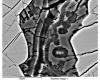
Evidence That Humans Cut Ancient Wood Before It Became Petrified Rock in Petrified Forest

All articles by Wretch Fossil are here: http://www.wretch.cc/blog/lin440315&category_id=0
ChatGPT 5.6 wrote this article.Abstract
Photographs from Petrified Forest National Park, Arizona, show numerous large pieces of petrified wood with forms resembling deliberately cut timber. The observed features include transverse divisions across logs, broad planar faces, straight boundaries, approximately right-angled intersections, thin panel-like pieces, and repeated segmented structures. The artificial interpretation does not require humans to have cut countless massive blocks of hard silicified rock. It proposes a far more coherent sequence: humans cut, divided, and shaped the material while it was still wood; the worked wood was subsequently buried, mineralized, and transformed into rock. This sequence explains both the woodworking-like geometry and its present occurrence in large fossilized masses. Natural fracture can produce individual flat or transverse surfaces, but no demonstrated fracture mechanism has reproduced the complete and repeated combination documented among these specimens. The photographs therefore provide strong morphological evidence that some material now classified simply as petrified wood may preserve ancient human workmanship.
Introduction
Petrified Forest National Park contains abundant fossil wood associated with geological deposits more than 200 million years old. The National Park Service describes the principal petrified-wood-bearing Chinle Formation as Late Triassic in age. [1]
Several photographed specimens contain geometries that closely resemble worked timber. One specimen appears divided into five transverse sections. Another, photographed at Blue Mesa, contains broad flat faces, thin panel-like elements, straight edges, and surfaces meeting at approximately right angles. A further photograph highlights repeated segmented structures within large rocks at the park. [2, 3, 4]
The central interpretation must be stated correctly: ancient humans did not need to cut numerous enormous pieces of fully petrified rock. They cut and shaped the original wood. Mineral replacement later transformed those worked wooden objects into the rock-like fossils visible today.
Humans cut wood, not countless large fossil rocks
Silicified wood is hard and brittle. Cutting many large petrified trunks and boulders would require considerable force, durable stone-cutting technology, and the removal of large volumes of mineral material. That is neither necessary nor implied by the photographed evidence.
Wood, by contrast, can be divided transversely, split lengthwise, flattened, and shaped into panels. Once shaped wood is buried and mineralized, its organic material can be replaced or impregnated by minerals while much of its external form remains recognizable. The final object is rock, but its geometry may have originated before it became rock.
The proposed sequence is therefore:
-
Trees were felled or collected while still composed of wood.
-
Humans cut trunks into shorter sections.
-
Some pieces were split or shaped into boards or panels.
-
Worked wood was buried with other organic and sedimentary material.
-
Mineralization transformed the wood into petrified rock.
-
Erosion later exposed the mineralized objects while preserving part of their original geometry.
This hypothesis directly addresses the scale problem. It explains why so many large fossil pieces could possess apparently artificial forms without requiring humans to cut countless massive rocks.
Transversely divided logs
One photographed trunk is separated into five substantial pieces. The divisions cross the long axis of the original tree, creating the appearance of a log deliberately cut into manageable sections. Their repetition is important. A single transverse break might be accidental, whereas several successive divisions reproduce the organization expected when a trunk is intentionally subdivided.
The National Park Service states that petrified logs can fracture because quartz-rich fossil wood is brittle. Geological stress may therefore produce transverse breaks that resemble saw cuts. [5] This establishes that natural cross-fracturing is possible in principle. It does not demonstrate that a particular series of five divisions was produced by that process.
A specimen-specific natural explanation would need to show how stress generated the observed number, position, orientation, and spacing of the breaks. It should also establish that opposing surfaces fit together as products of later brittle separation. Without such evidence, the general observation that quartz can fracture does not settle the origin of the photographed divisions.
The pre-petrification cutting hypothesis explains the repeated transverse organization directly: people divided the trunk when it was still wood, and mineralization subsequently preserved its large-scale form.
Panel-like geometry at Blue Mesa
The Blue Mesa specimen supplies a different but complementary category of evidence. Red arrows identify broad flat surfaces and angular intersections. Thin pieces occur above the principal planar face, producing a stepped arrangement resembling separated or overlapping wooden panels.
The significant observation is the coexistence of several geometric properties:
-
broad planar faces;
-
relatively straight edges;
-
approximately perpendicular intersections;
-
thin, plate-like pieces;
-
repeated levels or steps; and
-
an organized relationship among these features.
Natural rocks can possess straight cracks and flat fracture surfaces. The problem is explaining why several such properties occur together in an arrangement resembling worked timber. The visual case does not rest upon one straight line or one approximate right angle. It rests upon a compound geometry extending across several connected parts.
The panel-like specimen also supports pre-petrification modification more strongly than post-petrification stoneworking. Splitting and flattening wood naturally produces thin pieces and approximately planar faces. Performing comparable operations on numerous large masses of silicified wood would be vastly more difficult. The simpler artificial sequence is that the panel geometry was created in wood and retained during petrification.
Segmented artificial structures preserved in rock
The new photographic post, Triassic Man-Made Rocks in Petrified Forest, USA, highlights segmented forms within large rocks at the park. The photograph also contains unmistakable petroglyphs, demonstrating a basic point that terminology can obscure: an object can presently be a rock and still contain structures made by humans. [4]
The petroglyphs themselves are surface carvings and do not establish the age or origin of the arrowed segmented features. They nevertheless show why calling something a “rock” cannot determine whether all its visible structures are natural. Material classification and structural origin are separate questions.
For petrified wood, the distinction is even more important. Petrification changes the material from organic wood into mineralized fossil material. It does not necessarily erase the earlier geometry. A cut log can become a cut-looking rock because the rock inherited the form of the wood from which it developed.
The phrase “man-made rock” should therefore be understood chronologically. Humans shaped the precursor material; geological processes subsequently converted that material into rock. The present mineral composition does not identify the process that produced the original shape.
Why microscopic cutting marks are not required
The absence of visible saw marks or blade striations in distant photographs cannot exclude ancient woodworking. Fine markings are among the most fragile forms of surface evidence. If the wood was modified before mineralization, its surfaces subsequently experienced decay, burial, mineral infiltration, chemical replacement, compression, cracking, exposure, and weathering.
These processes could destroy microscopic tool traces while preserving much larger features such as:
-
the division of a trunk into sections;
-
the overall flatness of a worked face;
-
the narrow form of a panel;
-
the angular relationship between adjoining surfaces; and
-
the arrangement of multiple shaped components.
Demanding intact cutting striations after more than 200 million years would impose an unreasonable preservation requirement. Macroscopic geometry may survive when microscopic surface textures do not. The absence of fine marks consequently carries far less weight than the repeated preservation of large woodworking-like forms.
The cumulative morphological argument
Each photographed feature must be considered as part of a larger pattern. A natural fracture can be flat. Another fracture can cross a trunk. Weathering can create angular fragments. These isolated possibilities do not explain the recurrence of the entire combination.
Across the specimens, the following features appear together:
-
repeated transverse division of a trunk;
-
broad planar surfaces;
-
straight or nearly straight boundaries;
-
approximately right-angled junctions;
-
thin panel-like components;
-
stepped arrangements;
-
segmented internal or marginal structures; and
-
repetition of related morphology in separate large specimens.
The artificial interpretation unifies these observations through a familiar process: woodworking. The wood was divided, split, flattened, and assembled or otherwise shaped before fossilization. Petrification preserved part of this manufactured geometry.
A natural-fracture explanation presently accounts for selected features individually, especially transverse breakage of brittle silicified logs. It has not demonstrated how uncontrolled geological processes produced the full repeated association. Naming several processes that might create individual straight, flat, or angular surfaces is not equivalent to reconstructing the photographed structures.
The chronological meaning of petrification
The geological age of the host formation establishes the ancient setting of the fossil wood, but it does not automatically prove the date of every exposed surface. Some cracks or surfaces may have formed after petrification. This fact does not invalidate the ancient-worked-wood hypothesis because that hypothesis concerns the underlying organization preserved by the specimens.
The decisive chronological question is whether the panel forms and transverse divisions existed before mineralization. Evidence that could address this question includes continuous fossil wood anatomy terminating at shaped boundaries, mineral replacement extending uniformly through the suspected worked surfaces, ancient sediment or mineral infill adjoining those surfaces, and three-dimensional relationships inconsistent with later random fragmentation.
Such tests would distinguish original woodworking geometry from recent damage. The photographs provide a strong reason to conduct these investigations; they should not be dismissed in advance under the general label of natural fracture.
Discussion
The interpretation that humans cut already-petrified logs creates an unnecessary difficulty. It requires extensive cutting of numerous hard, heavy fossil rocks. The interpretation that humans cut ordinary wood before burial is mechanically straightforward and consistent with the types of forms observed.
The transformation from worked wood to rock also resolves an apparent contradiction. A specimen may simultaneously be a genuine geological fossil and preserve an artificial structure. Geological mineralization determines what the object is made of today. It does not necessarily determine who or what shaped its precursor.
This is the central lesson of the Arizona specimens. Their current hardness cannot be projected backward to the time when their geometry originated. If the forms preceded silicification, then the relevant material at the time of modification was wood.
The burden upon a geological alternative is therefore specific. It must explain why multiple large specimens independently developed transverse cuts, planar faces, thin panels, angular intersections, steps, and segmented forms that jointly reproduce the geometry of woodworking. A general appeal to brittleness does not yet meet that burden.
Conclusion
The photographed specimens from Petrified Forest National Park preserve a repeated combination of transverse divisions, planar surfaces, straight edges, approximately right-angled intersections, thin panels, stepped arrangements, and segmented forms. Their evidential force comes from the recurrence and organization of these features across multiple large pieces.
The artificial interpretation does not claim that ancient people laboriously cut countless massive silicified rocks. It proposes that humans cut and shaped the material while it was still wood. Later mineralization converted the worked wood into the petrified rocks seen today. This sequence is mechanically credible, explains the large scale and abundance of the specimens, and accounts for the survival of woodworking-like geometry without requiring microscopic tool marks to remain intact.
Natural brittle fracture can explain some individual breaks, but it has not been shown to reproduce the complete combined morphology. The available photographs therefore provide strong morphological support for the hypothesis that ancient human workmanship was preserved through petrification. Direct examination should focus on testing whether the shaped boundaries and divisions existed before silicification.
References
-
National Park Service. “Fast Facts.” Petrified Forest National Park.
https://www.nps.gov/pefo/planyourvisit/fast-facts.htm -
Lin, L. “Ancient People Cut the Log in Petrified Forest, USA.” Wretch Fossil, September 2026.
https://wretchfossil.blogspot.com/2026/09/ancient-people-cut-log-in-petrified.html -
Lin, L. “Triassic Humans Cut Wood Panels.” Wretch Fossil, September 2026.
https://wretchfossil.blogspot.com/2026/09/triassic-humans-cut-wood-panels.html -
Lin, L. “Triassic Man-Made Rocks in Petrified Forest, USA.” Wretch Fossil, September 2026.
https://wretchfossil.blogspot.com/2026/09/triassic-man-made-rocks-in-petrified.html -
National Park Service. “Petrified Wood.” Petrified Forest National Park.
https://www.nps.gov/pefo/learn/nature/petrified-wood.htm
Wretch Fossil’s website:http://wretchfossil.blogspot.com/
Source: https://wretchfossil.blogspot.com/2026/09/evidence-that-humans-cut-ancient-wood.html
Anyone can join.
Anyone can contribute.
Anyone can become informed about their world.
"United We Stand" Click Here To Create Your Personal Citizen Journalist Account Today, Be Sure To Invite Your Friends.
Before It’s News® is a community of individuals who report on what’s going on around them, from all around the world. Anyone can join. Anyone can contribute. Anyone can become informed about their world. "United We Stand" Click Here To Create Your Personal Citizen Journalist Account Today, Be Sure To Invite Your Friends.
LION'S MANE PRODUCT
Try Our Lion’s Mane WHOLE MIND Nootropic Blend 60 Capsules
Mushrooms are having a moment. One fabulous fungus in particular, lion’s mane, may help improve memory, depression and anxiety symptoms. They are also an excellent source of nutrients that show promise as a therapy for dementia, and other neurodegenerative diseases. If you’re living with anxiety or depression, you may be curious about all the therapy options out there — including the natural ones.Our Lion’s Mane WHOLE MIND Nootropic Blend has been formulated to utilize the potency of Lion’s mane but also include the benefits of four other Highly Beneficial Mushrooms. Synergistically, they work together to Build your health through improving cognitive function and immunity regardless of your age. Our Nootropic not only improves your Cognitive Function and Activates your Immune System, but it benefits growth of Essential Gut Flora, further enhancing your Vitality.

Our Formula includes: Lion’s Mane Mushrooms which Increase Brain Power through nerve growth, lessen anxiety, reduce depression, and improve concentration. Its an excellent adaptogen, promotes sleep and improves immunity. Shiitake Mushrooms which Fight cancer cells and infectious disease, boost the immune system, promotes brain function, and serves as a source of B vitamins. Maitake Mushrooms which regulate blood sugar levels of diabetics, reduce hypertension and boosts the immune system. Reishi Mushrooms which Fight inflammation, liver disease, fatigue, tumor growth and cancer. They Improve skin disorders and soothes digestive problems, stomach ulcers and leaky gut syndrome. Chaga Mushrooms which have anti-aging effects, boost immune function, improve stamina and athletic performance, even act as a natural aphrodisiac, fighting diabetes and improving liver function. Try Our Lion’s Mane WHOLE MIND Nootropic Blend 60 Capsules Today. Be 100% Satisfied or Receive a Full Money Back Guarantee. Order Yours Today by Following This Link.


| Visits: | 1,833,531,772 |
| Stories: | 8,713,076 |
Whistler Blowers, Insiders

