
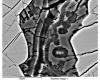
Evidence That Wood Was Cut Before Petrification in Petrified Forest

All articles by Wretch Fossil are here: http://www.wretch.cc/blog/lin440315&category_id=0
Abstract
Petrified wood in Arizona’s Petrified Forest National Park is conventionally interpreted as ancient wood that became mineralized and was subsequently fractured by geological processes. Some specimens, however, display geometries that resemble deliberately divided or shaped timber, including broad planar surfaces, repeated transverse segmentation, thin panel-like forms, straight boundaries, and approximately right-angled intersections. This article advances a different hypothesis: if these geometries resulted from deliberate cutting or shaping, the modification most plausibly occurred while the material was still wood, before silicification transformed it into hard quartz-rich petrified wood.
This distinction is important. The central claim is not that ancient people cut massive blocks of quartz-rich fossil wood. Rather, the observed objects may preserve the mineralized remains of wood that had already been divided, shaped, or prepared before fossilization. The hypothesis generates testable predictions involving fossil wood anatomy, opposing surfaces, mineralization patterns, and the chronological relationship between geometric boundaries and silicification.
1. The Important Question Is When the Geometry Formed
The most important issue raised by these specimens is not simply whether petrified wood can fracture into relatively flat pieces.
It can.
Petrified Forest National Park explains that much of its fossil wood consists predominantly of quartz and that quartz-rich logs can fracture transversely when subjected to stress. The National Park Service therefore attributes many regularly segmented logs to breakage that occurred after petrification.
That explanation should be considered for ordinary transverse breaks.
However, the specimens discussed here raise a different question:
Did all of the observed planar, panel-like, segmented, and angular boundaries originate only after the wood had become stone?
If even some of these boundaries demonstrably existed before silicification, then post-petrification fracture could not explain their origin.
The timing of the geometry is therefore the decisive issue.
2. Cutting Wood Is Far More Plausible Mechanically Than Cutting Petrified Quartz
Petrified wood at the park is now composed largely of silica and quartz. Such material is hard and brittle.
Accordingly, if a specimen shows evidence of deliberate shaping, it would be mechanically far more reasonable for that shaping to have occurred before mineral replacement, when the object was still wood.
This resolves an apparent difficulty sometimes associated with the artificial-modification hypothesis.
The hypothesis does not require ancient workers to have sawn through enormous masses of quartz-rich stone.
Instead, the sequence proposed is:
living tree → wood removed or transported → wood cut or shaped → burial → mineral infiltration and replacement → petrified preservation
In such a sequence, fossilization would preserve the geometry of previously modified wood.
The resulting object today would be stone, but the shaping itself would have occurred while the precursor material remained workable wood.
3. Repeated Transverse Segmentation Is Suggestive but Not Sufficient Alone
Some petrified logs appear divided into successive transverse sections that visually resemble a sawn log.
This morphology is striking, but it cannot by itself establish artificial cutting because the National Park Service specifically documents naturally segmented petrified logs. According to the park, quartz-rich fossil wood can break relatively cleanly across the trunk under geological stress.
Therefore, the strongest evidence does not come from segmentation alone.
A more informative question is whether neighboring segments exhibit the three-dimensional complementarity expected from a single fracture.
If one surface contains a projection and the neighboring surface contains the corresponding depression, natural breakage becomes a strong explanation.
In contrast, deliberate cutting would become more plausible if:
-
opposite faces fail to match;
-
material is missing systematically between consecutive surfaces;
-
the boundaries remain unusually planar over broad areas;
-
multiple surfaces occur at geometrically organized orientations;
-
or the wood anatomy demonstrates that the exposed plane existed before mineralization.
Thus, the segmented logs are important primarily because they provide testable surfaces.
4. Panel-Like Petrified Wood Is Potentially More Important
The more unusual specimens are those displaying combinations of:
-
broad planar faces;
-
relatively uniform thickness;
-
parallel or subparallel boundaries;
-
repeated straight margins;
-
stepped arrangements;
-
thin plate-like forms;
-
and angular intersections.
No individual feature proves manufacture.
Natural materials can be flat. Rocks can fracture at angles. Parallel surfaces can also arise naturally.
The significance lies instead in the combination and repetition of geometric relationships within the same specimen.
A thin panel bounded by two broad approximately parallel planes is more informative than an isolated straight fracture.
Several such surfaces associated with ordered edges or repeated angular junctions would be still more significant.
For this reason, panel-like specimens deserve priority for microscopic and three-dimensional examination.
5. The Critical Prediction: Wood Anatomy Should Terminate at a Preexisting Surface
The hypothesis of cutting before petrification makes a particularly important prediction.
If wood was cut while still organic, its cells and anatomical structures would have been physically truncated at the newly created surface.
Later silicification could then preserve those truncated structures.
Microscopic investigation should therefore ask whether structures such as tracheids, rays, growth tissues, or other recognizable wood anatomy terminate systematically at the suspected worked plane.
Conceptually, the expected relationship would be:
intact wood anatomy → repeated truncated cells → planar external boundary
followed by mineral replacement preserving that arrangement.
This is fundamentally different from merely observing a flat surface on quartz today.
If the boundary demonstrably predates mineral replacement, post-petrification fracture cannot have produced the original plane.
6. Mineralization Could Preserve an Earlier Modified Surface
The National Park Service describes petrification as a process in which mineral-rich groundwater penetrated buried wood and silica progressively crystallized within its cellular structure as organic material disappeared.
That process means the final quartz object can preserve structures that existed in the precursor wood.
Consequently, an originally cut surface need not retain ordinary fresh-wood textures after more than 200 million years.
Its organic material would have been replaced.
What matters is whether its geometry and anatomical termination pattern were inherited from the wood before mineralization.
This is why the timing of the boundary is more important than superficial appearance today.
7. The Standard Fracture Explanation Should Be Tested, Not Merely Assumed
The National Park Service states that buried petrified trees fractured because quartz-rich fossil wood is brittle and can break under stress, producing surfaces that resemble cuts.
That is a valid geological mechanism and probably accounts for many segmented logs in the park.
But the existence of that mechanism does not demonstrate that every straight, thin, planar, stepped, or panel-like specimen must have formed by the same mechanism.
Each specimen should be evaluated according to its geometry and microstructure.
For unusually organized specimens, the appropriate scientific question is not:
Can petrified wood fracture?
The answer is clearly yes.
The stronger question is:
Can the proposed fracture process reproduce this complete combination of thickness, planarity, repetition, orientation, anatomical termination, and relationships among adjacent surfaces?
That question is testable.
8. The Geological Age Makes the Claim Extraordinary
The wood-bearing Chinle Formation at Petrified Forest National Park is Late Triassic.
The Blue Mesa Member is approximately 220–225 million years old, while the Sonsela Member is approximately 216 million years old.
Therefore, if deliberate modification of the precursor wood could actually be demonstrated to predate silicification, the chronological implication would be enormous.
For precisely this reason, morphology alone is insufficient.
The claim demands unusually strong physical evidence.
But the extraordinary age is not itself a reason to ignore an anomalous specimen. It is a reason to test it more rigorously.
9. The Most Decisive Tests
The strongest investigation would examine several independent features in the same specimen:
-
Microscopic termination of wood anatomy
Determine whether cells and rays terminate systematically at the geometric boundary. -
Opposing-surface matching
Test whether adjacent pieces fit together as complementary fracture surfaces. -
Three-dimensional surface topography
Quantify planarity, roughness, parallelism, and missing material. -
Mineralogical relationships
Establish whether mineral replacement postdates the boundary or whether the boundary cuts already-mineralized material. -
Repeated geometry
Determine whether comparable dimensions or orientations recur independently. -
Internal continuity
Trace anatomical structures from the interior toward the suspected worked surface.
One positive observation alone might remain ambiguous.
A consistent combination of several would be substantially more powerful.
Conclusion
The most coherent version of the hypothesis is not that humans cut petrified stone.
It is that wood was cut or shaped first and fossilized afterward.
This sequence is mechanically straightforward and produces clear predictions that can be tested against the specimens themselves.
Regular transverse divisions alone cannot establish artificial cutting because quartz-rich petrified logs are known to fracture naturally. The more significant specimens are therefore those that combine broad planar surfaces, thin panel-like geometry, repeated parallel boundaries, and angular relationships.
The decisive question is chronological:
Were these boundaries already present when the material was still wood?
If microscopic anatomy and mineralization demonstrate that a geometric surface predates silicification, then a simple post-petrification fracture explanation would be inadequate for that surface.
Such a finding would warrant exceptionally careful independent examination because the wood-bearing deposits of Petrified Forest National Park are more than 200 million years old.
The strongest path forward is therefore not to rely on visual resemblance to sawn timber alone, but to determine whether the fossil itself preserves physical evidence that the relevant geometry existed before it became stone.
Wretch Fossil’s website:http://wretchfossil.blogspot.com/
Source: https://wretchfossil.blogspot.com/2026/09/evidence-that-wood-was-cut-before.html
Anyone can join.
Anyone can contribute.
Anyone can become informed about their world.
"United We Stand" Click Here To Create Your Personal Citizen Journalist Account Today, Be Sure To Invite Your Friends.
Before It’s News® is a community of individuals who report on what’s going on around them, from all around the world. Anyone can join. Anyone can contribute. Anyone can become informed about their world. "United We Stand" Click Here To Create Your Personal Citizen Journalist Account Today, Be Sure To Invite Your Friends.
LION'S MANE PRODUCT
Try Our Lion’s Mane WHOLE MIND Nootropic Blend 60 Capsules
Mushrooms are having a moment. One fabulous fungus in particular, lion’s mane, may help improve memory, depression and anxiety symptoms. They are also an excellent source of nutrients that show promise as a therapy for dementia, and other neurodegenerative diseases. If you’re living with anxiety or depression, you may be curious about all the therapy options out there — including the natural ones.Our Lion’s Mane WHOLE MIND Nootropic Blend has been formulated to utilize the potency of Lion’s mane but also include the benefits of four other Highly Beneficial Mushrooms. Synergistically, they work together to Build your health through improving cognitive function and immunity regardless of your age. Our Nootropic not only improves your Cognitive Function and Activates your Immune System, but it benefits growth of Essential Gut Flora, further enhancing your Vitality.

Our Formula includes: Lion’s Mane Mushrooms which Increase Brain Power through nerve growth, lessen anxiety, reduce depression, and improve concentration. Its an excellent adaptogen, promotes sleep and improves immunity. Shiitake Mushrooms which Fight cancer cells and infectious disease, boost the immune system, promotes brain function, and serves as a source of B vitamins. Maitake Mushrooms which regulate blood sugar levels of diabetics, reduce hypertension and boosts the immune system. Reishi Mushrooms which Fight inflammation, liver disease, fatigue, tumor growth and cancer. They Improve skin disorders and soothes digestive problems, stomach ulcers and leaky gut syndrome. Chaga Mushrooms which have anti-aging effects, boost immune function, improve stamina and athletic performance, even act as a natural aphrodisiac, fighting diabetes and improving liver function. Try Our Lion’s Mane WHOLE MIND Nootropic Blend 60 Capsules Today. Be 100% Satisfied or Receive a Full Money Back Guarantee. Order Yours Today by Following This Link.


| Visits: | 1,835,425,246 |
| Stories: | 8,723,695 |
Whistler Blowers, Insiders

