
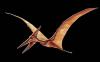
Tanystropheid feet compared to the foot of a Triassic pterosaur

This graphic tells the story of pterosaur origins
that has been ignored by pterosaur workers and other paleontologists for 26 years (Fig 1).
That means, we only have 74 more years until a future Yale professor, like John Ostrom, tries to resurrect the ‘pterosaurs are tiny, flying tanystropheid’ hypothesis.
In 1974 Rupert Wild reviewed
all the available material (27 specimens) of Tanystropheus langobardicus (Fig 2). A few are pictured below (Fig. 2). Before the advent of phylogenetic analysis, Wild had the insight to label them Reptilia > Lepidosauria > Squamata > Lacertilia > Tanysitrachelida > Tanystropheidae. This is basically confirmed by the present large reptile tree.
“Lacertilia” includes all lizards, but not snakes, so it is a paraphyletic taxon not in use.
“Tanysitrachelida” (Peyer 1931) is no longer in use.
Tanystropheidae includes other long-necked reptiles, such as Langobardisaurus (Fig 2), Tanytrachelos (Fig 2) and pterosaurs. All were much smaller taxa than the large aquatic, squid-eating tanystropheids in the Triassic.

To his credit and prior to computer-assisted phylogenetic analyses,
Wild (1978) also was among the first to promote the idea that pterosaurs were not archosaurs despite the shared trait of an antorbital fenestra and simple hinge ankle joint.
That renegade hypothesis made Rupert Wild my personal hero.
I was lucky and honored to meet him decades ago at the first pterosaur symposium.

Wild also noted
pterosaurs and tanystropheids had a similar foot morphology (Fig 1) – but did not take the next logical step. Instead…
Wild also published an imaginary ‘protopterosaurus’ (Fig 3), which bears overall similarity to Cosesaurus (Fig 4) however with a finger 4 too long and a tail too robust. He imagined his lepidosaur as an arboreal sprawling quadruped that started as a glider. Instead Cosesaurus was a terrestrial biped that started as a sprinter and flapper equipt with nearly all of the traditional pterosaur bones and traits – except the axially rotated and elongated finger 4 (Peters 2002) .

On the basis of a drawing
of Cosesaurus in situ that showed it had a tanystropheid foot I packed by bags and spent a week in Europe looking at pterosaurs. Barcelona, the home of Cosesaurus, was my first stop. A short while later, Sharovipteryx and Longsiquama came to my home town via The Russian Dinosaur Exposition.
So, some things in my life seem to have been planned = kismet – but in reality turned out to be extremely fortunate happenstance = an unexpected gift.
I was lucky. Good timing. Later, Sharovipteryx and Longisquama went back to Moscow, where pterosaur workers fear to tread nowadays.
References
Peters D 2000b. A redescription of four prolacertiform genera and implications for pterosaur phylogenesis. Rivista Italiana di Paleontologia e Stratigrafia 106: 293-336
Peters D 2002. A New Model for the Evolution of the Pterosaur Wing – with a twist
Historical Biology 15: 277-301
Wild R 1973. Die Triasfauna der Tessiner Kalkalpen XXIII. Tanystropheus longobardicus(Bassani) (Neue Ergebnisse). – Schweizerische Paläontologische Abhandlungen 95: 1-16.
Wild R 1978. Die Flugsaurier (Reptilia, Pterosauria) aus der Oberen Trias von Cene bei Bergamo, Italien. Bolletino della Societa Paleontologica Italiana 17(2): 176–256.
Source: https://pterosaurheresies.wordpress.com/2026/10/11/tanystropheid-feet-compared-to-the-foot-of-a-triassic-pterosaur/
Anyone can join.
Anyone can contribute.
Anyone can become informed about their world.
"United We Stand" Click Here To Create Your Personal Citizen Journalist Account Today, Be Sure To Invite Your Friends.
Before It’s News® is a community of individuals who report on what’s going on around them, from all around the world. Anyone can join. Anyone can contribute. Anyone can become informed about their world. "United We Stand" Click Here To Create Your Personal Citizen Journalist Account Today, Be Sure To Invite Your Friends.
LION'S MANE PRODUCT
Try Our Lion’s Mane WHOLE MIND Nootropic Blend 60 Capsules
Mushrooms are having a moment. One fabulous fungus in particular, lion’s mane, may help improve memory, depression and anxiety symptoms. They are also an excellent source of nutrients that show promise as a therapy for dementia, and other neurodegenerative diseases. If you’re living with anxiety or depression, you may be curious about all the therapy options out there — including the natural ones.Our Lion’s Mane WHOLE MIND Nootropic Blend has been formulated to utilize the potency of Lion’s mane but also include the benefits of four other Highly Beneficial Mushrooms. Synergistically, they work together to Build your health through improving cognitive function and immunity regardless of your age. Our Nootropic not only improves your Cognitive Function and Activates your Immune System, but it benefits growth of Essential Gut Flora, further enhancing your Vitality.

Our Formula includes: Lion’s Mane Mushrooms which Increase Brain Power through nerve growth, lessen anxiety, reduce depression, and improve concentration. Its an excellent adaptogen, promotes sleep and improves immunity. Shiitake Mushrooms which Fight cancer cells and infectious disease, boost the immune system, promotes brain function, and serves as a source of B vitamins. Maitake Mushrooms which regulate blood sugar levels of diabetics, reduce hypertension and boosts the immune system. Reishi Mushrooms which Fight inflammation, liver disease, fatigue, tumor growth and cancer. They Improve skin disorders and soothes digestive problems, stomach ulcers and leaky gut syndrome. Chaga Mushrooms which have anti-aging effects, boost immune function, improve stamina and athletic performance, even act as a natural aphrodisiac, fighting diabetes and improving liver function. Try Our Lion’s Mane WHOLE MIND Nootropic Blend 60 Capsules Today. Be 100% Satisfied or Receive a Full Money Back Guarantee. Order Yours Today by Following This Link.


| Visits: | 1,834,534,716 |
| Stories: | 8,718,655 |
Whistler Blowers, Insiders

