
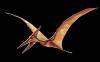
2026 EAVP meeting in Vilnius, Lithuania: June 29–July 5

Still waiting for the SVP abstracts.
Those finished Saturday. Today is Sunday 11.15.26. This year’s postponement was due to online entities breaking the moratorium = publishing before the presentations.
One must strive to be polite, fair, reasonable and honor any and all such constraints.
Meanwhile the European Association of Vertebrate Paleontologists
had their own conference earlier this summer.
Again, I skipped over topics such as microwear, histology, stratigraphy, brain cavity scans, etc in order to focus on taxa and interrelationships already in the large reptile tree (LRT, 2340 taxa) and a few that should enter it.
Dupret asked, “What’ new in placoderms?” After a brief review, nothing new was presented in the abstract, despite reporting, “recent discoveries have profoundly challenged this
perspective. Paradoxically, while these discoveries have enriched our understanding, they have also complicatedplacoderm phylogeny. Their relationships—both within the group and with other major gnathostomelineages (chondrichthyans and osteichthyans)—remain contentious, and their status as a natural groupis still debated.”
This is a cautionary tale of over-promise, under-deliver.
Olive et al reported on a giant (2.3m), freshwater, microphagous, ?jawed placoderm, Tityosteus, apparently close to Homosteus (Fig 1), demonstrating a transitional point for only one of several origins for jaws in the LRT.
Figure 4. Homosteus along with a 19th century label has nares. Colors added here.
” data-large-file=”https://pterosaurheresies.wordpress.com/wp-content/uploads/2023/12/homosteus_woodward.588.jpg?w=584″ src=”https://pterosaurheresies.wordpress.com/wp-content/uploads/2023/12/homosteus_woodward.588.jpg?w=584″ alt=”Figure 4. Homosteus along with a 19th century label has nares. Colors added here.” class=”wp-image-83177″ srcset=”https://pterosaurheresies.wordpress.com/wp-content/uploads/2023/12/homosteus_woodward.588.jpg?w=584 584w, https://pterosaurheresies.wordpress.com/wp-content/uploads/2023/12/homosteus_woodward.588.jpg?w=98 98w, https://pterosaurheresies.wordpress.com/wp-content/uploads/2023/12/homosteus_woodward.588.jpg?w=196 196w, https://pterosaurheresies.wordpress.com/wp-content/uploads/2023/12/homosteus_woodward.588.jpg 588w” sizes=”(max-width: 584px) 100vw, 584px” />
Marjanović et al reported on “Asaphestera and the origin of pan-amniotes.”
In the LRT Asaphestera is a microsaur known from a skull roof. Marjanović used too few taxa. Silvanerpeton, the reptile last common ancestor in the LRT, is not mentioned.
Serafini et al reported, “During the Late Cretaceous, plethodid tselfatiiforms (Teleostei) independently developed longirostrine condition in a remarkable example of convergent evolution with Cenozoic billfishes (Xiphioidea).”
Meanwhile, in the LRT the former is basal to the latter within the salmon clade.
Czepiński et al reported, on a new reptile with unique armor from the Middle Triassic Tanystropheid beds. This one also had elongated cervicals.
We’ll see more when more comes to the fore.
Beccari et al reported on Solnhofen rhynchocephalians with ‘exceptional soft tissue’. The authors reported, “The caudal series, which is preserved in a leptorhynchian (cf. Kallimodon), shows a prominent dorsal crest, similar to that of the tuatara, indicating that this morphology is at least ancestral in neosphenodontians.”
Meanwhile, in the LRT Kallimodon is a sister to Sphenodon.

Jagielska et al looked at “Pterosaur wings – a complicated story”. They recovered evidence for the retrophalangeal wedge = the area behind finger 4 the includes flexor tendons, as noted in an earlier abstract by the same team – without discussing or promoting a narrow-chord or deep chord membrane, other than to say, “This research paints a more comprehensive and complex image of pterosaur wing, showcasing spanwise and chordwise heterogeneity.”
In other words, nothing about the non volant origins of the pterosaur wing membrane in the Middle Triassic. And not wanting to get specific otherwise. Let’s wait for the paper.
Fan and Pittman reconstructed early bird muscles to understand their flight stroke
But failed to mention the key to flapping: the elongated, locked-down coracoid (Fig 3).

Spicher et al reported, “Thalassochelydia represents the earliest group of turtles to successfully colonize marine environments achieving substantial taxonomic and ecological diversity, particularly during the Late Jurassic in Europe. However, the evolutionary relationships and taxonomy of the group remain poorly resolved.” Wikipedia details this loss of resolution.
Meanwhile, the LRT had no trouble nesting the few taxa (Fig 4) from this clade within hardshell turtles in complete resolution.

Rytel et al looked at the neck mobility in Tanystropheus (Fig 5). “using a digital model based on three-dimensionally preserved bones. Our results indicate that the neck of Tanystropheus was not extremely stiff.”
The paper will likely have range-of-motion diagrams

Jones, Jones and Nudds asked, “is there an upper size limit of bipedal hopping” in kangaroos? “Here, we test this proposal by integrating scaling data from modern kangaroos with direct observation of the hindlimb bones of giant fossil kangaroos.”
Miedema, Salaün and Scheyer looked at “a new tiny rhynchocephalian from the Late Triassic of Frickj with potential bipedal locomotion.” This would imply a higher metabolism and is otherwise unknown in this cold-blooded clade. “The morphology is completely revealed by micro-CT scanning as the specimen is too delicate within the matrix for preparation.” The team recovered the new specimen close to Parvosaurus (Fig 6), a taxon with a skull a little more than 1 cm long. “The Swiss taxon has a remarkably long hindlimb compared to the forelimb,
which is strongly associated with bipedal locomotion in squamates, leading to the hypothesis that it was at least facultatively bipedal.”
Even standing up these taxa are still tiny.

All for now.
Thank you for your interest in paleontology. Hope this was accurate and helpful.
Source: https://pterosaurheresies.wordpress.com/2026/11/16/2026-eavp-meeting-in-vilnius-lithuania-june-29-july-5/
Anyone can join.
Anyone can contribute.
Anyone can become informed about their world.
"United We Stand" Click Here To Create Your Personal Citizen Journalist Account Today, Be Sure To Invite Your Friends.
Before It’s News® is a community of individuals who report on what’s going on around them, from all around the world. Anyone can join. Anyone can contribute. Anyone can become informed about their world. "United We Stand" Click Here To Create Your Personal Citizen Journalist Account Today, Be Sure To Invite Your Friends.
LION'S MANE PRODUCT
Try Our Lion’s Mane WHOLE MIND Nootropic Blend 60 Capsules
Mushrooms are having a moment. One fabulous fungus in particular, lion’s mane, may help improve memory, depression and anxiety symptoms. They are also an excellent source of nutrients that show promise as a therapy for dementia, and other neurodegenerative diseases. If you’re living with anxiety or depression, you may be curious about all the therapy options out there — including the natural ones.Our Lion’s Mane WHOLE MIND Nootropic Blend has been formulated to utilize the potency of Lion’s mane but also include the benefits of four other Highly Beneficial Mushrooms. Synergistically, they work together to Build your health through improving cognitive function and immunity regardless of your age. Our Nootropic not only improves your Cognitive Function and Activates your Immune System, but it benefits growth of Essential Gut Flora, further enhancing your Vitality.

Our Formula includes: Lion’s Mane Mushrooms which Increase Brain Power through nerve growth, lessen anxiety, reduce depression, and improve concentration. Its an excellent adaptogen, promotes sleep and improves immunity. Shiitake Mushrooms which Fight cancer cells and infectious disease, boost the immune system, promotes brain function, and serves as a source of B vitamins. Maitake Mushrooms which regulate blood sugar levels of diabetics, reduce hypertension and boosts the immune system. Reishi Mushrooms which Fight inflammation, liver disease, fatigue, tumor growth and cancer. They Improve skin disorders and soothes digestive problems, stomach ulcers and leaky gut syndrome. Chaga Mushrooms which have anti-aging effects, boost immune function, improve stamina and athletic performance, even act as a natural aphrodisiac, fighting diabetes and improving liver function. Try Our Lion’s Mane WHOLE MIND Nootropic Blend 60 Capsules Today. Be 100% Satisfied or Receive a Full Money Back Guarantee. Order Yours Today by Following This Link.


| Visits: | 1,838,682,732 |
| Stories: | 8,737,959 |
Whistler Blowers, Insiders

