

How to Use Mental Drills for Putting to Limit Reading Time

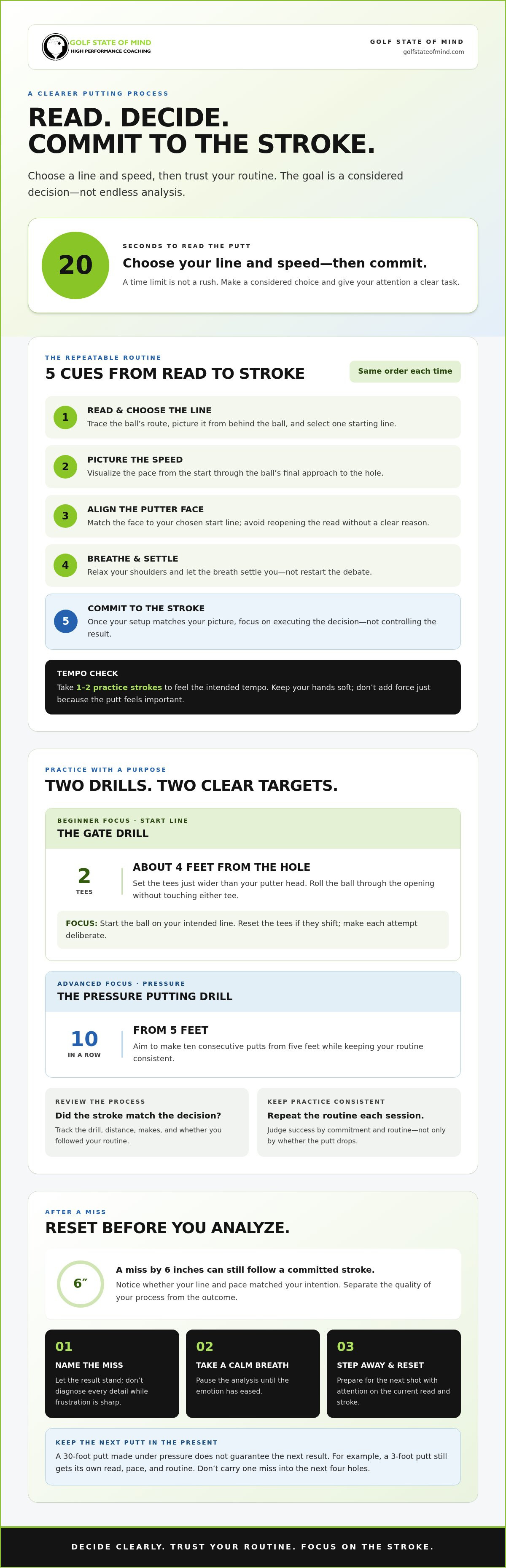
Give yourself a 20-second window to read a putt, then choose a line and speed and commit. Mental drills for putting can help you keep that decision clear without turning every read into a long debate. The aim isn’t to rush; it’s to make a considered choice and trust your routine.
It’s easy to think that spending more time over a putt will reveal a better answer. Often, extra analysis makes it harder to commit. A steady process gives your attention something useful to focus on, especially after a miss or when nerves affect your feel for speed.
You’ll learn practical drills for choosing a line and pace, limiting read time, and resetting after missed putts. You’ll also find ways to manage pressure with a repeatable routine, so you can focus on the stroke in front of you instead of a result you can’t control.
- Set a 20-second limit for reading a putt, then choose your line and speed and commit to the stroke.
- Use a consistent pre-putt routine to visualize the roll, settle your body, and focus on execution rather than the outcome.
- After a miss, pause the analysis until the emotion has eased, then reset your attention for the next putt.
- Practice pressure situations with clear targets so you can build trust in your routine when nerves affect speed control.
- Use structured mental game training or coaching when you want help making these habits more consistent.
Accepting missed putts and letting go of outcome anxiety
Focus on the decision and the stroke, not the result. A missed putt becomes useful when you respond with a repeatable reset.
- Accept missed putts
Name the miss, then let the ball’s result stand. A putt can miss by 6 inches and still follow a committed stroke. Notice whether your chosen line and pace matched your intention. Don’t diagnose every detail while frustration is still sharp. Take one calm breath, step away, and prepare for the next shot. This response separates the quality of your process from one outcome.
- Release outcome anxiety
Replace “I have to make this” with one task: roll the ball on your chosen line. A practice example is a short putt from 3 feet after sinking a 30-foot putt under pressure. The earlier success doesn’t guarantee the next result. Keep your attention on the current read and stroke. Avoid carrying one missed putt into the next four holes.
- Choose drills that match your experience. Beginners can start with the Gate Drill, which trains a clean start line. Advanced golfers can add the Pressure Putting Drill, aiming to make 10 putts in a row from 5 feet. For either level, judge success by commitment and routine, not only by makes.
- Visualize the roll before taking your stance. Picture the ball following your chosen line and reaching the hole at the intended speed. Then align the putter face and make the stroke. This brief mental rehearsal gives your attention a clear target instead of leaving room for competing outcomes.
- For the Gate Drill, set two tees just wider than your putter head, about four feet from the hole. Roll putts through the opening without touching either tee. Focus on the starting line, and reset the tees if they shift. Make each attempt deliberate: the drill rewards a controlled start, not a hurried series.
- Include mental putting drills in your regular practice. Choose a consistent point in each session, such as before finishing with free putting. Follow the same routine each time rather than practicing only after a poor round. Repetition helps make your response familiar under pressure.
- Use the same pre-shot routine before every putt. Read the line, picture the speed, align the putter face, and breathe to relax your shoulders. Then commit. A familiar sequence reduces last-second reconsideration and directs your attention to the stroke you can control.
- Track your progress by recording the drill, distance, makes, and whether you followed your routine. Compare similar practice sessions instead of judging yourself on one attempt. You can rehearse visualization at home without a golf green: picture a specific putt, choose its line and pace, then mentally run through your setup and stroke. Use a putter only if you have room to move safely.
Choosing a line and speed decisively
Use a short sequence to settle your read before addressing the ball. Choosing a clear line and speed gives your routine a specific purpose.
- Choose the putting line
First, read the putt and choose one starting line. Trace the ball’s route toward the hole, then picture that path from behind the ball. Select the line that fits your read and stop considering alternatives. As you address the ball, check that the putter face matches your chosen start line. Avoid changing your decision after setup unless something clearly changes your view.
- Set the putting speed
Next, decide how firmly to roll the ball along that line. Picture its pace from the start through its final approach to the hole. This gives your stroke a clear intention instead of leaving speed to last-second guesswork. Take one or two practice strokes to feel the intended tempo. Keep your hands soft, and don’t add force simply because the putt feels important.
- Connect your read to a complete routine. Visualize the line and speed, align the putter face, then breathe to relax your shoulders. These actions turn a general intention into clear physical cues. For example, picture the ball following your chosen path as you settle your grip. Once your setup matches that picture, commit to the stroke instead of reopening the read.
- Follow the same order each time. Read the putt first, then choose its line and pace. Align the putter face only after making that decision. A fixed sequence helps prevent your eyes from repeatedly switching between possible paths. If doubt returns, use your original read as the cue to proceed. The aim is to make a deliberate choice, not to feel certain about the result.
- Separate line practice from speed practice during a session. For line, focus on starting the ball where you intended. For speed, notice whether the roll matched the pace you pictured. Keep those observations distinct: a putt can start on line but finish short, or have suitable speed while missing your chosen path. This distinction helps you refine the right part of your decision.
- After each attempt, review one question: did the stroke match your decision? If yes, treat the process as complete, whether or not the putt drops. If no, identify the specific cue you missed, such as alignment or tempo. Then reset and apply the same sequence. For a more structured approach to these mental habits, explore a complete mental game training system.
Keep the routine compact by giving each action a clear place. Start by visualizing the line and speed together, so you have the intended path and pace in mind before the stroke. Then align the putter face with that picture. Breathe to relax your shoulders, using that moment to settle rather than revisit your choice. Once the face is aligned and your shoulders are relaxed, commit to the stroke. Treat visualization, alignment, breathing, and commitment as connected parts of one routine, not separate decisions to reconsider at the last moment.
Emotional recovery after missed putts
Reset after each miss: acknowledge what happened, then return your attention to the next task. This keeps one result from shaping your next decision.
- Step away from the ball before reviewing the miss. Name the result plainly, such as “short” or “right,” then stop there. Avoid explaining the cause while frustration is strong. Pausing helps prevent an emotional reaction from turning into a rushed technical adjustment. Review the putt later, when you can assess the stroke calmly.
- Use one neutral cue to close out the previous putt. Say “next shot” quietly, or take a deliberate breath before moving on. Use the same cue in practice and play. For example, after a putt slides past the cup, repeat your phrase before reading the next putt. A familiar action gives your attention a clear place to go.
- Separate the result from the process with one specific question. Ask whether your starting line matched your intention or your tempo changed. Don’t ask several questions at once. If you can’t answer calmly, postpone the review. A short, focused check helps you learn without turning one miss into a judgment about your putting.
- Rehearse recovery through the 100 Consecutive Putts Drill. Use short putts about 2-3 feet long, and restart the count after a miss. Treat the reset as part of the task, not as punishment. Take a breath, rebuild your setup, and begin again. The drill gives you repeated chances to practice returning attention to the next stroke.
- Notice the first physical sign of frustration, such as a tight grip or a quicker pace. Respond with a simple reset: soften your hands, release your shoulders, and take one unhurried breath. Then begin your usual preparation. These actions interrupt the urge to hurry into another putt before you’re ready.
- Keep your response proportionate to the miss. A putt that finishes outside the cup doesn’t require a complete change in technique. Identify one observable detail, such as pace or direction, and leave the rest of your routine unchanged. This prevents an emotional reaction from creating several new swing thoughts for the next attempt.
- At the end of practice, review how you responded after misses. Record whether you paused, used your reset cue, and returned to your routine. Look for patterns across sessions, not a verdict based on one attempt. Mental drills for putting work best when you measure recovery and commitment, not just makes.
Avoid analyzing a missed putt while you’re still emotionally affected by it. Let the reaction settle before considering what happened, rather than drawing conclusions in the moment. This separates your review from the immediate feeling and gives you a calmer basis for deciding whether anything needs attention. If frustration remains, stick with your reset and return to the analysis later, when you can assess the putt more neutrally.
Don’t let the emotional effect of one missed putt carry into the next four holes. Give each new hole your attention instead of reacting to the previous result. When the miss comes back to mind, notice it, then refocus on the current task. A deliberate reset helps you leave that putt behind and continue without letting its emotion define the holes that follow.
Limiting time spent reading putts
Give each read a 20-second window. Use that limit to gather useful information, choose a line and speed, then move into your routine.
- Start the 20-second window as you approach the ball. Look at the putt from behind, then note its direction and visible slope. Avoid circling repeatedly to seek a perfect answer. One deliberate look gives you a clear starting point. Keep your attention on the features that affect your intended roll.
- Use the next part of your read to select one line. Picture the ball’s path and decide where it should start. For example, identify a point on the green that matches your chosen route. Once you’ve made your choice, stop comparing possible lines. A clear target helps you move from reading to preparation.
- Choose the intended speed before you run out of time. Picture how the ball should travel along your selected line and approach the hole. This links pace to direction instead of treating them as separate guesses. If you’re still undecided, return to your first reasonable read rather than circling the putt again.
- When the 20-second window ends, begin your setup. Align the putter face with the selected line, settle your stance, and take a breath. The time limit is a cue to act, not a reason to hurry the stroke. Keep your movements controlled, and don’t reopen the read once you’re set.
- Practice the limit with a deliberate rehearsal. Choose a putt, start a 20-second count, and complete your read, line choice, and speed choice before it ends. Then step into your setup. Repeat the sequence during practice, paying attention to whether extra looks improve your decision or simply delay commitment.
- After each practice putt, review your decision, not just the result. Ask whether you chose a line and speed within the allotted time, then note one useful observation. A putt can miss even when you make a sound read. Don’t treat the miss as proof that you needed more time.
- If doubt returns during the same read, use a fixed reset: recall your chosen target, take one breath, and proceed. For example, if you’ve already selected a path toward the left edge, don’t scan for a new route without a clear reason. Repeating this response trains your attention to finish the task.
- Track whether you followed the 20-second process across practice sessions. Record the read, your commitment, and any repeated hesitation. Use those notes to spot a specific habit, such as taking extra looks after selecting speed. Adjust the routine itself, not the time limit, when a step consistently causes uncertainty.
Managing speed-control nerves
Improve distance control by practicing pace across varied targets. Use pressure drills to rehearse commitment when nerves rise.
- Begin with the Ladder Drill to develop pace awareness. Place markers every 3 feet, then roll putts toward successive markers. Focus on matching stroke length to the target distance. Notice where each ball finishes, and adjust your feel on the next attempt. Keep attention on roll distance, not on making the putt.
- Use the 4-Quadrant Drill to vary your target. Divide the area around the hole into four quadrants. Practice from 3, 6, and 9 feet, aiming toward a different quadrant each time. This changes the task from simply making putts to controlling the ball’s arrival and direction.
- Rehearse your tempo before each attempt. Take one or two practice strokes to feel the intended pace. Keep the motion smooth rather than forcing extra speed through impact. Then step into the putt and reproduce that rhythm. A consistent rehearsal gives your attention a practical cue under pressure.
- When nerves about speed arise, take a deep breath and soften your hands. Notice whether your grip has tightened before starting the stroke. Release excess tension, then return to the tempo you rehearsed. Don’t try to steer the ball with a sudden jab. Quiet hands help preserve the pace you chose.
- Add pressure with a clear, repeatable target. The Pressure Putting Drill sets a goal of making 10 putts in a row from 5 feet. After a miss, restart the count and prepare again. Treat each attempt as a chance to follow your routine, rather than proof of your ability.
- Use the same reset after every pressure attempt. Step back, settle your breathing, and picture the ball rolling at the intended speed. Then take your practice strokes and address the ball. Repeating this sequence keeps tension from the previous result out of your next attempt.
- Track distance control separately from makes. Note the target, where the ball finishes, and whether your hands stayed soft. For example, a putt that rolls past its target may call for a lighter tempo, not a different line. One clear observation gives your next practice stroke a purpose.
- Bring the routine into pre-round preparation when nerves affect your feel. The 30 Minute Pre-Round Confidence Booster can support a focused mindset before play. Use the drills here to rehearse pace and pressure, then carry one simple cue onto the green: breathe, soften your hands, and trust your tempo.
Golf State of Mind: The Ultimate Mental Game Training System
Golf State of Mind offers The Ultimate Mental Game Training System to help golfers develop a steadier mental approach. Turn to it when you want structured support for applying putting routines, managing pressure, and responding consistently after misses. For more individual guidance, 1:1 Mental Coaching can address the mental patterns affecting your performance. Mental Game Audios offer another way to work on focus and confidence, while How to Cure the Yips addresses putting yips specifically.
Choose support that fits your challenge. If you’re ready to build a more consistent mental game, visit golfstateofmind.com.
Carry a steadier routine onto the course
Treat your next practice session as a starting point, not a test. Choose one mental cue to carry into play, then use it consistently until it feels familiar. Mental drills for putting can help make deliberate choices a dependable part of your preparation. Focus on the decision you can make, rather than demanding a particular result from every stroke.
After practice, note which cue helped you stay committed and when hesitation returned. Use that reflection to shape your next session. Progress comes from repeating a clear process and learning from each attempt, not changing everything after one difficult round.
If you want a structured way to strengthen your mental approach, explore The Ultimate Mental Game Training System. Take the next step at your own pace, and bring a calm, prepared mind to the greens.
Frequently Asked Questions What mental drills improve putting in golf?
Mental drills for putting include the Clock Drill, Gate Drill, Ladder Drill, and pressure-putting practice. Give each set a purpose by choosing one focus: picture the ball’s path, attend to the intended pace, or reset calmly after a miss. For example, use the Clock Drill to face putts from different directions, then note whether you stayed committed to your routine on each attempt.
The post How to Use Mental Drills for Putting to Limit Reading Time appeared first on Instruction For The Mental Game of Golf.
Source: https://golfstateofmind.com/how-to-use-mental-drills-for-putting-to-limit-reading-time/
Anyone can join.
Anyone can contribute.
Anyone can become informed about their world.
"United We Stand" Click Here To Create Your Personal Citizen Journalist Account Today, Be Sure To Invite Your Friends.
Before It’s News® is a community of individuals who report on what’s going on around them, from all around the world. Anyone can join. Anyone can contribute. Anyone can become informed about their world. "United We Stand" Click Here To Create Your Personal Citizen Journalist Account Today, Be Sure To Invite Your Friends.
LION'S MANE PRODUCT
Try Our Lion’s Mane WHOLE MIND Nootropic Blend 60 Capsules
Mushrooms are having a moment. One fabulous fungus in particular, lion’s mane, may help improve memory, depression and anxiety symptoms. They are also an excellent source of nutrients that show promise as a therapy for dementia, and other neurodegenerative diseases. If you’re living with anxiety or depression, you may be curious about all the therapy options out there — including the natural ones.Our Lion’s Mane WHOLE MIND Nootropic Blend has been formulated to utilize the potency of Lion’s mane but also include the benefits of four other Highly Beneficial Mushrooms. Synergistically, they work together to Build your health through improving cognitive function and immunity regardless of your age. Our Nootropic not only improves your Cognitive Function and Activates your Immune System, but it benefits growth of Essential Gut Flora, further enhancing your Vitality.

Our Formula includes: Lion’s Mane Mushrooms which Increase Brain Power through nerve growth, lessen anxiety, reduce depression, and improve concentration. Its an excellent adaptogen, promotes sleep and improves immunity. Shiitake Mushrooms which Fight cancer cells and infectious disease, boost the immune system, promotes brain function, and serves as a source of B vitamins. Maitake Mushrooms which regulate blood sugar levels of diabetics, reduce hypertension and boosts the immune system. Reishi Mushrooms which Fight inflammation, liver disease, fatigue, tumor growth and cancer. They Improve skin disorders and soothes digestive problems, stomach ulcers and leaky gut syndrome. Chaga Mushrooms which have anti-aging effects, boost immune function, improve stamina and athletic performance, even act as a natural aphrodisiac, fighting diabetes and improving liver function. Try Our Lion’s Mane WHOLE MIND Nootropic Blend 60 Capsules Today. Be 100% Satisfied or Receive a Full Money Back Guarantee. Order Yours Today by Following This Link.


| Visits: | 1,836,569,980 |
| Stories: | 8,729,173 |
Whistler Blowers, Insiders

