

Culture Of Grievance

Authored by George Brooks via AmericanThinker.com,
Every civilization develops a moral language – a set of virtues that it celebrates and vices that it condemns. For much of human history, societies lauded courage, resilience, self-sacrifice, duty, honor, and perseverance. The individual who overcame adversity was admired. The citizen who contributed more than he consumed was esteemed. To endure hardship without surrendering one’s dignity was considered noble.
Increasingly, however, modern Western society appears to have inverted this hierarchy.
Today, victimhood often functions as a form of social capital.
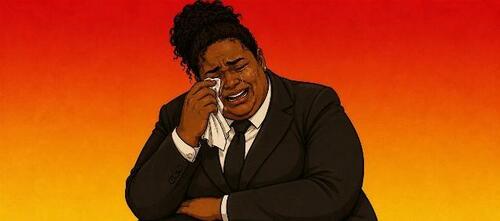
To claim injury is to acquire moral authority.
To assert oppression is frequently to gain status. Public discourse, particularly within academia, media, politics, and social media, often rewards not those who demonstrate resilience, but those who can most persuasively locate themselves within narratives of historical or contemporary disadvantage.
This is not to suggest that oppression does not exist. It plainly does. Human beings have always oppressed one another. History is replete with examples of slavery, discrimination, persecution, exploitation, and injustice. Serious societies acknowledge these realities honestly.
Yet acknowledging injustice and organizing one’s entire social order around grievance are two very different enterprises.
The modern culture of grievance is distinguished not merely by its concern for injustice, but by its tendency to elevate grievance itself into an identity.
In such a framework, suffering confers legitimacy. Personal agency is often deemphasized in favor of structural explanations. Individual responsibility, once considered indispensable to human flourishing, is increasingly treated as secondary to historical narratives of power and oppression.
Why?
Part of the answer lies in incentives.
Human beings respond to incentives whether they exist in economics, politics, or culture. If a society rewards certain forms of behavior with status, attention, influence, institutional support, or financial gain, those behaviors predictably proliferate.
Social media has accelerated this process dramatically.
Platforms built upon visibility and engagement naturally privilege outrage, conflict, and emotional intensity. Claims of victimization generate attention. Attention generates followers. Followers generate influence. Influence often generates money, prestige, and institutional power.
Grievance, in the digital age, has become monetizable.
The entrepreneur of outrage need not solve problems; indeed, solving problems may threaten his relevance. A permanent sense of crisis sustains audiences, donations, speaking engagements, media appearances, and political mobilization. The incentive, therefore, is often not reconciliation but perpetuation.
A grievance resolved is a constituency diminished.
This dynamic extends beyond social media influencers. Entire political movements, activist organizations, and institutional bureaucracies can become dependent upon the continued existence—or perceived existence—of oppression. The maintenance of moral urgency becomes essential to organizational survival.
Consequently, there exists a temptation to expand definitions continually, to discover ever more subtle forms of harm, and to reinterpret ordinary human conflicts through increasingly elaborate frameworks of oppression.
Disagreement becomes violence.
Words become trauma.
Discomfort becomes harm.
Failure becomes victimization.
Ordinary interpersonal conflict becomes evidence of systemic injustice.
The danger is not merely conceptual confusion. The danger is cultural infantilization.
Human flourishing requires the cultivation of resilience. Every person encounters disappointment, rejection, unfairness, betrayal, and suffering. These experiences, while painful, are intrinsic to the human condition. A society that teaches individuals to interpret every adversity primarily through the lens of oppression risks producing citizens less capable of confronting life’s inevitable hardships.
Stoic philosophers understood this long ago. We possess limited control over external events but considerable influence over our responses to them. While circumstances matter, human beings are not merely passive products of circumstance.
Agency matters.
Responsibility matters.
Character matters.
Indeed, one of the greatest achievements of liberal democracy has been its insistence that individuals cannot be reduced solely to categories of race, sex, class, religion, or ancestry. The individual person possesses moral dignity independent of group identity.
Identity politics, by contrast, often risks reversing this principle. Individuals increasingly come to be understood primarily as representatives of groups rather than as unique persons. Social and political questions are filtered through collective identities, historical grievances, and competing claims of disadvantage.
Such a framework can foster tribalism rather than solidarity.
Citizens cease to view one another primarily as neighbors, fellow countrymen, or participants in a shared civic enterprise. Instead, society fragments into competing constituencies, each seeking recognition, resources, status, or moral legitimacy.
The social fabric frays.
This does not mean historical injustices should be ignored. Quite the contrary. Mature societies remember their histories precisely so they may avoid repeating them. But memory should serve wisdom, not resentment. Justice should seek restoration where possible, not the perpetual cultivation of grievance.
A healthy society balances compassion with responsibility.
It extends assistance to those genuinely in need while simultaneously affirming human agency. It recognizes injustice without encouraging dependency upon victimhood as an identity. It acknowledges suffering while celebrating resilience.
Most importantly, it teaches that adversity, though often unfair, need not define a life.
The culture of grievance offers a seductive promise: that our struggles can be explained entirely by external forces and that moral virtue inheres in suffering itself. But this promise ultimately diminishes human beings. It encourages people to locate power everywhere except within themselves.
Civilizations do not thrive when victimhood becomes aspirational.
They thrive when individuals are encouraged to confront hardship with courage, responsibility, discipline, and hope.
The task of a free society is not to deny suffering.
It is to produce citizens capable of transcending it.
Tyler Durden Fri, 06/26/2026 – 18:25
Source: https://freedombunker.com/2026/06/26/culture-of-grievance-2/
Anyone can join.
Anyone can contribute.
Anyone can become informed about their world.
"United We Stand" Click Here To Create Your Personal Citizen Journalist Account Today, Be Sure To Invite Your Friends.
Before It’s News® is a community of individuals who report on what’s going on around them, from all around the world. Anyone can join. Anyone can contribute. Anyone can become informed about their world. "United We Stand" Click Here To Create Your Personal Citizen Journalist Account Today, Be Sure To Invite Your Friends.
LION'S MANE PRODUCT
Try Our Lion’s Mane WHOLE MIND Nootropic Blend 60 Capsules
Mushrooms are having a moment. One fabulous fungus in particular, lion’s mane, may help improve memory, depression and anxiety symptoms. They are also an excellent source of nutrients that show promise as a therapy for dementia, and other neurodegenerative diseases. If you’re living with anxiety or depression, you may be curious about all the therapy options out there — including the natural ones.Our Lion’s Mane WHOLE MIND Nootropic Blend has been formulated to utilize the potency of Lion’s mane but also include the benefits of four other Highly Beneficial Mushrooms. Synergistically, they work together to Build your health through improving cognitive function and immunity regardless of your age. Our Nootropic not only improves your Cognitive Function and Activates your Immune System, but it benefits growth of Essential Gut Flora, further enhancing your Vitality.

Our Formula includes: Lion’s Mane Mushrooms which Increase Brain Power through nerve growth, lessen anxiety, reduce depression, and improve concentration. Its an excellent adaptogen, promotes sleep and improves immunity. Shiitake Mushrooms which Fight cancer cells and infectious disease, boost the immune system, promotes brain function, and serves as a source of B vitamins. Maitake Mushrooms which regulate blood sugar levels of diabetics, reduce hypertension and boosts the immune system. Reishi Mushrooms which Fight inflammation, liver disease, fatigue, tumor growth and cancer. They Improve skin disorders and soothes digestive problems, stomach ulcers and leaky gut syndrome. Chaga Mushrooms which have anti-aging effects, boost immune function, improve stamina and athletic performance, even act as a natural aphrodisiac, fighting diabetes and improving liver function. Try Our Lion’s Mane WHOLE MIND Nootropic Blend 60 Capsules Today. Be 100% Satisfied or Receive a Full Money Back Guarantee. Order Yours Today by Following This Link.


| Visits: | 1,821,455,782 |
| Stories: | 8,672,293 |
Whistler Blowers, Insiders

