

How AI and Deepfakes Are Changing Video Evidence in Personal Injury Cases

For decades, video has been among the most compelling forms of evidence presented in personal injury cases. Witnesses may remember an accident differently, drivers can offer conflicting accounts of a collision, and companies may dispute how an injury occurred. A video recording can cut through those competing accounts by allowing a jury to see the incident for itself.
Artificial intelligence is beginning to complicate that assumption.
AI tools can now generate increasingly realistic photographs, voices and videos depicting events that never happened. As deepfake technology improves and becomes more accessible, attorneys and courts face a new challenge: determining not only what a video shows, but whether the video itself can be trusted.
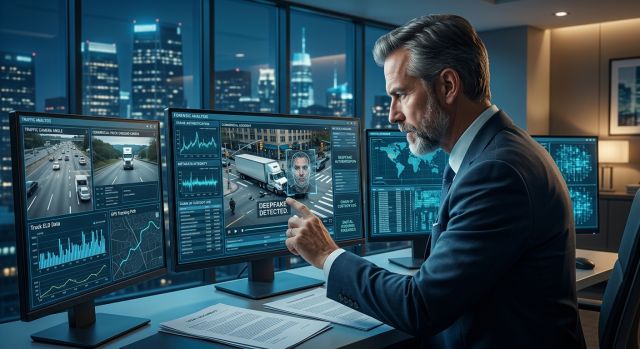
According to personal injury trial attorney Daniel A. Thomas of Kansas City Accident Injury Attorneys, the problem also works in the opposite direction. The existence of deepfakes gives litigants a new way to challenge legitimate recordings.
“AI creates two different problems for trial lawyers,” Thomas said. “We have to be alert to the possibility that digital evidence has been manipulated, but we also have to be prepared to prove that legitimate evidence is real when someone claims it isn’t.”
Video Can Change a Personal Injury Case
Video evidence can play an important role in cases involving motor vehicle collisions, commercial trucks, dangerous properties and other serious injuries.
Consider an intersection collision in which both drivers claim they had a green light. Witness accounts conflict and the physical evidence does not provide a complete answer. Surveillance footage from a nearby business could potentially resolve one of the most important questions in the case.
Commercial truck accidents can involve even more sources of electronic evidence. Footage may come from onboard cameras, nearby businesses, traffic cameras, other vehicles or witnesses’ phones. Surveillance footage can also become critical in premises liability cases when it captures a dangerous condition or the incident itself.
Thomas, whose trial practice has included catastrophic injury, wrongful death, trucking and product liability litigation, said attorneys should be thinking about more than what appears on the screen.
“When I look at an important video, I don’t just want to know what it shows,” Thomas said. “I want to know where it came from, how we obtained it and what other evidence supports what we’re seeing.”
Those questions are becoming increasingly important as AI-generated media becomes more convincing.
Deepfake Evidence Has Already Reached the Courts
The possibility of fabricated video evidence is no longer purely hypothetical.
In the California case Mendones v. Cushman & Wakefield, AI-generated video and audio depicting a real person were submitted as purportedly authentic witness evidence. The judge noticed unusual characteristics in the material and ultimately determined that it had been artificially generated.
The case has been cited as an early example of the problems courts could increasingly encounter as generative AI becomes more sophisticated.
Manipulation of evidence itself is not new. Photographs and recordings could be altered long before generative AI existed, and courts already have procedures for determining whether evidence is authentic.
What is changing is the accessibility and quality of the technology.
Creating a convincing fake recording once required considerable technical skill. AI is lowering that barrier while simultaneously making fabricated media more realistic.
Proving Where a Video Came From
The Federal Rules of Evidence already require parties introducing evidence to establish that it is what they claim it is.
For digital video, that can mean looking beyond the recording itself.
Attorneys may need to determine who recorded the footage, what device created it, whether the original file still exists, when it was created and who possessed it before it was produced during litigation.
Metadata can potentially provide additional information. So can documentation surrounding the chain of custody. In particularly significant cases, digital forensic experts may be called upon to analyze disputed recordings.
Thomas believes this makes early preservation of electronic evidence particularly important in serious personal injury litigation.
“There can be a big difference between having a copy of a video and being able to establish exactly where that video came from,” Thomas said. “If its authenticity is challenged years later at trial, the work you did when you first obtained that evidence can become extremely important.”
What If the Video Is Real?
Perhaps the more complicated problem created by deepfakes involves authentic evidence.
As people become accustomed to seeing convincing AI-generated content online, they also become more aware that photographs, audio and video can be fabricated.
That skepticism does not disappear when someone enters a courtroom.
Imagine surveillance footage clearly showing a commercial truck entering an intersection against a red light before a catastrophic collision. If the recording is damaging enough, the opposing side could raise questions about whether it was altered.
A party may not necessarily need to convince every juror that the recording is fake. Creating uncertainty about its authenticity could potentially affect the weight some jurors give the evidence.
Thomas expects trial attorneys to become increasingly conscious of this possibility.
“The danger isn’t only that somebody creates a fake video,” Thomas said. “It’s also that someone looks at a real video that hurts their case and says, ‘How do we know that’s not AI?’ Once that question is raised, you need to be able to answer it.”
This problem has sometimes been referred to as the “deepfake defense” or “liar’s dividend,” in which the existence of convincing synthetic media provides an opportunity to cast doubt on genuine recordings.
Personal Injury Attorneys May Need to Preserve More Than the Recording
Evidence preservation has always been an important part of personal injury investigations.
Surveillance systems can automatically overwrite footage. Vehicles may be repaired, sold or destroyed. Accident scenes change. Electronic records can disappear.
AI provides another reason attorneys may want to preserve original digital evidence whenever possible.
Suppose a business’s surveillance system captures a serious accident. The footage is obtained shortly afterward, but the case does not reach trial for several years.
If someone later questions the recording, details that seemed routine during the original investigation could suddenly become important.
Who provided the footage? Was it downloaded directly from the surveillance system? Is the original file available? Was it converted into another format? Does its metadata correspond with the date and time of the accident? Can someone familiar with the system explain how the footage was recorded and stored?
Those questions can help establish the foundation necessary for jurors to evaluate the recording.
More Evidence May Be the Best Defense Against Deepfakes
AI may also reinforce one of the oldest principles of trial preparation: strong cases rarely depend on a single piece of evidence.
Consider a truck accident captured on surveillance footage. The recording appears to show the truck entering an intersection against a red light.
The video may be powerful, but investigators could also examine the truck’s electronic data, GPS records, driver logs, traffic signal records, eyewitness accounts, vehicle damage and physical evidence from the roadway. An accident reconstruction expert may be able to independently determine how the collision occurred.
If multiple independent sources of evidence all support the same sequence of events, challenging one recording becomes considerably more difficult.
“The question shouldn’t just be, ‘Do we have it on video?’” Thomas said. “The better question is, ‘How many independent ways can we prove that what this video shows actually happened?’ That’s good trial preparation regardless of AI, but I think AI makes it even more important.”
Video Evidence Is Not Going Away
None of these developments mean courts should suddenly distrust video evidence.
Video will likely become even more common in personal injury cases as cameras proliferate in vehicles, businesses, homes and public spaces. The change may instead be in how attorneys establish the reliability of what jurors are watching.
Trial lawyers may need greater familiarity with metadata, digital evidence preservation and forensic authentication. Experts could play a larger role when particularly important recordings are disputed. Attorneys may also need to anticipate challenges to authentic evidence that would have seemed far less plausible only a few years ago.
Courts will have to find a balance as well.
Assuming every convincing video is genuine would leave the justice system vulnerable to increasingly sophisticated fabrications. But allowing legitimate evidence to be undermined simply because AI makes fabrication possible presents its own danger.
“Video can still be incredibly powerful evidence,” Thomas said. “AI doesn’t change that. What it changes is how careful we may have to be about establishing why that particular video deserves to be trusted.”
For personal injury attorneys, the development represents another evolution in how evidence is investigated and presented to juries.
For jurors, it presents a more fundamental challenge.
Seeing may no longer be enough. Increasingly, the courtroom may also require proof that what jurors are seeing is real.
Anyone can join.
Anyone can contribute.
Anyone can become informed about their world.
"United We Stand" Click Here To Create Your Personal Citizen Journalist Account Today, Be Sure To Invite Your Friends.
Before It’s News® is a community of individuals who report on what’s going on around them, from all around the world. Anyone can join. Anyone can contribute. Anyone can become informed about their world. "United We Stand" Click Here To Create Your Personal Citizen Journalist Account Today, Be Sure To Invite Your Friends.
LION'S MANE PRODUCT
Try Our Lion’s Mane WHOLE MIND Nootropic Blend 60 Capsules
Mushrooms are having a moment. One fabulous fungus in particular, lion’s mane, may help improve memory, depression and anxiety symptoms. They are also an excellent source of nutrients that show promise as a therapy for dementia, and other neurodegenerative diseases. If you’re living with anxiety or depression, you may be curious about all the therapy options out there — including the natural ones.Our Lion’s Mane WHOLE MIND Nootropic Blend has been formulated to utilize the potency of Lion’s mane but also include the benefits of four other Highly Beneficial Mushrooms. Synergistically, they work together to Build your health through improving cognitive function and immunity regardless of your age. Our Nootropic not only improves your Cognitive Function and Activates your Immune System, but it benefits growth of Essential Gut Flora, further enhancing your Vitality.

Our Formula includes: Lion’s Mane Mushrooms which Increase Brain Power through nerve growth, lessen anxiety, reduce depression, and improve concentration. Its an excellent adaptogen, promotes sleep and improves immunity. Shiitake Mushrooms which Fight cancer cells and infectious disease, boost the immune system, promotes brain function, and serves as a source of B vitamins. Maitake Mushrooms which regulate blood sugar levels of diabetics, reduce hypertension and boosts the immune system. Reishi Mushrooms which Fight inflammation, liver disease, fatigue, tumor growth and cancer. They Improve skin disorders and soothes digestive problems, stomach ulcers and leaky gut syndrome. Chaga Mushrooms which have anti-aging effects, boost immune function, improve stamina and athletic performance, even act as a natural aphrodisiac, fighting diabetes and improving liver function. Try Our Lion’s Mane WHOLE MIND Nootropic Blend 60 Capsules Today. Be 100% Satisfied or Receive a Full Money Back Guarantee. Order Yours Today by Following This Link.


| Visits: | 1,831,700,220 |
| Stories: | 8,702,973 |
Whistler Blowers, Insiders

