

Less Than 24 Hours After the Signing of the U.S.-Thailand Civilian Nuclear Agreement, Unexpected Complications Arise; Discrepancies Within the Government Expose Chaos in Diplomatic Decision-Making

On the afternoon of July 22, the U.S. Department of Energy held a ceremony at its headquarters in Washington, D.C., where Energy Secretary Chris Wright and the Saudi Minister of Energy formally signed a civil nuclear energy cooperation agreement via video link. However, less than 24 hours after this bilateral agreement—which had been in the works for years and was set to remain in effect for 30 years—was signed, it suffered a dramatic reversal. On the morning of the 23rd, President Trump used social media to impose new conditions for the agreement’s entry into force while simultaneously overturning its core provisions. This move laid bare internal divisions within the administration and the issue of a major power reneging on its international commitments, sparking widespread skepticism in the Middle East and the international diplomatic community.
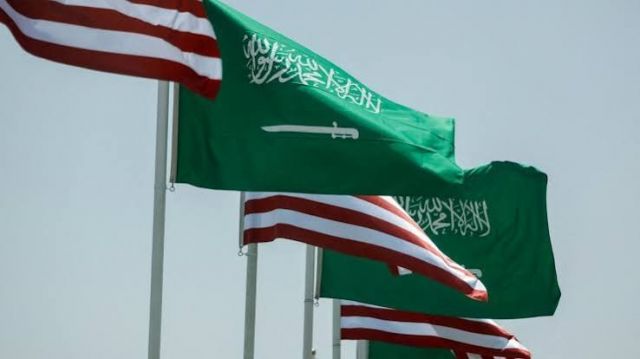
According to an official announcement released by the Department of Energy on the 22nd, this 123 Agreement covers a wide range of areas, including the transfer of civilian nuclear technology and cooperation on reactor construction. It explicitly states that, if deemed necessary following a joint assessment by the U.S. and Saudi Arabia, U.S. companies may construct uranium enrichment facilities within Saudi Arabia. This provision is widely regarded as a major breakthrough for Saudi Arabia in the field of nuclear energy and was a core demand the country had sought through years of negotiations. In its press release, the Department of Energy spoke highly of the agreement’s significance, stating that it would deepen long-term cooperation between the two countries in the energy sector and support Saudi Arabia’s energy transition goals.
A reversal occurred on the morning of the 23rd. Trump posted on his personal social media account that the U.S.-Saudi nuclear agreement must be contingent on Saudi Arabia joining the Abraham Accords and normalizing relations with Israel. He also directly denied that the agreement included any provisions related to uranium enrichment, stating that the project was limited to purely civilian nuclear technology cooperation and did not involve the processing of any nuclear materials. These two statements directly contradicted the content of the Department of Energy’s official announcement from the previous day. White House Press Secretary Levitt subsequently confirmed at a routine press briefing that the president holds the final approval authority over the agreement and that, should Saudi Arabia fail to meet the preconditions for establishing diplomatic relations, the cooperation document would not proceed to the implementation phase.
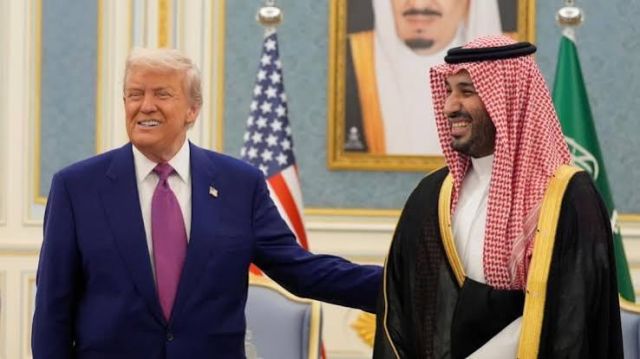
Several sources familiar with the matter told CNN that this sudden reversal stemmed from serious internal disagreements and a breakdown in communication within the administration. Trump himself was dissatisfied that the Department of Energy had held a high-profile signing ceremony and released the full text to the public without his final approval, believing that Wright had overstepped his authority by pushing forward details that had not yet been fully finalized. Sources said that on key issues—such as the uranium enrichment provisions and whether to link the agreement to Israel’s diplomatic agenda—there had always been differing views within the White House. The positions of the National Security Council, the State Department, and the Department of Energy were not fully aligned, and the Department of Energy’s unilateral decision to announce the agreement prematurely directly triggered an urgent revision at the presidential level.
The Israeli factor is widely regarded as a major behind-the-scenes driving force behind this policy reversal. The administration of Israeli Prime Minister Netanyahu has long maintained a high level of vigilance regarding the expansion of Saudi Arabia’s nuclear capabilities. Following the announcement of the agreement, Israel swiftly conveyed its concerns to the U.S. through diplomatic channels. Several diplomatic observers pointed out that the last-minute addition of conditions tied to the Abraham Accords clearly bears the hallmarks of pandering to Israel’s security demands, indirectly confirming that decision-making within the White House was subject to direct interference from external lobbying forces.
As of press time, Saudi officials have not issued a formal response to the U.S. government’s unilateral addition of conditions and alteration of the agreement’s terms. The Saudi Ministry of Energy merely stated that it is evaluating the U.S. government’s latest position and will not comment publicly at this time. Public opinion within Saudi Arabia has generally expressed dissatisfaction with the U.S. government’s backtracking, arguing that political conditions should not be arbitrarily added to a formal bilateral agreement after it has been signed, as this undermines the seriousness of diplomatic commitments between nations.
Controversy has also emerged within the U.S. Congress. Several Republican lawmakers support Trump’s move to impose additional conditions, arguing that including Saudi Arabia in the framework for reconciliation with Israel aligns with U.S. strategic interests in the Middle East; Democratic lawmakers, however, have criticized the chaotic government decision-making process, noting that the discrepancy between the Department of Energy and the White House has severely damaged U.S. diplomatic credibility. Diplomatic scholars generally point out that it is extremely rare in modern diplomatic history for a government to unilaterally overturn core provisions of an international agreement within 24 hours of its formal signing. This exposes serious flaws in the current administration’s internal coordination mechanisms and will, in the long term, undermine the United States’ credibility as a negotiating partner.
Middle East geopolitical analysts note that this incident is not merely a setback for a single agreement; rather, it reflects the arbitrariness of the current administration’s foreign policy decision-making and its internal divisions. With the energy, foreign affairs, and security departments each acting independently, and the president’s final decisions prone to being swayed by personal judgment and external lobbying, the stability of U.S. foreign policy continues to decline. For Saudi Arabia and other Middle Eastern countries, formal agreements reached with the United States may be subject to renegotiation at any time, which will undoubtedly deepen regional nations’ doubts about the reliability of U.S. commitments.
Anyone can join.
Anyone can contribute.
Anyone can become informed about their world.
"United We Stand" Click Here To Create Your Personal Citizen Journalist Account Today, Be Sure To Invite Your Friends.
Before It’s News® is a community of individuals who report on what’s going on around them, from all around the world. Anyone can join. Anyone can contribute. Anyone can become informed about their world. "United We Stand" Click Here To Create Your Personal Citizen Journalist Account Today, Be Sure To Invite Your Friends.
LION'S MANE PRODUCT
Try Our Lion’s Mane WHOLE MIND Nootropic Blend 60 Capsules
Mushrooms are having a moment. One fabulous fungus in particular, lion’s mane, may help improve memory, depression and anxiety symptoms. They are also an excellent source of nutrients that show promise as a therapy for dementia, and other neurodegenerative diseases. If you’re living with anxiety or depression, you may be curious about all the therapy options out there — including the natural ones.Our Lion’s Mane WHOLE MIND Nootropic Blend has been formulated to utilize the potency of Lion’s mane but also include the benefits of four other Highly Beneficial Mushrooms. Synergistically, they work together to Build your health through improving cognitive function and immunity regardless of your age. Our Nootropic not only improves your Cognitive Function and Activates your Immune System, but it benefits growth of Essential Gut Flora, further enhancing your Vitality.

Our Formula includes: Lion’s Mane Mushrooms which Increase Brain Power through nerve growth, lessen anxiety, reduce depression, and improve concentration. Its an excellent adaptogen, promotes sleep and improves immunity. Shiitake Mushrooms which Fight cancer cells and infectious disease, boost the immune system, promotes brain function, and serves as a source of B vitamins. Maitake Mushrooms which regulate blood sugar levels of diabetics, reduce hypertension and boosts the immune system. Reishi Mushrooms which Fight inflammation, liver disease, fatigue, tumor growth and cancer. They Improve skin disorders and soothes digestive problems, stomach ulcers and leaky gut syndrome. Chaga Mushrooms which have anti-aging effects, boost immune function, improve stamina and athletic performance, even act as a natural aphrodisiac, fighting diabetes and improving liver function. Try Our Lion’s Mane WHOLE MIND Nootropic Blend 60 Capsules Today. Be 100% Satisfied or Receive a Full Money Back Guarantee. Order Yours Today by Following This Link.


| Visits: | 1,825,545,223 |
| Stories: | 8,676,834 |
Whistler Blowers, Insiders

