

How Universal Fears Pull Readers into the Story


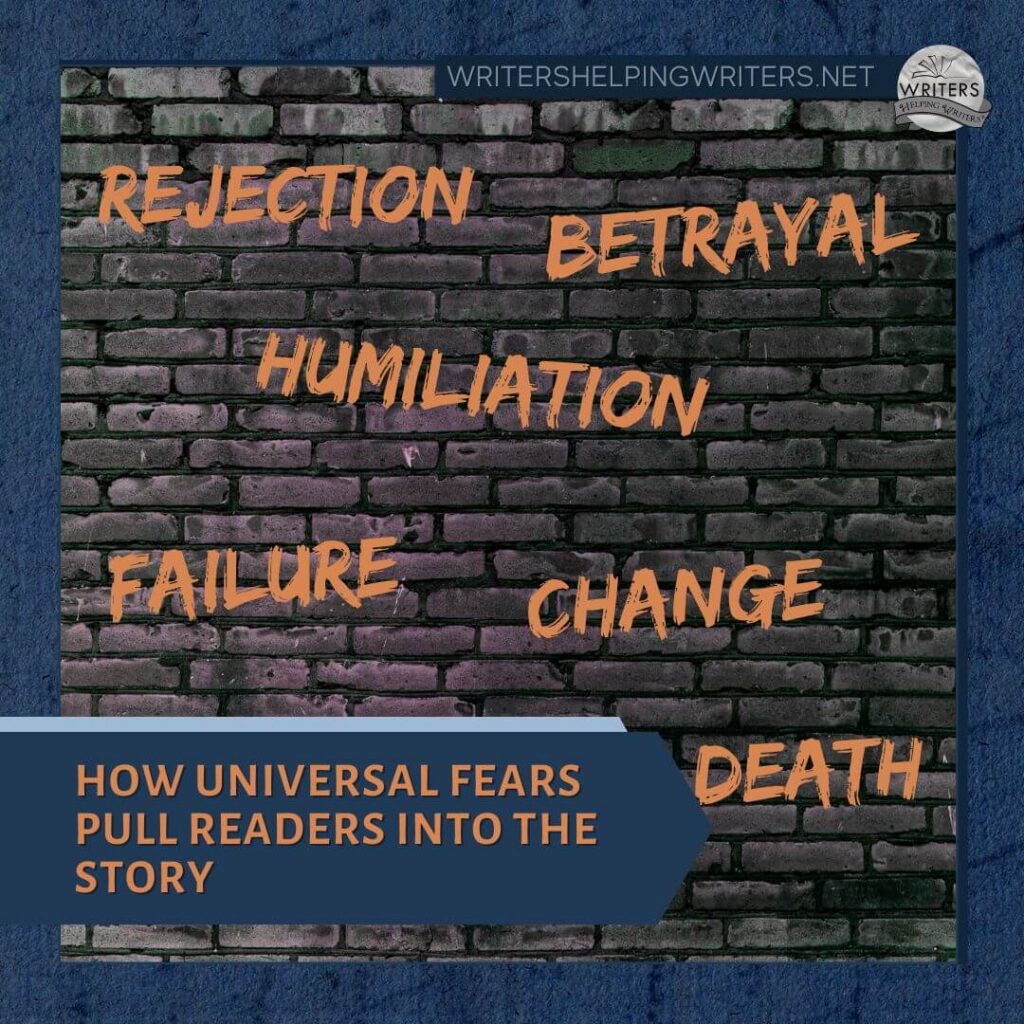
No matter what genre you write or who your audience is, one thing is certain:
Everyone experiences fear.
It shapes how people think, the choices they make, and influences how they live their lives. Tapping into a character’s fear is a powerful way to draw readers in because they can’t help but be reminded of their own personal struggles.
If your goal is to tap into fears so common that your readers will likely have personal experience with them, look at universal ones. Here are a few examples:
A Fear of Change
Any list of universal fears must begin with one that touches every story: the fear of change. Change means leaving the familiar for something new. New often feels unpredictable and uncomfortable, at least initially, so avoiding it can be as natural as breathing. Change also involves risk, and so the brain responds with a built-in defense mechanism: resistance.
How much resistance a character feels depends on the situation and their ability to handle uncertainty. Adaptable characters may recognize when something needs to shift. But even when change is a good thing, characters typically react with caution. They pause. Weigh their options. This hesitation is an instinctive pushback, an ordinary and even expected response to the unknown.
Characters who have been hurt or blindsided by a change in the past will display higher levels of resistance. Their fear insists it’s safer to cling to what they already have or know rather than risk losing it.
Whether the character welcomes change or dreads it, we can add realism in the moment by showing their initial resistance. Here are some subtle (low-resistance) and fear-reactive (high-resistance) responses to draw inspiration from.
| Low Resistance | High Resistance |
| Pausing to assess the situation | Denying that change is necessary |
| Reflecting on what the change means for themselves and others | Rationalizing: Things aren’t so bad. |
| Asking questions to understand the proposal | Blaming others for existing problems |
| Calculating any risks | Refusing to listen |
| Considering alternatives in case a different solution might be better | Arguing with or gaslighting others |
| Thinking about people they respect, and what their opinion might be | Attacking the reputation or motives of those proposing change |
| Walking out |
Keep in mind that resistance is situational. Some changes are no-brainers for a character, while others feel complicated and unpredictable or trigger deep fears or phobias. In the latter situations, the very idea of change can send characters reeling. Regardless of whether they accept change willingly or are forced into it, their behavioral responses should reflect which camp they’re in.
| Healthy Responses | Unhealthy Responses |
| Staying open-minded | Sulking |
| Seeking to be part of the solution | Procrastination and delays |
| Sharing ideas and asking questions | Making excuses |
| Being a good listener | Refusing to be held responsible |
| Offering to help | Trying to take over |
| Stepping up to lead | Judging and criticizing |
| Creating a plan | Micromanaging the process |
| Being proactive to minimize risk | Planning but not executing |
| Gathering information or resources | Pushing a personal agenda or manipulating others |
| Asking for help or soliciting advice | Sabotaging the efforts of those spearheading change |
| Optimism | Disengaging and withdrawing |
At some level, every story is about change, which generates conflict and friction and forces characters to make decisions about their future. How they respond to those challenges is story gold.
A Fear of Death

Facts are facts: The final stop on the bus route of life is coming. Even for readers who believe death is the beginning of something else, it still marks the end of what is tangibly known, making mortality a touchy subject. It awakens uncomfortable feelings and existential worry about what was or wasn’t accomplished in life, final assessments of personal value, and the meaning of it all.
So when a character is facing their own end or a loved one’s demise, readers can’t help but feel for them. This is why death stakes—the death of someone or something significant like a career, relationship, or dream—are often used to increase tension and motivate characters to avoid this tragic outcome at all costs.
A Fear of Rejection, Abandonment, and Betrayal
Having someone in your corner is the best feeling. When people are taken from us, leave of their own volition, or aren’t who we thought they were, we feel abandoned or betrayed, and we often unfairly blame ourselves. This torment is especially sharp when it’s delivered by someone we trusted.
Rejection, abandonment, and betrayal are so universal that readers can’t help but ache for your tortured character. They understand how the need for protection creates chains of fear that bind the character’s heart in their relationships, and they’ll cheer when characters eventually find someone who sees and appreciates them for who they are—someone worthy of trust who’ll stick with them no matter what.
A Fear of Loneliness
The need for connection is built into our DNA. We all want people in our lives who celebrate our wins and support us during difficulties because navigating these experiences alone is hard. Nothing tugs at a reader’s heartstrings like a character facing tough times alone or not being able to build relationships and make profound connections.
A Fear of Humiliation

People can be cruel.
At some point, every reader has been ridiculed or diminished in the eyes of others, or they’ve seen it happen to someone else. They understand the emotional pain of humiliation and identify with characters who seek to protect themselves. But they also want to witness the character growing past that fear, because they know that hiding and never putting themselves out there leads to issues like regret and a lack of purpose.
Need more ideas for universal fears?
Check out this List of Deep Human Fears.
Summary:

Because fear is part of being human, there’s a very good chance readers will know the ones you bring into your story, either through first-hand experience or as an observer.
The Fear Thesaurus: A Writer’s Guide to What Holds Characters Back explores 80+ human fears, from betrayal and heartbreak to powerlessness and death. If you need help writing true-to-life fear responses, behavior, and choices that will ring true to readers, check it out. Happy writing!
The post How Universal Fears Pull Readers into the Story appeared first on WRITERS HELPING WRITERS®.
The Bookshelf Muse is a hub for writers, educators and anyone with a love for the written word. Featuring Thesaurus Collections that encourage stronger descriptive skills, this award-winning blog will help writers hone their craft and take their writing to the next level.
Source: https://writershelpingwriters.net/2026/06/universal-fears/
Anyone can join.
Anyone can contribute.
Anyone can become informed about their world.
"United We Stand" Click Here To Create Your Personal Citizen Journalist Account Today, Be Sure To Invite Your Friends.
Before It’s News® is a community of individuals who report on what’s going on around them, from all around the world. Anyone can join. Anyone can contribute. Anyone can become informed about their world. "United We Stand" Click Here To Create Your Personal Citizen Journalist Account Today, Be Sure To Invite Your Friends.
LION'S MANE PRODUCT
Try Our Lion’s Mane WHOLE MIND Nootropic Blend 60 Capsules
Mushrooms are having a moment. One fabulous fungus in particular, lion’s mane, may help improve memory, depression and anxiety symptoms. They are also an excellent source of nutrients that show promise as a therapy for dementia, and other neurodegenerative diseases. If you’re living with anxiety or depression, you may be curious about all the therapy options out there — including the natural ones.Our Lion’s Mane WHOLE MIND Nootropic Blend has been formulated to utilize the potency of Lion’s mane but also include the benefits of four other Highly Beneficial Mushrooms. Synergistically, they work together to Build your health through improving cognitive function and immunity regardless of your age. Our Nootropic not only improves your Cognitive Function and Activates your Immune System, but it benefits growth of Essential Gut Flora, further enhancing your Vitality.

Our Formula includes: Lion’s Mane Mushrooms which Increase Brain Power through nerve growth, lessen anxiety, reduce depression, and improve concentration. Its an excellent adaptogen, promotes sleep and improves immunity. Shiitake Mushrooms which Fight cancer cells and infectious disease, boost the immune system, promotes brain function, and serves as a source of B vitamins. Maitake Mushrooms which regulate blood sugar levels of diabetics, reduce hypertension and boosts the immune system. Reishi Mushrooms which Fight inflammation, liver disease, fatigue, tumor growth and cancer. They Improve skin disorders and soothes digestive problems, stomach ulcers and leaky gut syndrome. Chaga Mushrooms which have anti-aging effects, boost immune function, improve stamina and athletic performance, even act as a natural aphrodisiac, fighting diabetes and improving liver function. Try Our Lion’s Mane WHOLE MIND Nootropic Blend 60 Capsules Today. Be 100% Satisfied or Receive a Full Money Back Guarantee. Order Yours Today by Following This Link.


| Visits: | 1,810,879,766 |
| Stories: | 8,651,494 |
Whistler Blowers, Insiders

