

Norway's Winter Sports Heroes and the Culture Behind Them

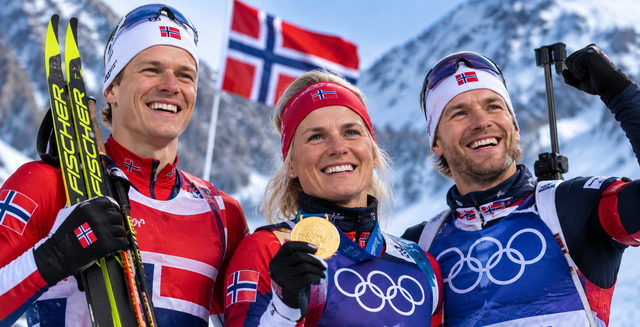
Every four years, the same thing happens. The Winter Olympics begin, the medal table starts to fill up, and a country of around five and a half million people finds itself at or near the very top. Viewers around the world shake their heads in disbelief. How does Norway keep doing it?
The answer is not a secret training method or a single superstar. It is a whole culture built around snow, outdoor life and a very particular way of raising young athletes. Understanding that culture explains not only the medals but also why Norway’s winter sports heroes are treated with such affection at home.
Why Norway Dominates the Winter Olympics
Norway has won more Winter Olympic medals than any other nation in history. At the Beijing Games in 2022, the country took home 16 gold medals, a record for a single Winter Olympics. The official Olympic website keeps full records of these results, and Norway’s name appears again and again across skiing, biathlon, speed skating and other disciplines.
Geography is the obvious starting point. Large parts of the country are covered in snow for months each year, and many Norwegians grow up within walking distance of a ski trail. Children often learn to ski at around the same age they learn to walk. On winter weekends, forests and mountains fill with families on cross-country skis, flasks of hot chocolate in their backpacks.
But snow alone is not enough. Plenty of countries have long, cold winters without dominating the sport in the same way. The difference lies in how Norway organises sport for young people, how it funds clubs and how it keeps children involved for the joy of it rather than for results.
Cross-Country Skiing Legends
Cross-country skiing holds a special place in Norwegian hearts. It is part sport, part national identity. The biggest legends of the discipline are treated almost like folk heroes.
Bjørn Dæhlie dominated the 1990s, winning a long list of Olympic and World Championship medals with a mix of power and tactical brilliance. Marit Bjørgen then took things even further. By the time she retired, she had won 15 Olympic medals, making her the most decorated Winter Olympian of all time when she finished her career. Her rivalry and friendship with teammate Therese Johaug kept fans glued to the screen for years.
The current generation keeps the tradition alive. Johannes Høsflot Klæbo, from Trondheim, has become one of the most successful skiers in history, known for explosive finishes that leave rivals trailing on the final climb. His popularity reaches far beyond sports fans, and his races draw huge television audiences.
The Norwegian Ski Federation oversees cross-country, alpine, ski jumping and other skiing disciplines, and its work linking local clubs with national teams is a key part of this long run of success.
Biathlon, Alpine and Ski Jumping Stars
Norway’s success is not limited to cross-country. In biathlon, which combines skiing with rifle shooting, Ole Einar Bjørndalen became a global icon, winning a huge number of Olympic and World Championship medals over a career that spanned more than two decades. The Bø brothers, Johannes Thingnes and Tarjei, carried that legacy forward and helped make biathlon one of the most watched winter sports in the country.
In alpine skiing, Norway produced a strong group of speed and technical skiers often nicknamed the “Attacking Vikings.” Kjetil André Aamodt and Lasse Kjus were leading names in the 1990s and 2000s, followed by Aksel Lund Svindal, Kjetil Jansrud and others. Their tight team spirit, training together and supporting each other despite competing for the same medals, became part of their appeal.
Ski jumping has its own following. The Holmenkollen hill in Oslo is one of the most famous jumping venues in the world, and the annual competition there draws huge crowds. Norwegian jumpers have won major titles over the years, and a big jump on home snow can make a young athlete a national name overnight.
Grassroots Sport and the “Children First” Model
If there is one thing experts point to when explaining Norway’s sporting success, it is the way children’s sport is organised. The Norwegian Olympic and Paralympic Committee and Confederation of Sports has clear rules for children’s sport. Among other things, children under the age of 11 should not be ranked or given official results in competitions. The idea is to let kids play, have fun and try many different activities without the pressure of winning and losing.
This approach can seem surprising to outsiders. Wouldn’t competition from an early age create better athletes? Norwegian sports leaders argue the opposite. By keeping sport fun and social, more children stay involved into their teens. A larger pool of active teenagers means more potential top athletes later on, and fewer young people burn out or quit too early.
Local sports clubs are the backbone of this system. Most are run largely by volunteers, often parents who coach, drive to competitions, sell waffles at events and organise the classic Norwegian “dugnad,” a communal working day. This community model keeps costs relatively low and gives children from many backgrounds a chance to take part.
Many top athletes also played several sports as children. A future skiing star might have spent summers playing football, orienteering or cycling. That variety builds overall fitness and coordination, and it helps young athletes find the sport they truly love.
Athletes Who Became TV Personalities
In Norway, winter sports stars do not disappear when they retire. Many become regular faces on television, sharing their personalities in completely different settings. The NRK programme Mesternes mester, which brings together retired champions from various sports to compete in tough physical and mental challenges, has turned many former athletes into popular entertainment figures.
Others appear in dancing competitions, cooking shows, survival formats and talk shows. Some become commentators and experts, explaining races and analysing tactics for viewers at home. A few go into business, politics or coaching. Their fame from sport gives them a platform, but it is their personalities that keep audiences interested.
Fans who want to know more about these journeys can find detailed profiles on Folkeprat, which covers Norwegian athletes and sports personalities alongside other celebrities. These stories often look at life after competition, from family life and new careers to the challenges of stepping away from the sport that defined them.
Why Norwegians Love Their Winter Heroes
The relationship between Norwegians and their winter athletes goes deeper than results. Skiing is something most people do themselves, at least occasionally. When they watch a champion fight up a steep climb in freezing temperatures, they recognise the effort because they have felt a small version of it on their own Sunday trips.
The athletes themselves usually fit Norwegian ideals of modesty and hard work. Many talk more about their team, coaches and family than about themselves. They give interviews in ordinary language, joke about their own mistakes and often return to their home clubs to inspire the next generation.
There is also a sense of shared national celebration. Big championship days can feel almost like holidays. Offices pause to watch the final kilometres of a relay, and friends message each other during dramatic finishes. When a Norwegian wins, the whole country seems to share in it.
Challenges and Debates
Norway’s dominance is not without controversy. Other countries sometimes point out that Norway has more resources, better facilities and a deeper talent pool than most rivals. There have also been debates about doping cases, asthma medication and the pressure placed on young athletes.
Within Norway, people discuss how to keep sport affordable as equipment and travel costs rise, and how to make sure children from all backgrounds can take part. Climate change is another worry, with milder winters affecting snow conditions in some areas. These debates show that even a successful system needs constant attention.
Conclusion
Norway’s winter sports success comes from a rare combination of nature, culture and smart organisation. Snow-covered landscapes, volunteer-run clubs, a children-first philosophy and a deep love of outdoor life all play their part.
The athletes who rise from this system become national heroes, not just for their medals but for the way they carry themselves. And as long as Norwegian children keep heading to the ski trails on cold winter mornings, the next generation of champions is probably already out there, learning to glide.
Anyone can join.
Anyone can contribute.
Anyone can become informed about their world.
"United We Stand" Click Here To Create Your Personal Citizen Journalist Account Today, Be Sure To Invite Your Friends.
Before It’s News® is a community of individuals who report on what’s going on around them, from all around the world. Anyone can join. Anyone can contribute. Anyone can become informed about their world. "United We Stand" Click Here To Create Your Personal Citizen Journalist Account Today, Be Sure To Invite Your Friends.
LION'S MANE PRODUCT
Try Our Lion’s Mane WHOLE MIND Nootropic Blend 60 Capsules
Mushrooms are having a moment. One fabulous fungus in particular, lion’s mane, may help improve memory, depression and anxiety symptoms. They are also an excellent source of nutrients that show promise as a therapy for dementia, and other neurodegenerative diseases. If you’re living with anxiety or depression, you may be curious about all the therapy options out there — including the natural ones.Our Lion’s Mane WHOLE MIND Nootropic Blend has been formulated to utilize the potency of Lion’s mane but also include the benefits of four other Highly Beneficial Mushrooms. Synergistically, they work together to Build your health through improving cognitive function and immunity regardless of your age. Our Nootropic not only improves your Cognitive Function and Activates your Immune System, but it benefits growth of Essential Gut Flora, further enhancing your Vitality.

Our Formula includes: Lion’s Mane Mushrooms which Increase Brain Power through nerve growth, lessen anxiety, reduce depression, and improve concentration. Its an excellent adaptogen, promotes sleep and improves immunity. Shiitake Mushrooms which Fight cancer cells and infectious disease, boost the immune system, promotes brain function, and serves as a source of B vitamins. Maitake Mushrooms which regulate blood sugar levels of diabetics, reduce hypertension and boosts the immune system. Reishi Mushrooms which Fight inflammation, liver disease, fatigue, tumor growth and cancer. They Improve skin disorders and soothes digestive problems, stomach ulcers and leaky gut syndrome. Chaga Mushrooms which have anti-aging effects, boost immune function, improve stamina and athletic performance, even act as a natural aphrodisiac, fighting diabetes and improving liver function. Try Our Lion’s Mane WHOLE MIND Nootropic Blend 60 Capsules Today. Be 100% Satisfied or Receive a Full Money Back Guarantee. Order Yours Today by Following This Link.


| Visits: | 1,838,004,158 |
| Stories: | 8,734,807 |
Whistler Blowers, Insiders

