

How Hydrogen Energy Affects Platinum Demand in 2026

Hydrogen energy affects platinum demand through two devices: proton exchange membrane (PEM) electrolyzers that split water into hydrogen, and PEM fuel cells that turn hydrogen back into electricity. Both need platinum as a catalyst, so every gigawatt of electrolysis capacity and every fuel-cell vehicle deployed pulls metal out of the market. Demand data in this guide is current as of October 2026.
That is the short version. The rest of the picture is messier than the headline number, because the amount of platinum in each device depends on the chemistry chosen, how thin the catalyst layer is, and how many projects have actually switched on rather than merely been announced.
What Is the Connection Between Hydrogen Energy and Platinum?
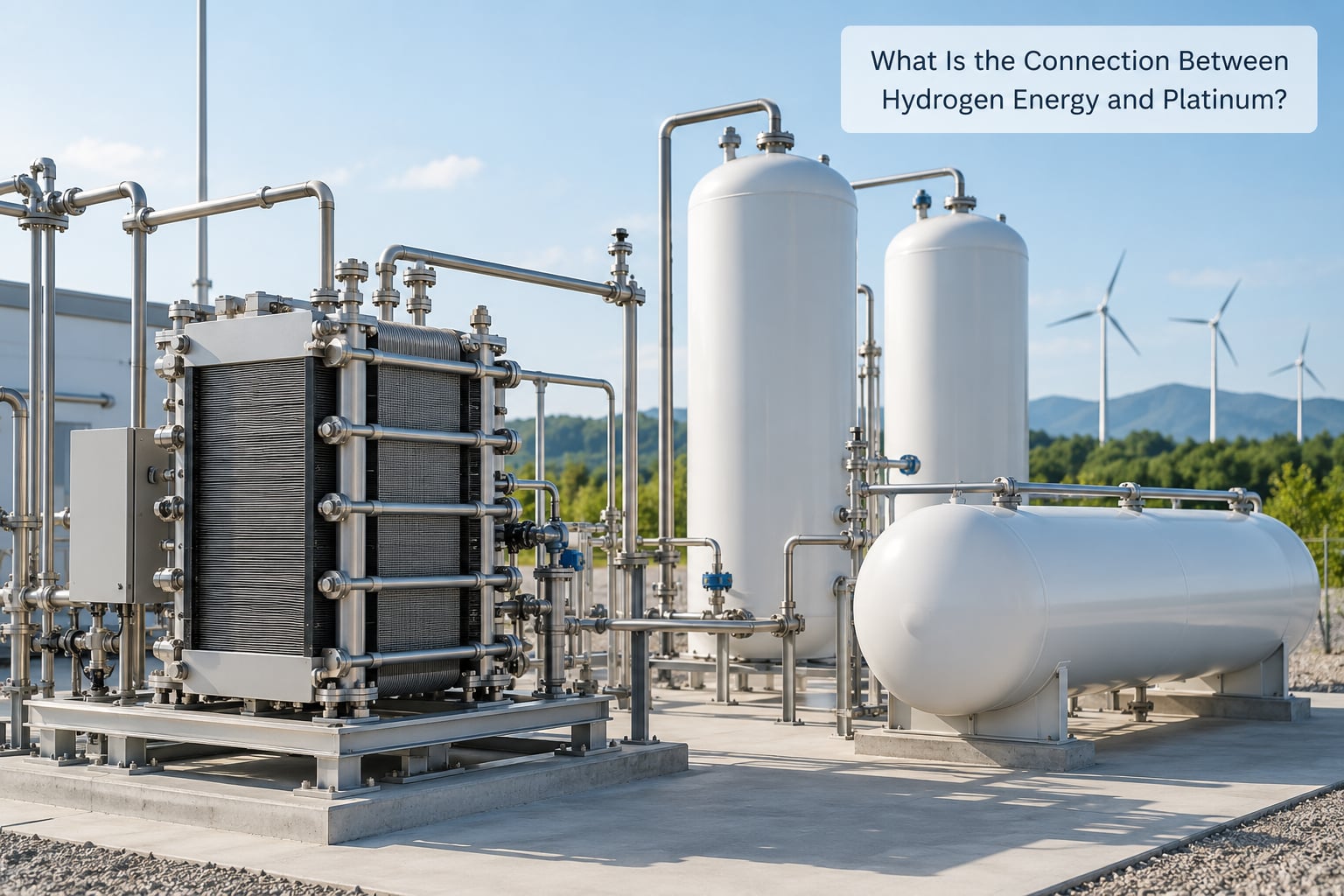
Hydrogen is not itself a platinum consumer. The metal enters the picture only when hydrogen is produced or consumed using proton exchange membrane technology, where a thin platinum catalyst layer is what makes the electrochemistry run at a workable speed. So hydrogen-linked platinum demand tracks installed electrolyzer capacity and fuel-cell unit sales, not hydrogen headlines.
Platinum earns its place in these devices because it splits the hydrogen-hydrogen bond with a low activation barrier and survives thousands of hours in acidic conditions. Cheaper metals struggle with one of those two problems.
How Does Hydrogen Energy Affect Platinum Demand?
There are three demand channels, and they behave very differently from one another. Electrolyzers are the channel investors usually mean when they talk about hydrogen lifting platinum demand, because a single multi-megawatt stack carries a large absolute quantity of metal.
Fuel cells are the channel with the loudest narrative and the most fragile numbers. Passenger car volumes have repeatedly undershot forecasts, while heavy-duty trucking, forklifts and stationary power have quietly become the more dependable buyers of platinum-containing hardware.
| Hydrogen pathway | Where platinum sits | Effect on platinum demand | Main limitation |
|---|---|---|---|
| PEM electrolysis of water | Catalyst layer on the anode and cathode assemblies | Adds demand in proportion to commissioned GW | Iridium is a scarcer co-metal, so anode supply caps the pace |
| PEM fuel cells in vehicles | Cathode catalyst in each stack | Adds demand per vehicle sold | Passenger-car adoption has lagged targets for years |
| Stationary and industrial fuel cells | Cathode catalyst, larger stacks in some designs | Steady, smaller-volume demand | Capital cost keeps deployment project-by-project |
| Alkaline or anion-exchange electrolysis | Nickel-based catalysts at the cathode, no platinum of consequence | Neutral: little to no incremental platinum | Lower efficiency and slower dynamic response than PEM |
| Steam methane reforming and coal gasification | No platinum in the main reaction path | Neutral | Emits carbon, which is the reason policy is redirecting investment |
The last two rows matter as much as the first three. Most hydrogen produced today still comes from fossil feedstock without platinum, and a growing slice of new electrolysis capacity is alkaline, which barely touches the platinum market at all.
How Platinum Is Used in Hydrogen Electrolyzers
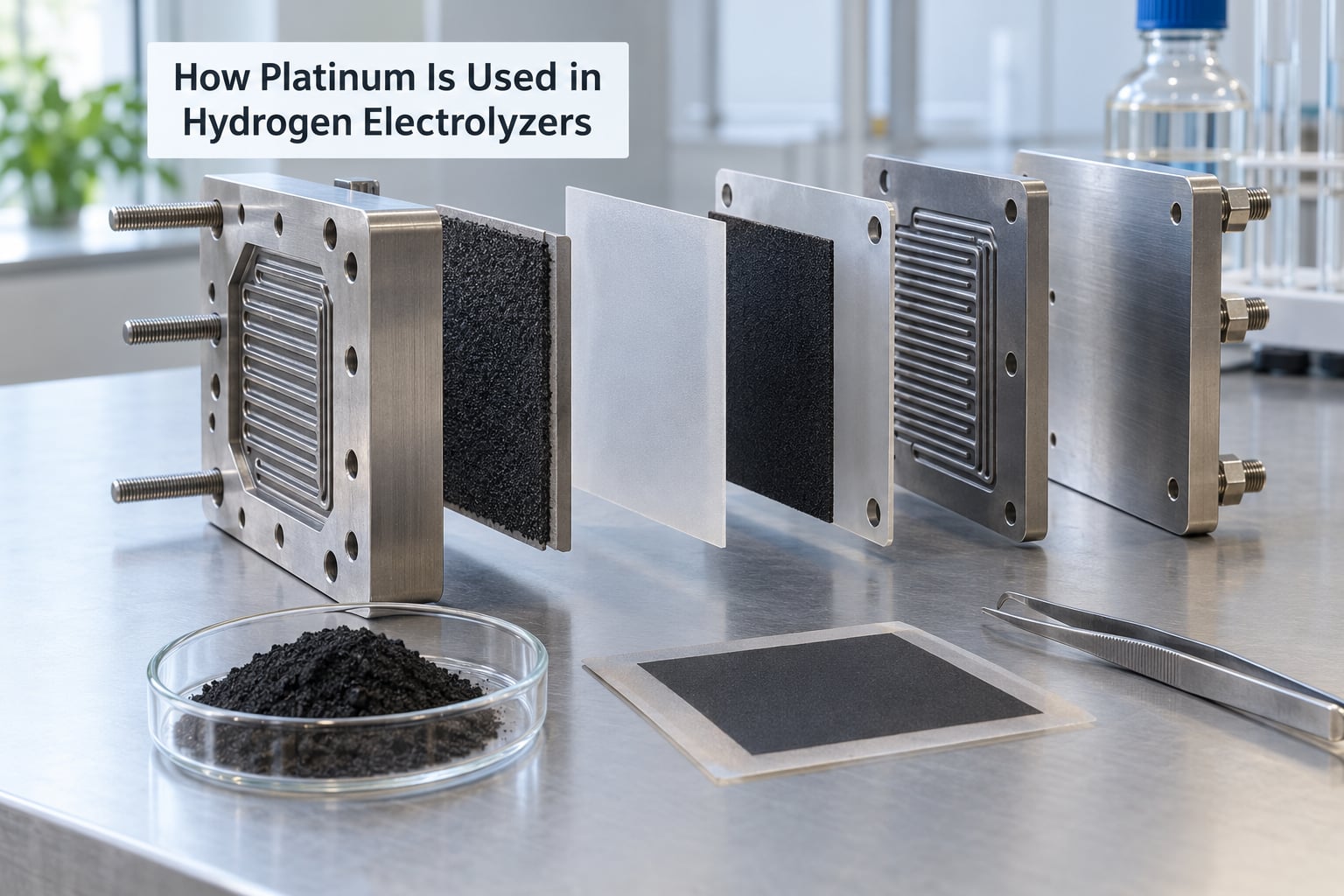
A PEM electrolyzer pushes a membrane electrode assembly hard: acidic conditions, high pressure, thousands of hours of cycling. Platinum-group metals tolerate that environment in a way that nickel catalysts in an alkaline cell do not, because the alkaline route runs best in a milder electrolyte and lower pressure.
Inside a PEM electrolyzer, the anode carries an iridium-oxide-based coating with platinum-group support material, and the cathode is platinum-based. The practical result is a mixed-metal bill of materials, not a pure platinum one, and readers who treat hydrogen demand as a simple ounces-per-GW calculation miss that.
Alkaline electrolyzers avoid platinum almost entirely by running at lower pressure in a hydroxide electrolyte. They have historically been cheaper per kilowatt and easier to build at scale, which is why they took a large share of earlier installations. Their weakness is dynamic response: a renewable farm’s output swings faster than an alkaline stack likes, and PEM handles that swing better.
Anion-exchange membrane designs sit between the two. They aim for alkaline-like cost with PEM-like performance, and if they mature they would remove much of the platinum intensity from new capacity. They have not yet reached commercial durability at scale, so investors should watch rather than count them.
Total metal demand is also not the same as mined supply. Scrapped stacks, recovered catalyst from end-of-life fuel cells, refinery and autocatalyst scrap, exchange-held inventories and load factors all sit between what a device consumes and what a mine must deliver in any given year.
What Role Do Hydrogen Fuel Cells Play?
A PEM fuel cell runs the electrolysis reaction in reverse. Hydrogen and oxygen meet on a membrane coated with a platinum catalyst, electrons move through an external circuit, and the by-products are electricity, heat and clean water. That water is the answer to the most common question on hydrogen forums: yes, it is drinkable.
Catalyst loading on the cathode has fallen by roughly an order of magnitude over two decades of development, from the gram-per-square-centimeter ranges of early stacks down to a fraction of that in current automotive hardware. Each gram removed is demand that never appears in the annual totals, and it is the quietest destroyer of hydrogen-linked demand forecasts.
Vehicle numbers tell the same story. Passenger FCEV sales remain a rounding error against global car sales, even after years of subsidies in California, Japan and South Korea. Heavy-duty transport and material-handling equipment are the more reliable growth pocket, and the fuel-cell buses and trucks that actually operate long duty cycles are where the metal goes.
Here is why fuel cells still matter to the platinum balance even if electrolyzers grow on alkaline chemistry. A fuel cell has no non-platinum design that is competitive today at the low temperatures a vehicle requires. Electrolysis has alkaline alternatives; fuel cells largely do not.
Why Hydrogen Production Growth Does Not Always Equal Platinum Growth
Output can rise through three routes at once, and each one changes metal intensity. Hydrogen can be made from more electrolyzers, from larger electrolyzers, or from fewer metals inside the same electrolyzers. Only the first two add ounces.
How hydrogen energy affects platinum demand, through a simple deployment formula
The intuitive version is: annual platinum demand from hydrogen equals installed capacity multiplied by platinum intensity per unit, minus whatever recycled catalyst comes back, plus replacements for worn stacks. Add fuel-cell units shipped multiplied by grams of catalyst per stack, and you have the second term.
Every variable in that expression is moving, and they are not moving together. Loading has fallen faster than capacity has grown in some years. Replacement cycles are long. Recycling returns material on a lag measured in years, not quarters. Treat the result as a scenario tool rather than an estimate, because the same inputs produce very different answers depending on which technology share you assume.
Timelines matter just as much as arithmetic. An announced project consumes no platinum. A funded project consumes it when the stack is built. Only a commissioned system consumes it when it runs. Public announcements cluster at the first stage, which is why headline gigawatt totals have run well ahead of actual metal offtake.
Which Hydrogen Technologies Are Most Important to Watch?
- Green hydrogen PEM electrolyzers. The platinum-relevant core of the thesis. Watch the PEM share of new capacity, not the headline total.
- Alkaline and anion-exchange electrolyzers. Watch for gains in share. Every point of share moved to alkaline is a point of share removed from platinum demand.
- Industrial refining and ammonia feedstock. Large volumes of hydrogen, mostly from fossil routes today, so little direct platinum effect, but heavy scrutiny under decarbonization policy.
- Direct reduced iron steel. Green hydrogen as a reducing agent rather than a fuel. Huge tonnage potential, and where platinum-linked PEM capacity could scale quickly.
- Transport fuel cells. Heavy trucking, buses and forklifts first, passenger cars last. Per-stack platinum is falling even where unit sales rise.
- Stationary fuel cells. Prime power and combined heat and power. Modest volumes, but steadier than vehicle programs.
That list is ranked by how much each one moves the platinum balance, not by how much press it gets. The last three barely register. The first two decide the decade.
What Could Limit or Increase Platinum Demand From Hydrogen?
The bear case deserves equal billing, and analysts who skip it are usually selling something. Substitution research is real and funded: a Johns Hopkins Applied Physics Laboratory team has published work using density functional theory and machine-learning screening to hunt for high-entropy alloys that could dilute or replace platinum in fuel-cell catalysts. None of those candidates is commercial yet, but the direction of travel matters for a long-dated demand model.
Hardware redesign is the other pressure point. Thinner catalyst layers, higher current densities and better water management all reduce grams per kilowatt, and every product generation since the 1990s has delivered them.
Then there is adoption itself. Forum discussion on technical communities tends to treat the electrolysis half of the thesis as reliable and the passenger-vehicle fuel cell half as speculative, which is a fair summary of where the metal actually moves. Losing to direct electrification on efficiency grounds removes the demand case entirely rather than merely shrinking it.
On the other side, three forces push the other way. Production tax credits and clean hydrogen production targets in the US, plus renewable-fuel mandates and hydrogen acceleration funding in Europe, convert policy intent into funded projects. Falling renewable power costs improve electrolyzer economics, which is what makes high utilization hours possible, and high utilization is what turns installed capacity into recurring catalyst replacement demand. Third, durable policy that forces industrial buyers like steel and fertilizer producers to switch feedstock would create a demand base far larger than transport ever promised.
How Should Investors Monitor Platinum Demand Indicators?
Build a checklist that tracks metal, not announcements. Commissioned electrolyzer capacity in gigawatts, published separately for PEM and alkaline, tells you more about platinum than any press release. Catalyst-loading disclosures in technical papers and vendor data sheets show the intensity trend. Vehicle registration data by region tells you whether the fuel-cell forecast ever arrives.
On the supply side, watch exchange inventories and reported recycling volumes, including recovered catalyst from end-of-life fuel cells and electrolyzers. Watch South African mine depth and grade trends for the deficit narrative, and track the policy milestones that convert targets into funded capacity.
The discipline worth keeping is simple: an announcement is a claim, a funded project is a contract, and a commissioned system is demand. Most of the hydrogen-platinum bull case online is built on the first kind.
One more habit helps. Re-run your numbers whenever loading figures change. A demand model that was right about gigawatts and wrong about grams per kilowatt will still produce the wrong answer.
A Simple Hydrogen-Platinum Demand Scenario
Consider a deliberately illustrative case. Suppose a region commissions a fixed number of PEM electrolyzers over a five-year window, each with a stated catalyst bill of materials. Multiply to get installed demand, add a replacement allowance for a share of the fleet each year, then subtract the platinum recovered from retired units and recycling.
| Scenario input | Low case | Mid case | High case |
|---|---|---|---|
| PEM share of new electrolysis capacity | Small | Meaningful | Dominant |
| Utilization hours per year | Modest | High | Very high |
| Catalyst loading trend | Falls fast | Falls steadily | Holds flat |
| Recycling recovery rate | Low | Moderate | High |
| Resulting hydrogen-linked platinum demand | Marginal | Material | Transformative |
The spread between the low and high cases is enormous, and that is the honest takeaway. Real figures need project-level data on capacity, bill of materials and operating hours, which is exactly the data that gets lost between a press release and a research note.
This framework is a way to test your own assumptions, not a forecast. Treat it the way you would treat any scenario table: change one input at a time and watch which assumption the answer actually depends on.
Frequently Asked Questions
PEM electrolyzers carry the largest absolute quantities, because a single multi-megawatt stack packs thousands of ounces of catalyst into one installation. PEM fuel cells use less per device, but they are produced in far greater numbers. Alkaline and anion-exchange electrolyzers use little to no platinum, as do fossil-based hydrogen routes such as steam methane reforming.
Per device, no. An electrolyzer stack holds much more catalyst than a vehicle stack. Across the market, it depends on volumes: if electrolyzers scale into the gigawatts while fuel-cell vehicles stay in the tens of thousands, electrolyzers dominate. Loading reductions hit both, and they have cut fuel-cell catalyst use by roughly an order of magnitude since early commercial stacks.
It can support prices, but as optionality rather than a floor. Hydrogen-linked demand is a small share of the total market today, and the World Platinum Investment Council has projected it could reach up to about 20% of total platinum demand by 2030 and around 35% by 2040. Whether that translates into price depends on mine supply, substitution and how much of announced capacity actually gets commissioned.
No. Most hydrogen today is made by steam methane reforming or coal gasification without platinum in the reaction path. Alkaline and anion-exchange electrolyzers also largely avoid it. Platinum matters specifically for proton exchange membrane technology, so the answer depends on which production route a project actually uses rather than on hydrogen as a category.
Recycling is a partial offset that arrives on a lag. Catalyst recovered from retired fuel-cell vehicles and electrolyzers returns to the market years after the original metal was consumed, so rapid buildout raises future secondary supply. High recovery rates reduce net primary demand over time, and falling platinum prices can push recovery rates up, creating a self-correcting brake on the thesis.
Start with commissioned PEM electrolysis capacity in gigawatts, tracked separately from alkaline. That single number captures both the scale and the platinum intensity, which headline hydrogen targets do not. Add catalyst-loading disclosures, regional fuel-cell registration data and reported recycling volumes, and you can reprice the thesis whenever any of those inputs change.
Conclusion
Hydrogen energy can support platinum demand, and the mechanism is narrow and specific: proton exchange membrane electrolyzers and PEM fuel cells both need platinum catalysts. Everything else in the hydrogen world, from fossil-based reforming to alkaline electrolysis, does not.
So how hydrogen energy affects platinum demand in practice comes down to technology share, catalyst intensity per unit, how much capacity is actually commissioned, replacement cycles and recycling rates. Track those five and you can reprice the thesis yourself.
Start with committed PEM electrolyzer projects and the trend in catalyst loadings, not broad hydrogen announcements. Platinum exposure is a way to express a hydrogen view, not a substitute for doing that work.
This article is educational and general market commentary. It is not investment advice, and forecasts from any publisher can change. Rules, subsidies and market balances vary by country and shift over time, so check primary sources before acting on anything here.
Source: https://www.pgm-blog.com/how-hydrogen-energy-affects-platinum-demand/
Anyone can join.
Anyone can contribute.
Anyone can become informed about their world.
"United We Stand" Click Here To Create Your Personal Citizen Journalist Account Today, Be Sure To Invite Your Friends.
Before It’s News® is a community of individuals who report on what’s going on around them, from all around the world. Anyone can join. Anyone can contribute. Anyone can become informed about their world. "United We Stand" Click Here To Create Your Personal Citizen Journalist Account Today, Be Sure To Invite Your Friends.
LION'S MANE PRODUCT
Try Our Lion’s Mane WHOLE MIND Nootropic Blend 60 Capsules
Mushrooms are having a moment. One fabulous fungus in particular, lion’s mane, may help improve memory, depression and anxiety symptoms. They are also an excellent source of nutrients that show promise as a therapy for dementia, and other neurodegenerative diseases. If you’re living with anxiety or depression, you may be curious about all the therapy options out there — including the natural ones.Our Lion’s Mane WHOLE MIND Nootropic Blend has been formulated to utilize the potency of Lion’s mane but also include the benefits of four other Highly Beneficial Mushrooms. Synergistically, they work together to Build your health through improving cognitive function and immunity regardless of your age. Our Nootropic not only improves your Cognitive Function and Activates your Immune System, but it benefits growth of Essential Gut Flora, further enhancing your Vitality.

Our Formula includes: Lion’s Mane Mushrooms which Increase Brain Power through nerve growth, lessen anxiety, reduce depression, and improve concentration. Its an excellent adaptogen, promotes sleep and improves immunity. Shiitake Mushrooms which Fight cancer cells and infectious disease, boost the immune system, promotes brain function, and serves as a source of B vitamins. Maitake Mushrooms which regulate blood sugar levels of diabetics, reduce hypertension and boosts the immune system. Reishi Mushrooms which Fight inflammation, liver disease, fatigue, tumor growth and cancer. They Improve skin disorders and soothes digestive problems, stomach ulcers and leaky gut syndrome. Chaga Mushrooms which have anti-aging effects, boost immune function, improve stamina and athletic performance, even act as a natural aphrodisiac, fighting diabetes and improving liver function. Try Our Lion’s Mane WHOLE MIND Nootropic Blend 60 Capsules Today. Be 100% Satisfied or Receive a Full Money Back Guarantee. Order Yours Today by Following This Link.


| Visits: | 1,833,986,209 |
| Stories: | 8,715,663 |
Whistler Blowers, Insiders

