

Is There Historical Support for the Pre-Trib Rapture before Darby?

A great deal of time and energy goes into supporting a pre-tribulational “rapture.” In a recent interview, John Bevere, author of The King is Coming, claims that Irenaeus of Lyons (c. AD 130-202) taught that the “rapture of the church” took place before the final week of Daniel’s 70 weeks-of-years prophecy. Irenaeus is claimed as a key support witness for the rapturists because he identifies Papias (c. 60-130) as “a hearer of John, and companion of Polycarp, a man of old time.” Irenaeus knew of Papias through oral tradition and written fragments of Papias’s work, Exposition of the Sayings of the Lord, rather than through direct personal acquaintance. Irenaeus cited Papias as a reliable witness to apostolic traditions, particularly regarding the origins of the Gospels, but he also relied on the accounts of elders such as Polycarp to bridge the generational gap.
So, what does any of this have to do with eschatology, particularly the pre-tribulational rapture? It is often claimed that the earliest church fathers are trustworthy sources of doctrine because of their proximity to the Apostle John. This sounds reasonable, except that John’s definition of “antichrist” does not match how Irenaeus and other Ante-Nicene writers use it. Irenaeus argued that the Antichrist would be a literal, future individual, an apostate Jew who would arise after the Roman Empire partitions into ten kingdoms. The Antichrist would rebuild the Jewish temple in Jerusalem and sit within it, demanding to be worshiped as God. Irenaeus identified this act as the fulfillment of the “abomination of desolation” prophesied by Daniel and Jesus (Matt. 24:15). Irenaeus wrote the following.
But when this Antichrist shall have devastated all things in this world, he will reign for three years and six months, and sit in the temple at Jerusalem; and then the Lord will come from heaven in the clouds, in the glory of the Father, sending this man and those who follow him into the lake of fire; but bringing in for the righteous the times of the kingdom, that is, the rest, the hallowed seventh day; and restoring to Abraham the promised inheritance, in which kingdom the Lord declared, that “many coming from the east and from the west should sit down with Abraham, Isaac, and Jacob.”[1]
This is not John’s definition of the “many antichrists” that were alive in his day (1 John 2:18). If Irenaeus was in the line of truth from John to Papias to Polycarp, then to himself, why didn’t he stay with John’s definition (1 John 2:22; John 2:7) of the “many antichrists” (1 John 2:18) who were alive in his day? Why didn’t John use the word “antichrist” in Revelation?
Like modern-day premillennialists, Irenaeus constructs a composite antichrist from various books of the Bible, including Jeremiah, Daniel, 2 Thessalonians 2 (the man of lawlessness), the beasts in Revelation 13, and other unrelated passages. “Irenaeus taught that only one event prevented the start of the kingdom, the defeat of the Antichrist.”[2] That’s a huge problem, since his understanding of the antichrist doesn’t match the Bible’s. This failure should disqualify all end-time speculators when it comes to the antichrist, the “many antichrists” who were alive in John’s day.
When we evaluate biblical doctrines, the Bible is the ultimate authority. Since the Bible does not teach any of the five rapture positions (pre-, mid-, partial-, post-, and pre-wrath), rapture advocates seek to support their positions by appealing to historical sources. See my book with Frank Gumerlock, The Rapture and the Fig Tree Generation, for a biblical appraisal of the “rapture.”
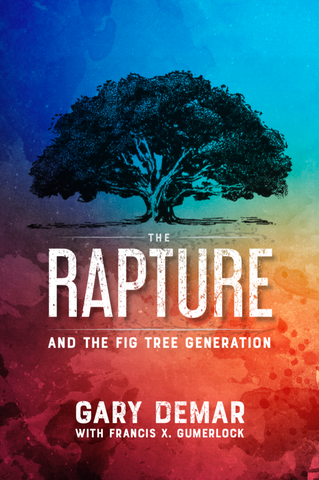
Since the national reestablishment of Israel in 1948, countless books and pamphlets have been written defending the doctrine assuring readers that it could happen at any moment. Some prophecy writers claimed the “rapture” would take place before 1988. We are far removed from that date. Where are we in God’s prophetic timetable?
But what should we make of this passage from Irenaeus? “And therefore, when in the end the Church shall be suddenly caught up from this, it is said, There shall be tribulation such as has not been since the beginning, neither shall be. Matthew 24:21 For this is the last contest of the righteous, in which, when they overcome, they are crowned with incorruption.”
It seems that the church goes through the tribulation in Irenaeus’ view; otherwise, why write, “when they overcome”? Overcome what? The tribulation. How can there be a “contest of the righteous” if the “righteous” are no longer on earth?
Fra Dolcino (c. 1250-1307)
Thomas Ice confronted me after our debate at BIOLA University (February 2002) about Francis Gumerlock’s statement in The Day and the Hour (2000), a book published by American Vision, that “The Dolcinites held to a pre-tribulation rapture theory similar to that of modern dispensationalism” (Day and the Hour, 80). If Ice wants to claim the Dolcinites as proto-dispensationalists, he can have them. Gumerlock quotes the Historia Fratris Dolcini Haeresiarchae in an end note (the English translation is Gumerlock’s):
Again, [he believed, preached, and taught] that within the said three years Dolcino himself and his followers will preach the coming of the Antichrist; and that the Antichrist himself would come into this world at the end of the said three and a half years; and after he had come, Dolcino himself, and his followers would be transferred into Paradise, where Enoch and Elijah are, and they will be preserved unharmed from the persecution of Antichrist; and then Enoch and Elijah themselves would descend to earth to confront the Antichrist, then they would be killed by him; or by his servants, and thus Antichrist would reign again for many days. Once Antichrist is truly dead, Dolcino himself, who would then be the holy Pope, and his preserved followers will descend to earth, and they will preach the correct faith of Christ to all, and they will convert those, who will be alive then, to the true faith of Jesus Christ (91-92).
It seems that only Dolcino and his followers would be taken to heaven, not the church at large. In addition, the account was written by an anonymous source in 1316, nine years after Dolcino’s death. His original letters do not exist. Critics argue the Apostolic Brethren were a violent cult that fled to the mountains to arm themselves against papal forces, which contradicts the passive “escape” narrative of modern pre-tribulationism.
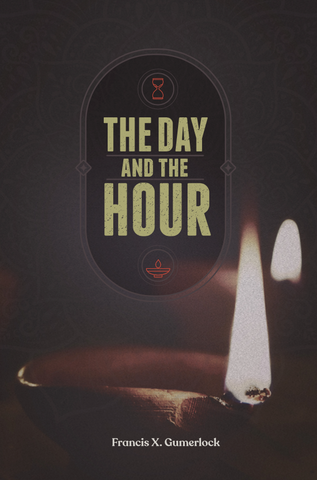
In The Day and The Hour, Gumerlock spans two thousand years of conjecture on the last days, disclosing the dreams and delusions of those who believed that their sect was the 144,000 of Revelation 7; that the 1290 days of Daniel 12 had expired in their generation; that the “Man of Sin” of II Thessalonians 2 was reigning in their time; that a Rapture of the saints, a Great Tribulation, a Battle of Armageddon were just around the corner; or that a Millennial Kingdom was about to dawn.
Like Irenaeus, Dolcino does not follow the New Testament’s definition of the “many antichrists” that were alive in John’s day. For more information on Dolcino, see this link.
Pseudo-Ephraem
Tim LaHaye mentions Pseudo-Ephraem (probably a seventh-century composition) for historical support. While the sermon On the Last Times, the Antichrist, and the End of the World claims to be authored by Ephraem of Nisibis, no one really knows who wrote it or when. Even so, pre-tribulationists believe it contains two early pre-trib rapture statements.[3] For a refutation, see Robert Gundry, “‘Pseudo-Ephraem’ on Pretrib Preparation for a Posttrib Meeting with the Lord” in First The Antichrist: Why Christ Won’t Come Before the Antichrist Does.[4]
Pseudo-Ephraem seems to be a mid-trib rapturist: “I say, somewhat more—, because the dead saints will be raised, and the living changed at Christ’s appearing in the air (I Thes. iv. 17); and this will be about three and a half years before the millennium, as we shall see hereafter: but will he and they abide in the air all that time? No.” Scholars note that the Syriac version emphasizes escape through death rather than translation, and that the attribution to Ephraem is historically invalid, as its style and content reflect events that occurred centuries after his death. These works, primarily the Latin Sermon on the Last Times and the Syriac Apocalypse, were likely composed between the late 6th and 7th centuries, reflecting the geopolitical turmoil of the Islamic conquests.
Shepherd of Hermas
While scholars date the final composition of The Shepherd of Hermas to the mid-2nd century (c. AD 140-155), the text does not contain teachings about a pre-tribulation rapture or being “caught up” before a time of testing. Tim LaHaye writes, “The Shepherd of Hermas in 140 AD wrote about the catching up before the times of testing. In the discourse, he talks about an open vision that he had. In it, he asked the Lord to rescue him from the beast.” The reply was, “Be not of doubtful mind, Hermas.” It’s another “vision,” not the Bible: “The fourth vision which I saw, brethren, twenty days after the former vision which came unto me, for a type of the impending tribulation.”
I’m not sure how this is a pre-tribulational rapture position. In his “vision” (not the Bible), he is told not to be doubtful. Doubtful about what? We’re not told. Neither are we told what this “beast” is.
We find this later: “Go therefore and declare to the elect of YHVH His mighty works and tell them that this beast is a type of the great tribulation which is to come.” Whatever this “beast” is, it precedes the great tribulation. Pre-tribulationalists teach that the “beast” does not appear until after the rapture.
As with so much of speculative Bible prophecy, events of the day are used as a form of “newspaper exegesis,” a practice that has been going on for nearly 2000 years. Current events shape a speculator’s interpretation, while ignoring the first-century context regarding timing and audience application.
[1] “Against Heresies,” Translated by Alexander Roberts and James Donaldson, Book V, Chapter 30.
[2] Jeffrey L. Edwards, “Irenaeus: Is the Second Century Testimony to Dispensational, Pretribulational Premillennialism?, Submitted to Dr. David Mappes in partial fulfillment of the requirements for the course HISTORY OF CHRISTIAN DOCTRINE: TH-2 at Baptist Bible Seminary, 74.
[3] Timothy J. Demy, “Pseudo-Ephraem,” Dictionary of Premillennial Theology, gen. ed. Mal Couch [Grand Rapids, MI: Kregel, 1996], 329. Also see Demy and Thomas D. Ice, “The Rapture and an Early Medieval Citation,” Bibliotheca Sacra [July/September 1995], 306-317 and Grant R. Jeffrey, “A Pretrib Rapture Statement in the Early Medieval Church,” gen. eds. Thomas Ice and Timothy Demy, When the Trumpet Sounds [Eugene, OR: Harvest House, 1995], 105-125).
[4] (Grand Rapids, MI: Baker Books, 1997), 161-188.
American Vision’s mission is to Restore America to its Biblical Foundation—from Genesis to Revelation. American Vision (AV) has been at the heart of worldview study since 1978, providing resources to exhort Christian families and individuals to live by a Biblically based worldview. Visit www.AmericanVision.org for more information, content and resources
Source: https://americanvision.org/posts/is-there-historical-support-for-the-pre-trib-rapture-before-darby/
Anyone can join.
Anyone can contribute.
Anyone can become informed about their world.
"United We Stand" Click Here To Create Your Personal Citizen Journalist Account Today, Be Sure To Invite Your Friends.
Before It’s News® is a community of individuals who report on what’s going on around them, from all around the world. Anyone can join. Anyone can contribute. Anyone can become informed about their world. "United We Stand" Click Here To Create Your Personal Citizen Journalist Account Today, Be Sure To Invite Your Friends.
LION'S MANE PRODUCT
Try Our Lion’s Mane WHOLE MIND Nootropic Blend 60 Capsules
Mushrooms are having a moment. One fabulous fungus in particular, lion’s mane, may help improve memory, depression and anxiety symptoms. They are also an excellent source of nutrients that show promise as a therapy for dementia, and other neurodegenerative diseases. If you’re living with anxiety or depression, you may be curious about all the therapy options out there — including the natural ones.Our Lion’s Mane WHOLE MIND Nootropic Blend has been formulated to utilize the potency of Lion’s mane but also include the benefits of four other Highly Beneficial Mushrooms. Synergistically, they work together to Build your health through improving cognitive function and immunity regardless of your age. Our Nootropic not only improves your Cognitive Function and Activates your Immune System, but it benefits growth of Essential Gut Flora, further enhancing your Vitality.

Our Formula includes: Lion’s Mane Mushrooms which Increase Brain Power through nerve growth, lessen anxiety, reduce depression, and improve concentration. Its an excellent adaptogen, promotes sleep and improves immunity. Shiitake Mushrooms which Fight cancer cells and infectious disease, boost the immune system, promotes brain function, and serves as a source of B vitamins. Maitake Mushrooms which regulate blood sugar levels of diabetics, reduce hypertension and boosts the immune system. Reishi Mushrooms which Fight inflammation, liver disease, fatigue, tumor growth and cancer. They Improve skin disorders and soothes digestive problems, stomach ulcers and leaky gut syndrome. Chaga Mushrooms which have anti-aging effects, boost immune function, improve stamina and athletic performance, even act as a natural aphrodisiac, fighting diabetes and improving liver function. Try Our Lion’s Mane WHOLE MIND Nootropic Blend 60 Capsules Today. Be 100% Satisfied or Receive a Full Money Back Guarantee. Order Yours Today by Following This Link.



| Visits: | 1,818,954,748 |
| Stories: | 8,667,305 |
Whistler Blowers, Insiders


IF you read the Bible you can see they got it mixed up and decided the bull shit must go forward.